Carbon Farming CE

Project overview

Development of Carbon Farming in the Central Europe

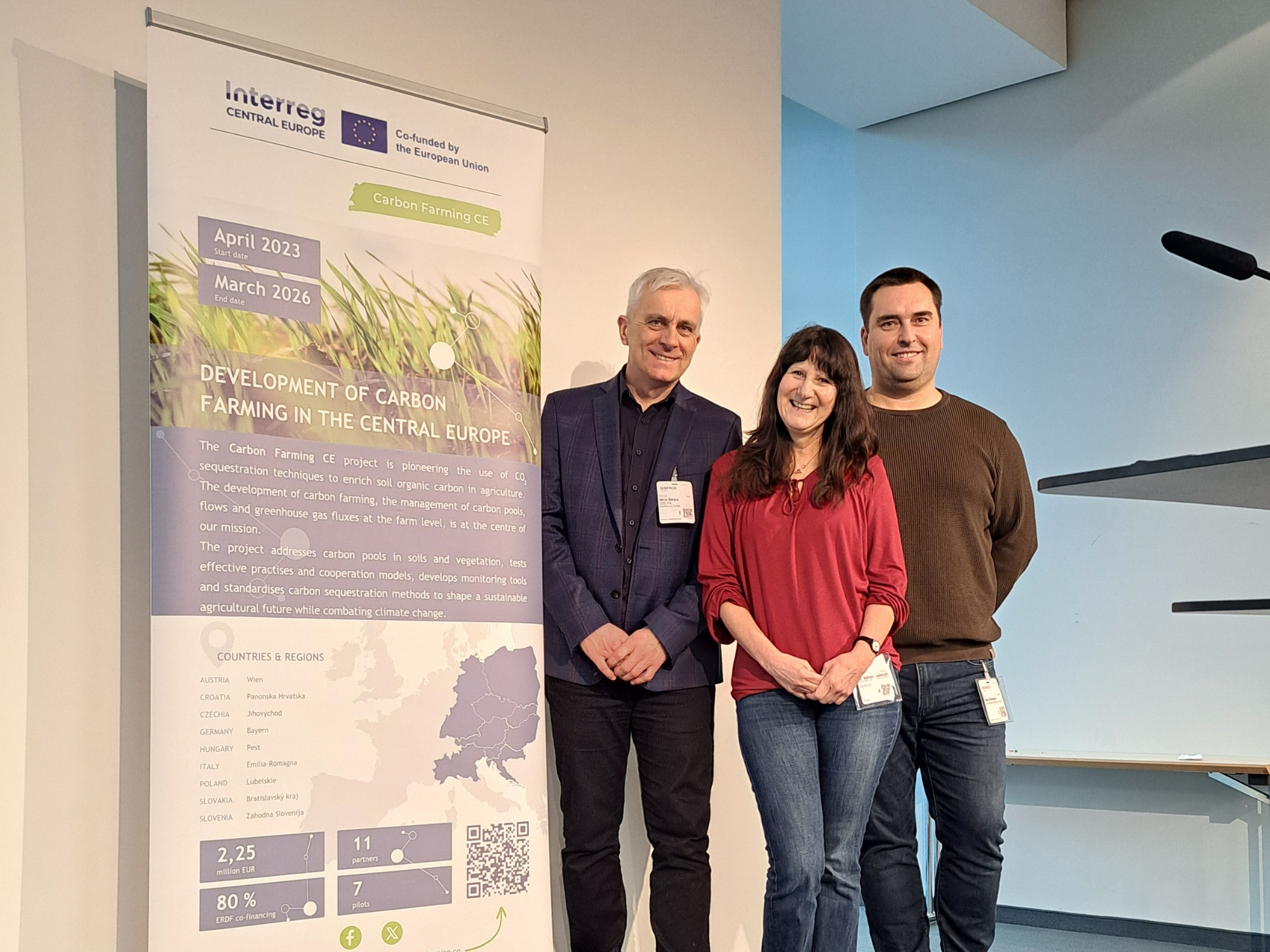
Carbon farming is the process of changing agricultural practices to increase the amount of carbon stored in the soil, or to reduce greenhouse gas emissions from livestock. It has huge potential but is still underused in central Europe. The Carbon Farming – CE project changed this and make regions more familiar with the concept. The partnership adapted and tested various techniques and business models and developed a monitoring tool for transnational, standardised carbon sequestration.

2,25m €

Project Budget

80%

of the Budget is funded by ERDF

Layer 1

9

Countries

9

Regions

11

Partners

7

Pilots

Duration

Start date

End date

Project progress

100%

About the project

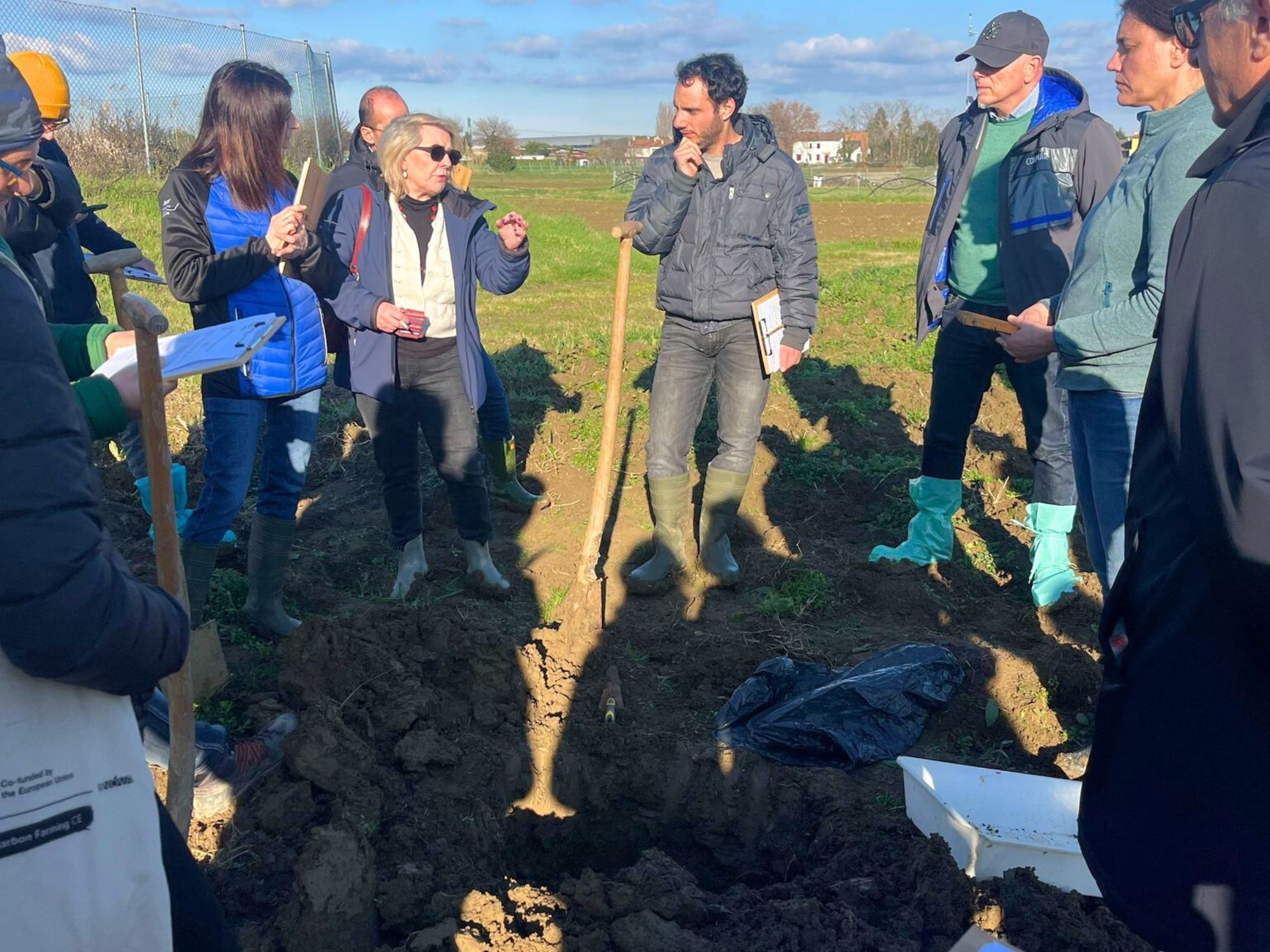
Carbon Farming CE brought together organisations from across central Europe to make carbon farming more accessible, practical and applicable under different agricultural conditions. Agricultural soils play an important role in tackling climate change while supporting soil health and resilient food production. Carbon farming can contribute to these goals through agricultural practices that increase carbon storage in soils and reduce greenhouse gas emissions. However, its wider uptake has been limited by fragmented knowledge, varying regional conditions and a lack of practical guidance for farmers and other stakeholders. Over three years, Carbon Farming CE brought together 11 organisations from nine central European countries to test and evaluate carbon farming approaches under different agricultural, climatic and soil conditions. The partnership combined research with practical experience to identify solutions that could be applied beyond individual pilot sites. The project tested seven carbon farming techniques, including cover crops, reduced tillage, crop rotation diversification, agroforestry and organic fertilisation. A total of 36 field trials provided evidence on their feasibility, potential impact on carbon sequestration and soil quality, and acceptance by farmers. The results were transformed into practical guidance and decision-support tools for farmers and agricultural advisors. Carbon Farming CE also developed and tested carbon farming business models, exploring how cooperation between farmers, businesses, public authorities, research organisations and other actors could support the wider adoption of carbon farming. In parallel, the project developed a common methodology for monitoring soil carbon sequestration, designed for different levels of assessment – from farmer self-monitoring to more advanced external evaluation. Knowledge transfer was an important part of the project. 27 capacity-building seminars in nine countries reached more than 800 participants, while 50 farmers implemented and evaluated carbon farming practices on their farms. To support long-term uptake, the partnership developed a Strategy and Action Plan for Carbon Farming Development in central Europe and established the Central European Carbon Farming Cluster. By project completion, 62 organisations from nine countries had endorsed the Strategy and Action Plan, creating a basis for continued cooperation and further mainstreaming of carbon farming after the project.

Project partnership

Project partners

Slovenija (SI)

Lead partner

Agricultural Institute of Slovenia

Address
Hacquetova ulica 17
1000 Ljubljana
Country
Slovenia (SI)
Web
https://www.kis.si/

Project partner

Address
Koritno 67
4260 Bled
Country
Slovenia (SI)
Web
www.isd.si
Total partner budget
197,400 €
Knowledge Transfer Division (vocational training, adult education and farm advisory unit of GAK)
Address
Páter Károly út 1
2103 Gödöllő
Country
Hungary (HU)
Web
www.gak.hu
Total partner budget
212,800 €
Address
Via dell’Arrigoni 120
47522 Cesena
Country
Italy (IT)
Web
www.rinova.eu
Total partner budget
194,750 €
DEPARTMENT OF BIOECONOMY AND SYSTEMS ANALYSIS
Address
CZARTORYSKICH 8
24-100 PULAWY
Country
Poland (PL)
Web
https://en.iung.pl/
Total partner budget
181,560 €
Address
Esslinger Hauptstrasse 132-134
A-1220 Vienna
Country
Austria (AT)
Web
www.bioforschung.at
Total partner budget
203,700 €
Address
Oravska 3/A
821 09 Bratislava
Country
Slovakia (SK)
Web
www.no-gravity.sk
Total partner budget
207,925 €
Department of Forage Crops Breeding and Genetics
Address
Juzno predgradje 17
31000 Osijek
Country
Croatia (HR)
Web
https://www.poljinos.hr
Total partner budget
215,750 €
Agricultural Chemistry and Pedology Units
Address
Via G Fanin 44
40127 Bologna
Country
Italy (IT)
Web
https://distal.unibo.it/
Total partner budget
165,200 €
Address
Eichethof 1
D 85411 Hohenkammer
Country
Germany (DE)
Web
www.naturland-beratung.de
Total partner budget
214,900 €
Department of Agronomy
Address
Zahradní 1
66441 Troubsko
Country
Czechia (CZ)
Web
www.vupt.cz
Total partner budget
183,120 €

Roadmap

1

Challenge

Agricultural soils can play an important role in climate change mitigation by storing carbon while supporting soil health and resilient food production. However, the wider uptake of carbon farming in central Europe was limited by fragmented knowledge, varying regional conditions and a lack of harmonised approaches for implementation and monitoring. Carbon Farming CE addressed these challenges by connecting research, practice and policy across nine countries.

2

Testing carbon farming techniques

Carbon Farming CE tested and evaluated seven carbon farming techniques in 36 field trials across central Europe. The techniques were assessed for their carbon sequestration potential, feasibility and acceptance, helping identify approaches suitable for different agricultural, climatic and soil conditions. The results were translated into practical guidance and decision-support tools for farmers and agricultural advisors.

3

Developing and testing carbon farming business models
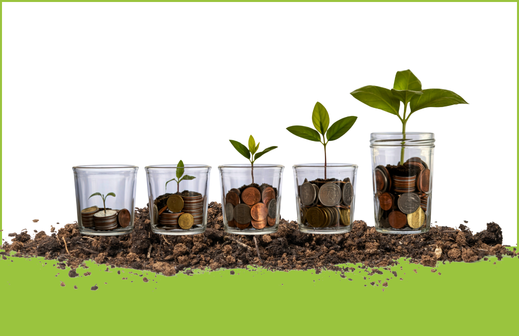
The project developed and tested carbon farming business models under different national and regional conditions. The models explored cooperation between farmers, businesses, research organisations, public authorities and other actors to support the practical and economic uptake of carbon farming. Testing and stakeholder feedback were used to develop guidance for applying and scaling up these models.

4

Mainstreaming carbon farming

Carbon Farming CE turned the knowledge gained through testing into tools and recommendations for wider use. The project developed a common methodology for monitoring soil carbon sequestration, assessed future carbon sequestration potential and prepared a Strategy and Action Plan to support the long-term development of carbon farming in central Europe. Knowledge was transferred through training, advisory activities and stakeholder cooperation, while the Central European Carbon Farming Cluster created a platform for continued collaboration beyond the project.

News
Events

Pilot actions

Outputs
Pilot testing carbon farming techniques
The testing results help farmers, agricultural advisors and other practitioners compare carbon farming techniques and better understand their practical, environmental and economic implications before introducing them in practice. Carbon Farming CE tested seven carbon farming techniques through 36 field trials across central Europe. The results were evaluated from different perspectives, including carbon sequestration potential, feasibility and acceptance, as well as environmental and economic impacts. Stakeholder-based SWOT analyses and farmers’ perspectives provided additional insights into practical opportunities and barriers. The report brings together the results and lessons learned from different agricultural and regional conditions, providing an evidence base for selecting and implementing carbon farming techniques and for the development of the Guide to Carbon Farming Techniques.
Type of output: Strategies and action plans

Guide to Carbon Farming Techniques

The Guide to Carbon Farming Techniques helps farmers and agricultural advisors compare carbon farming practices and identify options suited to their local conditions and farming objectives. Based on the project’s field-testing experience, the guide provides practical information on seven carbon farming techniques, including their feasibility, potential impact on carbon sequestration and acceptance. It also highlights factors such as labour, equipment, costs, soil and climatic conditions, and practical implementation requirements. The guide is complemented by an Excel-based decision matrix that allows users to assess and compare the seven techniques according to feasibility, impact and acceptance, supporting informed decisions on which practices may be most suitable for their specific situation.
Type of output: Solutions
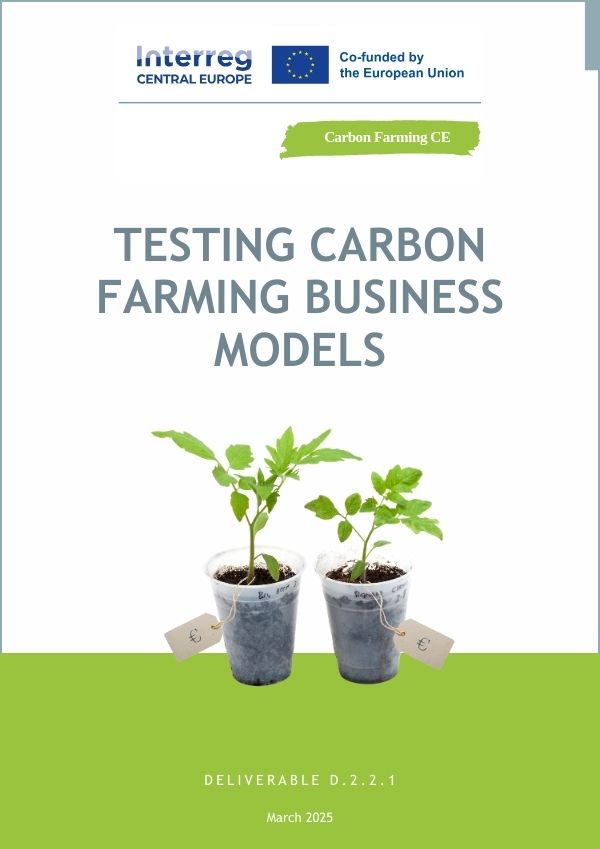
TESTING CARBON FARMING BUSINESS MODELS

Pilot testing carbon farming business models
The testing results help farmers, businesses, advisors, public authorities and other organisations understand how different forms of cooperation can support the implementation of carbon farming. The nine tested cases provide practical examples of what motivates stakeholders to cooperate, what benefits different models can offer and which challenges need to be considered. Carbon Farming CE tested nine cooperation models across central Europe, ranging from farmer-led initiatives and cooperation within or beyond the agri-food value chain to government-led and knowledge-transfer models. The testing examined the roles of different actors, environmental, economic, social and organisational impacts, monitoring approaches, strengths and weaknesses, and the long-term viability of the models. The experiences and lessons learned can help stakeholders assess existing cooperation models or develop new ones adapted to their regional, market and organisational context.
Type of output: Strategies and action plans
CE guide for Carbon Farming business models

Carbon Farming Business Model Guide
The Carbon Farming Business Model Guide helps farmers, agricultural advisors and other practitioners understand the financial and cooperative aspects of carbon farming and plan how carbon farming can be introduced at farm level. The guide takes users through the main steps of the process – from understanding carbon farming and exploring available options to assessing the farm baseline, developing a transition plan, implementation and evaluation. It also provides practical background on carbon farming business and cooperation models, economic considerations, carbon footprint calculation, standards and carbon markets. Drawing on the experiences gained through Carbon Farming CE, the guide helps users navigate different options and identify approaches that can be adapted to their farm, market and regional context.
Type of output: Solutions

Strategy and Action Plan for Carbon Farming in central Europe
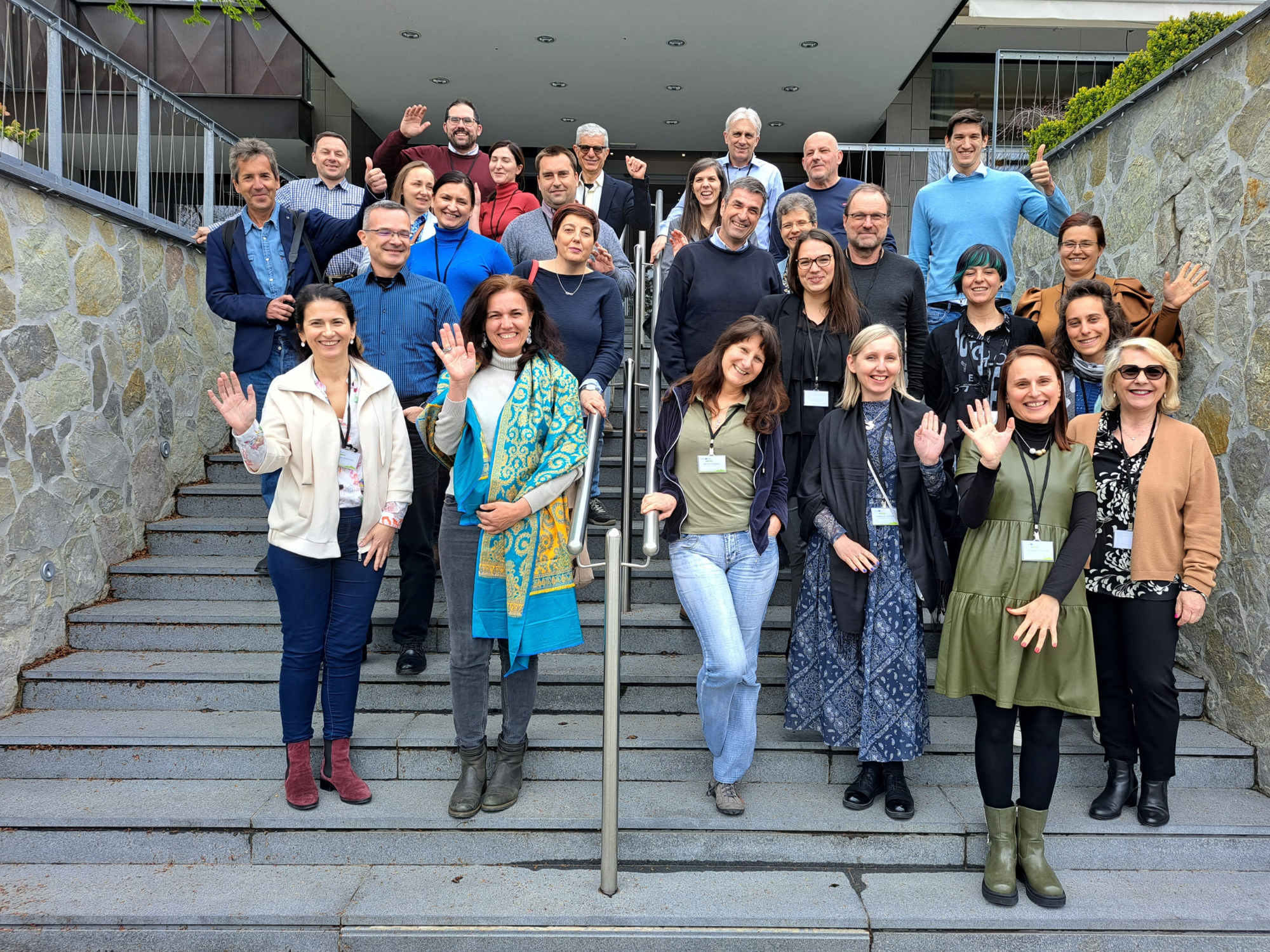
The Strategy and Action Plan provide policymakers, agricultural organisations, researchers, advisors and other stakeholders with a common framework for supporting the wider uptake of carbon farming in central Europe. They identify the conditions, priorities and actions needed to move from individual initiatives towards broader and longer-term implementation. The Strategy sets out a shared vision for carbon farming and identifies three key areas for action: policy advocacy and financial support; capacity development, knowledge transfer, training, research and innovation; and awareness raising. It builds on an analysis of the strengths, weaknesses, opportunities and threats affecting carbon farming in central Europe and translates these findings into strategic recommendations. The accompanying Action Plan turns these priorities into concrete actions, expected outputs and indicators for the period 2026–2035, providing a practical framework for continued cooperation and carbon farming development beyond the project.
Type of output: Strategies and action plans

Central European Carbon Farming Cluster

The Central European Carbon Farming Cluster brings together organisations and stakeholders interested in the development and wider uptake of carbon farming. Established by Carbon Farming CE, it provides a platform for continued cooperation, knowledge exchange and networking beyond the lifetime of the project. The Cluster connects actors from farming, research, advisory services, business, public authorities and other organisations across central Europe. It supports the exchange and further use of knowledge, tools and approaches developed through Carbon Farming CE and creates opportunities for new cooperation and initiatives in the field of carbon farming. The project also built a broader stakeholder network, with 62 organisations from nine central European countries endorsing its Strategy and Action Plan through Letters of Intent. By maintaining these connections beyond the project, the Cluster helps ensure that Carbon Farming CE results remain relevant, accessible and open to further development and uptake.
Type of output: Strategies and action plans

Carbon Farming CE

The project lead partner is responsible for the content of this project website.

Project on social media