

Project overview
Sustainable public transport solutions and innovative governance schemes for improving connectivity in Central Europe
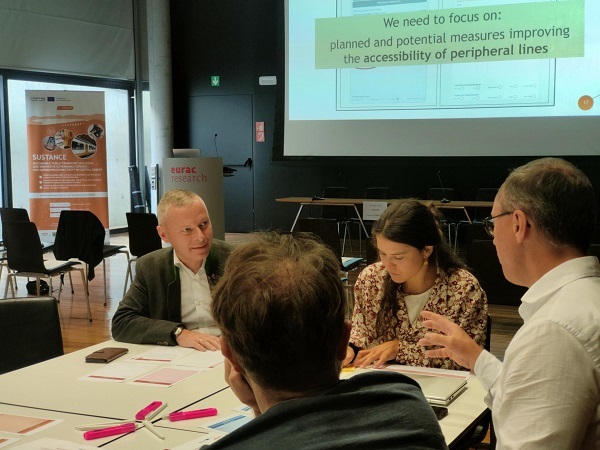
Leaving the car at home remains challenging for people in sparsely populated areas close to borders. Too often, there are simply no satisfying public transport offers available. The SUSTANCE project involved a wide range of transport stakeholders to co-design innovative mobility services and governance schemes that help public authorities to change this. In this process, the partners deployed amongst others customised intervention action plans in pilot regions.
-
2,01m €
-
Project Budget
-
80%
-
of the Budget is funded by ERDF
-
4
-
Countries
-
7
-
Regions
-
8
-
Partners
-
6
-
Pilots
Duration
Start date
End date
Project progress
About the project
Project partnership
Project partners

Lead partner
Central European Initiative - Executive Secretariat
Project Management Office
Project partner
Institute for Regional Development
Roadmap
Challenge
Problem

Idea
Solution
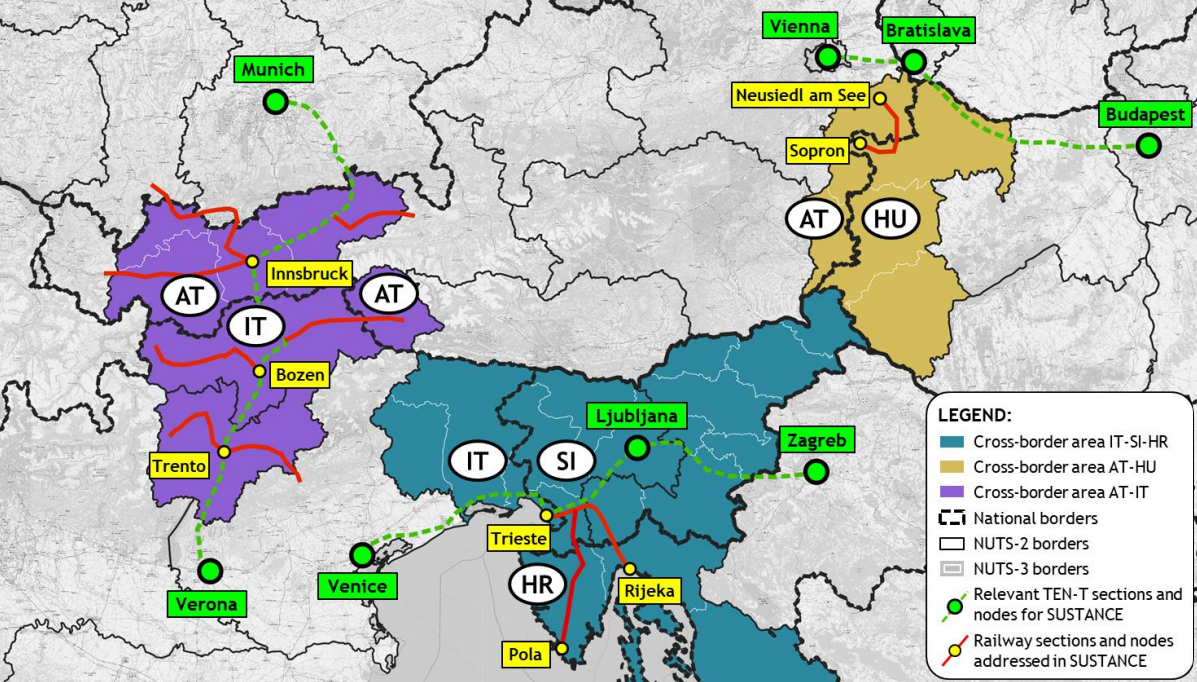
Over almost three years, SUSTANCE delivered six pilot actions and two supporting digital tools, developed with institutions from four countries (Italy, Slovenia, Croatia, and Hungary) with the shared goal of improving cross-border connectivity.
Concretely, the project has successfully introduced:
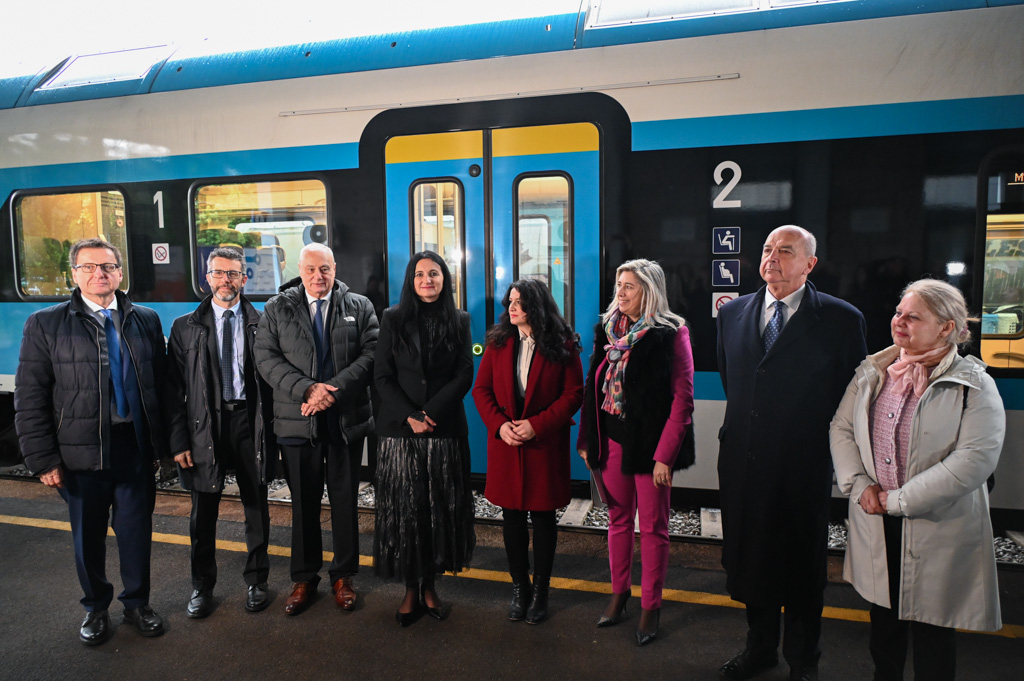
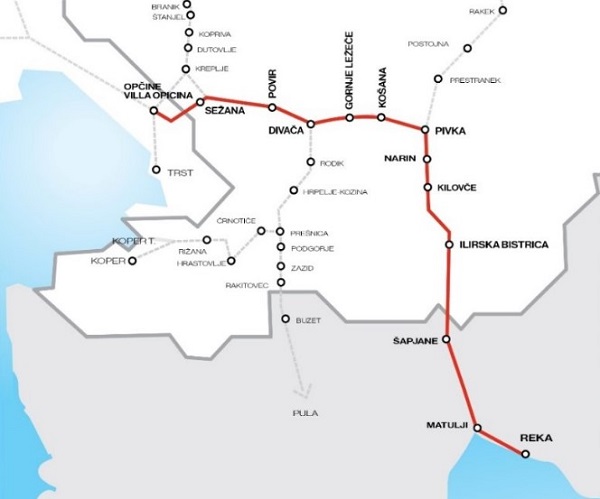
- A temporary direct cross-border train connection between Trieste (Italy) and Rijeka (Croatia), via Divača and Pivka (Slovenia).
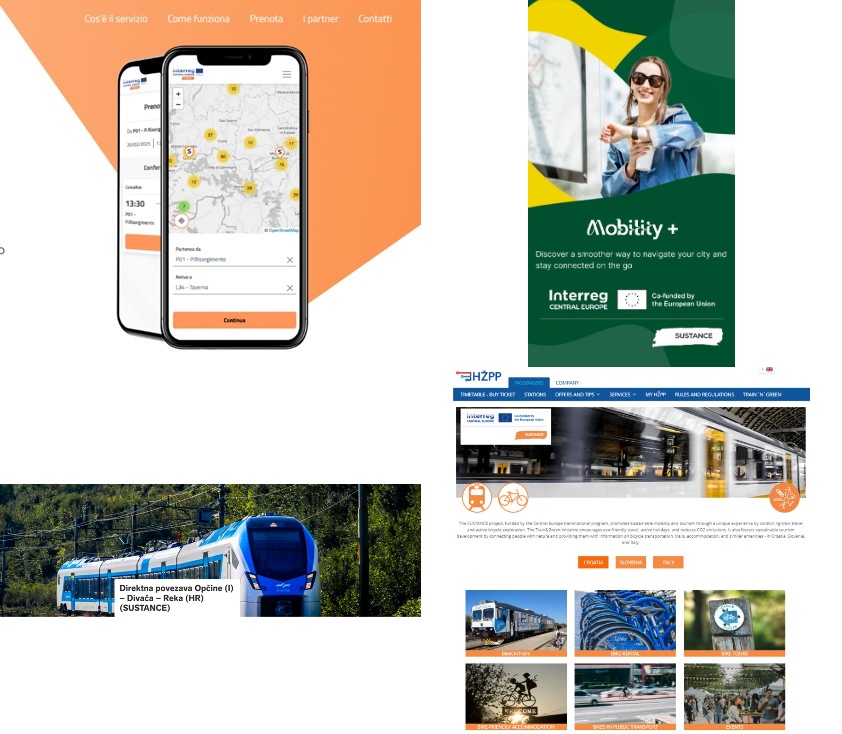
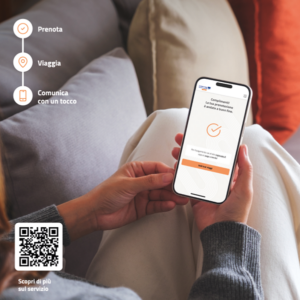
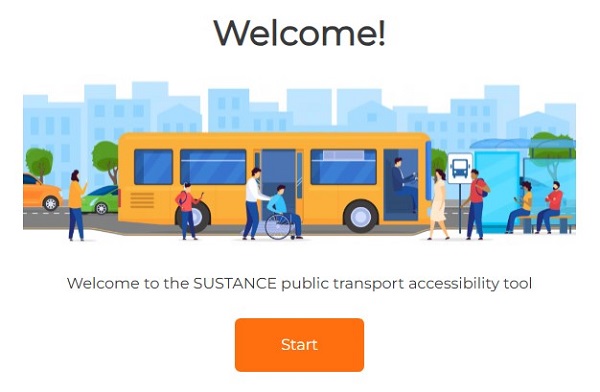
- A web application supporting a Demand-Responsive Transport (DRT) service in the Emilia-Romagna Region, Italy.
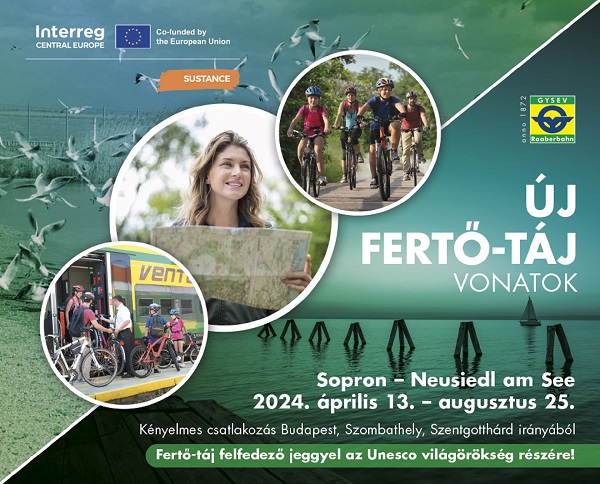
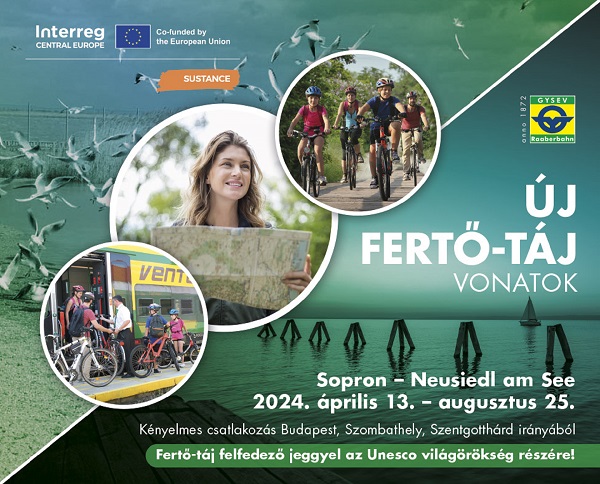
- A direct cross-border train line between Neusiedl Lake (Austria) and Sopron (Hungary), replacing a route that previously required a change of trains.
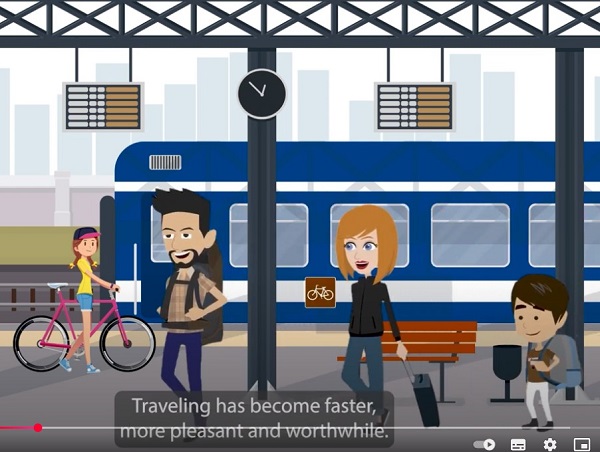
- A bike-sharing service near train stations in the Istria Region, connecting cycling and rail travel.
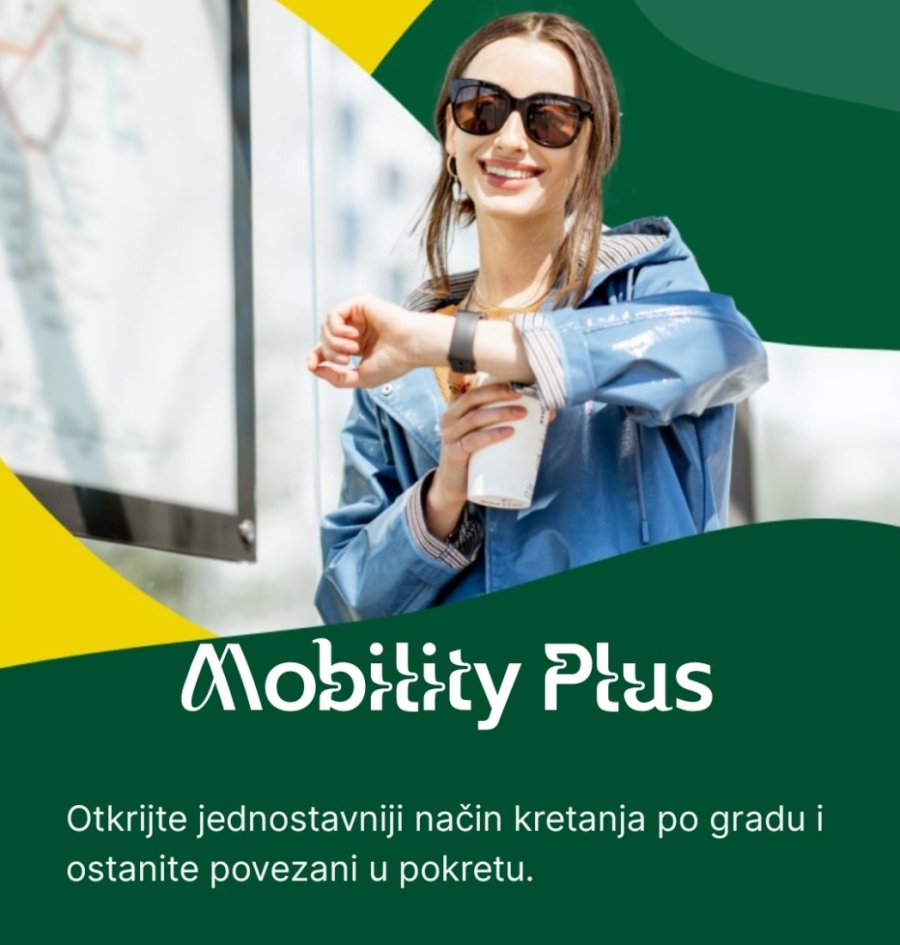
- An application integrating bike and train travel in Istria, Croatia.
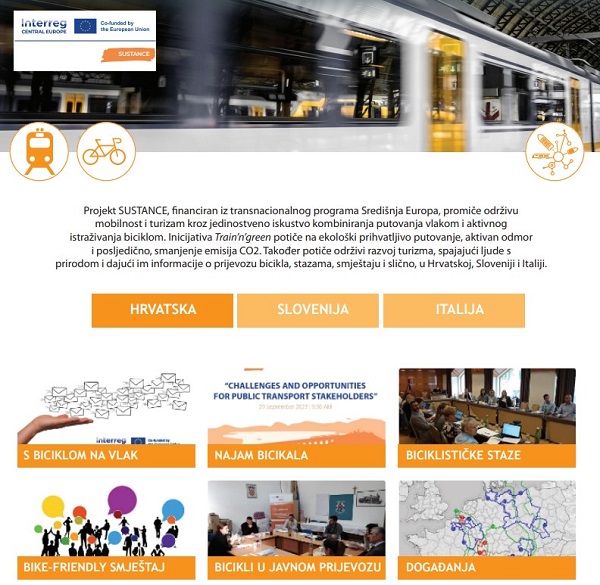
- A new bike-and-train section on the Croatian Railways website, consolidating information on public transport, cycling routes, EuroVelo routes, bike-friendly accommodation, and local sights.
How
Proof
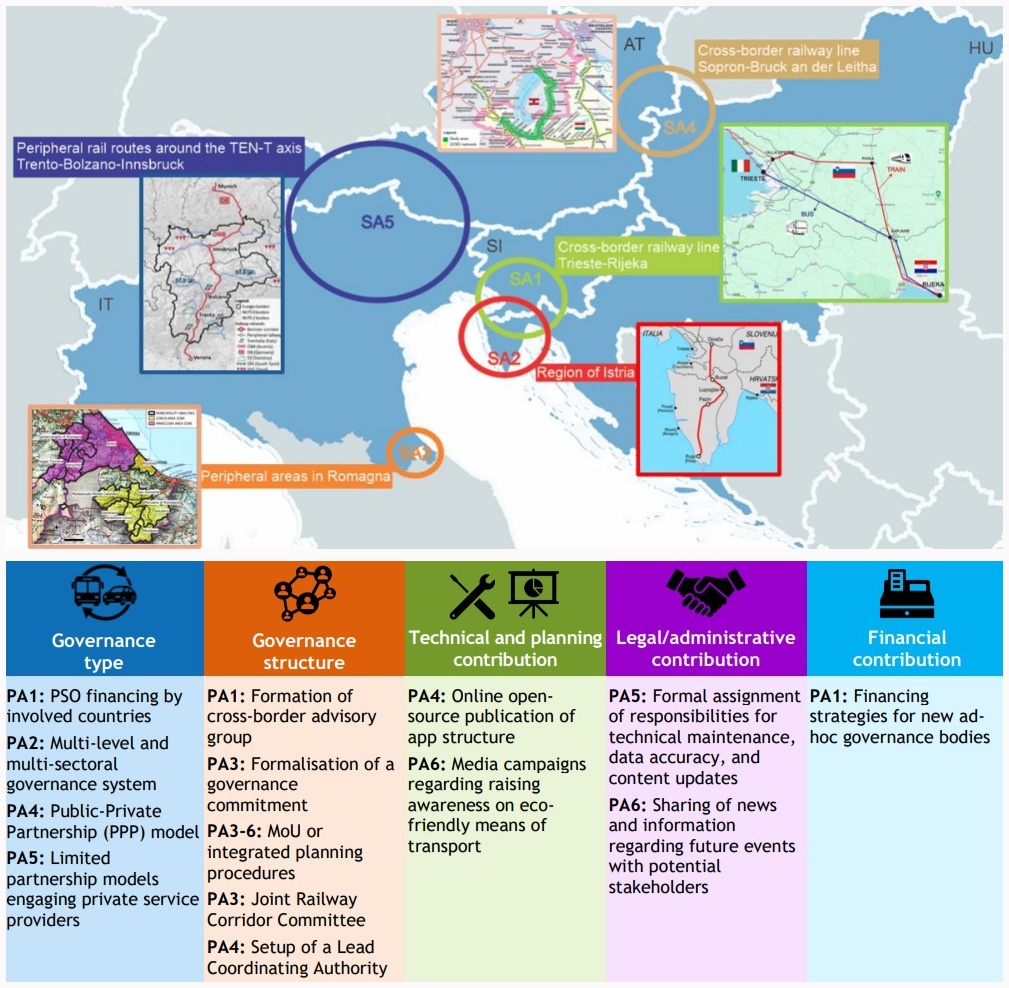
The Pilot Actions generated strong and measurable results. Here are some examples:
- The Trieste–Rijeka train connection, operating from April to September 2024, carried more than 8,200 passengers and 425 bicycles.
- The DRT web application in Emilia-Romagna, operating from March to December 2025, facilitated over 7,600 bookings and served around 9,000 passengers.
- The Neusiedl Lake–Sopron direct train line ran 160 times over 20 weekends from April to August 2024, transporting more than 2,000 passengers and 600 bicycles.
- The Istria bike-sharing service recorded over 550 bicycle rentals between summer and December 2025.
- The Istria bike-and-train application surpassed 3,000 downloads.
Impact
News












Events
Pilot actions
Outputs

Transnational action plan for better cross-border public transport connectivity
Transnational action plan for better ICT solutions for public transport

Long-term sustainability guidelines for better connectivity & smart mobility solutions

Long-term strategy for promoting cooperation and better governance of public transport
Project videos
Project documents
Newsletters
SUSTANCE
The project lead partner is responsible for the content of this project website.