
Project overview
Facilitating Shift Towards Active Forms of Mobility by Changing the Attitude and Travel Behaviour of Residents Through the Use of Green, Low-cost Tactical Urbanism and Placemaking Solutions
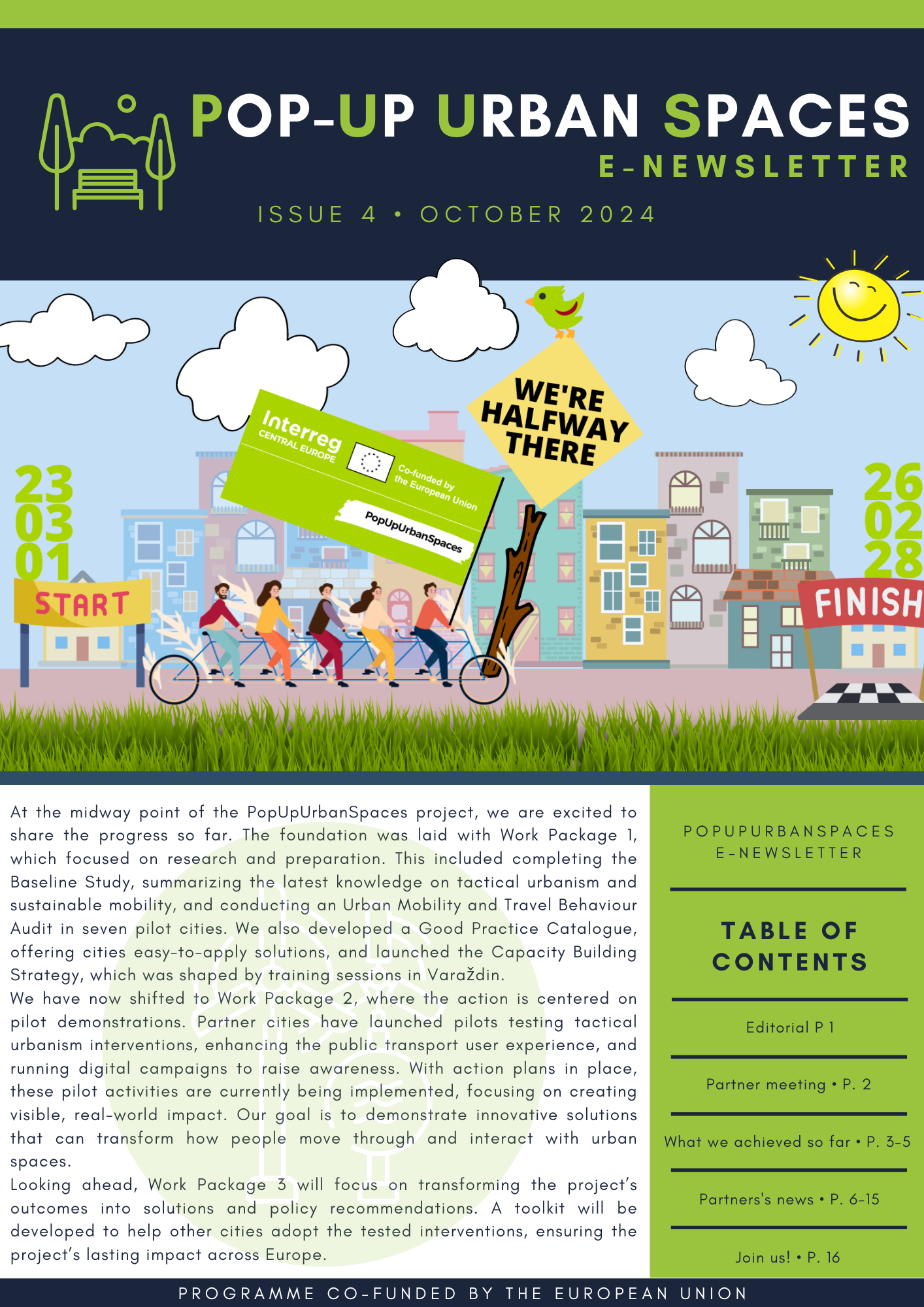
Mobility in our cities is still dominated by cars. Sustainable options often exist but are underused. A change of user behaviour is needed. The PopUpUrbanSpaces project applied a “show and tell” approach to raise awareness on the issue. The partners design pop-up interventions to show citizens and policy makers what it would be like to have streets and public spaces not dominated by cars. And they developed digital campaigning tools to tell citizens about risks of car-oriented urban mobility.
-
2,29m €
-
Project Budget
-
80%
-
of the Budget is funded by ERDF
-
7
-
Countries
-
9
-
Regions
-
10
-
Partners
-
1
-
Pilots
Duration
Start date
End date
Project progress
About the project
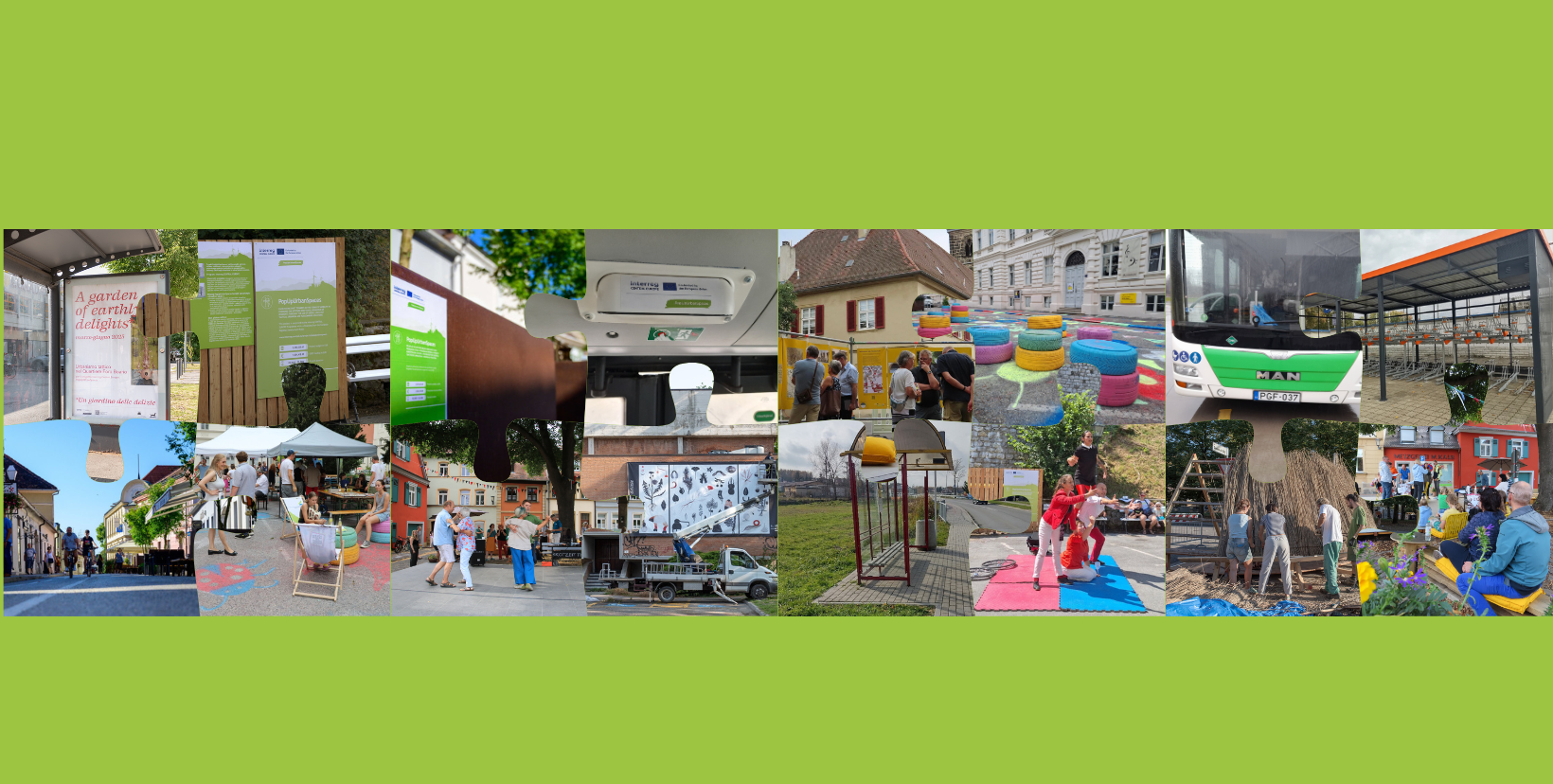
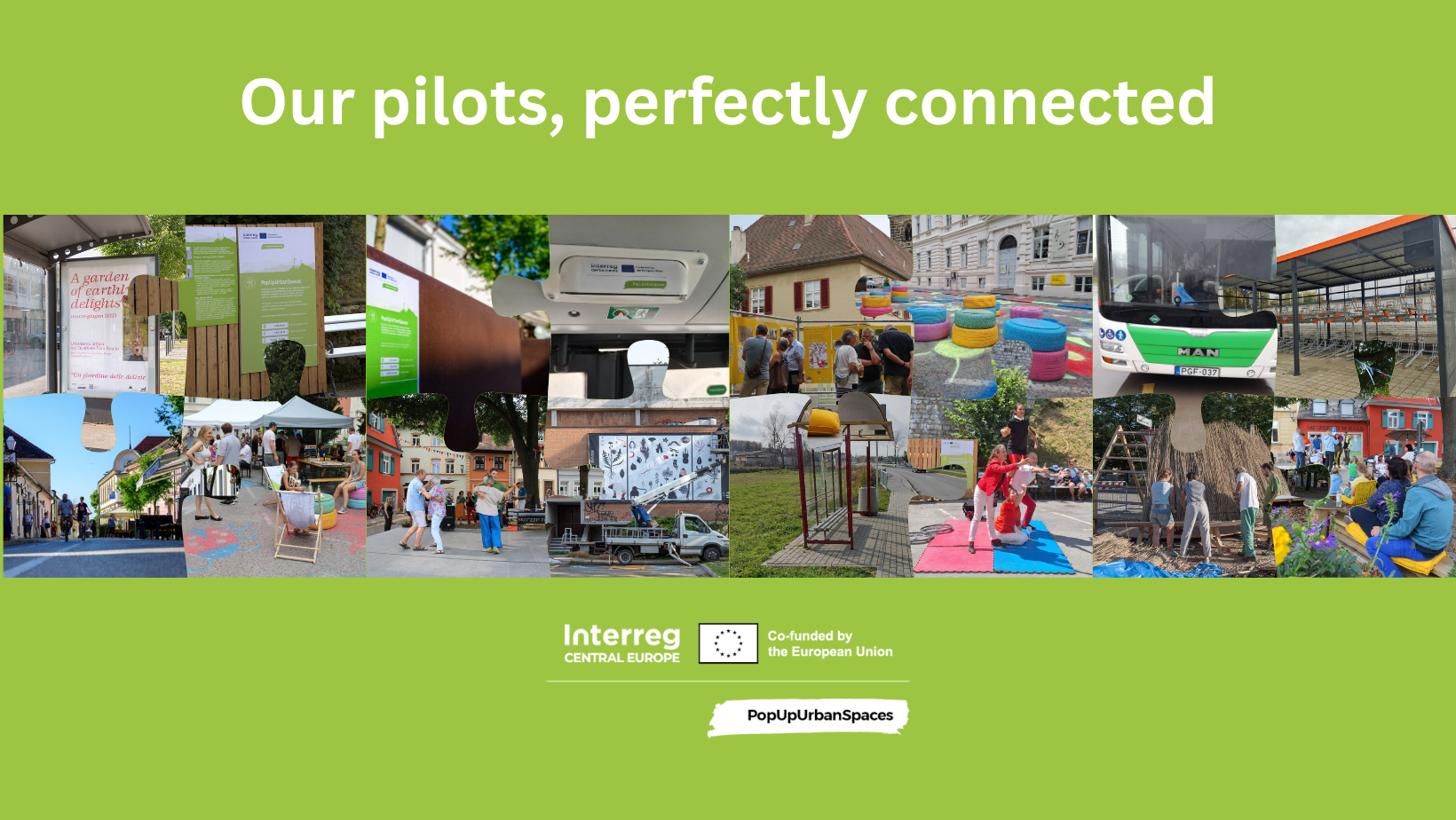
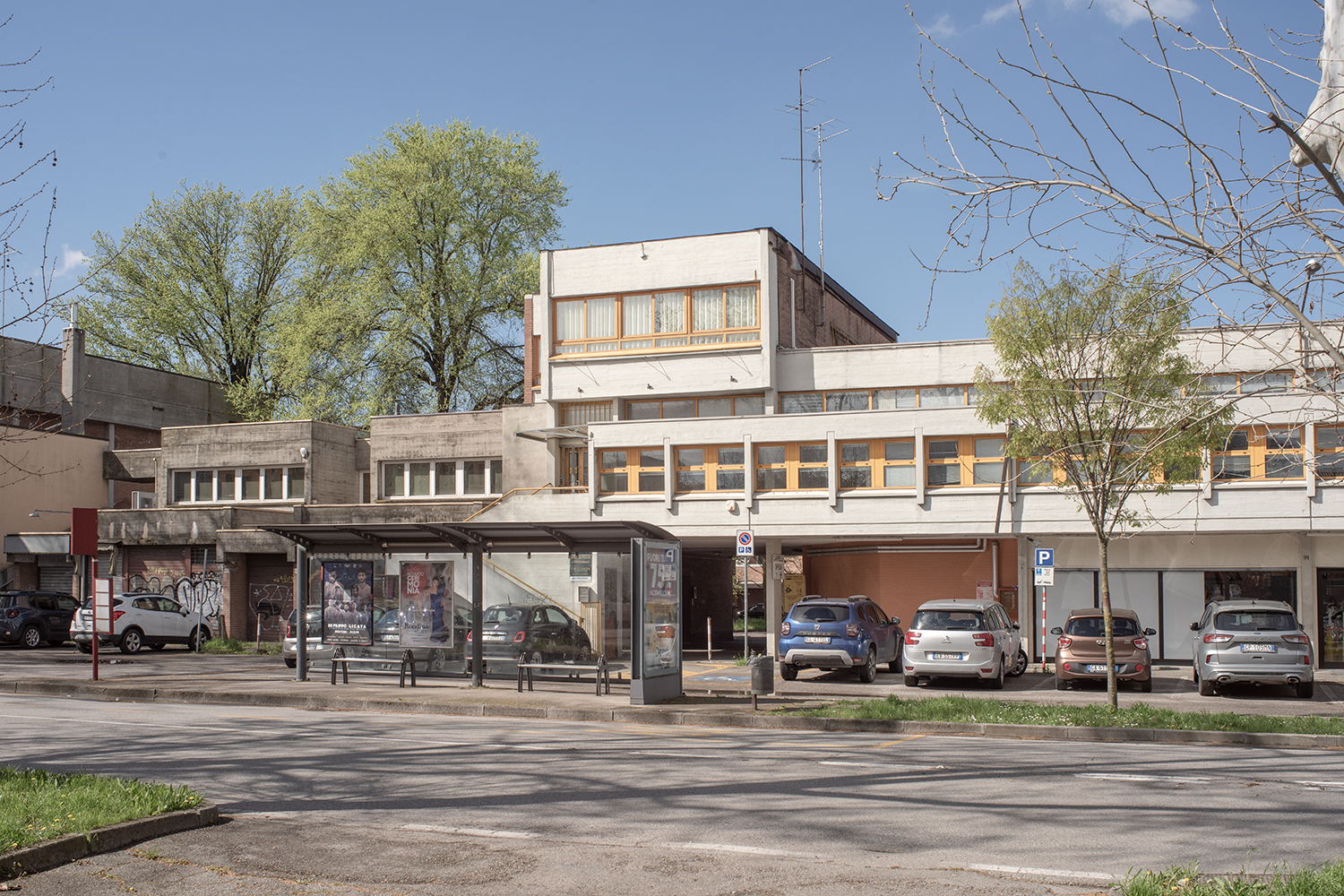
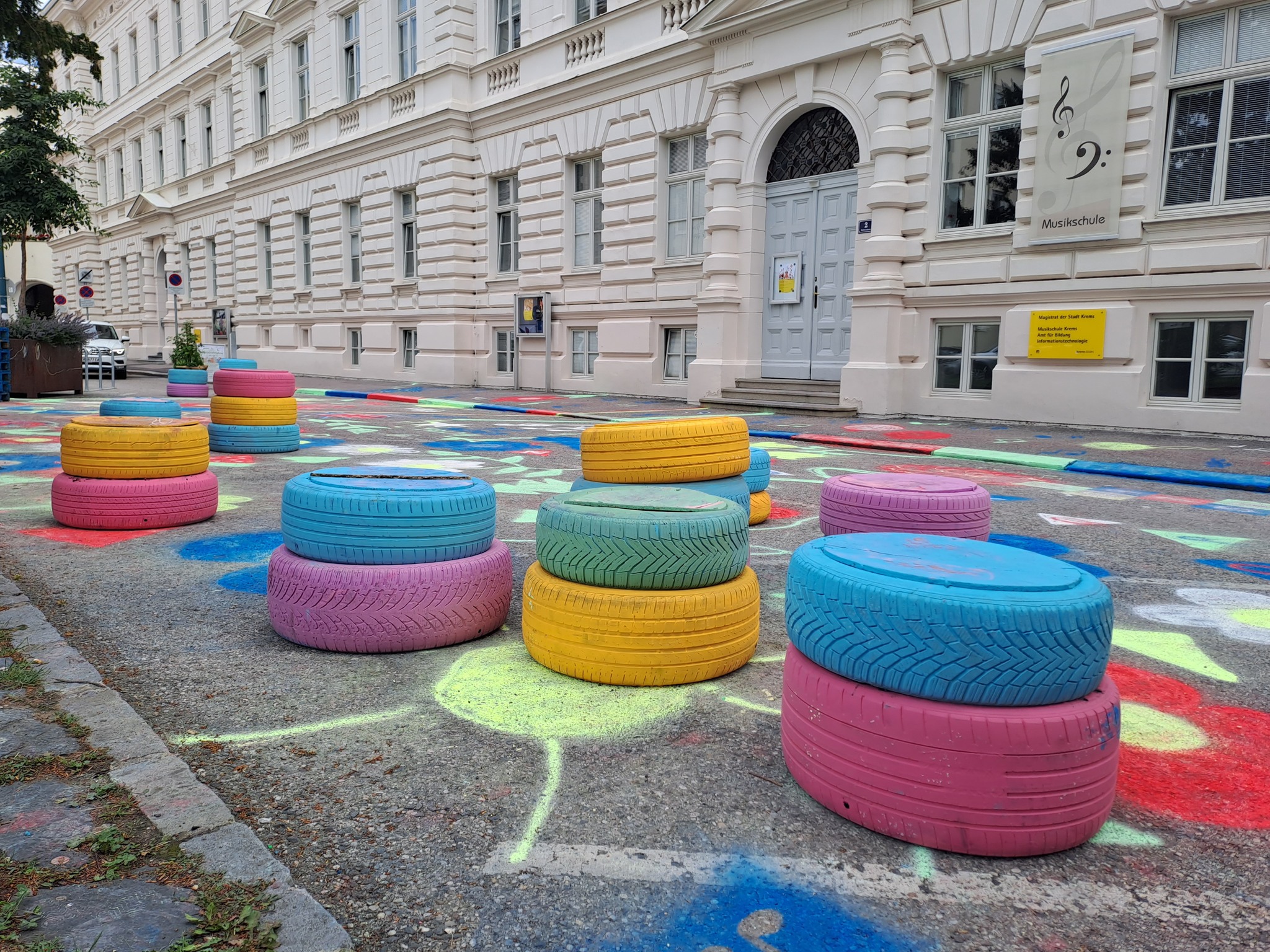
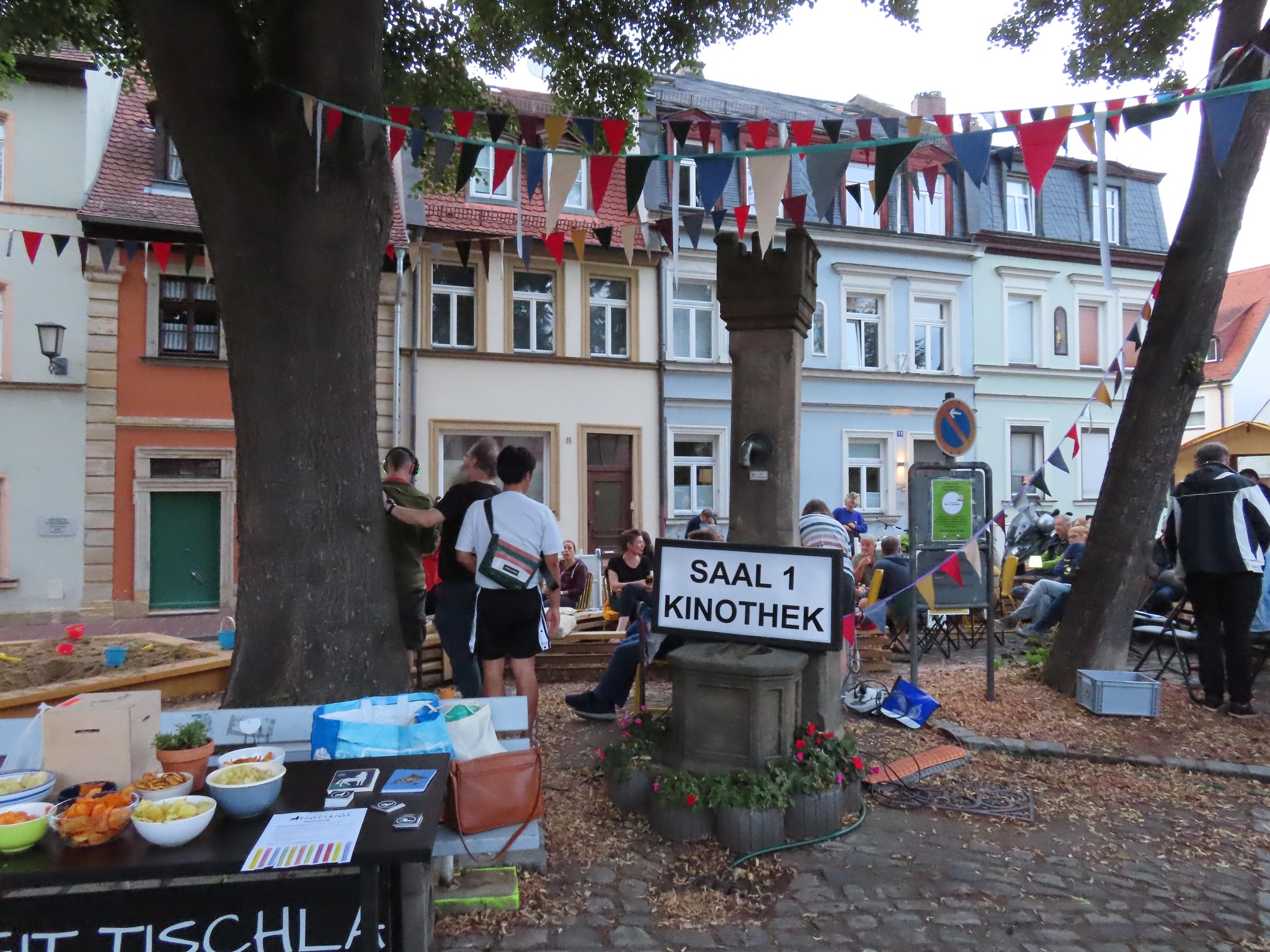
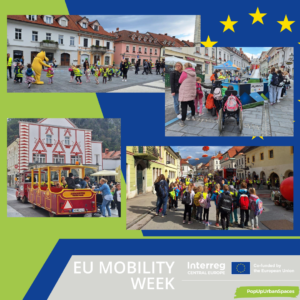
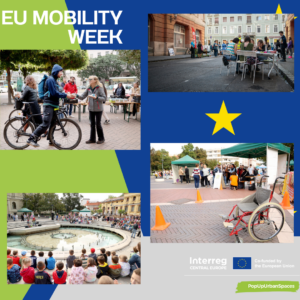
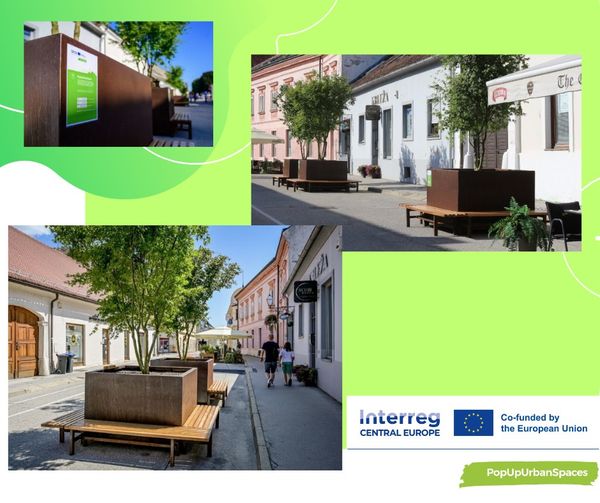
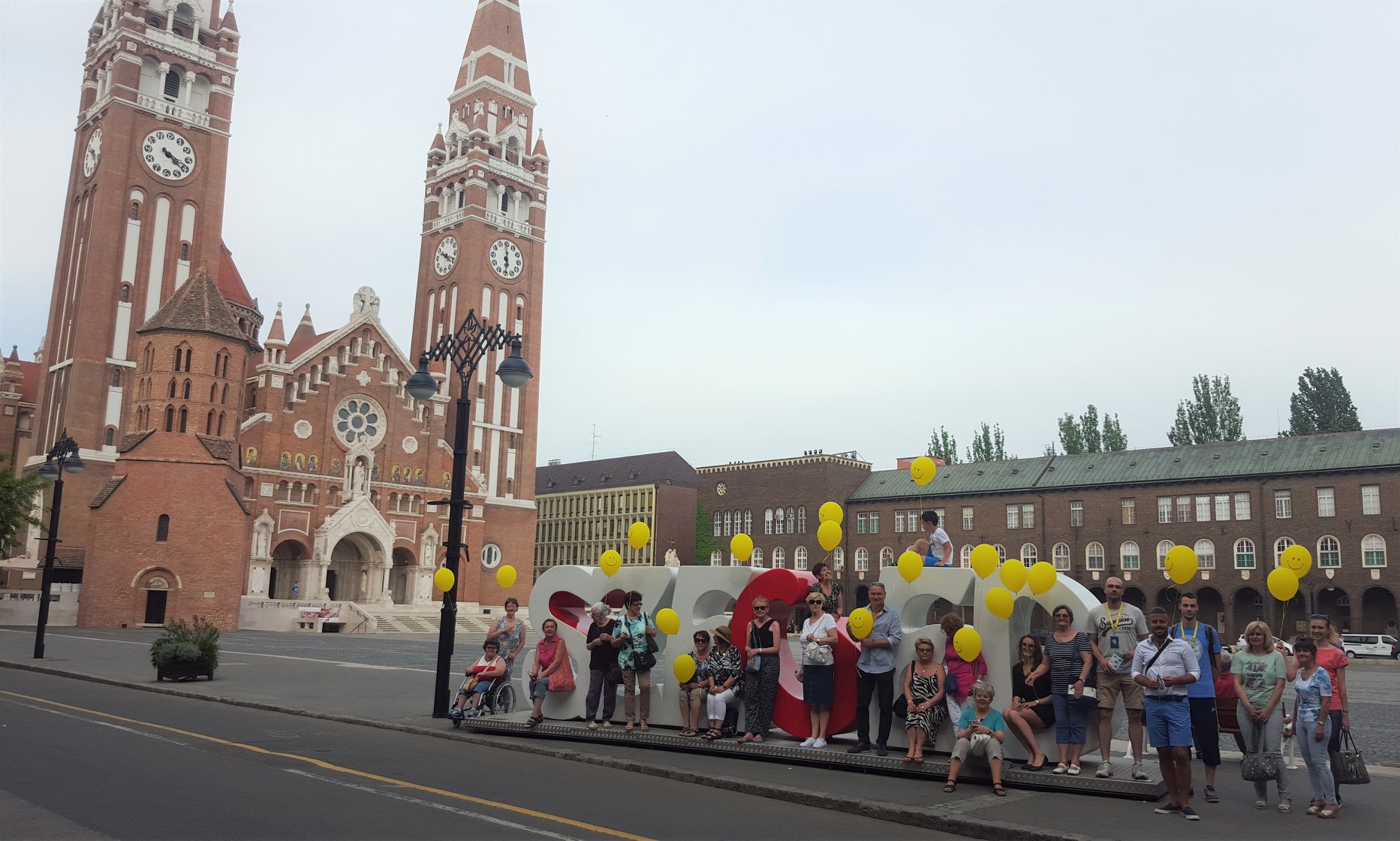
Throughout the project, pilot cities implemented pop-up interventions based on tactical urbanism, placemaking and tactical transit principles, allowing citizens and decision-makers to experience how streets and public spaces could function with less space dedicated to cars. At the same time, partners designed and implemented digital communication campaigns that explained the environmental, social and health impacts of car-oriented mobility and promoted walking, cycling and public transport.
By combining practical demonstrations with targeted communication, the project increased awareness, encouraged behavioural change and provided municipalities with practical methods, tools and recommendations that can be replicated in other cities across Central Europe.
Project partnership
Project partners

Lead partner
Municipality of Kamnik
Department of development and investments – European projects office
Project partner
Total partner budget
190,378 €
Urban and Rural Development Planning Unit
Total partner budget
179,200 €
Total partner budget
210,000 €
Total partner budget
210,000 €
Environment dept
Total partner budget
192,617 €
Regional Development and International Cooperation Department
Total partner budget
194,600 €
Total partner budget
280,000 €
World Heritage Office
Total partner budget
198,834 €
Total partner budget
247,765 €
Roadmap
1
Specific problem

A key challenge that hinders making urban mobility systems in Central Europe more sustainable (that would necessitate the drastic reduction of car use) is that most people are not willing to abandon cars and shift to a combination of public transport, micro-mobility, and active forms of transport (walking and cycling). Key facts of this challenge:
2
Main objective

The project was designed to achieve the following main objective: to enable the public sector and related entities in cities functional urban areas to encourage changes in the travel behaviour of citizens and to trigger shifts towards smart and sustainable forms of urban mobility by actively involving citizens in testing innovative green approaches as well as digital technologies, using tactical urbanism approaches.
3
Our approach #1 - Tactical urbanism
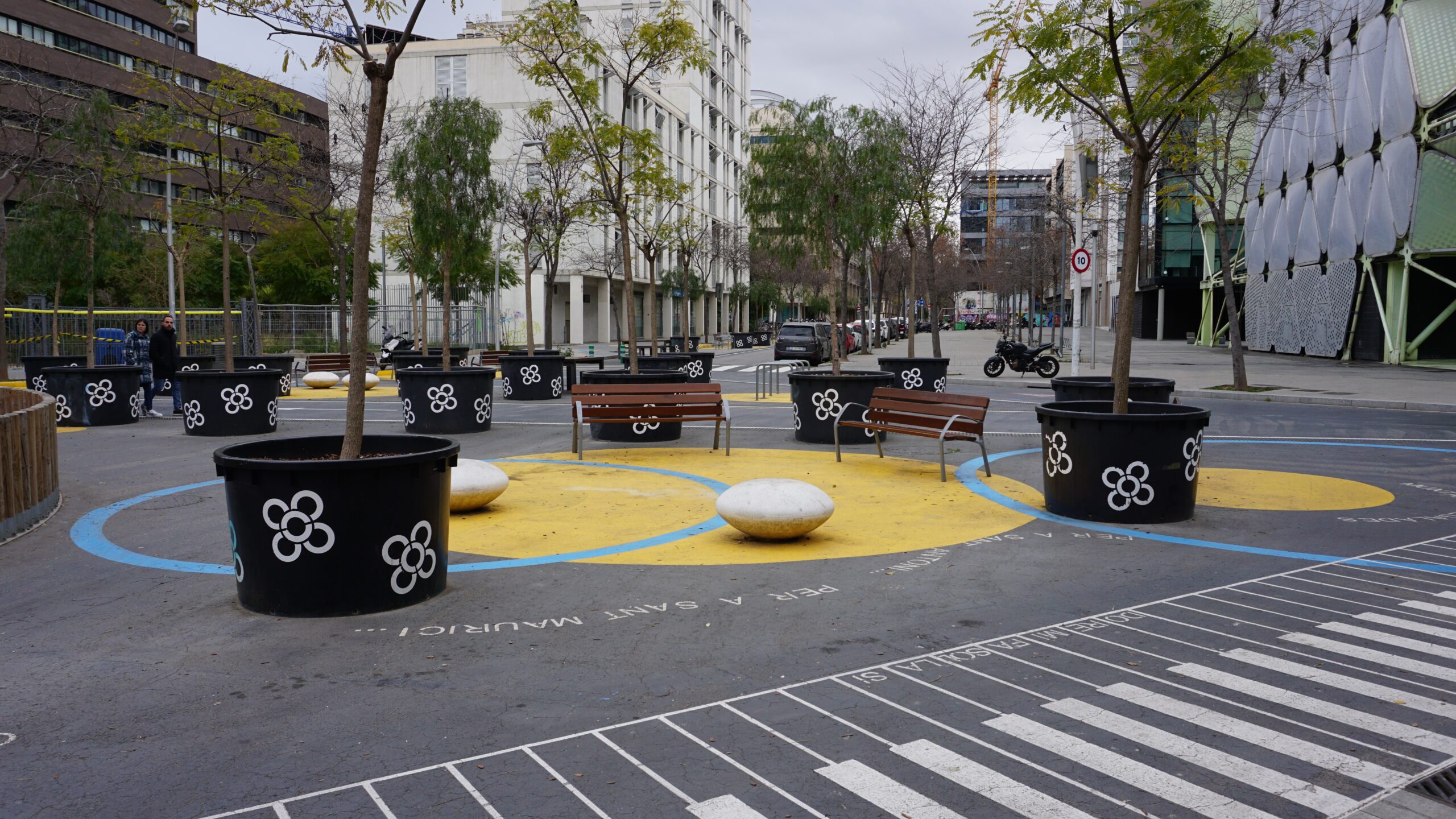
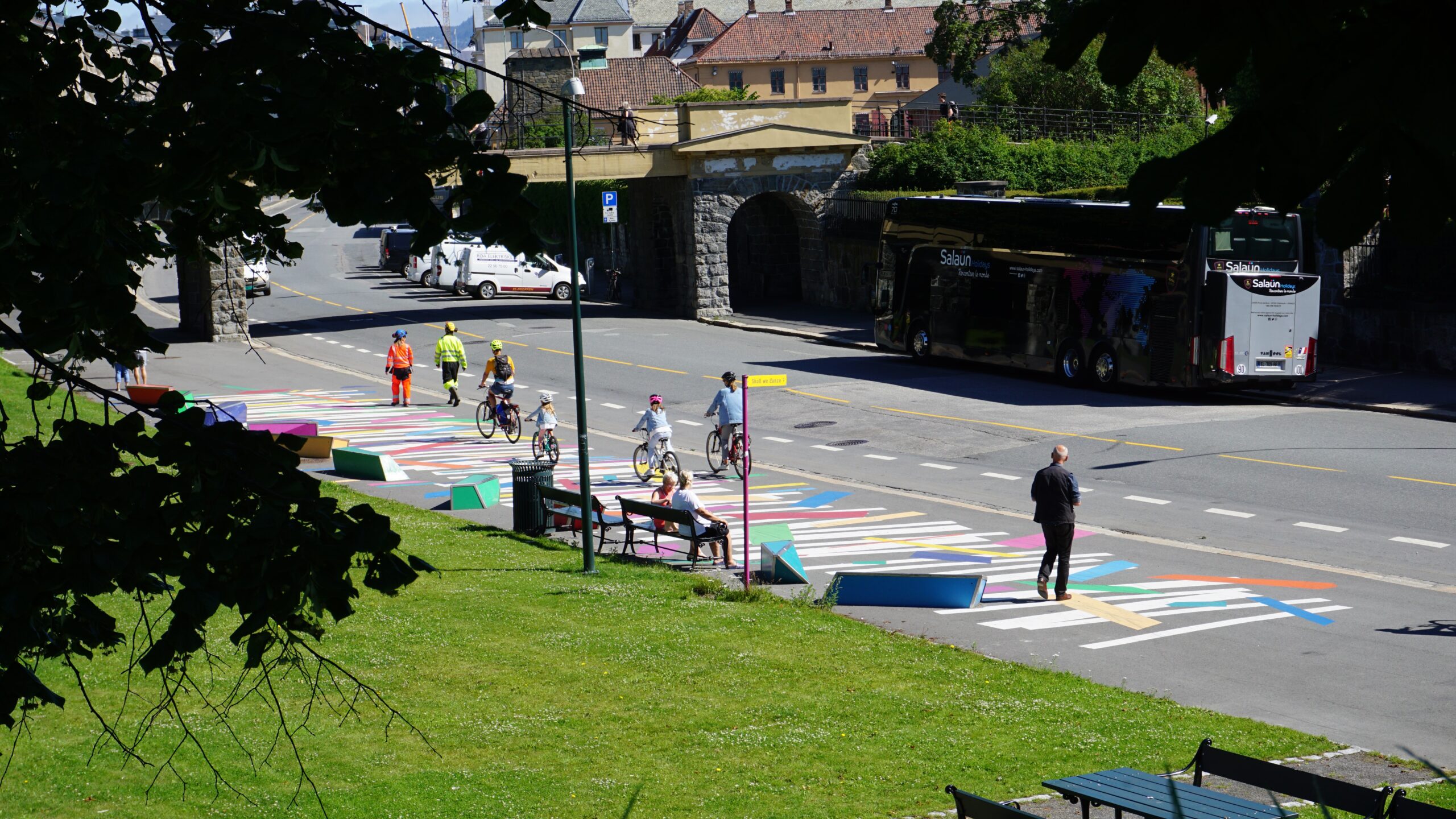
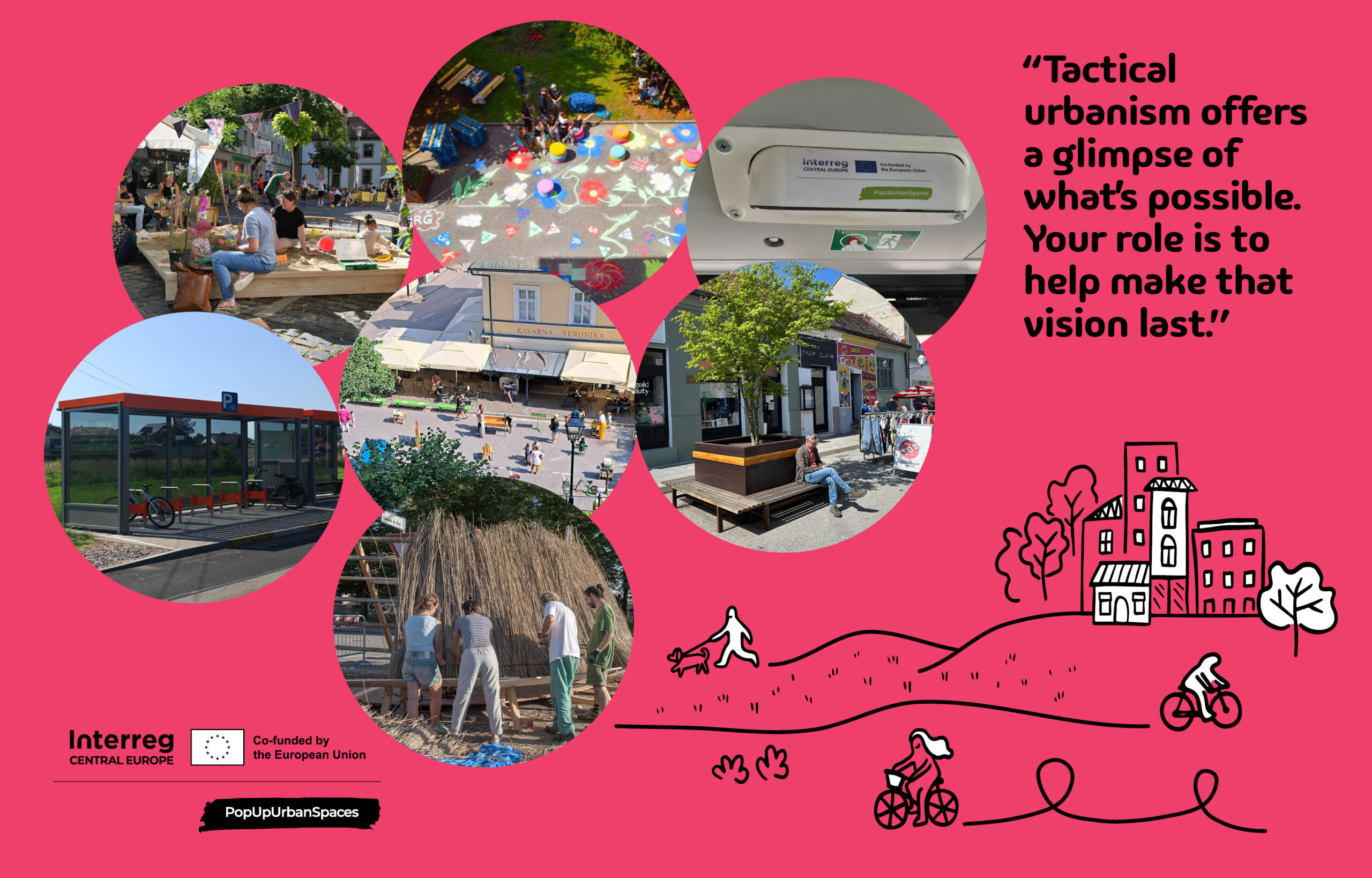
The project applied tactical urbanism as a practical method for testing temporary, low-cost interventions in public spaces before permanent investments are made. Pilot cities implemented a wide range of demonstration actions that allowed citizens and decision-makers to experience alternative street layouts, greener public spaces and more people-oriented urban environments. The pilots proved that temporary interventions are an effective way to gather feedback, build public support and reduce the risks associated with permanent urban transformations.
4
Our approach #2 - Tactical transit
The project demonstrated how tactical transit measures can improve public transport accessibility and the passenger experience through temporary, low-cost interventions. Pilot cities tested innovative solutions around public transport stops, multimodal connections and passenger facilities, providing valuable evidence that small-scale improvements can make public transport more attractive and user-friendly while supporting sustainable urban mobility.
5
Our approach #3 - Campaigning

The project successfully applied its "Show & Tell" approach by combining pilot actions with targeted digital campaigns. While the pilot interventions allowed citizens and decision-makers to experience sustainable mobility solutions first-hand ("Show"), the digital campaigns explained the environmental, social and health benefits of reducing car dependency ("Tell"). Together, these communication activities increased awareness, supported behavioural change and significantly expanded the visibility of the project beyond the pilot cities.
6
Impact, solution
To ensure that the project results remain available and transferable beyond the pilot phase, the partnership developed the project’s jointly developed solution: the PopUpUrbanSpaces Toolkit for Tactical Urbanism, Tactical Transit and Digital Campaigning Interventions. Building on the experiences and lessons learned from all pilot cities, the toolkit provides practical guidance for municipalities and other stakeholders on how to design, implement and replicate people-centred, low-cost mobility interventions. As the project's main solution, it supports the wider uptake of tactical urbanism, tactical transit and digital campaigning approaches across Central Europe.
News
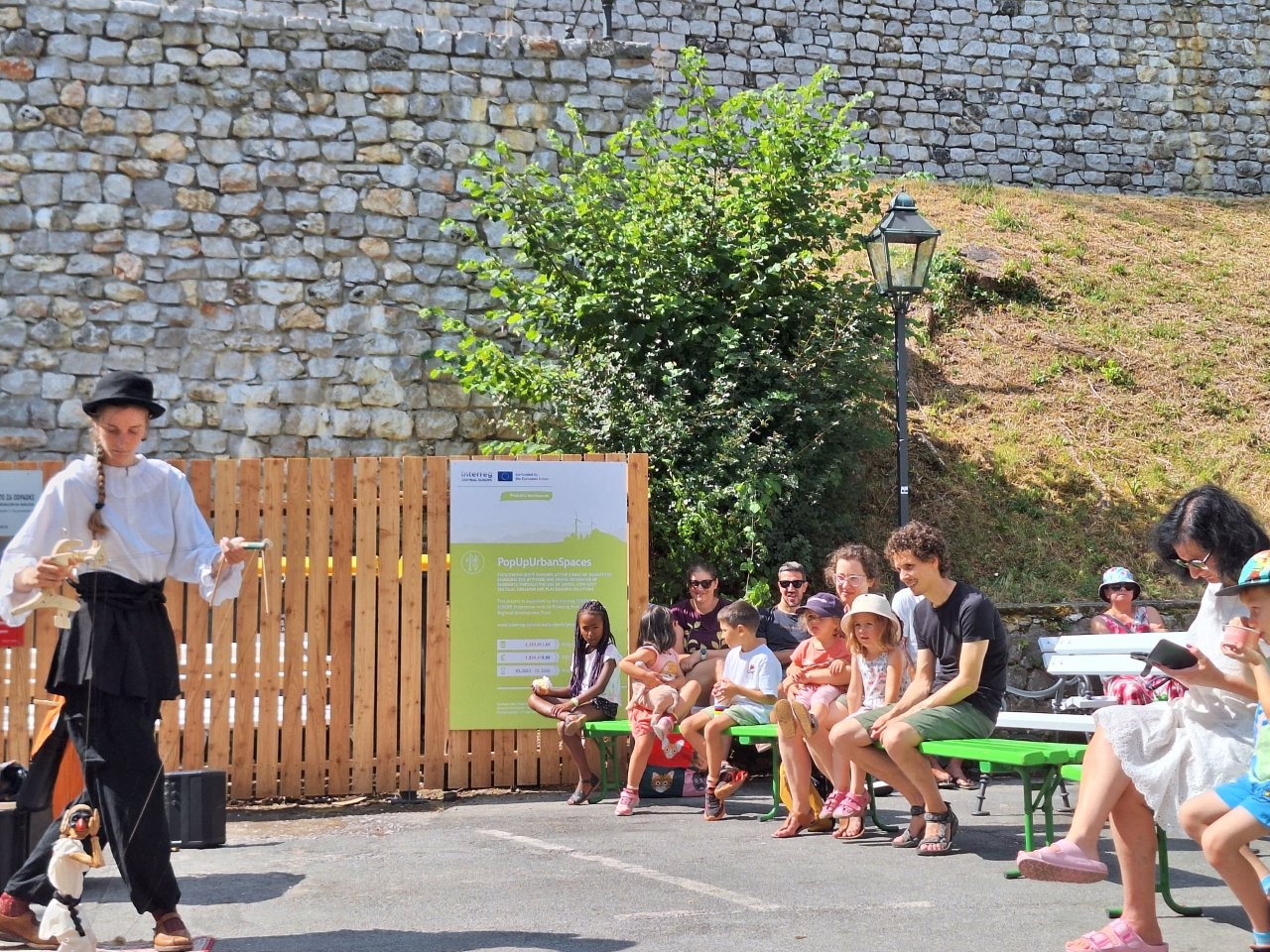
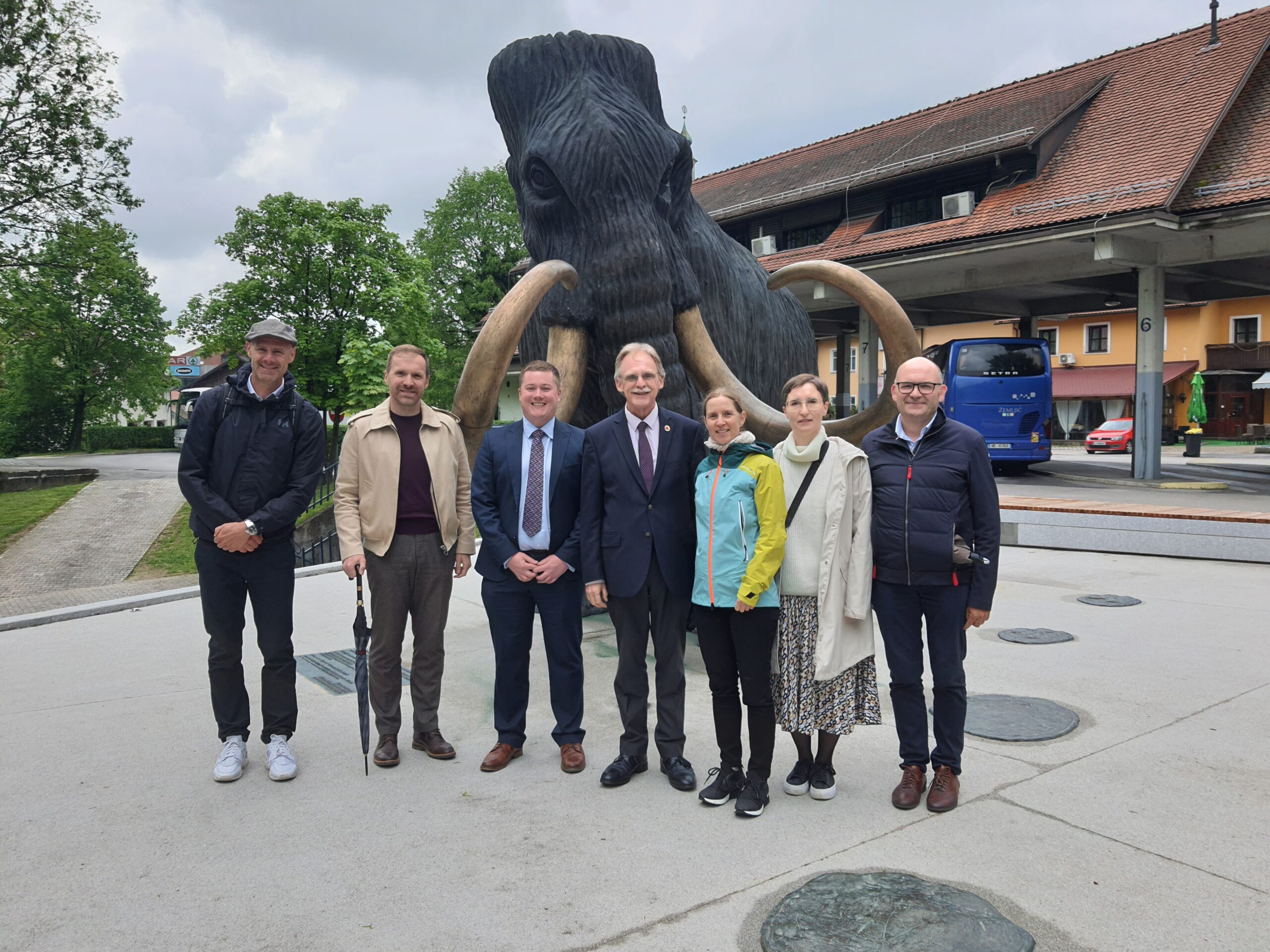
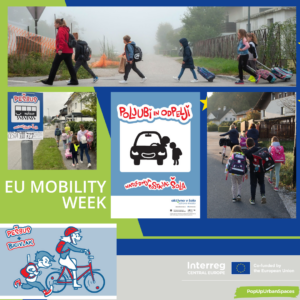
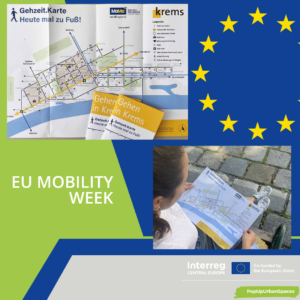

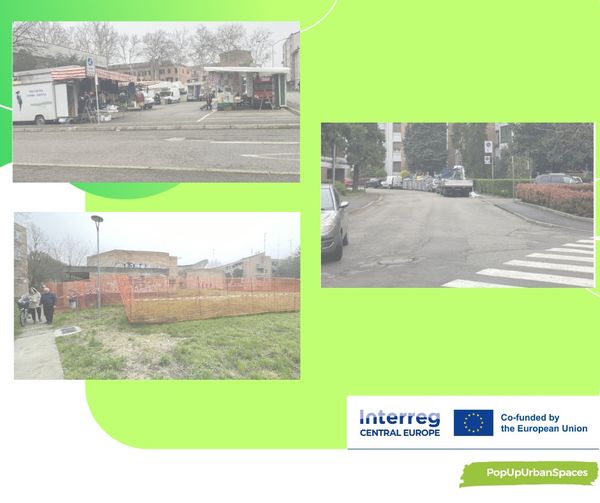
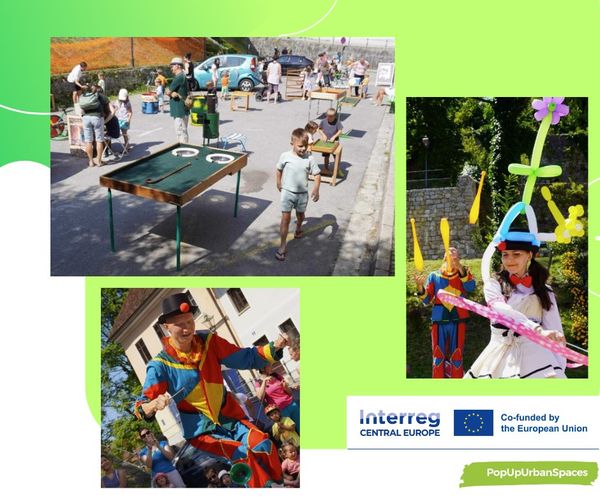


Pilot actions
Outputs
PopUpUrbanSpaces Capacity Building Strategy
The PopUpUrbanSpaces Capacity Building Strategy was developed to help municipalities and other public sector organisations strengthen their knowledge and competencies in tactical urbanism, tactical transit and digital campaigning.
The strategy provides a structured framework for building the skills needed to plan, implement and promote people-centred mobility interventions. It supports local authorities in encouraging more sustainable travel behaviour and can be used as a practical reference for future capacity-building activities across Central Europe.
Type of output: Strategies and action plans
PopUpUrbanSpaces tool kit for tactical urbanism, tactical transition and digital campaigning interventions
The PopUpUrbanSpaces Toolkit is the project's main jointly developed solution. It brings together the knowledge, experiences and lessons learned from all pilot cities into a practical guide for municipalities and mobility professionals.
The toolkit provides step-by-step guidance on planning, implementing and communicating tactical urbanism, tactical transit and digital campaigning interventions. It is designed primarily for small and medium-sized cities and helps local authorities replicate successful approaches to create greener, more people-centred urban environments long after the project has ended.
Type of output: Solutions
PopUpUrbanSpaces territorial action plans
The Territorial Action Plans translate the project's results into concrete local actions. Each territorial partner developed an action plan tailored to its own city, identifying future priorities and practical measures for promoting tactical urbanism, tactical transit and digital campaigning.
The action plans support municipalities in integrating the project's approaches into their long-term planning processes, ensuring that the knowledge and experience gained during PopUpUrbanSpaces continue to shape more sustainable urban mobility beyond the project's lifetime.
Type of output: Strategies and action plans
PopUpUrbanSpaces
The project lead partner is responsible for the content of this project website.