


Project overview
Creative craft for industrial symbiosis in circular economies
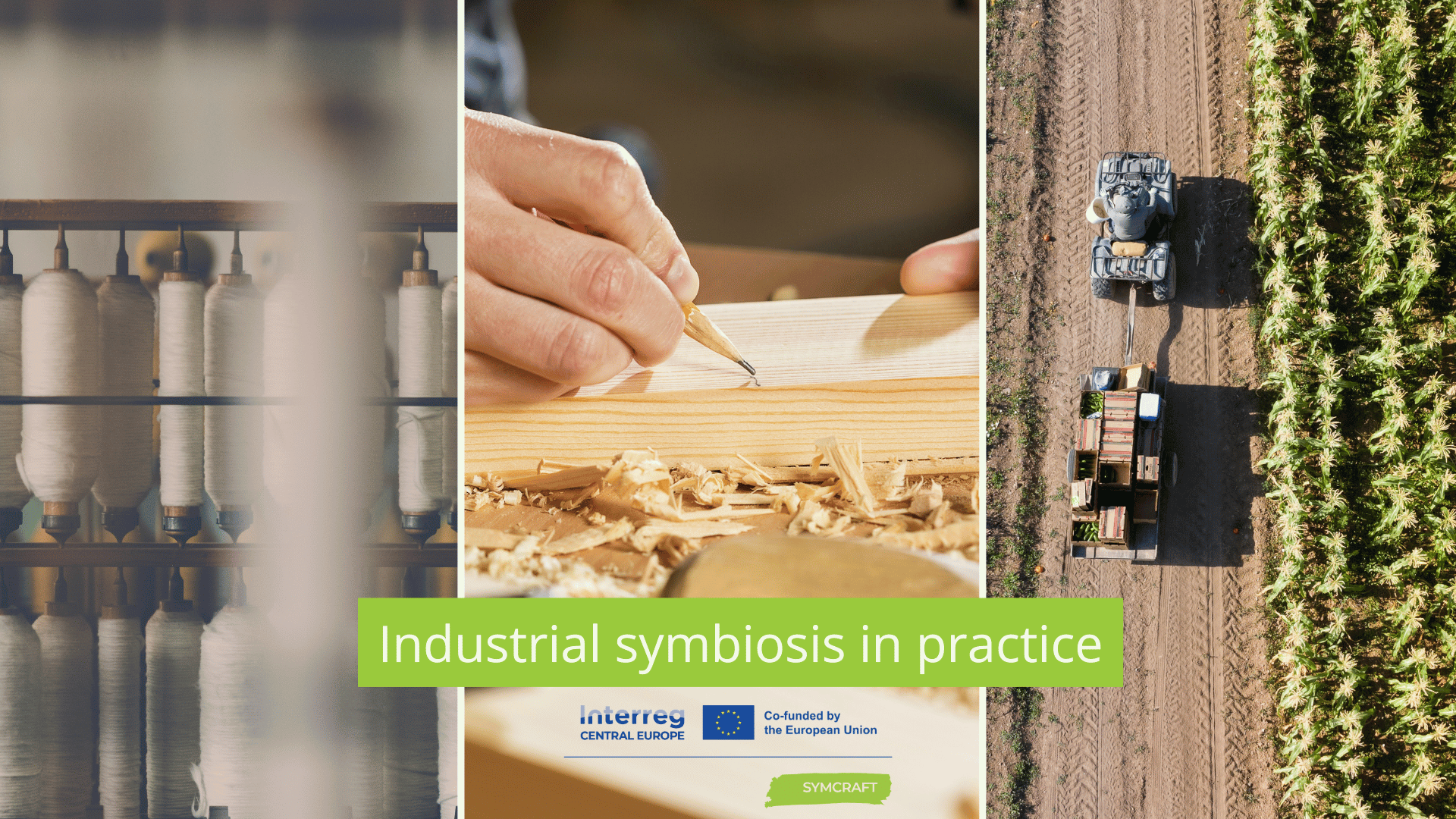
Approaches to circular economy are often fragmented and inefficient. They suffer from a lack of cooperation and symbiosis across sectors. The SYMCRAFT project fosters collaboration between the craft sector and key industries like textiles, wood, furniture, and agri-food. The partners focus on the challenge of repurposing industrial waste from these sectors into innovative craft products. They pioneer eco-friendly business models tailored to the craft sector and pave the way for a more environmentally conscious and economically viable future.
-
2,17m €
-
Project Budget
-
80%
-
of the Budget is funded by ERDF
-
8
-
Countries
-
9
-
Regions
-
11
-
Partners
-
3
-
Pilots
Duration
Start date
End date
Project progress
About the project
SYMCRAFT project aims to advance circularity in the agro-food, textile, and wood/furniture sectors by designing resource-efficient business ecosystems. Through symbiotic craft practices, the project fosters sustainable economies across Central Europe.
The main objectives of the SYMCRAFT project are:
1. To promote the circular economy in Central Europe:
The project focuses on promoting the circular economy in Central Europe by utilising the craft sector (including craft SMEs and socially innovative craft practises) to foster industrial symbiosis.
2. Building bridges between crafts and industry:
SYMCRAFT aims to demonstrate how craft creativity can contribute to the circular economy, particularly in the textiles, wood/furniture and agri-food sectors.
3. Extending industrial symbiosis beyond industry:
SYMCRAFT expands the concept of industrial symbiosis to include other social practises and economic processes, promoting a holistic approach to the circular economy.
4. Addressing fragmented approaches to the circular economy:
The project aims to overcome the fragmentation of the circular economy, where medium to large companies apply formalised strategies while smaller production units rely on spontaneous, informal approaches.
5. Creating cross-border cooperation:
SYMCRAFT promotes strategic opportunities for cooperation between economic sectors that are territorially close to each other and that have previously had limited opportunities for co-operation.
Favouring different stakeholder groups:
• Medium to large industries: Gain creative solutions to implement circular practises.
• Craft SMEs: Discover sustainable ways to grow their business.
• Non-profit organisations, local authorities and citizens: Benefit from the expanded social networks fostered by the craft sector.
The project will deliver the following:
• 1 strategy and 1 action plan.
• 3 pilot actions focussing on reuse, eco-business models and cooperation agreements.
• 3 solutions for waste reuse, innovative business models and co-operation models.
• A cross-border network to continue co-operation after the end of the project.
Project partnership
Project partners

Lead partner
t2i - technology transfer and innovation
N/A
Project partner
N/A
Enterprise Support and Human Resources Development
Trenčín Regional Chamber
N/A
Entrepreneurship Support and Development, Coordination and International Cooperation Sector
Independent unit of the Federal Department of Trade and Crafts in the Austrian Federal Economic Chamber
N/A
N(A
Textiles Zentrum Haslach
Roadmap
News







Events





Pilot actions
Outputs

SYMCRAFT Strategy

Action Plan

SYMCRAFT Solution 1: Turning Industrial Waste into New Products
SYMCRAFT Solution 2: Turning Industrial Waste into Business Opportunities
From Waste to a New Product - Replication Guidlines
From Product Idea to Circular Business - Replication Guidlines
From Cooperation to Circular Partnership - Replication Guidlines
SYMCRAFT
The project lead partner is responsible for the content of this project website.