
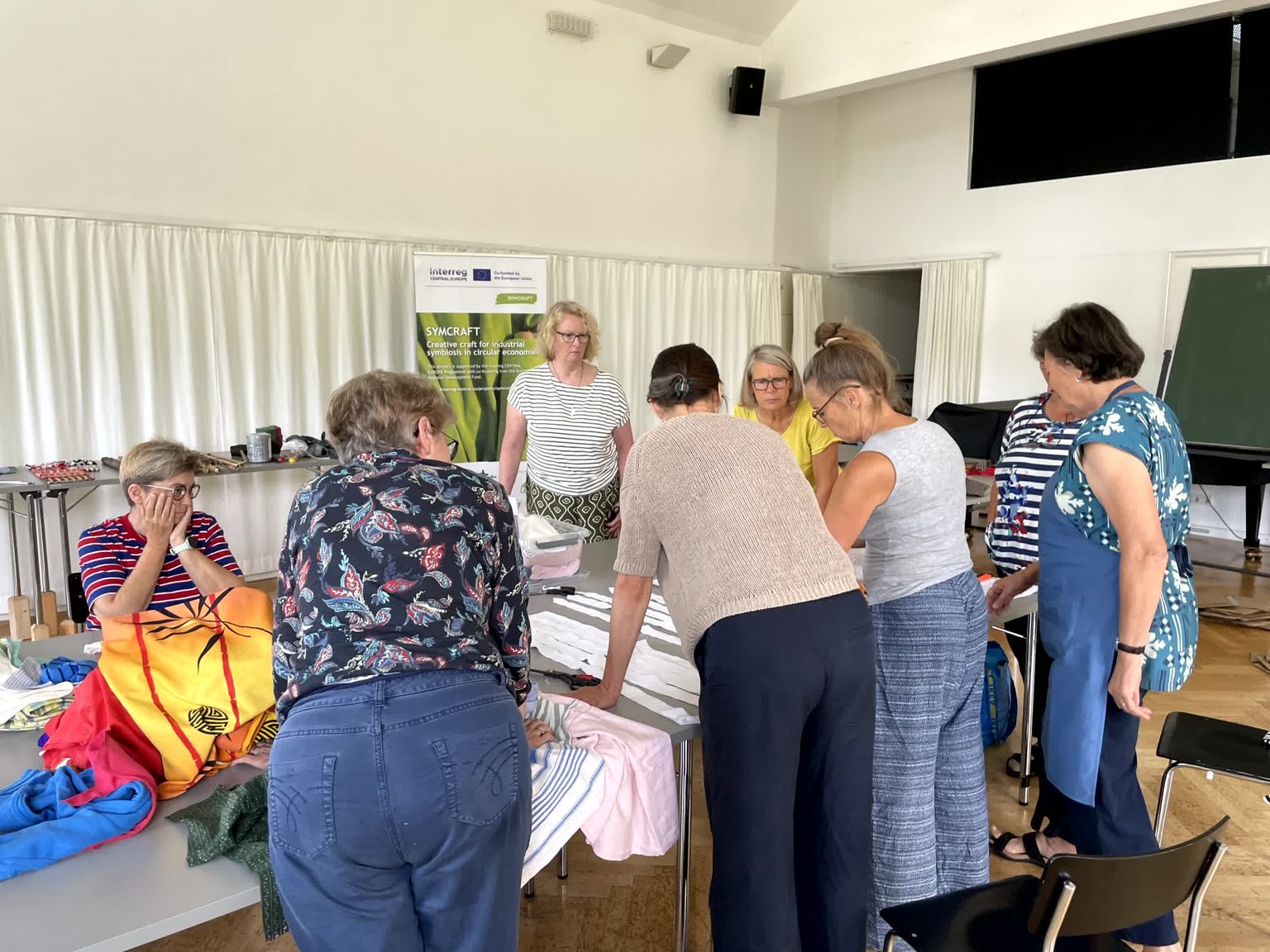
On 20 July 2026, a field trip brought participants to four textile companies in the region, offering a firsthand look at local textile production and its potential for new collaborations within the SYMCRAFT project.
Participants explored different production processes, machinery and materials – from linen and jacquard fabrics to cords and ropes, fire hoses and technical safety textiles.
Four companies, four approaches to textile production
At Schernberger Seiltechnik in Putzleinsdorf, the craft of rope-making has been combined with modern braiding and plastic extrusion since 1790. The family-owned company manufactures cords, ropes and technical braids for a wide range of applications.
Luxury Weaving in Oepping specializes in high-quality jacquard fabrics, producing custom-made textiles from selected natural fibres such as linen, wool, cashmere and silk.
The Vieböck Linen Mill in Helfenberg has been weaving since 1832. Today, the company produces linen and cotton fabrics and transforms them into a variety of home textiles in its own sewing workshop.
A. Haberkorn in Freistadt has been manufacturing technical textiles since 1919. Its products include fire hoses, tubular fabrics, ropes and tapes, as well as personal protective equipment.
From textile production to new collaborations
The field trip was particularly relevant to SYMCRAFT because some of the companies visited are already contributing to collaborations that emerged through the project.
The foundations for these connections were laid at the first SYMCRAFT networking event, held on 14 March 2025 at the Textile Center Haslach. The event brought textile companies together with artists and craftspeople to explore new forms of collaboration and, in particular, new possibilities for materials left over from textile production.
Materials such as selvedges, yarn scraps and fabric remnants can easily be seen as waste. Through the collaborations initiated by SYMCRAFT, however, they become a starting point for experimentation. Artists, craftspeople and companies work together to explore how these materials can be reimagined and transformed into new products and applications.
Understanding production, strengthening collaboration
Visiting the companies provided more than an overview of textile manufacturing. Seeing where materials come from, how they are produced and which properties they have helps collaborators better understand what can be done with production remnants.
This knowledge is particularly valuable for the collaborations emerging through SYMCRAFT. A deeper understanding of production processes and materials can open up new possibilities for reuse, experimentation and the development of circular solutions.
The field trip highlighted both the diversity of textile production in the Mühlviertel region and the potential that emerges when industry, crafts and the creative sector come together.
This is at the heart of SYMCRAFT: connecting different fields of knowledge, creating space for new collaborations and exploring how materials, skills and resources already present in a region can contribute to a more circular economy.