
Shannia Christanty Unsplash
Project overview
Circular and digital renewal of central Europe construction and building sector
The construction industry heavily contributes to resource consumption, waste generation, and greenhouse gas emissions. The adoption of circular and digital practices can help reduce the environmental impact of the sector. The ReBuilt project promoted these approaches in an education programme and deployed new solutions. The partners also designed a transnational circular and digital construction strategy that builds on green labelling, end-of-waste criteria, and green public procurement.
-
2,40m €
-
Project Budget
-
80%
-
of the Budget is funded by ERDF
-
9
-
Countries
-
13
-
Regions
-
14
-
Partners
-
4
-
Pilots
Duration
Start date
End date
Project progress
Project partnership
Project partners

Lead partner
Slovenian National Building and Civil Engineering Institute
Department for Materials
Project partner
Project Office
Total partner budget
232,950 €
Sector of development
Total partner budget
155,470 €
NA
Total partner budget
117,407 €
DEVELOPMENT
Total partner budget
145,809 €
Faculty of Civil Engineering, Institute of Material Technology, Building Physics and Building Ecology
Total partner budget
193,565 €
NA
Address
Tkalčićeva 73 A 10000 Zagreb
Country
Croatia (HR) Web
https://www.fininfo.hr/Poduzece/Pregled/por-consult/Detaljno/737367
Total partner budget
173,308 €
NA
Total partner budget
151,315 €
NA
Total partner budget
127,940 €
Department of Materials and Structures
Total partner budget
108,488 €
NA
Total partner budget
113,450 €
NA
Total partner budget
116,749 €
NA
Total partner budget
140,044 €
Department of Civil Engineering, Institute for Materialss and Building Research
Total partner budget
207,950 €
Roadmap
1
THE CHALLENGE WE ADDRESSED

The construction sector remains one of the most resource-intensive industries in Europe, accounting for over 50% of extracted materials, significant water and energy consumption, and more than one-third of total waste generation and greenhouse gas emissions.
At the start of the ReBuilt project, these challenges highlighted the urgent need to accelerate the transition toward circular, resource-efficient, and digitally supported construction practices.
Through ReBuilt, partners worked to address these systemic barriers and support the uptake of secondary, recycled, and bio-based construction materials across Central Europe.
2
KEY BARRIERS IDENTIFIED IN CENTRAL EUROPE
ReBuilt identified several common barriers slowing down the transition to circular construction across Central Europe:
- Limited market acceptance of secondary raw material (SRM)-based products
- Insufficient traceability, quality assurance, and reliable material data
- Fragmented legal and administrative pathways for reuse and End-of-Waste implementation
- Limited examples of scalable circular economy business models
- Weak cross-border cooperation and lack of specialised training opportunities
- Logistic and supply-chain challenges related to collection, separation, and transport of recyclable materials
- High quality and procurement requirements limiting the use of recycled construction products
- Low public confidence and limited practical experience with circular and bio-based materials
By mapping these barriers, the project created a stronger foundation for practical solutions and regional collaboration.
3
OUR APPROACH

ReBuilt promoted a shift in mindset — from linear construction practices toward circular, digital, and resource-efficient building systems.
The project combined innovation, cooperation, training, and digital tools to connect stakeholders across the value chain and demonstrate that circular construction can be practical, scalable, and economically relevant.
ReBuilt the Mindset. ReBuilt the Future.
4
WHAT REBUILT DELIVERED
ReBuilt delivered practical tools, tested solutions, and strategic cooperation models to strengthen circular construction across Central Europe.
Key achievements include:
- Development of educational and capacity-building activities for circular and digital construction
- Improvement and piloting of technical and digital solutions supporting material reuse and circular workflows
- Strengthening demand-side measures, including green labelling, End-of-Waste approaches, and green public procurement practices
- Support for regional and transnational cooperation between industry, research institutions, and public stakeholders
- Contribution to a long-term strategy for circular and digital construction through regional hubs and knowledge exchange networks
- Increased awareness of sustainable construction materials and circular business opportunities.
These outcomes created a stronger foundation for future circular construction ecosystems in Central Europe.
News
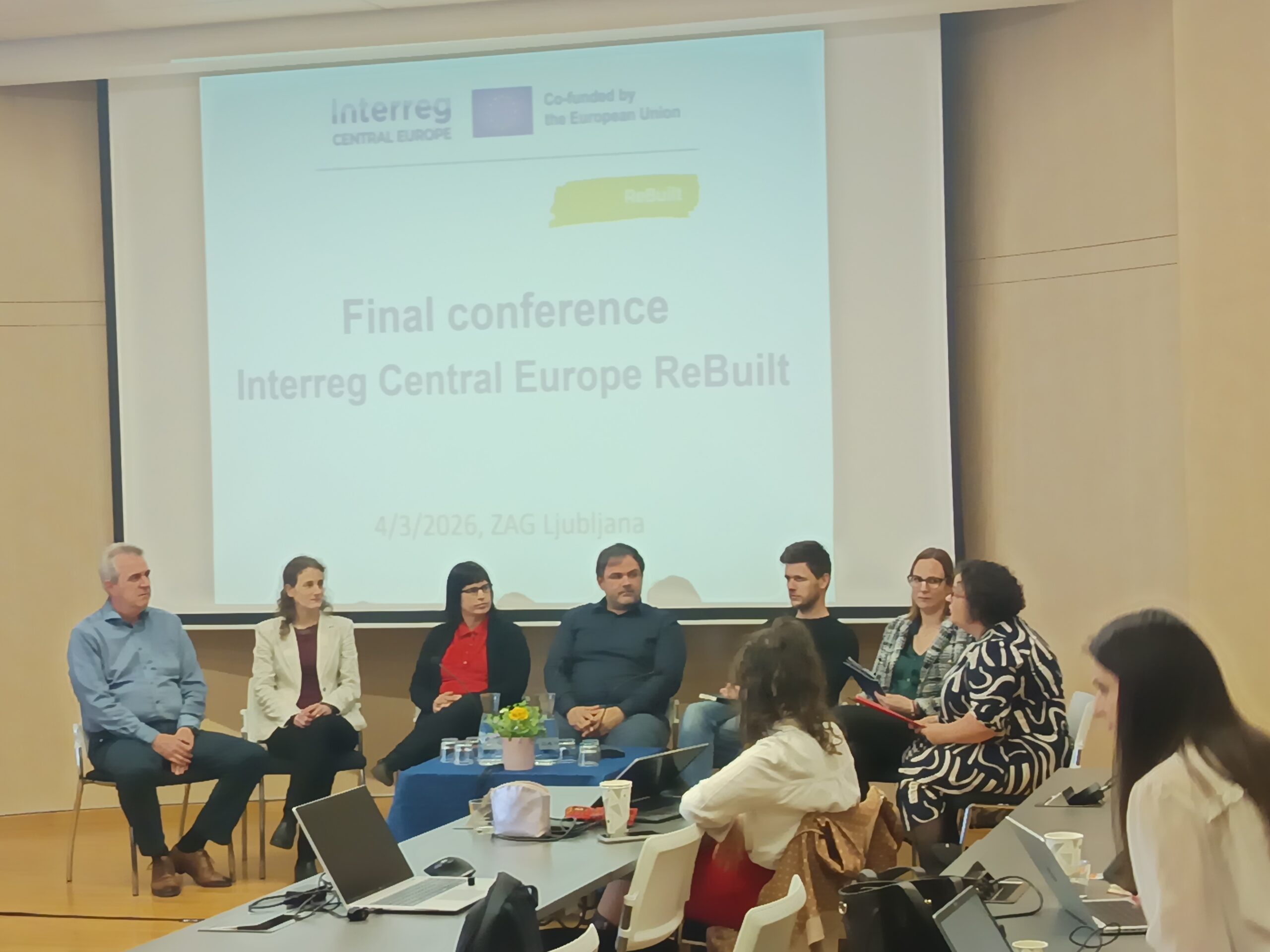


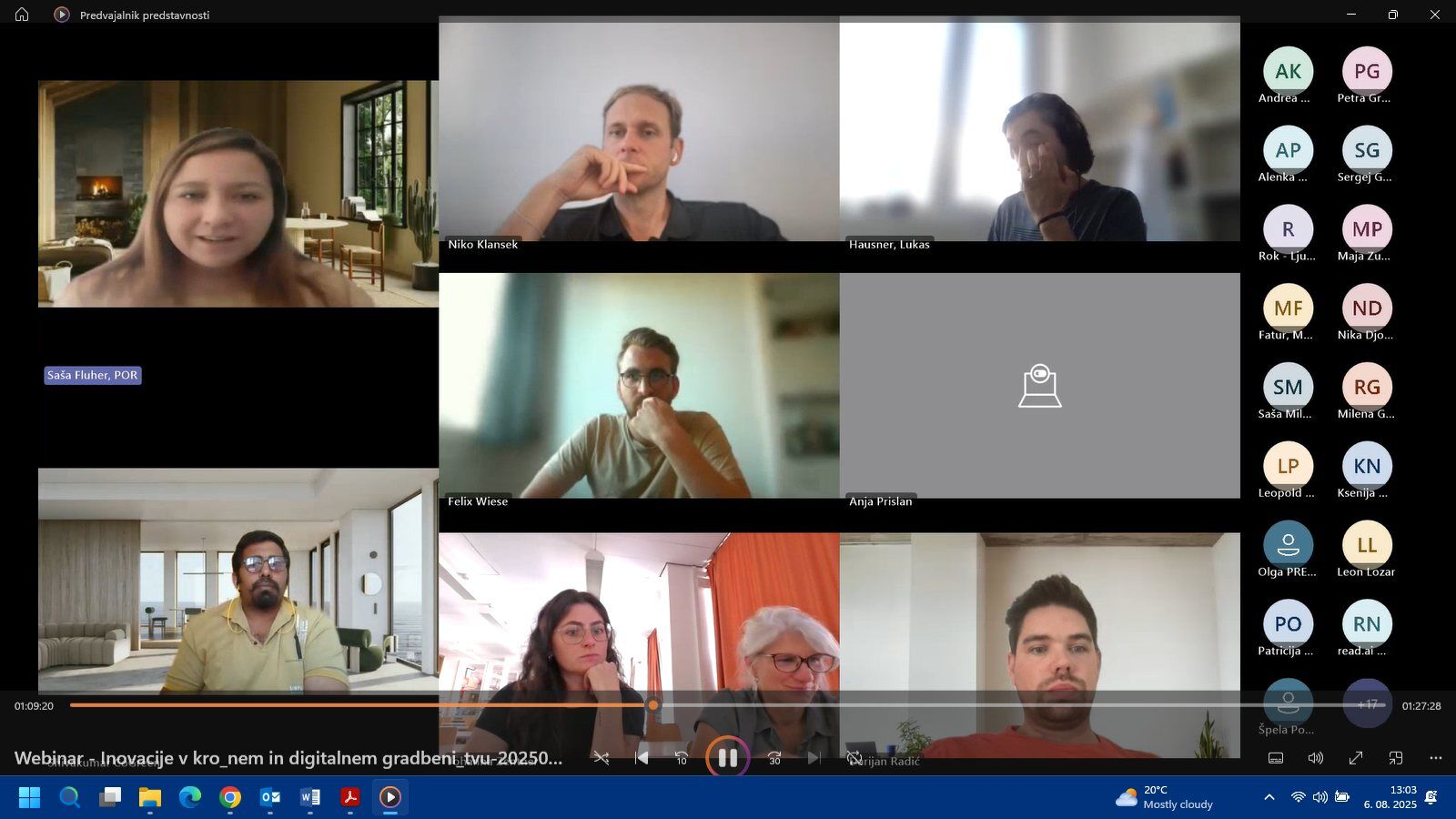
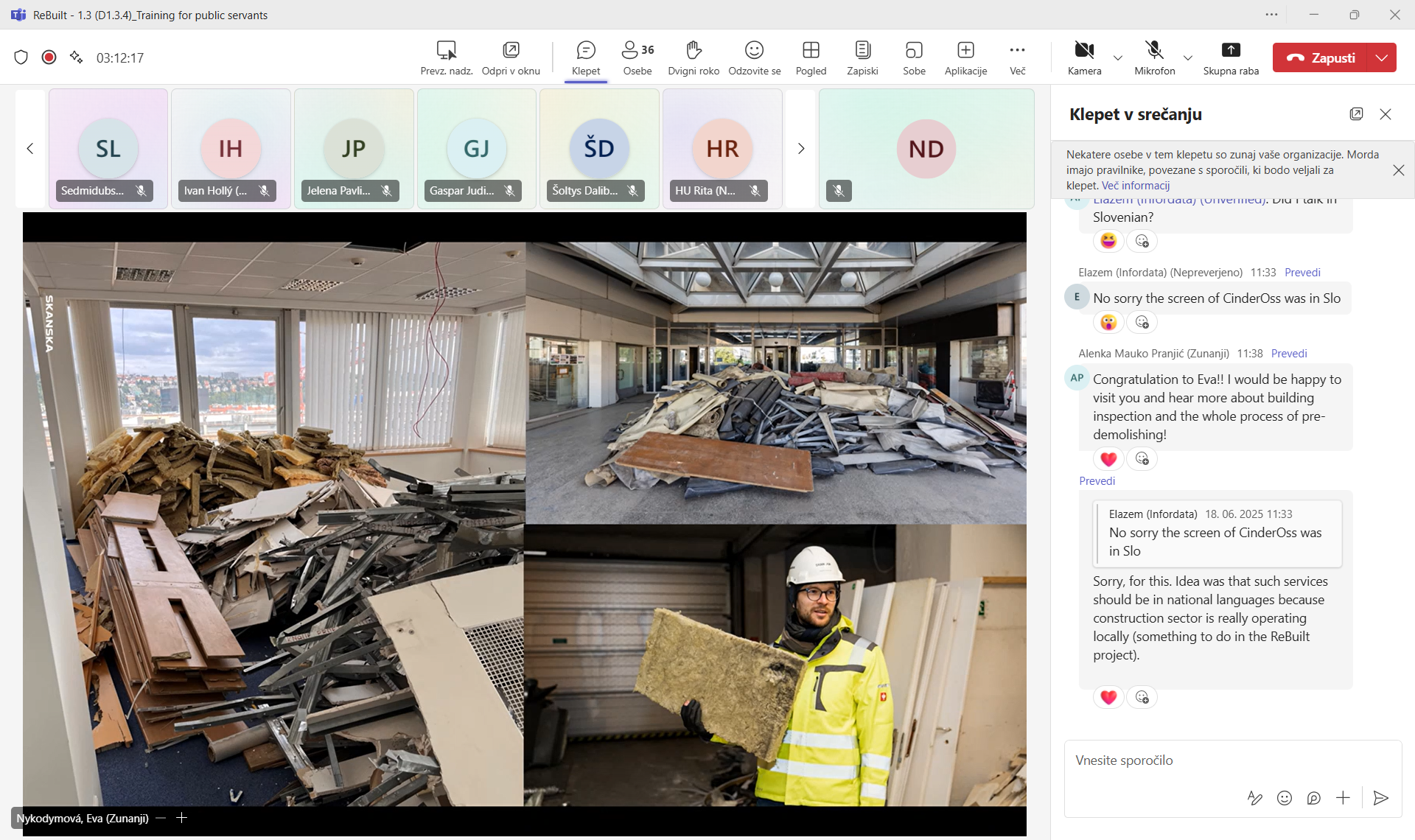



Events
Pilot actions
Outputs
Common Strategy for Circular and Digital Construction in central Europe
The Common Strategy provides a shared strategic framework for accelerating the transition towards circular and digital construction across Central Europe. Developed jointly by project partners and stakeholders, the strategy identifies common challenges, priorities and policy recommendations while promoting stronger cooperation between public authorities, research institutions, industry and business support organisations. It serves as a roadmap for future investments, innovation and skills development in the construction sector.
Type of output: Strategies and action plans
Organisations cooperating across borders
The ReBuilt project established a long-term transnational cooperation network connecting research organisations, higher education institutions, public authorities, business support organisations and companies from across Central Europe. Through joint development, pilot activities and knowledge exchange, partners created lasting cooperation mechanisms that extend beyond the project's lifetime. The partnership continues to collaborate through the ReBuilt Hubs, the common strategy for circular and digital construction, the shared MOOC platform, technical and digital solutions, and the preparation of new European initiatives supporting the transition towards a circular built environment.
Type of output: Strategies and action plans
Pilot testing of ReBuilt training programme, including MOOC
The jointly developed ReBuilt training programme was tested across Central Europe through pilot activities involving students, professionals, SMEs and public authorities. The programme combines face-to-face learning with an online Massive Open Online Course (MOOC), providing accessible education on circular construction, digitalisation, sustainable building practices and innovative technologies. Feedback collected during pilot testing was used to improve the learning materials and ensure their practical relevance for different target groups.
Type of output: Strategies and action plans
Jointly Developed Cross-National Training Programme: Fit for Circular and Digital Construction to boost circular economy transition in central European construction sector
Partners jointly developed an innovative cross-national training programme that equips learners with the knowledge and skills needed for the transition towards circular and digital construction. The programme integrates technical expertise, digital tools, circular economy principles and practical case studies into a modular curriculum that can be adapted by universities, vocational education providers, business support organisations and lifelong learning institutions throughout Central Europe.
Type of output: Solutions
Circular Construction technical pilots
Technical pilot actions demonstrated innovative circular construction solutions in real-life environments. The pilots tested sustainable construction methods, material recovery approaches, resource efficiency measures and technologies supporting the circular use of construction materials. The experience gained provides practical guidance for organisations seeking to implement circular construction principles in everyday practice.
Type of output: Solutions
Circular Construction digital pilots
Digital pilot actions demonstrated how digital technologies can support circular construction processes throughout the building lifecycle. The pilots validated digital tools for data management, building information modelling (BIM), material traceability, digital collaboration and decision support, helping organisations improve efficiency, transparency and sustainability within the construction sector.
Type of output: Solutions
Technical solutions for circular construction
The project developed and validated a portfolio of technical solutions supporting the implementation of circular construction principles. These solutions address sustainable building design, material reuse, construction waste reduction, resource efficiency and innovative technologies that contribute to lowering the environmental footprint of the construction sector while increasing its resilience and competitiveness.
Type of output: Solutions
Digital solutions for circular construction
ReBuilt delivered a range of digital solutions that enable smarter planning, management and monitoring of circular construction processes. The developed tools support collaboration among stakeholders, improve access to reliable construction data and facilitate informed decision-making throughout the entire building lifecycle, contributing to more sustainable and efficient construction practices.
Type of output: Solutions
Pilot testing of Regional Circular and Digital Construstion Hubs
Regional ReBuilt Hubs were established and tested through pilot activities in participating countries to validate their services, governance models and cooperation mechanisms. The pilots demonstrated how regional innovation ecosystems can support businesses, public authorities and educational institutions in adopting circular and digital construction practices while strengthening long-term cross-border cooperation throughout Central Europe.
Type of output: Solutions
Holistic Solution as a Service Offered by Circular and Digital Construction Hubs
The ReBuilt Hubs provide an integrated support model bringing together knowledge, training, innovation services and practical expertise for organisations involved in circular and digital construction. Acting as regional competence centres, the Hubs connect businesses, researchers, public authorities and education providers, offering access to technical solutions, digital tools, capacity building activities and cross-border cooperation opportunities.
Type of output: Solutions
Project documents
PROJECT DOCUMENTS
DID YOU KNOW?
Project images
ReBuilt
The project lead partner is responsible for the content of this project website.