
Industrial hemp is a versatile natural resource used across multiple industries, including textiles, bio-based products, and construction. In recent years, research and innovation have increasingly focused on its application in sustainable and circular building materials.
Hemp in Construction
Hemp can be used in construction in two main ways:
- Hemp fibres – explored for reinforcement in cement-based composites and other innovative building materials
- Hemp shives (hemp hurd) – the inner woody part of the stem, commonly used in bio-based building products such as hempcrete
These applications support the growing interest in renewable and lower-impact alternatives within construction systems.
What is Hempcrete?
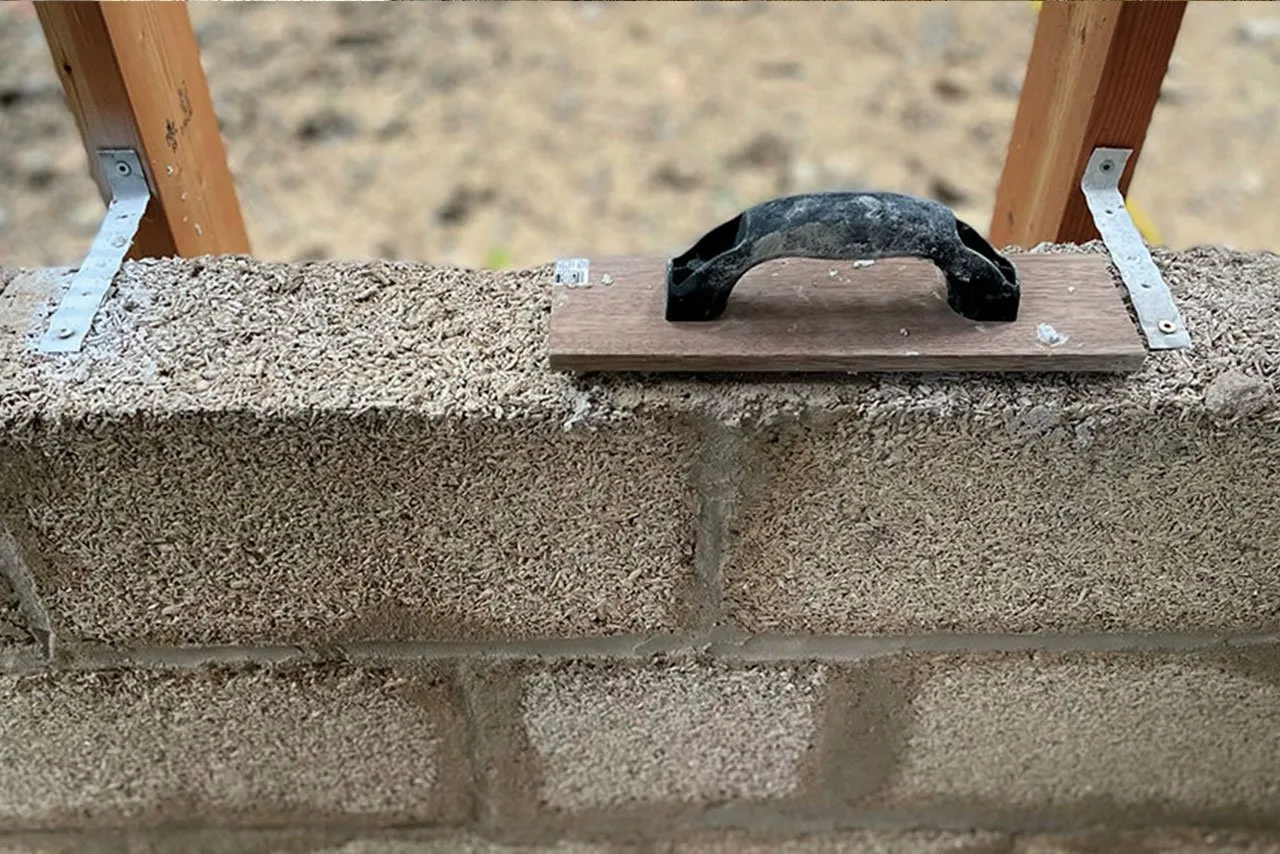
Hempcrete is a lightweight bio-based material produced by combining lime-based binders with hemp shives. Although often referred to as a natural concrete, hempcrete is primarily used as a non-load-bearing building material.
It is recognised for properties that support sustainable and energy-efficient building design, including:
- Low thermal conductivity – supports insulation performance
- Thermal mass – helps regulate indoor temperature changes
- Moisture regulation – contributes to healthier indoor humidity conditions
- Acoustic performance – supports sound insulation
- Fire resistance – improves building safety
- Resistance to mould – due to lime-based composition and moisture behaviour
These characteristics make hempcrete suitable for applications such as wall infill, insulation systems, and other non-structural building components.
Challenges and Innovation Potential
Despite its environmental and functional benefits, hempcrete has limited mechanical strength compared to conventional structural concrete, which restricts its use mainly to non-load-bearing applications.
At the same time, hemp-based materials continue to be an important area of research and innovation, particularly in improving durability, performance, and integration into circular and low-carbon construction systems.
Within the ReBuilt project, innovative and sustainable construction materials such as hemp-based solutions were recognised as important examples of how bio-based and circular approaches can contribute to resource-efficient and resilient building practices across Central Europe.
As part of the wider transition toward circular and digital construction, bio-based materials can support diversification of sustainable building solutions and reduce dependence on conventional high-impact materials.
Article prepared based on contributions from PP6 Technical University of Vienna (Dipl.-Ing. Daniella Mehanni).