
In the construction sector, SRM can contribute to improved resource efficiency, reduced waste generation, lower environmental impacts, and stronger material security. As one of the most resource-intensive industries, construction has significant potential to increase reuse, recycling, and integration of secondary materials into value chains.
Well-functioning SRM markets are essential for enabling circular construction across Europe. They support the circulation of high-quality recycled materials and can help reduce raw material consumption, energy use, and climate-related impacts. At the same time, market development continues to face challenges such as limited standardisation, quality assurance, traceability, cross-border trade barriers, and market acceptance of recycled materials.
Strengthening SRM use requires collaboration between industry, public stakeholders, research institutions, and innovation projects that support practical testing, validation, and wider adoption of circular material solutions.
Good Practice Example: Nigrad Reuse Centre, Dogoše (Slovenia)
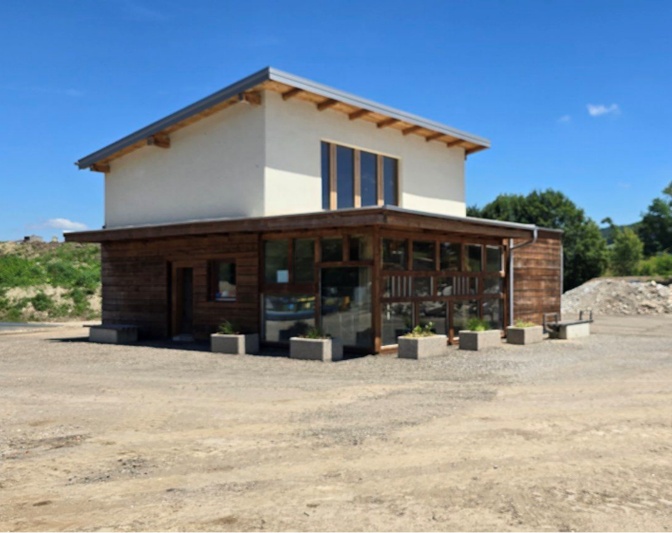
The Nigrad Reuse Centre in Dogoše, Maribor, represents an important example of how secondary raw materials can be integrated into practical construction and infrastructure solutions.
Through multiple sustainability-focused initiatives and European projects, the site has demonstrated the reuse and recycling of construction waste, including the development of pilot buildings using secondary raw materials, testing areas for innovative materials, and practical applications supporting circular construction practices.
The centre also contributes to knowledge exchange and serves as a recognised demonstration site for good practice in waste recovery, material reuse, and sustainable construction innovation.
Within the ReBuilt project, SRM use was recognised as a key priority for supporting circular value chains, reducing dependence on primary materials, and strengthening sustainable transformation in the construction sector across Central Europe.
As highlighted through ReBuilt, improving the recovery, reuse, and market uptake of secondary raw materials remains essential for accelerating circular and resilient construction systems.
Article prepared based on contributions from PP3 Nigrad d.o.o.