

Pexels Mikhail Nilov

Project overview
Empowerment of Rural and Inland Communities testing Eco-Cultural Tourism Management Models and Tools-Solutions in the CE region through Bottom-Up participatory decision-making processes
Cultural heritage and natural landscapes in peripheral regions are often underused because tourism governance is fragmented, and local voices are weak. ENRICH-US aims to empower communities to steer sustainable tourism growth. Partners test governance models such as destination management organisations, community cooperatives and public-private-community partnerships, backed by digital tools, cultural content platforms and small eco-tourism pilots. Together they develop participatory, replicable frameworks.
-
0,68m €
-
Project Budget
-
80%
-
of the Budget is funded by ERDF
-
5
-
Countries
-
5
-
Regions
-
5
-
Partners
-
4
-
Pilots
Duration
Start date
End date
Project progress
About the project
Many beautiful regions across Italy, Czech Republic, Slovenia, Croatia, and Poland have rich heritage and landscapes, but struggle with weak coordination, low community involvement, and tourism that doesn’t always benefit local people. ENRICH-US changes that by helping territories manage tourism better, together, and in a more sustainable way.
ENRICH-US aims to:
- Strengthen local governance – so tourism is planned and managed in a coordinated way, not in fragments.
- Empower communities – giving residents, local groups, and small businesses a real voice in decisions.
- Use culture and nature responsibly – turning heritage and landscapes into long-term value, not short-term pressure.
- Build skills and cooperation – so regions can continue improving even after the project ends.
The project works at two levels: local and international.
LOCALLY:
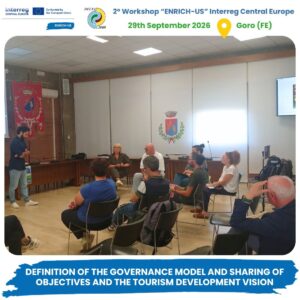
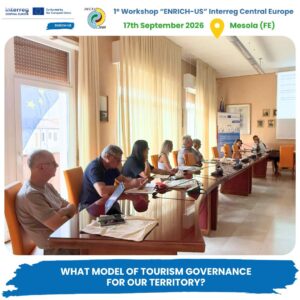
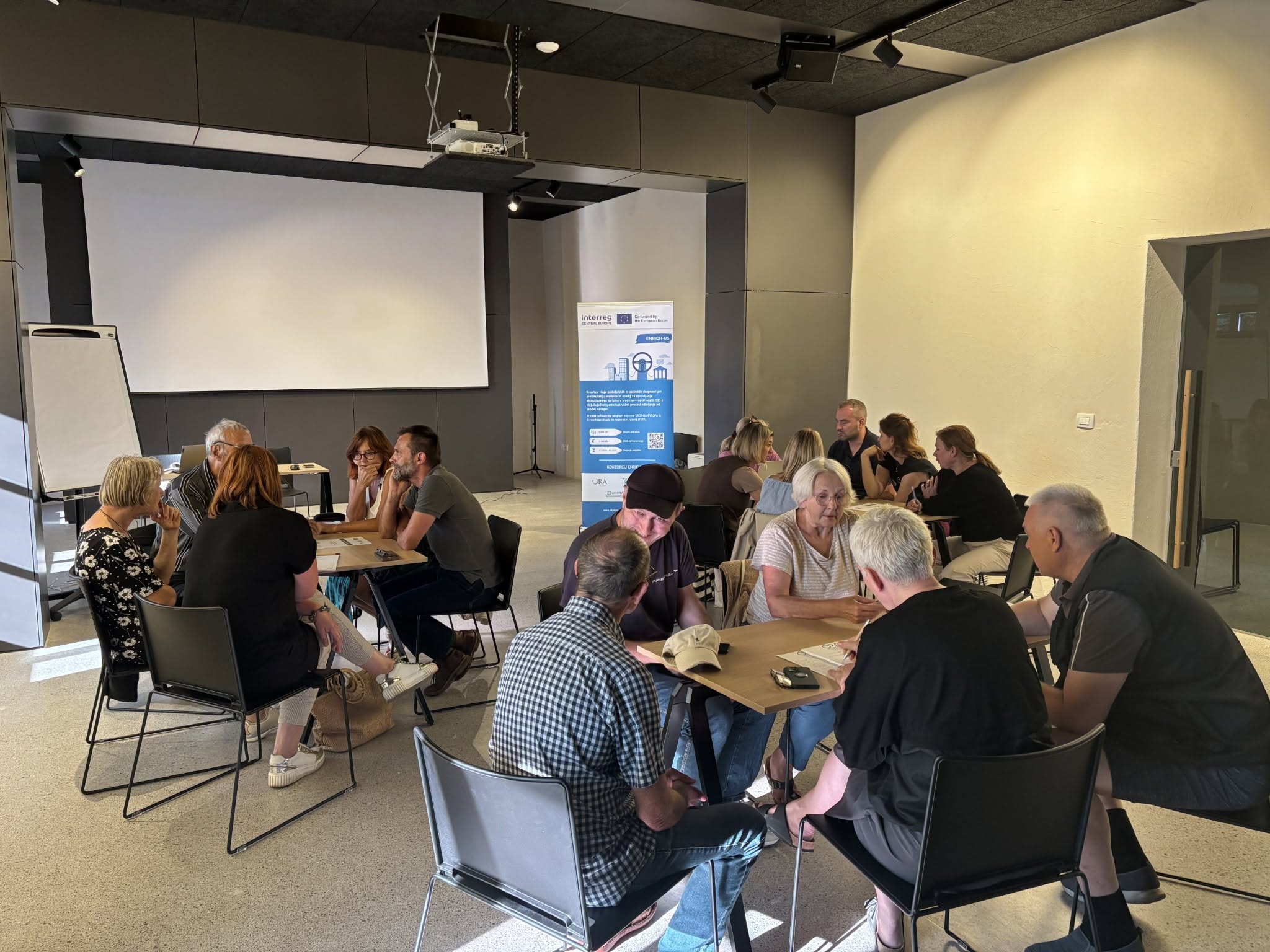
In each partner region, local authorities, NGOs, businesses, cultural actors, and citizens meet in participatory workshops to shape a shared vision for eco-cultural tourism. These discussions lead to Territorial Tourism Concepts that define how tourism should be managed in that area.
Each region then tests a practical governance model, such as a Destination Management Organisation (DMO), a community cooperative, or
a public-private-community partnership.
Through pilot actions, partners work with stakeholders on real solutions, supported by shared tools, monitoring, and peer exchange with other countries. This ensures learning is practical, not just theoretical.
INTERNATIONALLY:
Regions regularly exchange experience, compare results, and jointly develop a common transnational strategy. Training, communication activities, and a new cooperation network help spread knowledge and keep collaboration alive beyond the project.
By the end of ENRICH-US, regions will have clearer, more participatory tourism governance.
- At least four pilot-tested tourism management solutions will be ready for wider use.
- A Joint Transnational Strategy on Eco-Cultural Tourism Management will guide future action.
- Organisations across countries will continue working together through a lasting cooperation network.
Most importantly, local communities will be more involved, more capable, and better prepared to use tourism in a way that supports their economy, protects their heritage, and strengthens their identity.
ENRICH-US shows that when regions cooperate and citizens are part of the process, tourism can truly work for places and people — not the other way around.
Project partnership
Project partners

Lead partner
DELTA 2000 Consortium Company with limited liability
NA
Project partner
NA
Total partner budget
119,095 €
NA
Total partner budget
129,839 €
NA
Total partner budget
122,450 €
Department for Innovation and Business Development
Total partner budget
127,737 €
Roadmap
1
CONTEXT
ENRICH-US takes place in rural and inland regions of Italy, Czech Republic, Slovenia, Croatia, and Poland, bringing together local and regional actors across Central Europe. The project works in the sustainable tourism and territorial governance sector, with a focus on eco-cultural tourism, community participation, and better management of natural and cultural heritage.
2
SPECIFIC PROBLEM
Rural and inland regions involved in ENRICH-US face fragmented tourism governance and underused cultural and natural assets, with limited stakeholder participation and weak alignment with sustainability principles.
3
IDEA
How can rural regions work together with local authorities, communities, and businesses to create shared, sustainable tourism management models that better use cultural and natural heritage?
4
SOLUTION
The project develops and tests participatory eco-cultural tourism governance models—such as DMOs, community cooperatives, and public-private-community partnerships—supported by a joint transnational strategy and practical tools for sustainable territorial tourism management.
5
HOW IT WORKS
The solution brings local authorities, communities, businesses, and NGOs together in participatory workshops to co-design territorial tourism concepts and identify shared priorities for eco-cultural tourism. These concepts are then tested through pilot actions using governance models such as DMOs, community cooperatives, or public-private-community partnerships, supported by common tools and monitoring methods. Results from all regions are combined into a joint transnational strategy and long-term cooperation network to ensure the approach can be sustained and replicated.
News



Events


ENRICH-US
The project lead partner is responsible for the content of this project website.