green-pine-trees-on-green-grass-field-during-daytime
Rostyslav Savchyn Unsplash

Central Mountains

Project overview

From the Alps to the Carpathians – strengthening governance models for sustainable development of mountain areas in Central Europe

The Alps and Carpathians are important natural corridors that connect many central European countries. Unfortunately, cooperation across borders often lacks a joint vision in mountain areas. To change this, the Central Mountains project designs and implements a joint strategy and regional action plans to create amongst others cross-border functional areas. By improving governance structures, processes and operations, the partners sustainably improve cooperation among Alpine-Carpathian regions.

2,33m €

Project Budget

80%

of the Budget is funded by ERDF

Layer 1

7

Countries

10

Regions

11

Partners

6

Pilots

Duration

Start date

End date

Project progress

100%

About the project

First and foremost, the "Central Mountains" project was willing to take advantage of the European community that we are a part of and that enables us to cooperate across a wide range of countries, regions and territories. We believed we have more similarities than differences, and that experiences gained in one territory could be transferred to another. With this ‘open mind‘ approach, the "Central Mountains" project addressed and identified challenges through capitalization, joint strategies, cross-border testing and territorial roll-out. This approach was oriented towards improved governance structures and processes in mountain areas from the Alps to the Carpathians, including the Sudetes. Over time, all the actions undertook within the framework boiled down to a series of paradigms that laid a foundation for enhanced governance. Therefore, the project stays open for mountains areas from outside the Alps and the Carpathians as well.

Project partnership

Project partners

Polska (PL)

Lead partner

Rzeszów County

Jednostka samorządu terytorialnego (a local government unit)
Address
Grunwaldzka 15
35-959 Rzeszów
Country
Poland (PL)
Web
www.powiat.rzeszowski.pl

Project partner

Address
Pl. Kilińskiego 2
35-005 Rzeszów
Country
Poland (PL)
Web
https://www.karpacki.pl/
Total partner budget
358,480 €
Address
Bezručova 9
811 09 Bratislava
Country
Slovakia (SK)
Web
www.zmos.sk
Total partner budget
199,200 €
Address
Felvégi 53
3300 Eger
Country
Hungary (HU)
Web
www.karpatokalapitvany.hu
Total partner budget
205,060 €
Address
Zelená 182
251 62 Mukařov
Country
Czechia (CZ)
Web
www.regionalni-znacky.cz
Total partner budget
147,800 €
Address
Jana Kiepury 1/9
58-506 Jelenia Góra
Country
Poland (PL)
Web
www.krajobraz.edu.pl
Total partner budget
149,800 €
Institute for Regional Development
Address
Viale Druso 1
39100 Bolzano/Bozen
Country
Italy (IT)
Web
https://www.eurac.edu/en
Total partner budget
192,110 €
Address
13 13
34170 Gorizia
Country
Italy (IT)
Web
www.isig.it
Total partner budget
200,360 €
Address
Techendorf 90
9762 Weissensee
Country
Austria (AT)
Web
www.alpine-pearls.com
Total partner budget
208,420 €
Address
Hirschgraben 15
6800 Feldkirch
Country
Austria (AT)
Web
https://www.cipra.org/en/about/people/cipra-international-lab
Total partner budget
200,200 €
Address
Eroilor Blvd 5
500007 Brasov
Country
Romania (RO)
Web
www.judbrasov.ro
Total partner budget
184,000 €

Roadmap

1

Why we are here?

Mountain areas are specific with their own challenges. Even the well-developed Alpes are very heterogeneous with economic and demographic disparities such. These areas may also be very peripheral such as the Carpathians or the Sudetes. But at the same time these are regions with many assets or resources (including natural and cultural heritage). From the Alps to the Carpathians, let's meet, work and cooperate!

2

Specific problem

The Carpathians, Alps and Sudetes are located on border areas the lack of effective cross-border and transnational cooperation. This cooperation is crucial, since it the basis for the proper management of natural or cultural resources, steering the sustainable development of the whole chain of mountain areas and ensuring that the local communities are involved in the process (including youth involvement). Problems related to sustainable development in border areas of the Alps and the Carpathians cannot be solved by one country alone and require cooperation beyond borders.

3

Our idea

What if we could improve the governance models of mountain areas and cross-border cooperation?

4

Our solution

We wanted to strengthen and improve governance models in mountain areas of Central Europe, with particular emphasis on cross-border and transnational cooperation structures in order to solve common challenges for the sustainable development.

5

How was it working?

We achieved long-term, sustainable cooperation across borders in mountain areas. Developing and improving cross-border and transnational cooperation structures was a key element to strengthen regional development and cohesion across borders. These structures will operate without dependence on the project cycles and EU funding.

News

Events

Pilot actions

Outputs
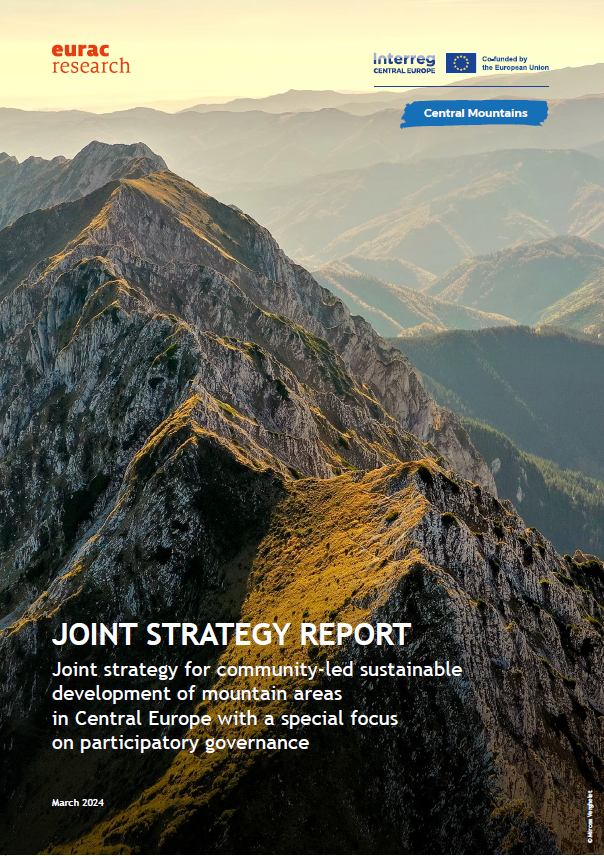
Strategy main page

Joint Strategy Report

Joint Strategy for Community-Led Sustainable Development of Mountain Areas in Central Europe with a Special Focus on Participatory Governance This document presents an analytical framework designed to support community-based initiatives in strengthening cross-border participatory governance processes. It provides the basis for the preparation and implementation of regional and local Action Plans and serves as a reference framework for stakeholders involved in the sustainable development of mountain areas. The strategy was developed by the EURAC, CIPRA and ISIG teams with the support of the project partners and remains a key outcome of the Central Mountains project.
Type of output: Strategies and action plans

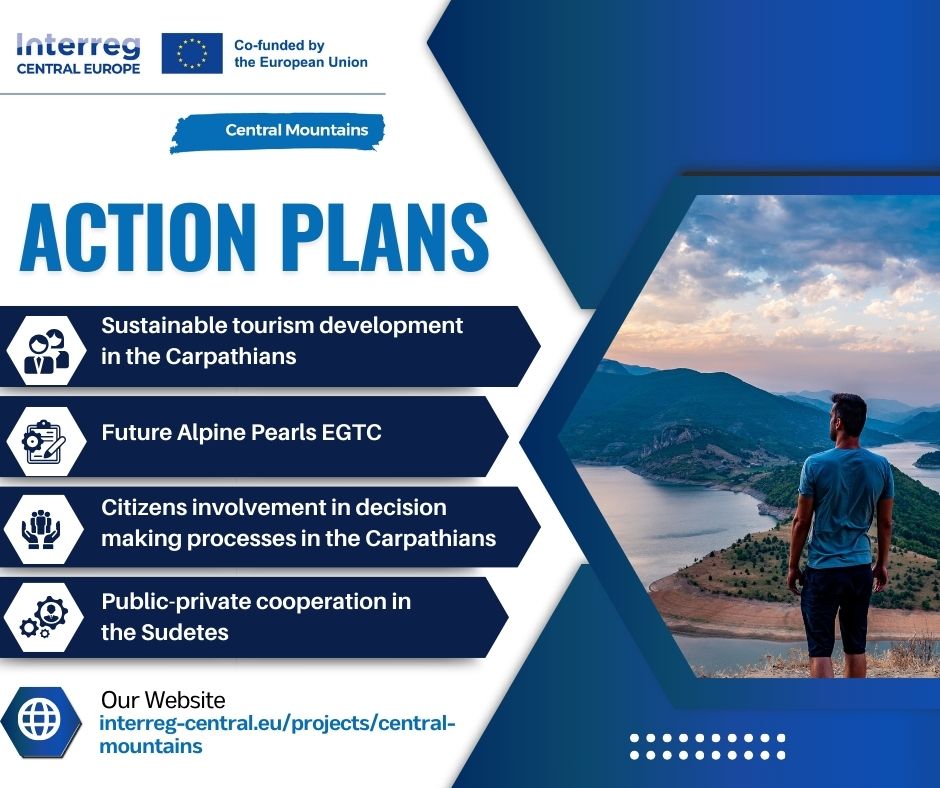
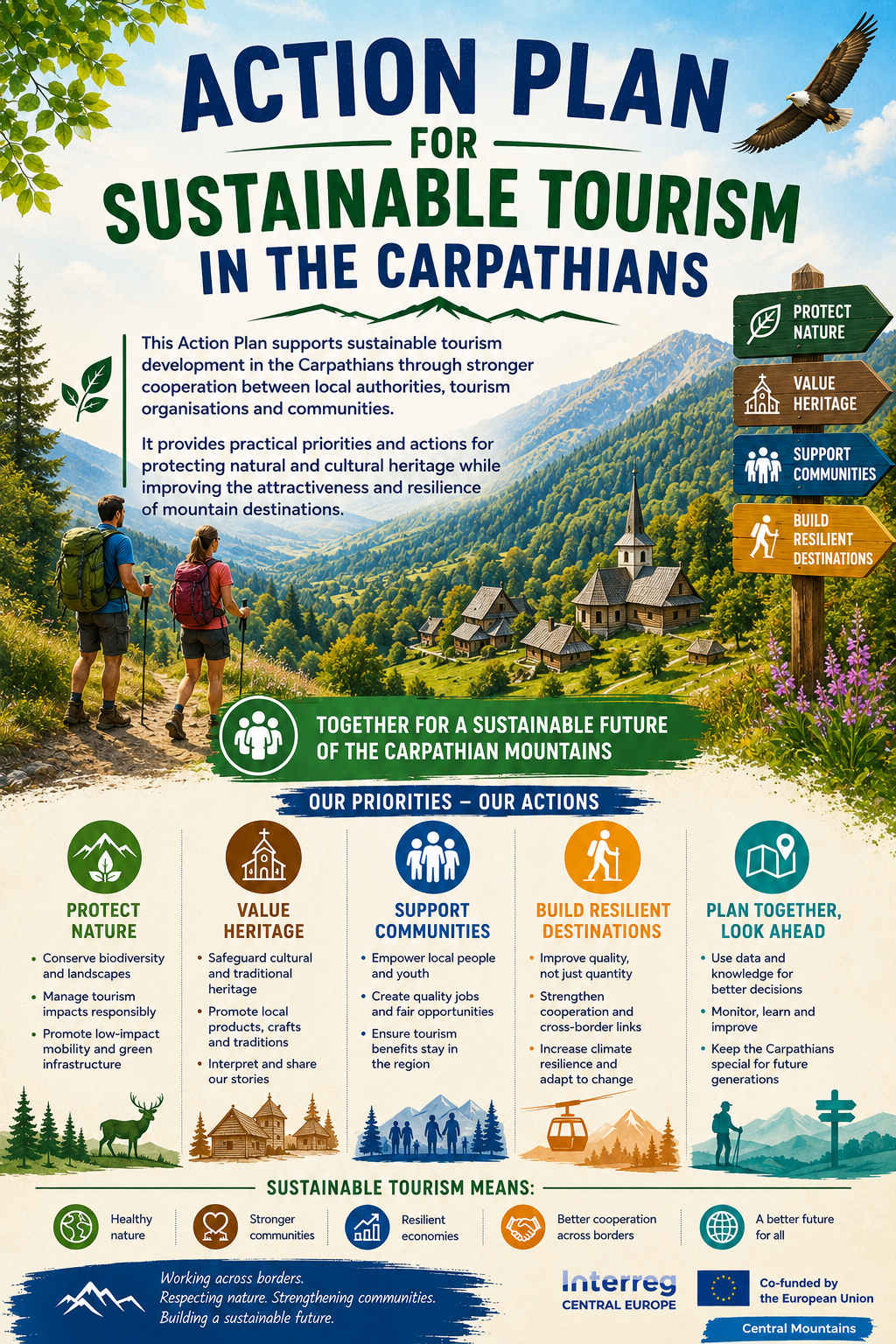
Sustainable tourism development in the Carpathians

This Action Plan provides a strategic framework for strengthening governance and promoting sustainable tourism development across the Carpathian region. It focuses on the active involvement of local communities, cross-border cooperation and the sustainable use of natural and cultural heritage. The Action Plan identifies three strategic priorities: institutional cooperation in the Carpathians, green and sustainable development, and integrated territorial competitiveness. It serves as a practical roadmap for public authorities, civil society organisations and tourism stakeholders working towards a more resilient and sustainable future for the Carpathians.
Type of output: Strategies and action plans

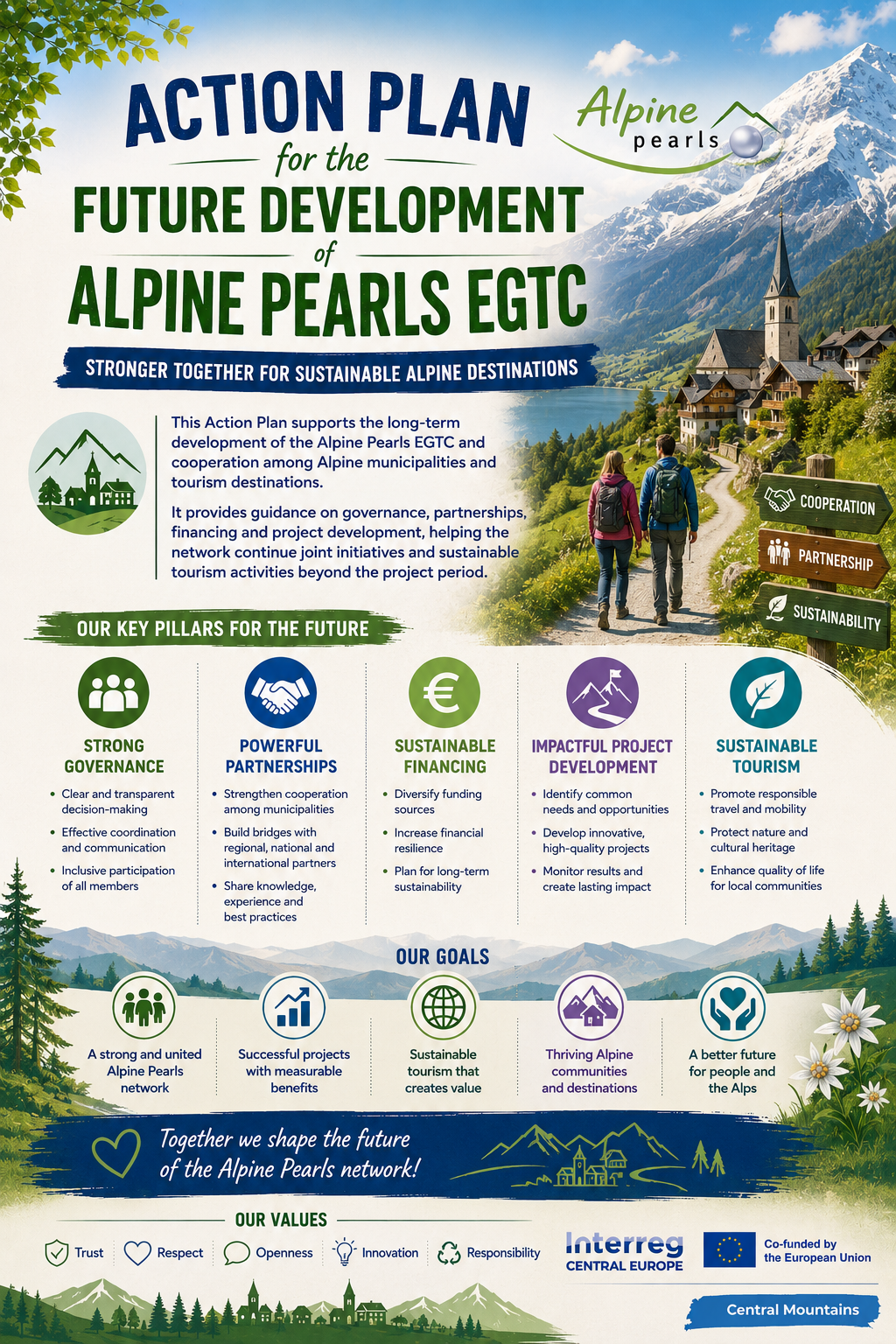
Future Alpine Pearls EGTC

This Action Plan supports the long-term development of the Alpine Pearls EGTC as a platform for transnational cooperation among Alpine municipalities and tourism destinations. It provides guidance on governance, stakeholder involvement, financing mechanisms and project development. The Action Plan strengthens the capacity of the Alpine Pearls network to coordinate sustainable tourism initiatives and facilitate cooperation across borders. It serves as a practical framework for implementing the EGTC strategy and supporting the sustainable development of Alpine territories.
Type of output: Strategies and action plans

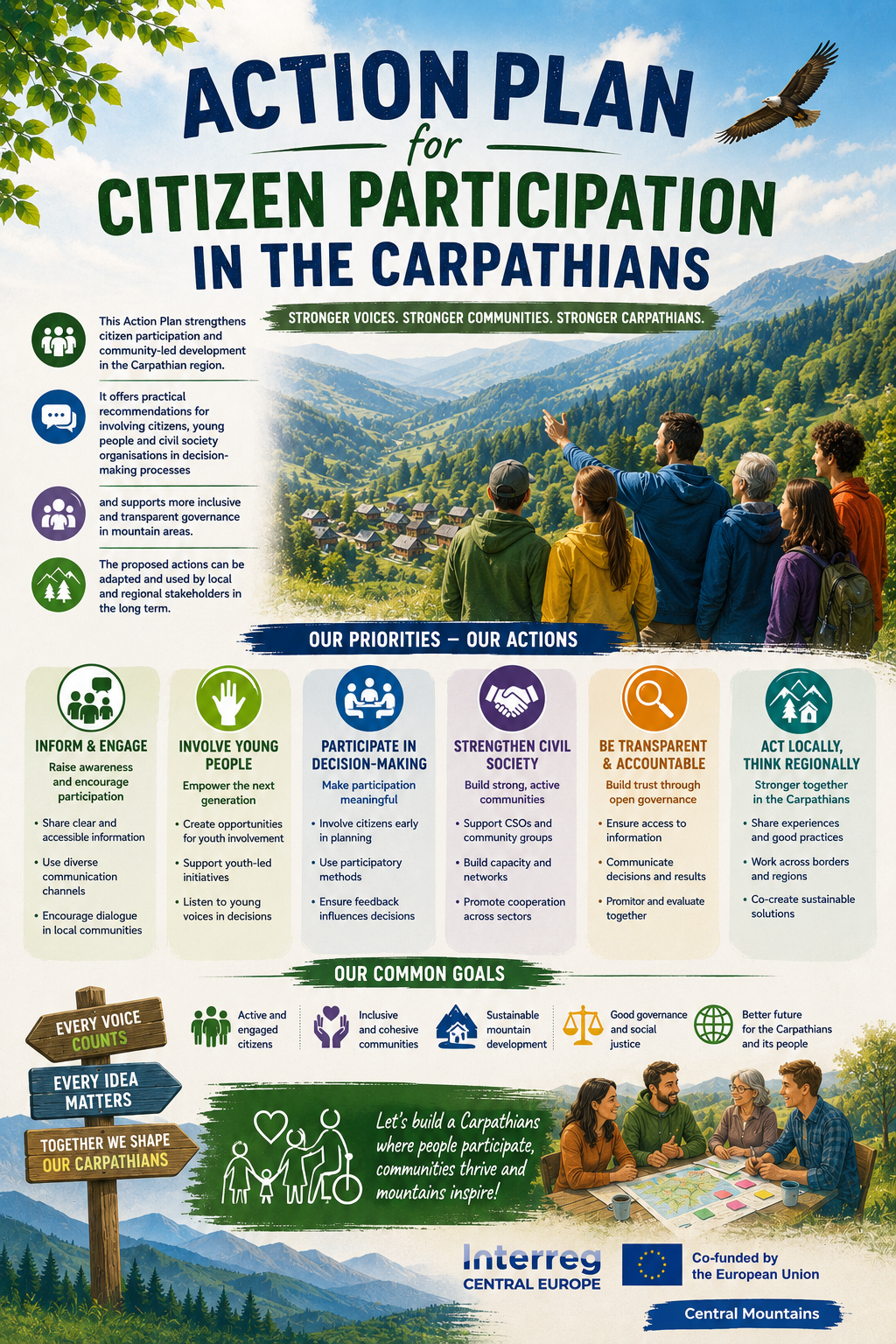
Citizens involvement in decision making processes in the Carpathians

This Action Plan promotes community-led development and strengthens the role of civil society organisations in governance processes across the Carpathian region. It provides practical recommendations and actions for increasing citizen participation, supporting youth engagement and enhancing cooperation among civil society actors. The Action Plan serves as a roadmap for the further development of the Carpathian Civil Society Platform and contributes to more inclusive, participatory and transparent decision-making processes. It supports long-term cooperation among organisations and stakeholders at local, regional, national and transnational levels.
Type of output: Strategies and action plans

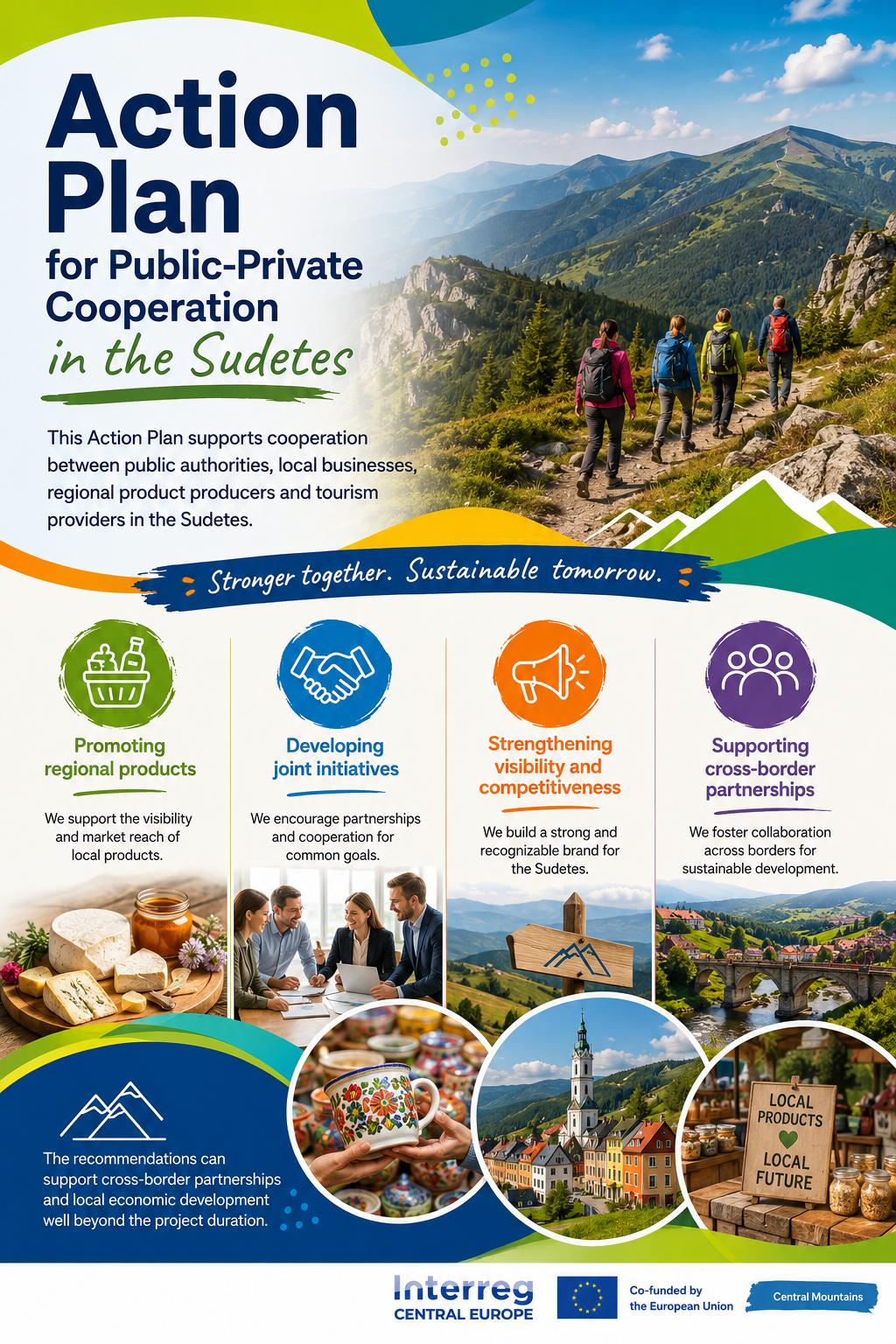
Public-private cooperation in the Sudetes

This Action Plan provides a framework for strengthening cooperation between public authorities, regional product producers, rural SMEs and tourism service providers in the Sudetes. It supports the promotion of regional products and services through coordinated cross-border activities and joint branding initiatives. The Action Plan offers practical solutions for building sustainable partnerships, improving market visibility and enhancing the attractiveness of mountain regions for both residents and visitors. It also supports the transfer of knowledge and good practices between Czech and Polish stakeholders.
Type of output: Strategies and action plans

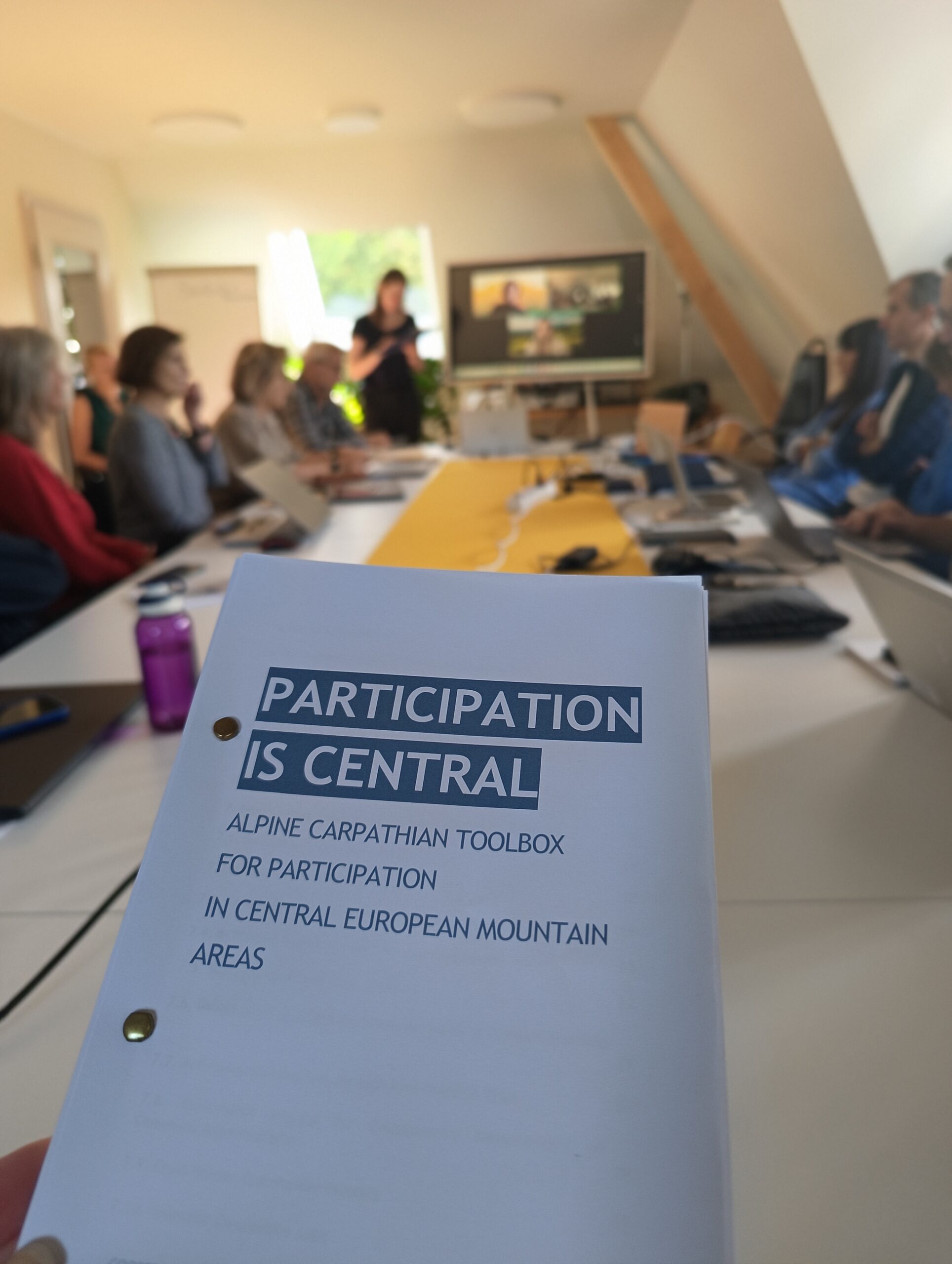
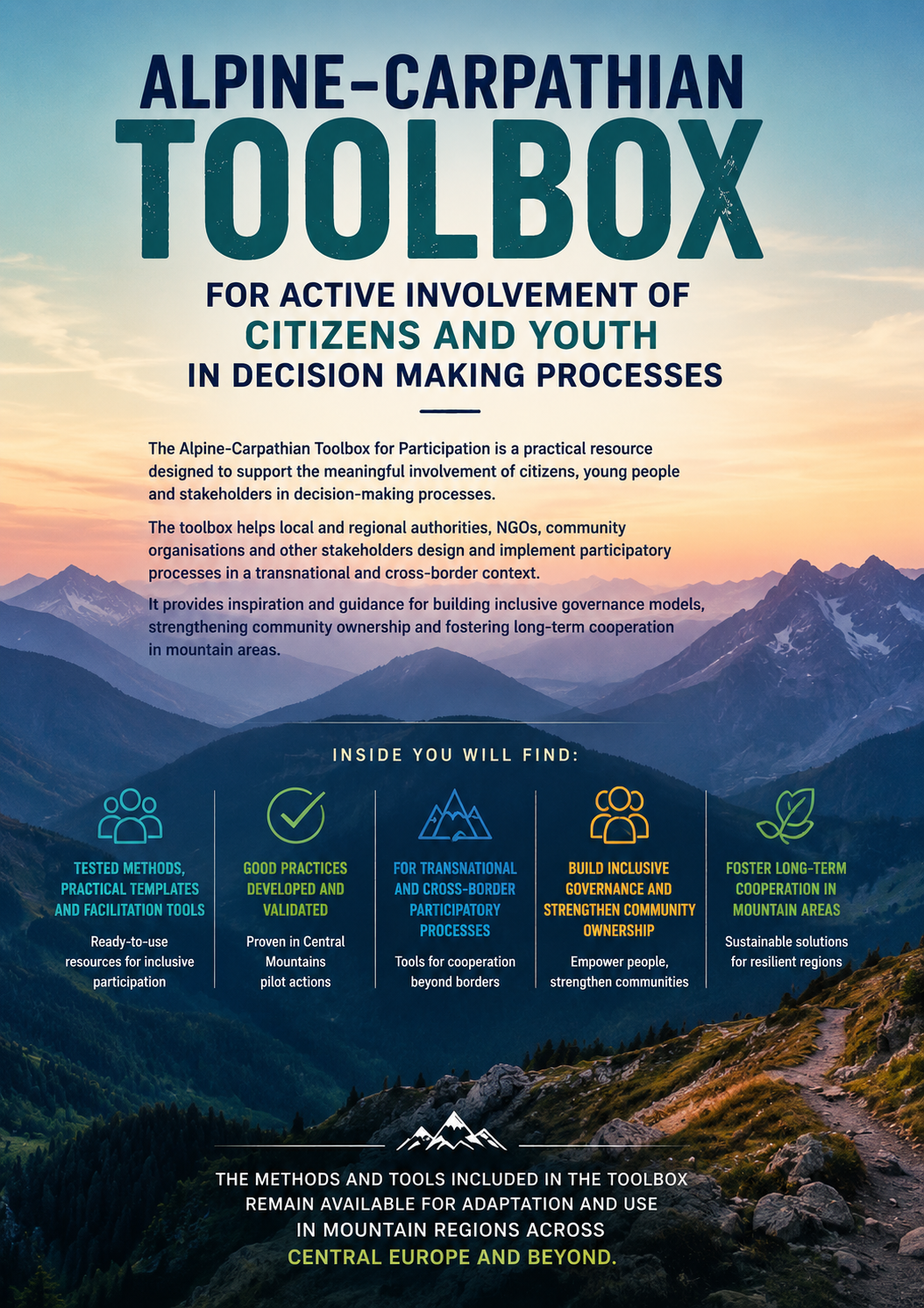
Alpine-Carpathian toolbox for active involvement of citizens and youth in decision making processes

The Alpine-Carpathian Toolbox for Participation is a practical resource designed to support the meaningful involvement of citizens, young people and stakeholders in decision-making processes. It brings together tested methods, practical templates, facilitation tools and good practices developed and validated through the Central Mountains pilot actions. The toolbox helps local and regional authorities, NGOs, community organisations and other stakeholders design and implement participatory processes in a transnational and cross-border context. It provides inspiration and guidance for building inclusive governance models, strengthening community ownership and fostering long-term cooperation in mountain areas. The methods and tools included in the toolbox remain available for adaptation and use in mountain regions across Central Europe and beyond.
Type of output: Solutions

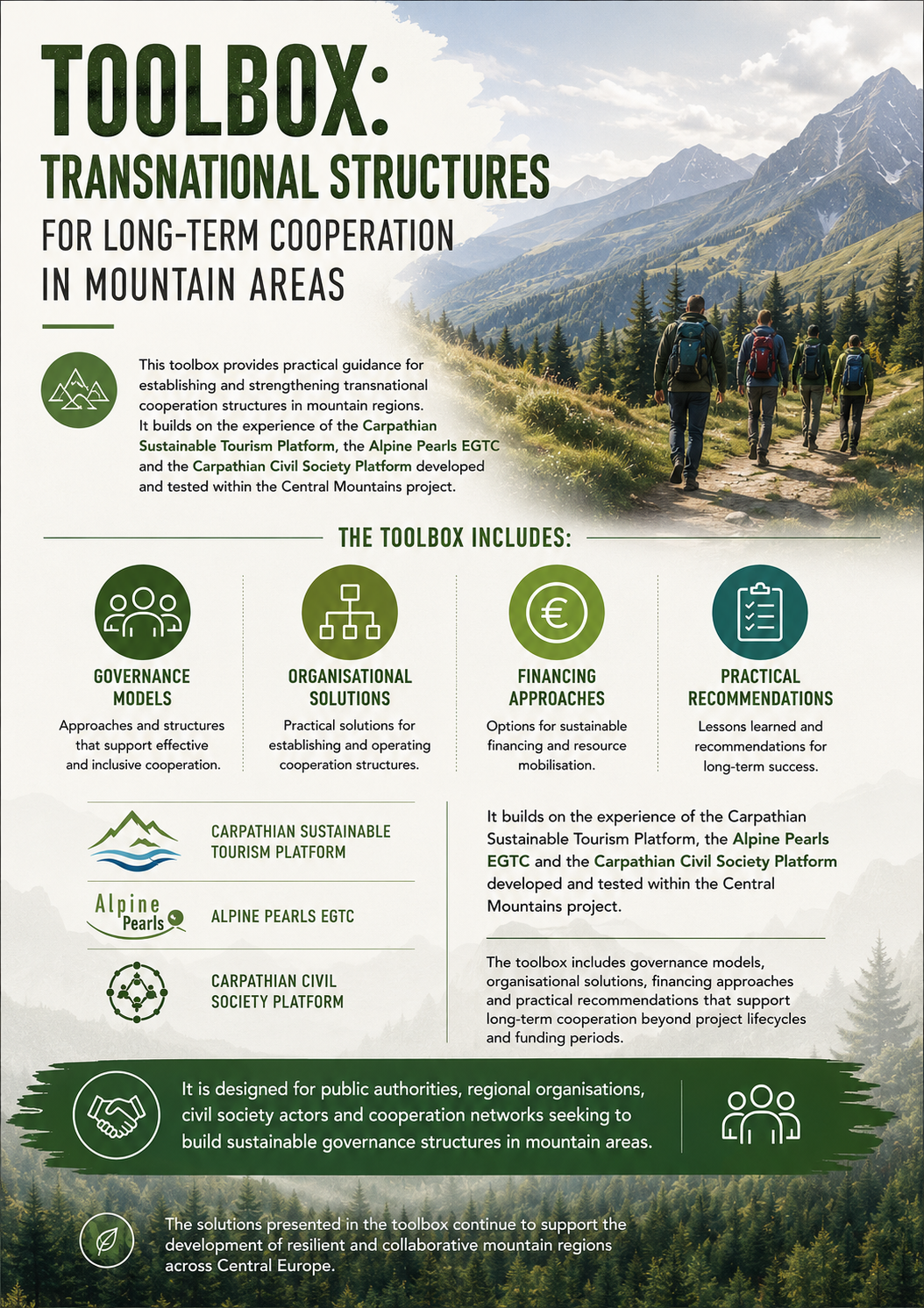
Toolbox: Transnational structures for long-term cooperation in mountain areas

This toolbox provides practical guidance for establishing and strengthening transnational cooperation structures in mountain regions. It builds on the experience of the Carpathian Sustainable Tourism Platform, the Alpine Pearls EGTC and the Carpathian Civil Society Platform developed and tested within the Central Mountains project. The toolbox includes governance models, organisational solutions, financing approaches and practical recommendations that support long-term cooperation beyond project lifecycles and funding periods. It is designed for public authorities, regional organisations, civil society actors and cooperation networks seeking to build sustainable governance structures in mountain areas. The solutions presented in the toolbox continue to support the development of resilient and collaborative mountain regions across Central Europe.
Type of output: Solutions

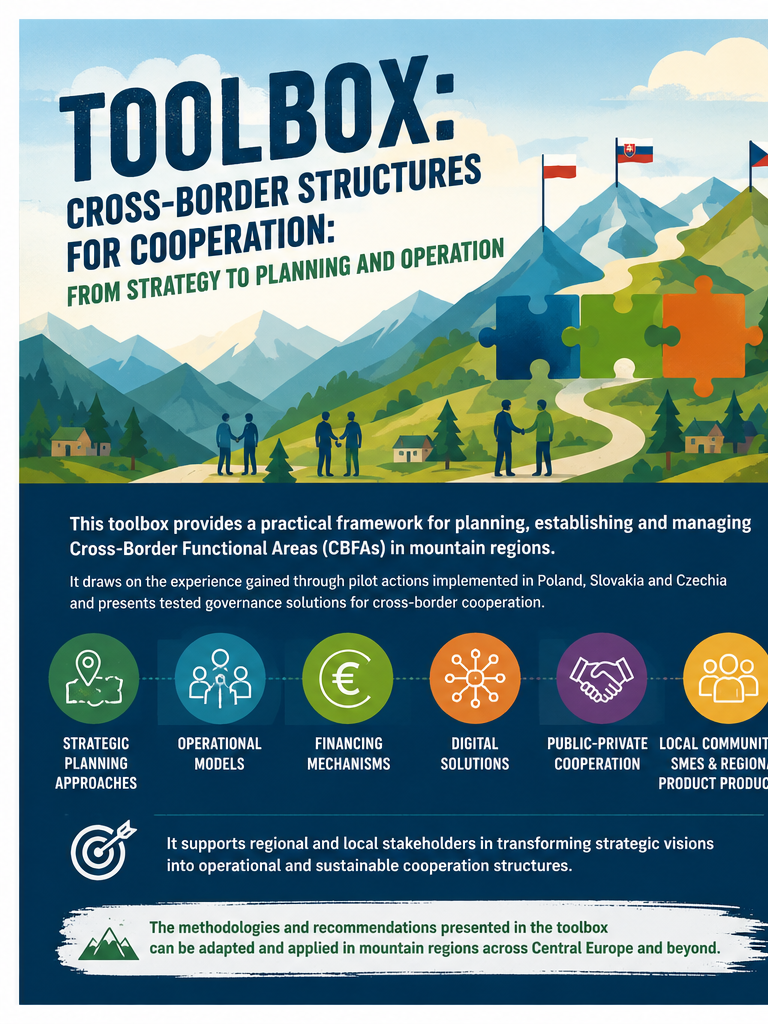
Toolbox: Cross-border structures for cooperation: from strategy to planning and operation

This toolbox provides a practical framework for planning, establishing and managing Cross-Border Functional Areas (CBFAs) in mountain regions. It draws on the experience gained through pilot actions implemented in Poland, Slovakia and Czechia and presents tested governance solutions for cross-border cooperation. The toolbox includes strategic planning approaches, operational models, financing mechanisms, digital solutions and examples of public-private cooperation involving local communities, SMEs and regional product producers. It supports regional and local stakeholders in transforming strategic visions into operational and sustainable cooperation structures. The methodologies and recommendations presented in the toolbox can be adapted and applied in mountain regions across Central Europe and beyond.
Type of output: Solutions

Project videos

Central Mountains

The project lead partner is responsible for the content of this project website.

Project on social media

Project Contacts

Project Manager

Dawid Lasek
Phone: 0048 17 852 52 05

Finance Manager

Malgorzata Steckiewicz
Phone: 0048691930716

Communication Manager

Anna Buk
Phone: 0048 17 852 52 05