
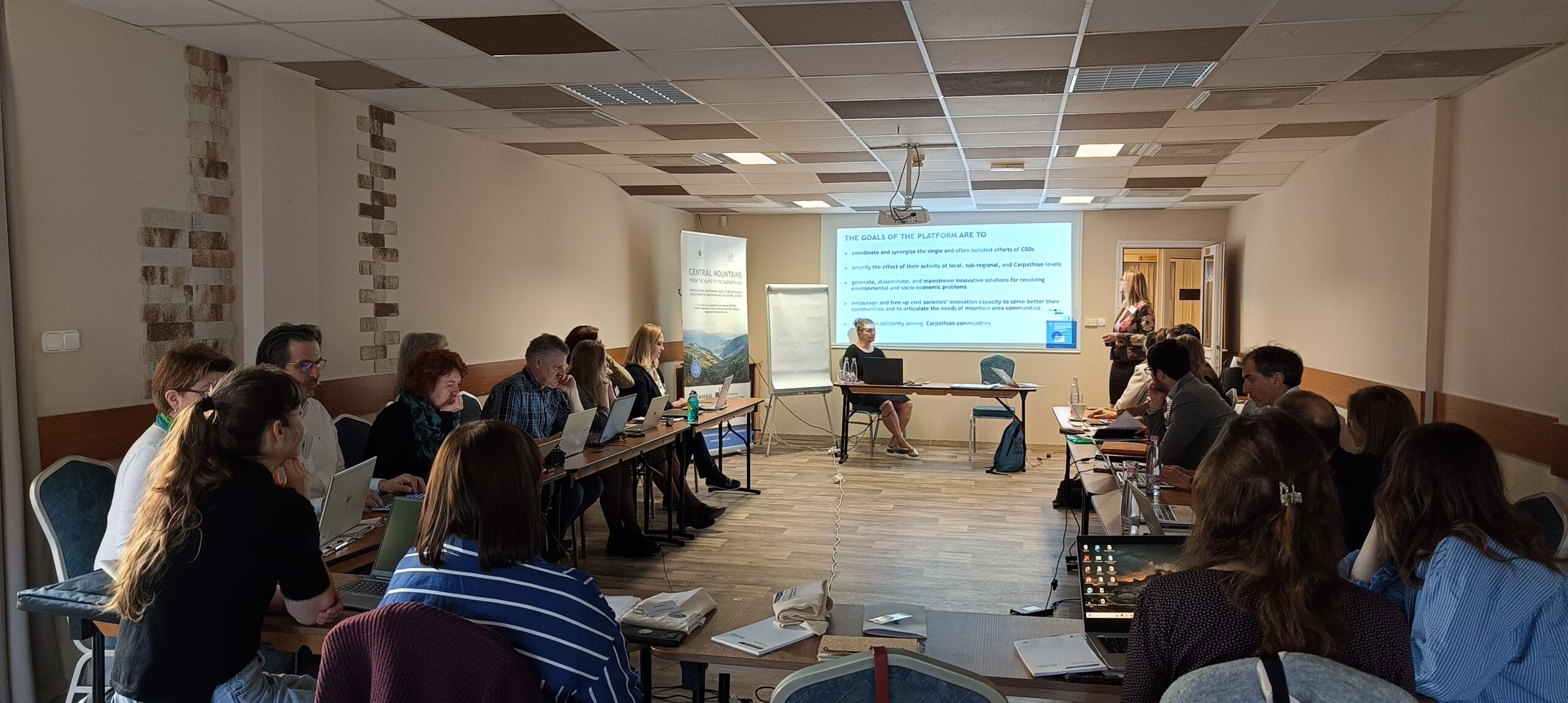
Throughout the visit, participants met organisations demonstrating how active communities can complement the work of public authorities in addressing social, economic and environmental challenges.
One of the key examples was the Hungarian Roma Association in Szomolya, which presented initiatives supporting disadvantaged Roma communities through education, family engagement and cooperation with local institutions. These activities illustrated the importance of inclusive governance and community participation in building resilient mountain communities.
Participants also visited the Eger Community Foundation, where they learned how community philanthropy can strengthen local development by connecting donors, citizens and civil society organisations. Programmes supporting youth engagement, equal opportunities and local initiatives demonstrated innovative approaches to building social capital and encouraging civic participation.
Another important stop was the Civil House in Eger, a community hub that facilitates networking, cooperation and capacity building for local NGOs. The example highlighted how dedicated support structures can strengthen civil society and improve collaboration between organisations, local authorities and citizens.
The visit also introduced participants to the work of the Farkaskő Association in Noszvaj, where environmental education, cultural heritage and artistic activities are combined to engage young people and promote sustainable development through creative learning.
Particular attention was given to the role of cross-border cooperation. Discussions with representatives of the Carpathian Foundation demonstrated how long-term networking, grant schemes and capacity-building initiatives can strengthen civil society organisations throughout the Carpathian region. The visit also contributed to the further development of the Carpathian Civil Society Platform and its Virtual HUB, designed to facilitate networking, knowledge exchange and future cooperation among organisations working in mountain areas.
How did this contribute to CENTRAL MOUNTAINS?
The study visit demonstrated how community-led initiatives and strong civil society organisations can support more inclusive and resilient mountain governance. The experiences gathered in Hungary provided practical inspiration for implementing the principles outlined in the Joint Strategy for Participatory Governance in Central European Mountain Areas.
The lessons learned contributed to the implementation of regional Action Plans, helping partners identify effective approaches to stakeholder engagement, cross-sector cooperation and community participation. They also inspired subsequent Pilot Actions, where many of these governance approaches were tested in practice, and informed the development of practical Toolboxes designed to support public authorities and local stakeholders in strengthening participatory governance.
The visit confirmed that resilient mountain regions depend not only on effective public policies but also on active local communities, strong civil society organisations and long-term cooperation across sectors and national borders.