

Project overview
Climate-proof landscape through renaturing urban areas in Central Europe
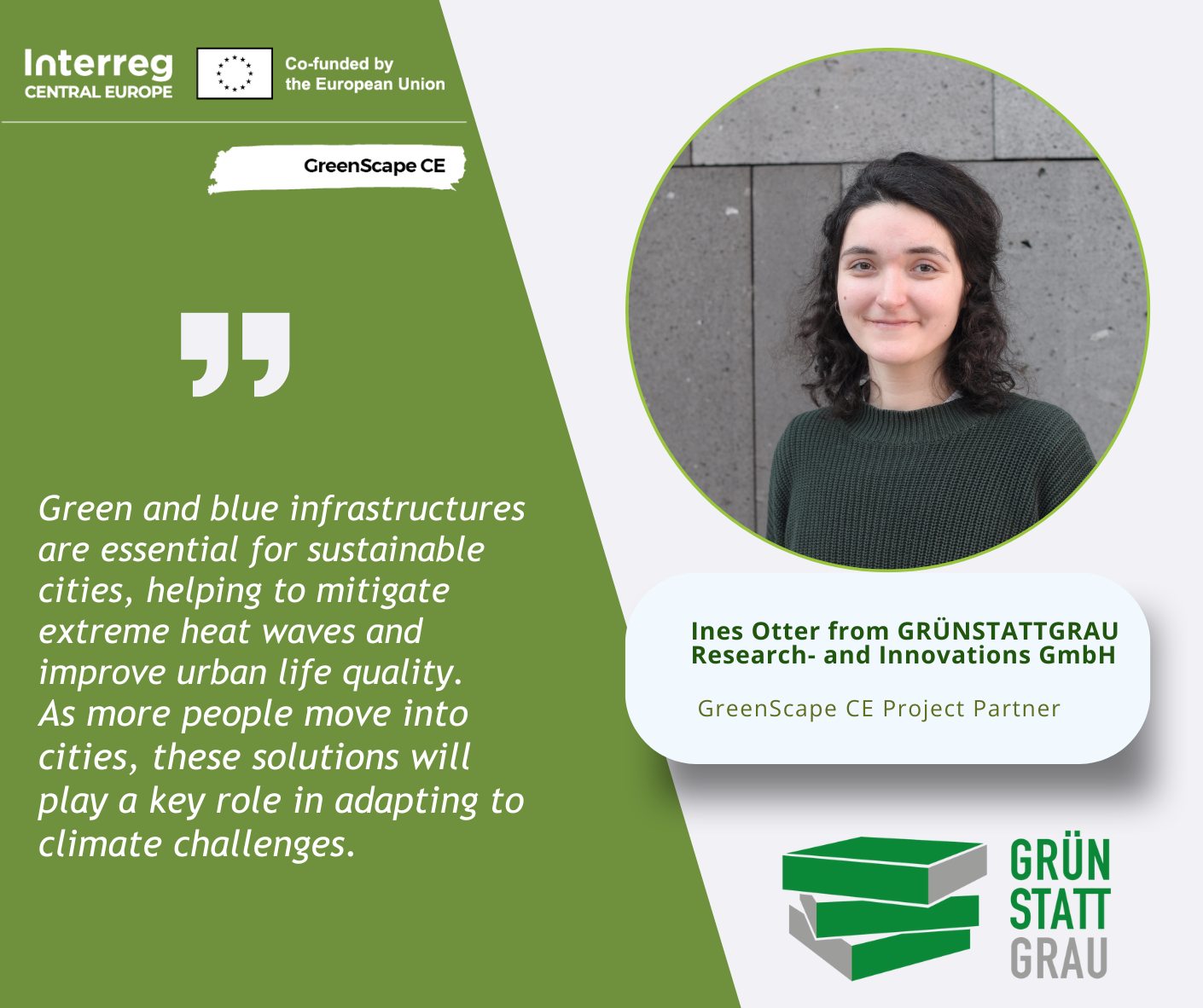
Cities are growing in central Europe, often turning green areas into grey concrete places. This urban sprawl accelerates negative effects of climate change such as urban heat islands. The GreenScape-CE project worked on reversing the trend by making urban areas greener again. The partnership strengthened planning capacities and piloted the application of nature-based solutions and green infrastructure approaches in five cities, which are significantly affected by urban heat island effects.
-
2,24m €
-
Project Budget
-
80%
-
of the Budget is funded by ERDF
-
6
-
Countries
-
9
-
Regions
-
12
-
Partners
-
3
-
Pilots
Duration
Start date
End date
Project progress
Project partnership
Project partners

Lead partner
North-West Croatia Regional Energy and Climate Agency
Project partner
City Office for Economy, Ecological Sustainability and Strategic Planning
Service for Environmental Protection and Health Ecology
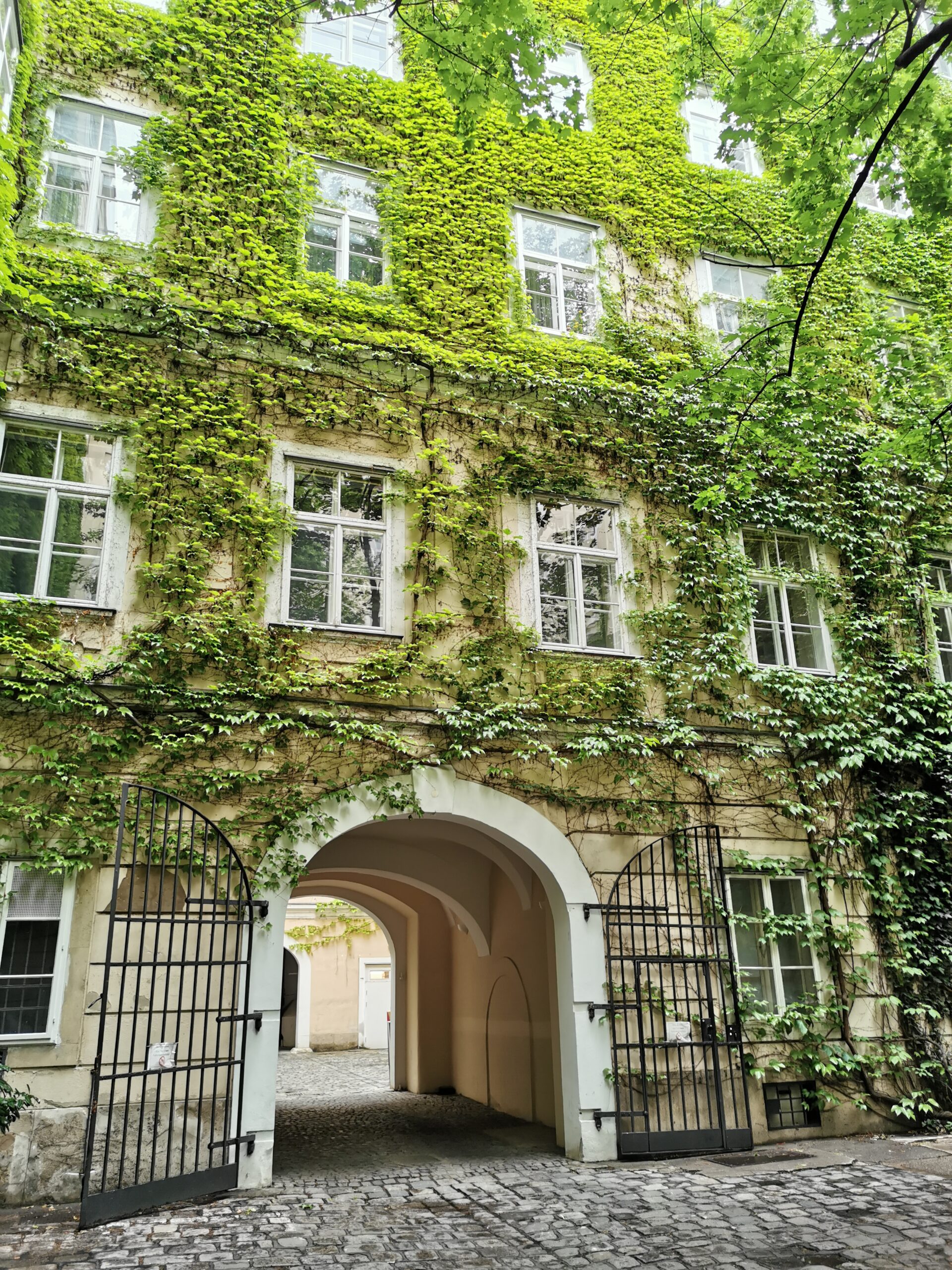
Green roofs/green walls
Roadmap
Challenge
Urban areas share common challenges, including urban sprawl, extreme weather impacts, pollution, health problems, biodiversity loss, and rising energy demand.
Specific Problem
The aggravating urban heat island effect in five Central European urban areas due to growing urban sprawl and the transformation of green spaces into grey areas.
GreenScape: how it all started
To promote climate resilience integration in urban areas through transnational collaboration and knowledge exchange, where Cooperation is central.
Solutions
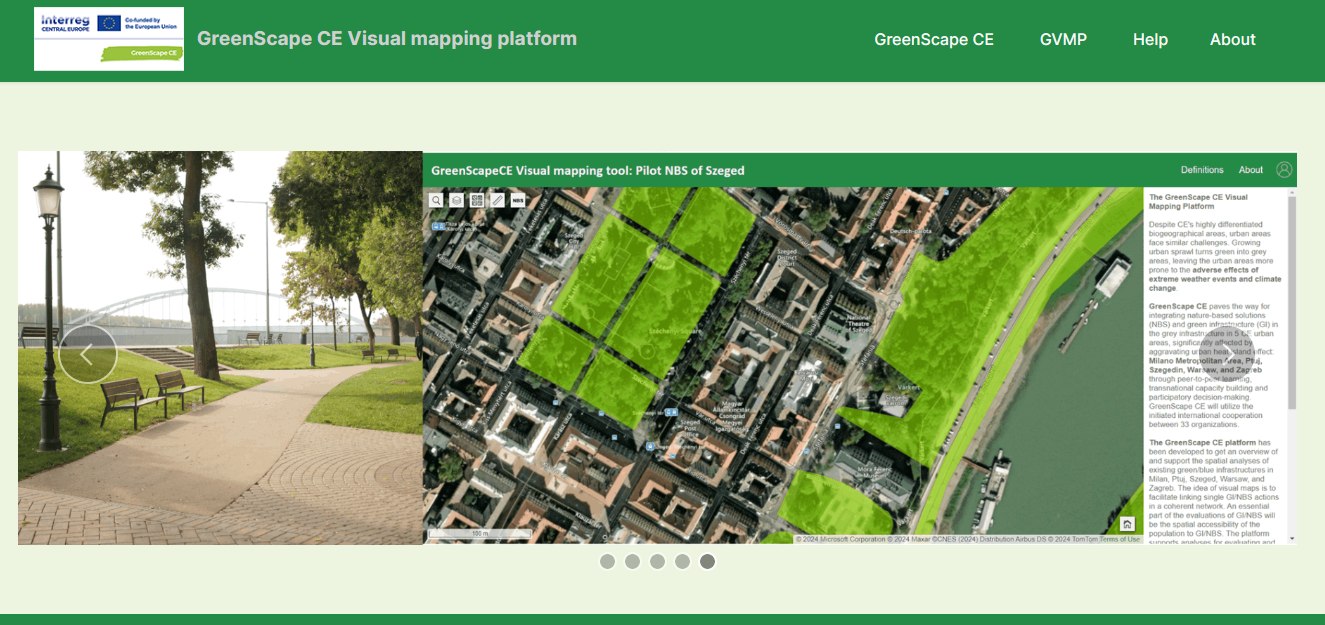
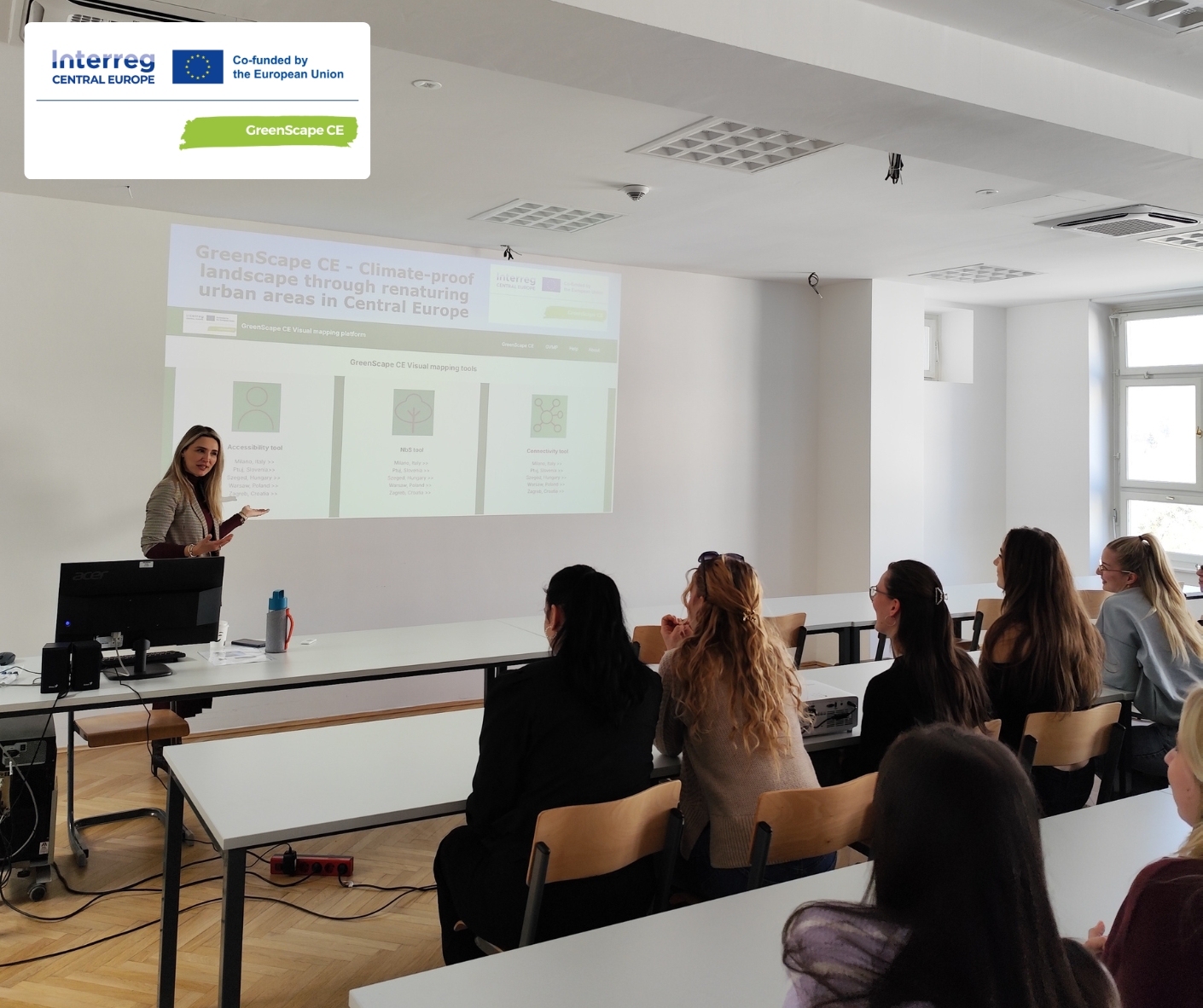
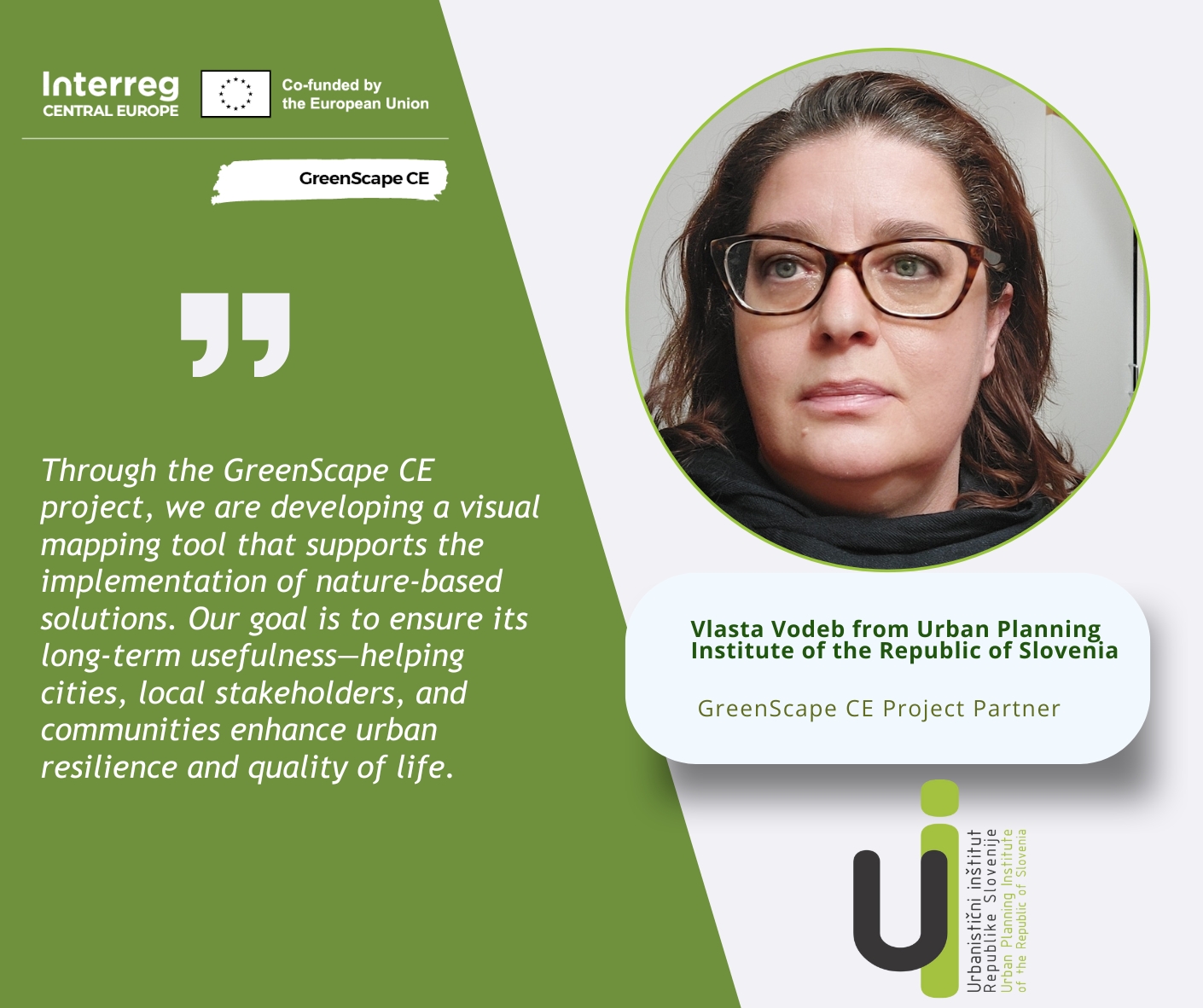
The GreenScape CE Visual Mapping Platform is an interactive map-based platform designed to support the development of pilot actions in the five pilot areas. It provides an overview of the existing green and blue infrastructure and NbS and help to identify opportunities for linking individual GI/NbS actions into a coherent network. Visual mapping is the backbone of climate-resilient urban planning, transforming raw data into clear, actionable insights that guide sustainable development. By integrating diverse datasets—such as land use, population density, climate risks, and green infrastructure—into interactive, visually intuitive maps, planners and communities can: uncover hidden patterns: identify where green spaces are lacking, heat islands form, or flood risks escalate; prioritize interventions: pinpoint the most effective locations for Nature-based Solutions (NbS) like urban forests, green roofs, or permeable pavements; foster collaboration: engage stakeholders—residents, policymakers, and experts—in shared decision-making through transparent, easy-to-understand visuals; track progress: measure the impact of GI and NbS over time, ensuring investments deliver real, measurable benefits. The approach ensures transferability, providing other CE cities with the basis and resources for reuse in their urban planning process.
How it worked
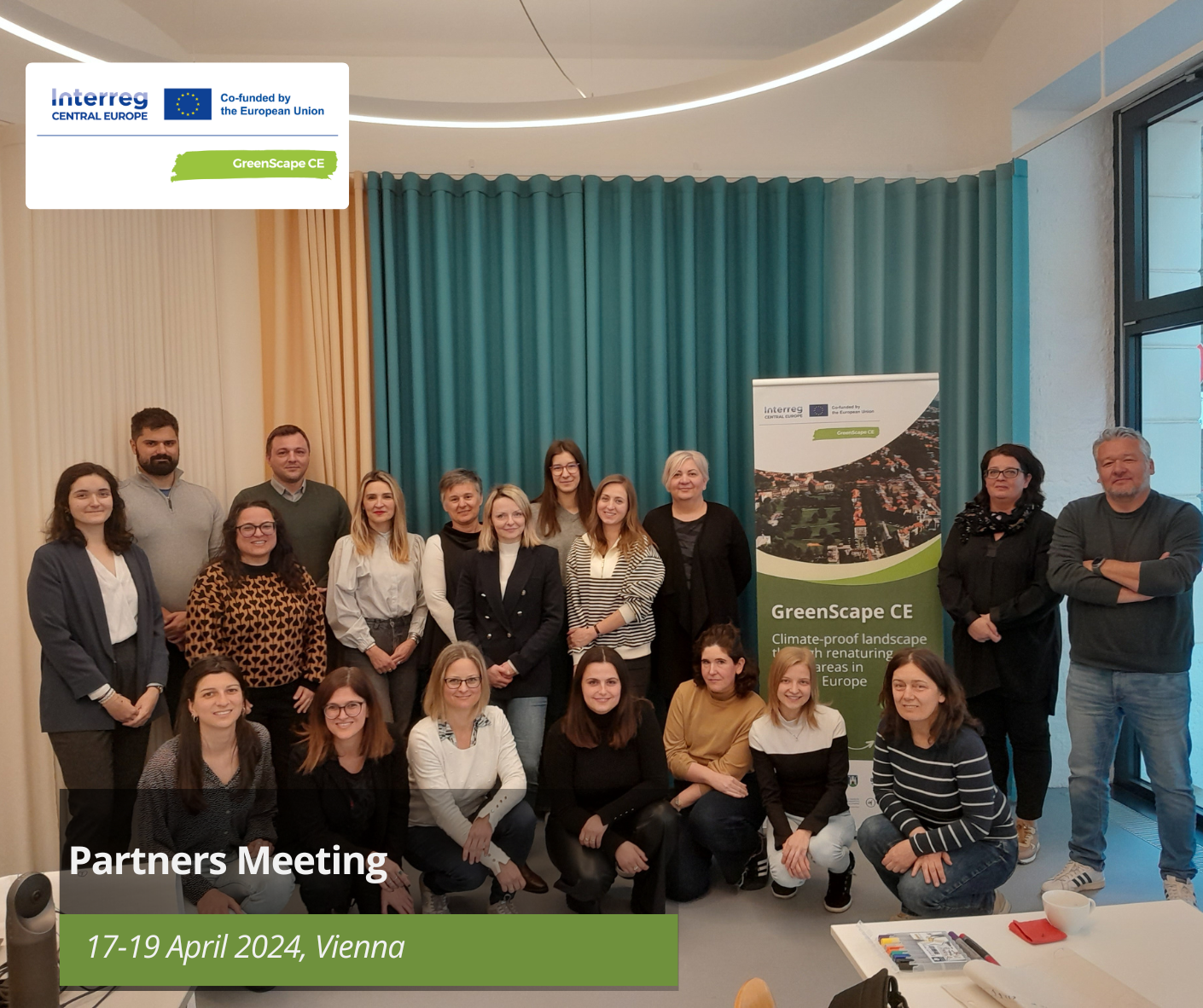
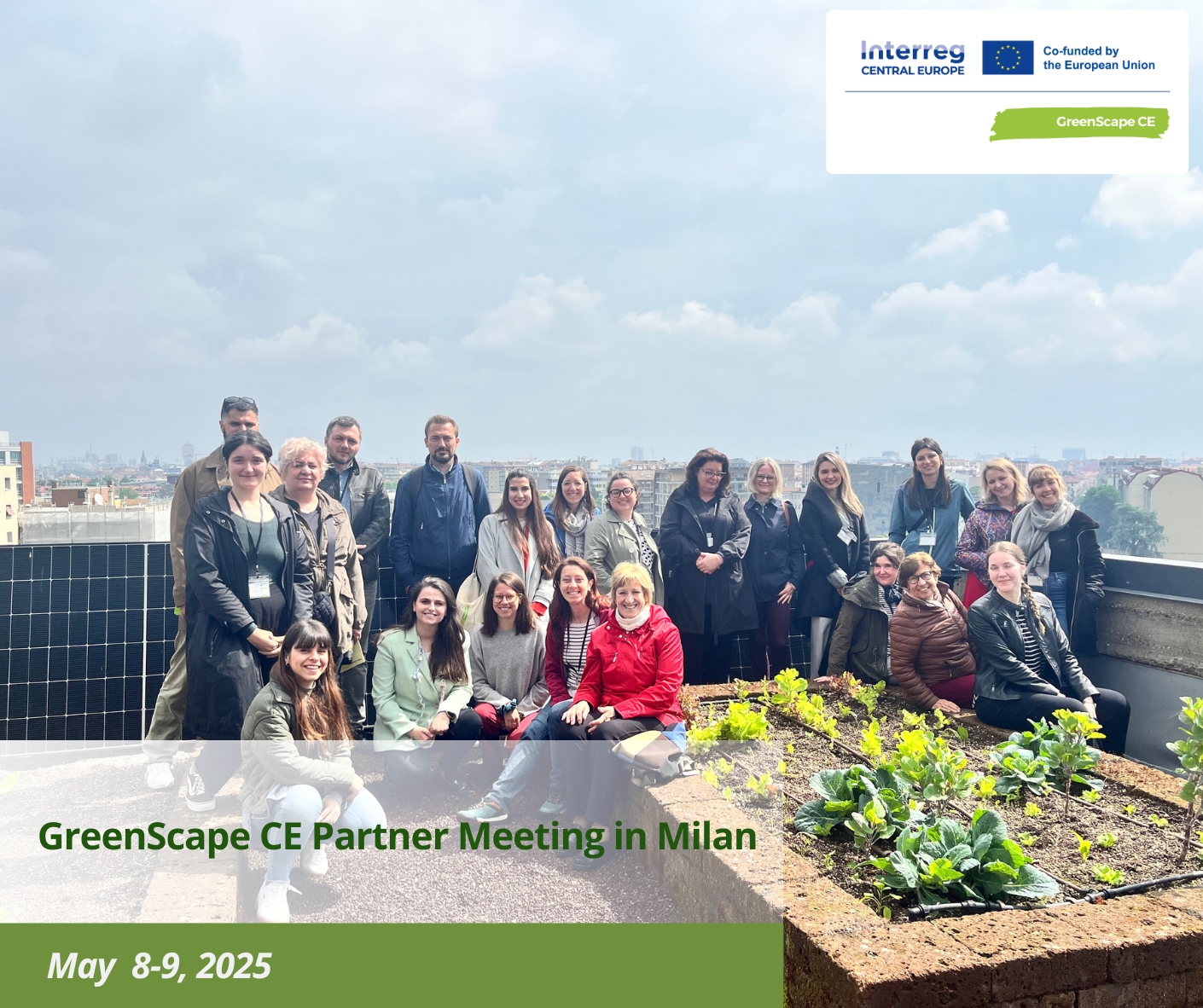
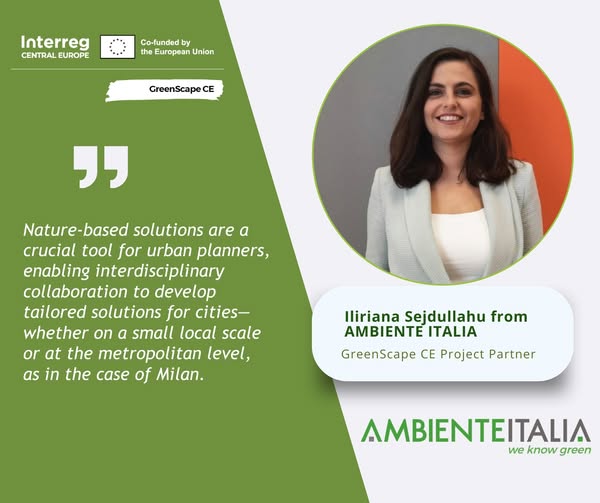
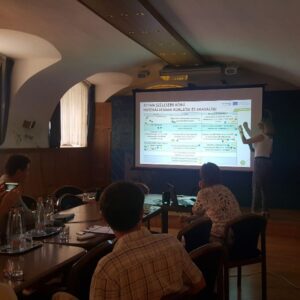
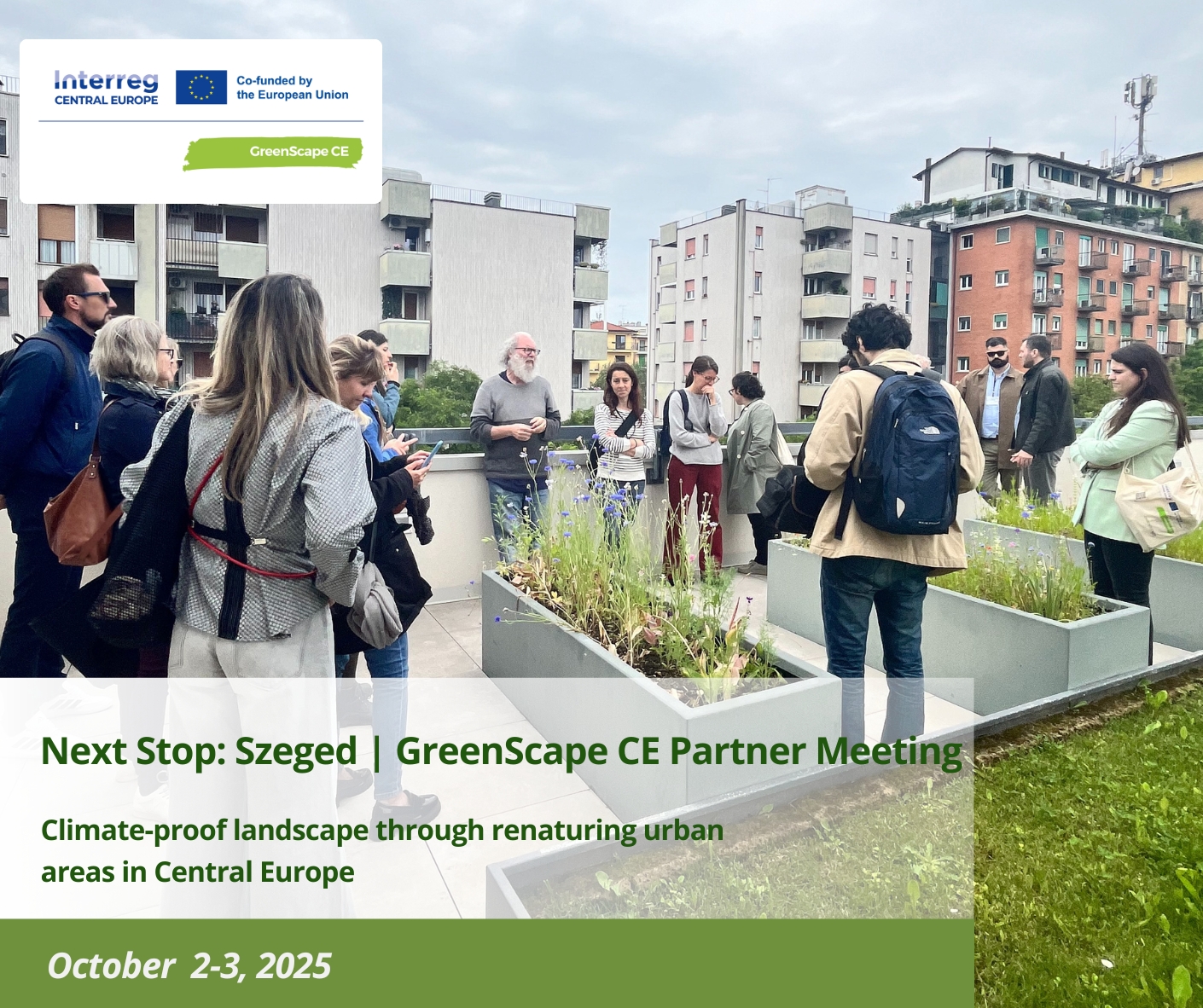
Each pilot city drove the project forward, shaping its success by identifying local needs for Green Infrastructure (GI) and Nature-based Solutions (NbS). They didn’t just participate—they led, hosted, and inspired, turning their cities into collaboration hubs where partners reviewed progress, planned next steps, and explored real-world NbS through visits to sites like Milan’s green roofs. The Grassroots Participation activity set the stage with a Multistakeholder Engagement Roadmap and Train the Trainers program, equipping partners with tools for inclusive, engaging events. These weren’t just discussions—they empowered communities to co-create solutions. The hackathons took this further, serving as catalysts for change: raised awareness about climate challenges and NbS benefits; fostered collaboration across disciplines and sectors; ignited creativity, with even unselected ideas sparking new local projects; built trust between communities and administrations, proving co-created solutions work. These events didn’t just spark short-term ideas—they fueled lasting partnerships, many evolving into ongoing NbS and resilience efforts.
Proof/credibility
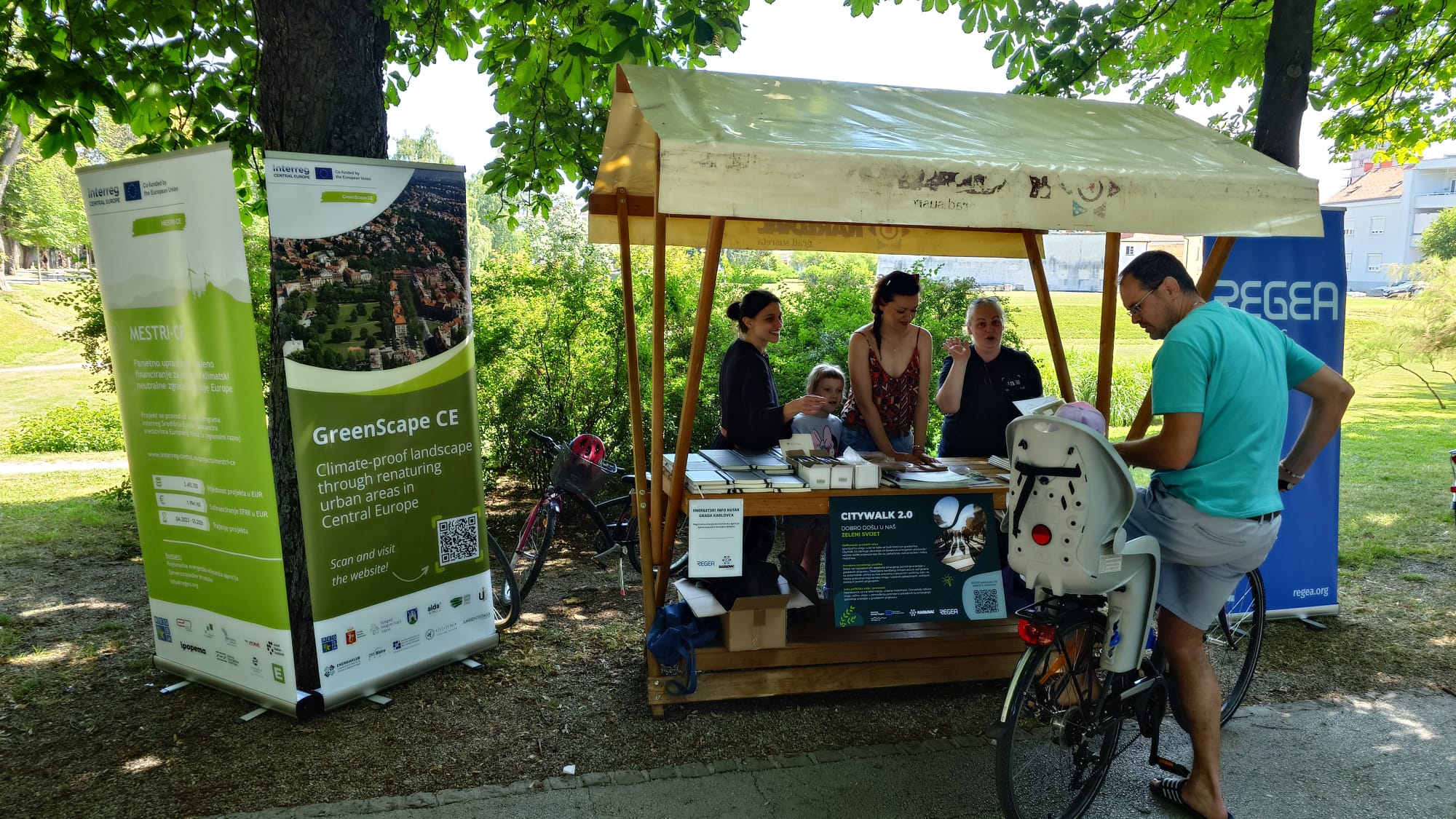
Pilot actions carried out in five Central European urban areas, where partners jointly developed, tested, and implemented key aspects of urban nature-based solutions (NbS) and green infrastructure (GI). These actions focused on three main areas: citizen engagement and co-creation, technical and tendering solutions, and financing models (including public, private, and citizen-led approaches). The process combined stakeholder collaboration, practical testing, and shared learning to ensure that solutions were feasible, inclusive, and adaptable to real urban contexts. The results were presented through clear infographics, making the outcomes more accessible and easier to understand for the general public. The benefits reach a wide range of people and institutions. Residents and public space users gain greener, more livable neighborhoods and greater opportunities to shape their surroundings. Also the broader public gains clearer, more accessible information about urban greening initiatives through infographics and public events. Local communities and NGOs benefit from stronger relationships with local authorities and a lasting culture of collaboration. City administrations gain practical, replicable models for financing, governance, and citizen engagement.
Vision and Legacy
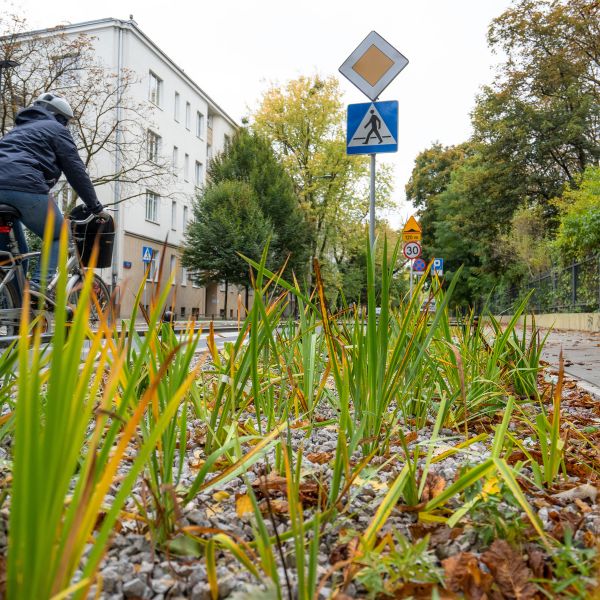
Transformation of urban areas into resilient, sustainable, and environmentally harmonious spaces. The transnational NbS network of cities and followers established within the project, is foreseen as a permanent and evolving group of institutions and cities that will continuously exchange experiences, share knowledge, and collaborate on Nature-based Solutions, and will be actively promoted by all project partners even after the project ends, with the aim of further expanding and strengthening the network over time.
News

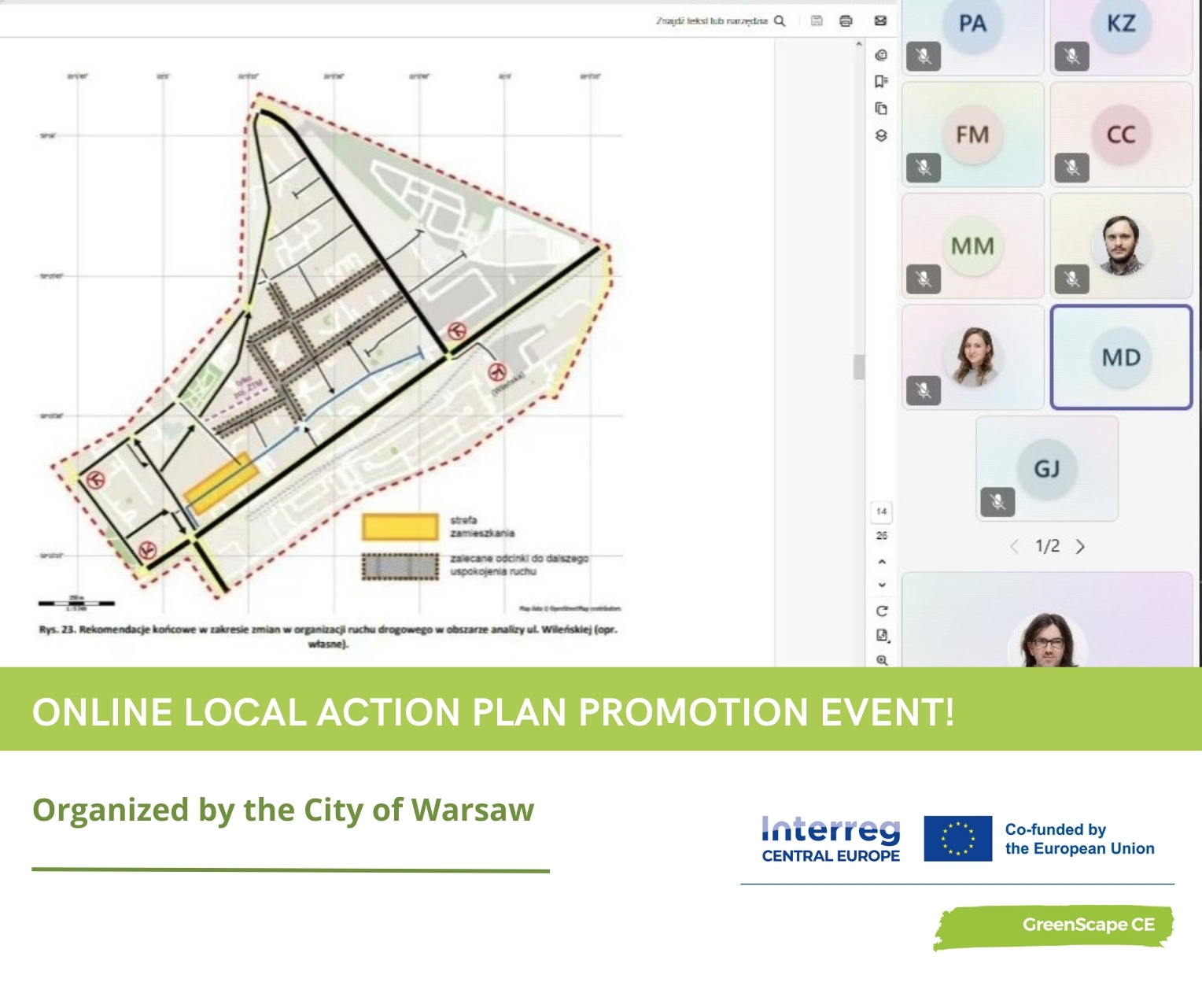
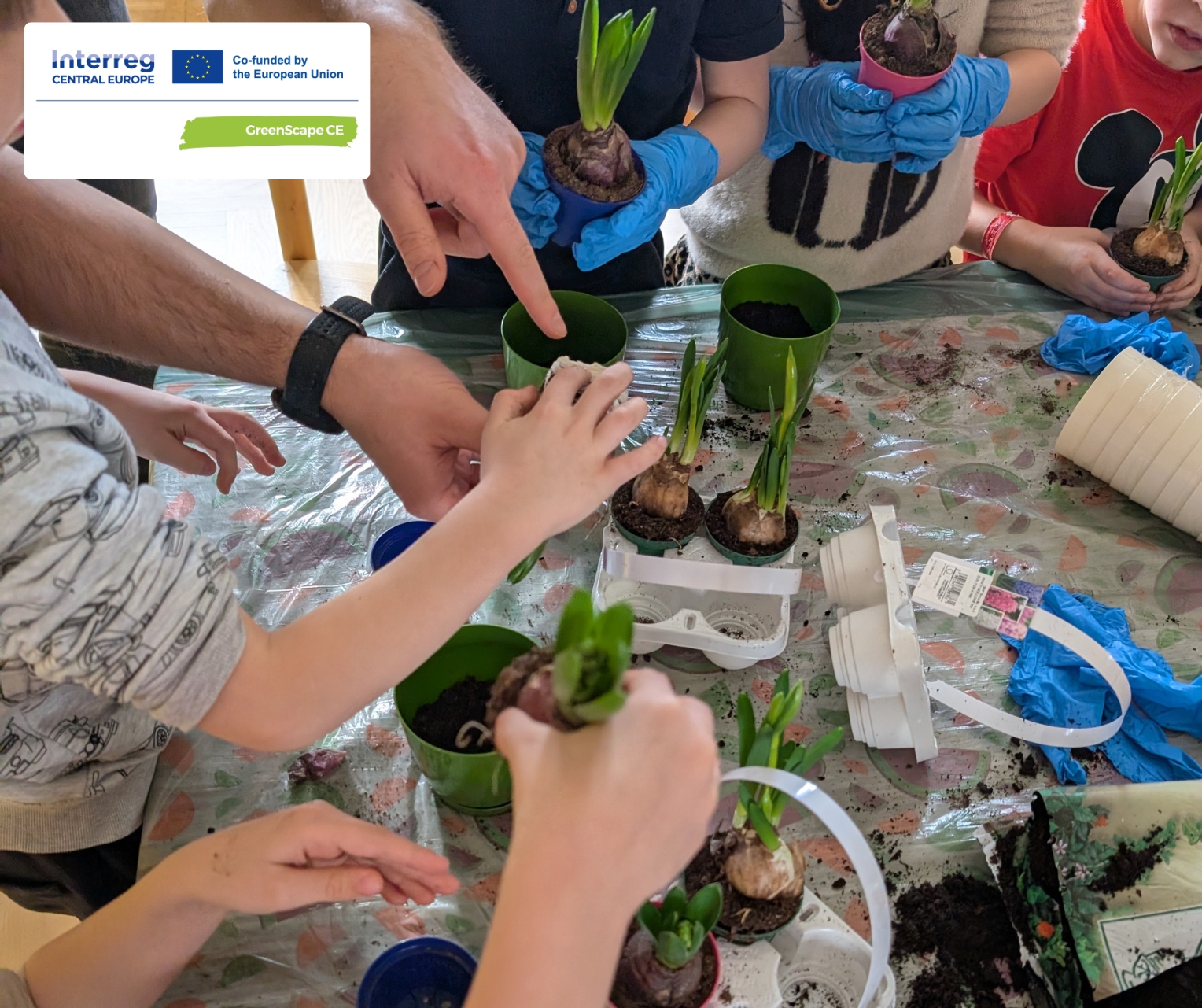
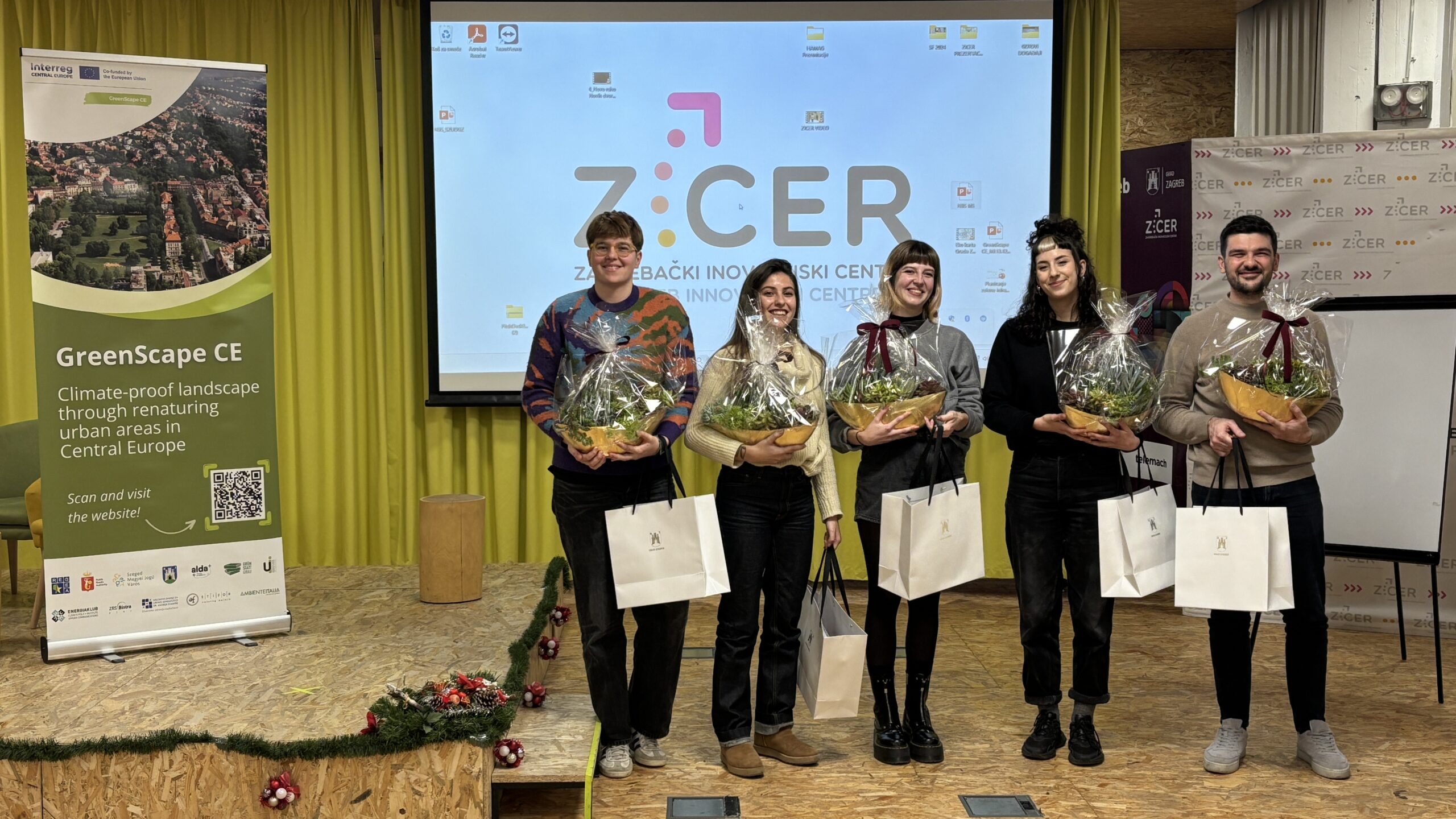
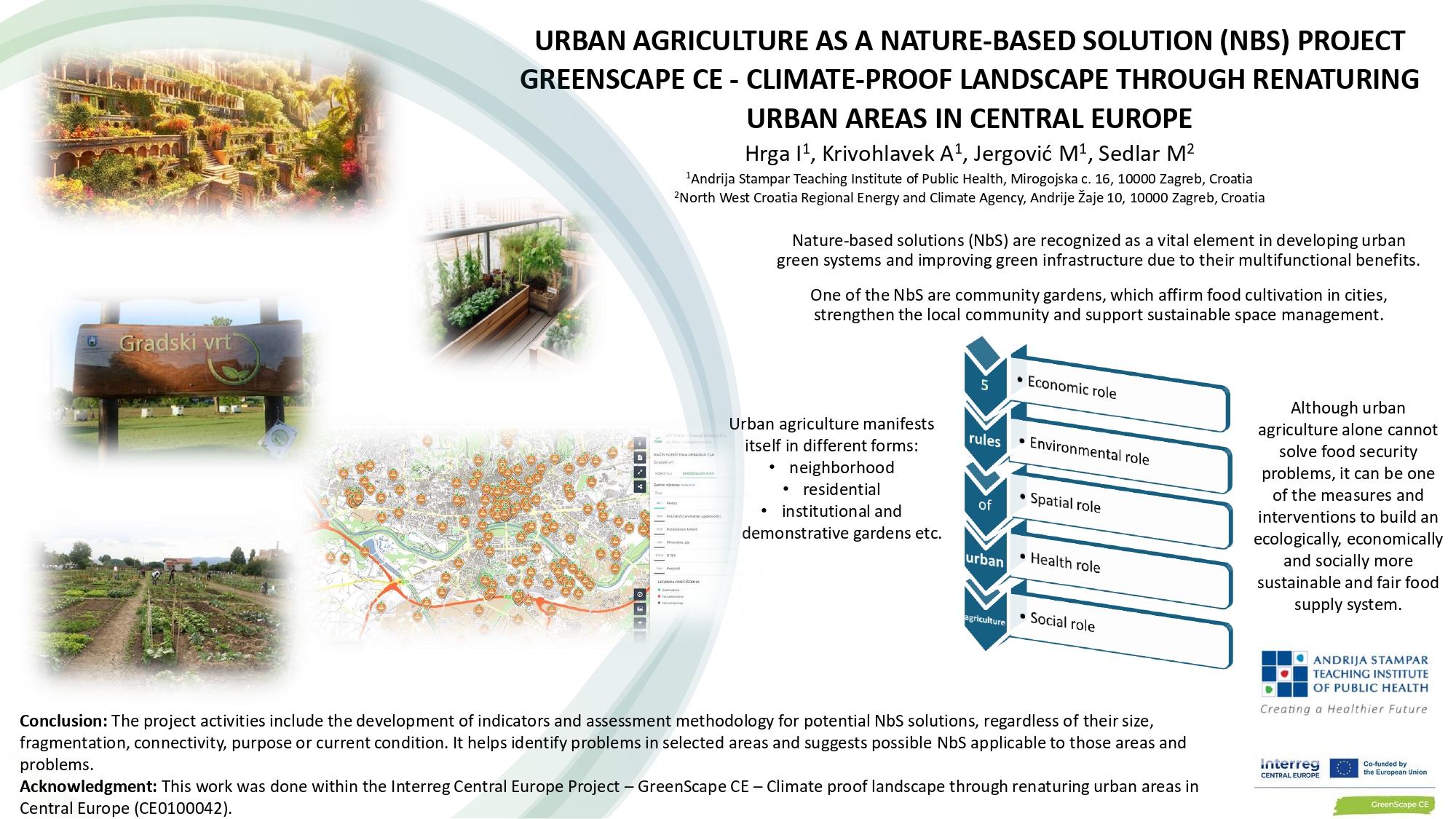
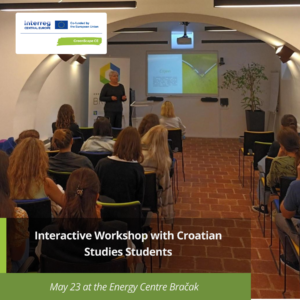
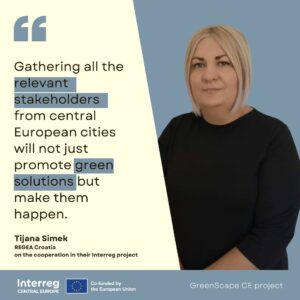
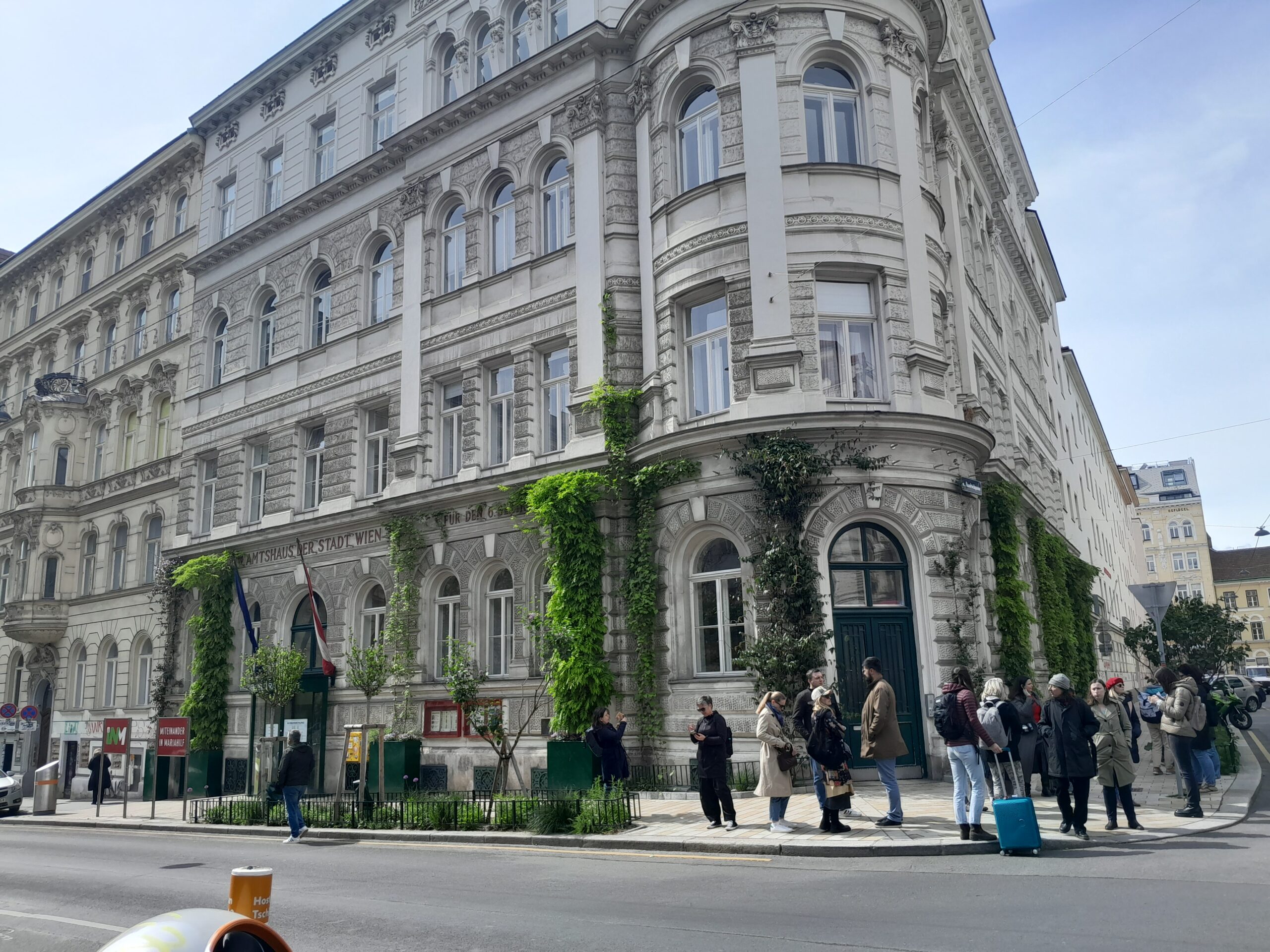
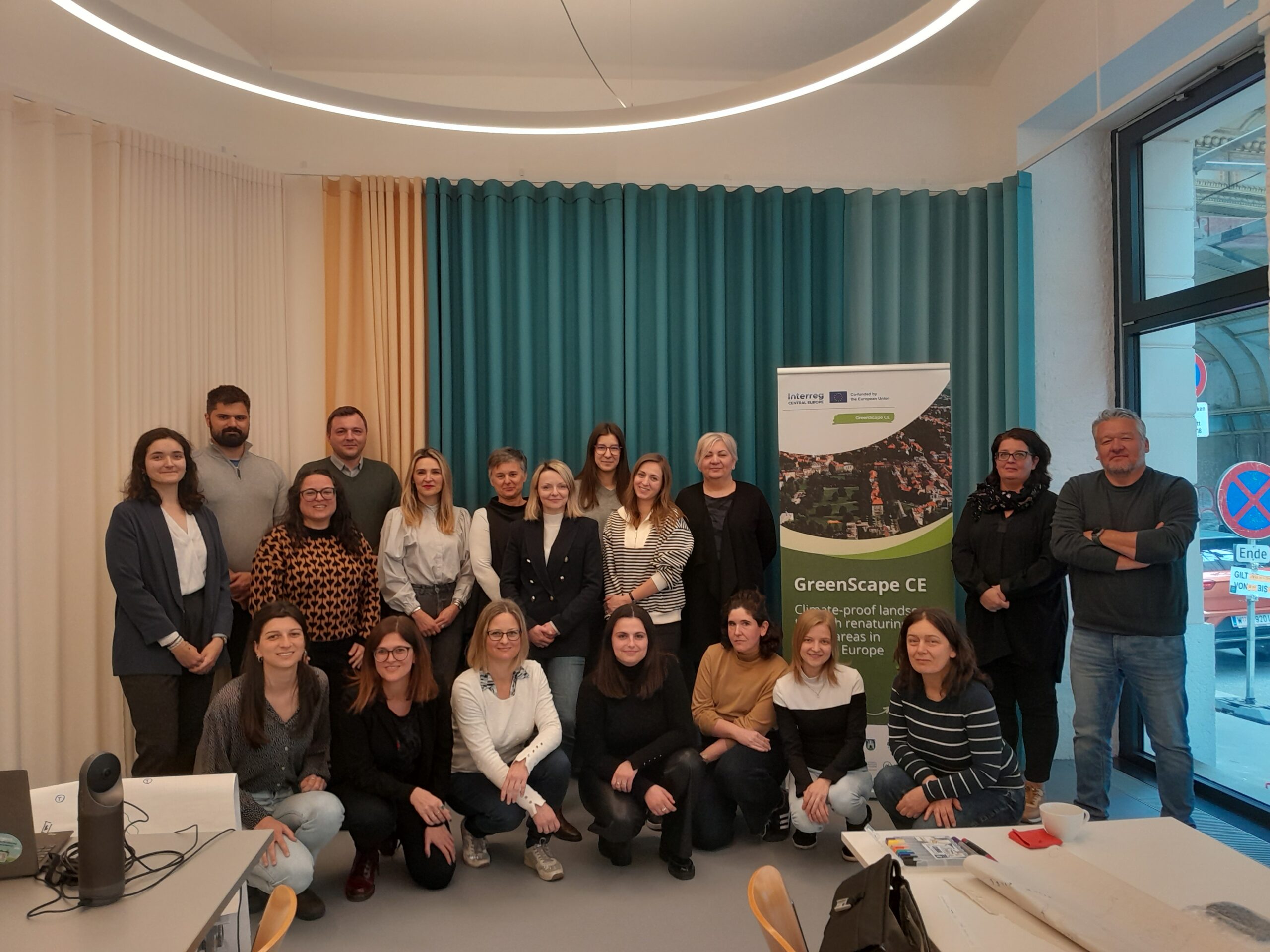
Events

Pilot actions
Outputs
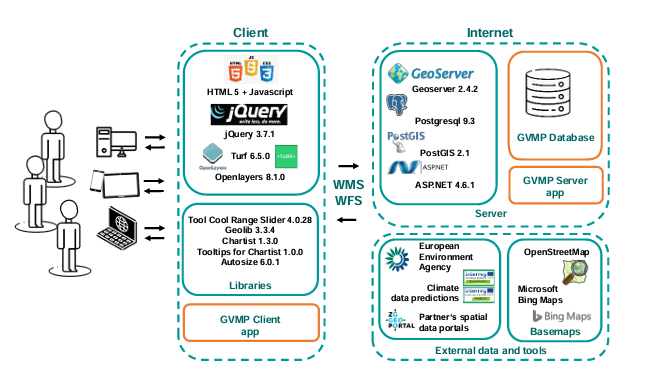
The GreenScape CE Visual Mapping Platform
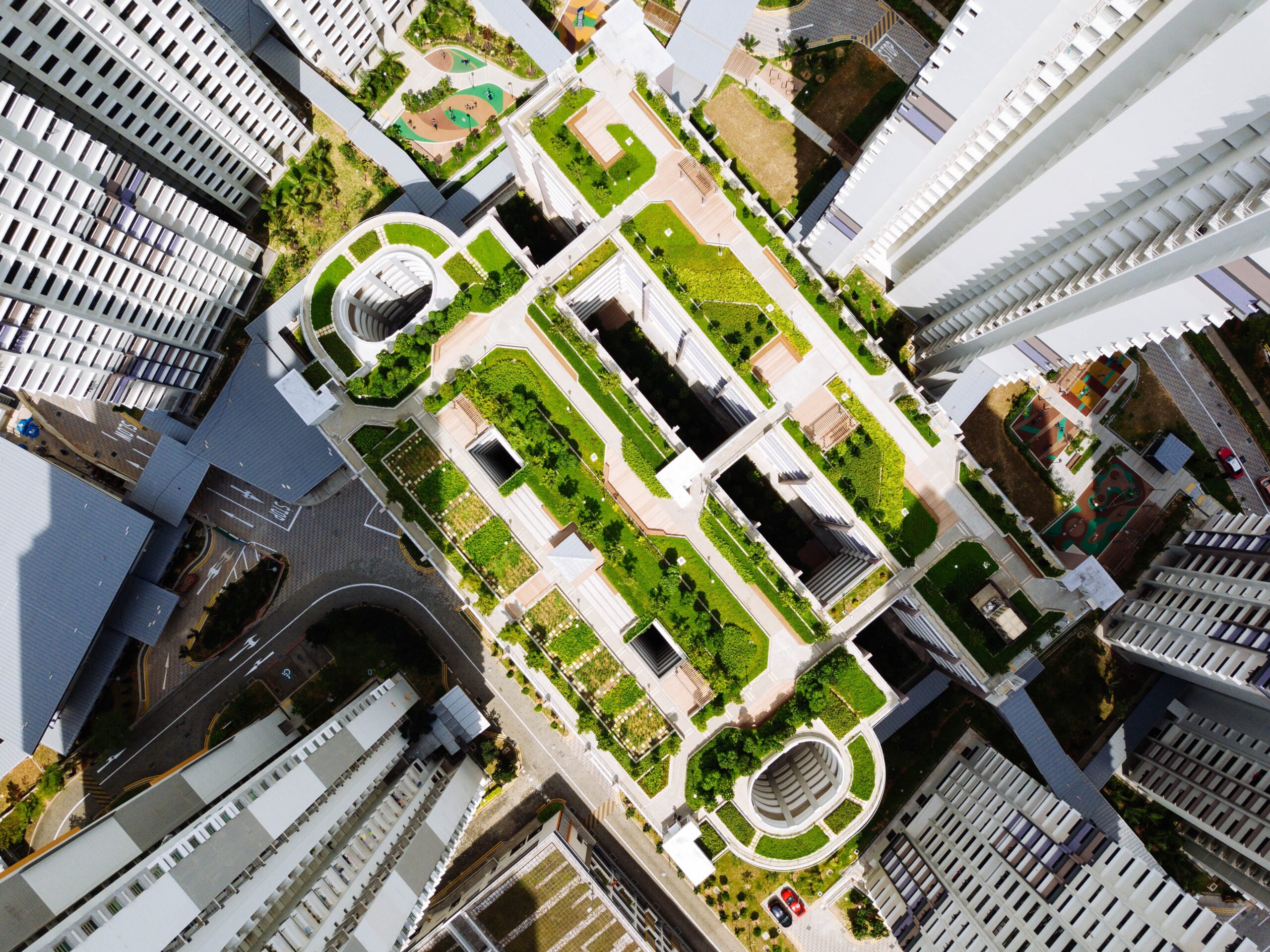
Joint Strategy on Strengthening NBS Implementation in CE
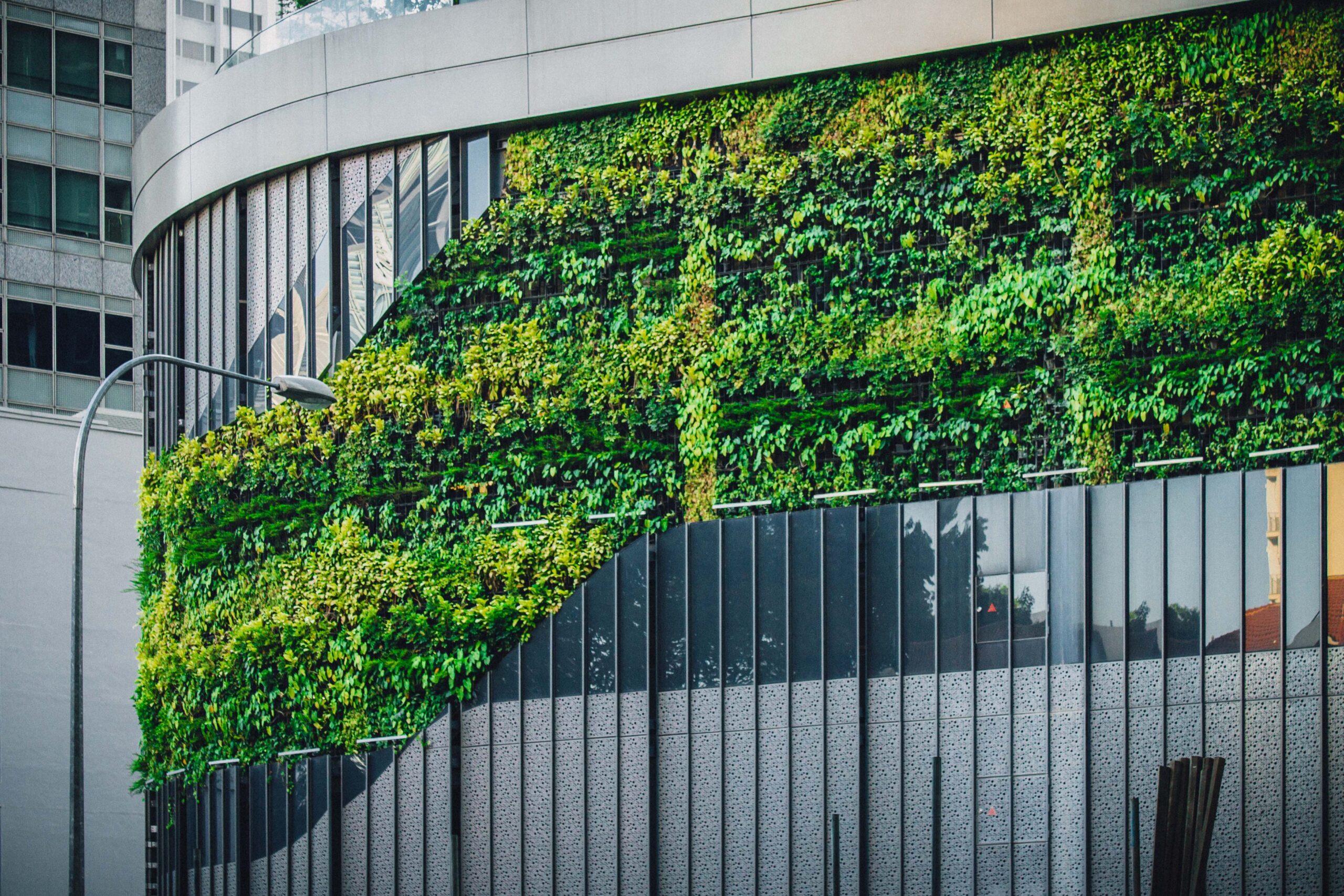
NBS/GI action plans in pilot areas
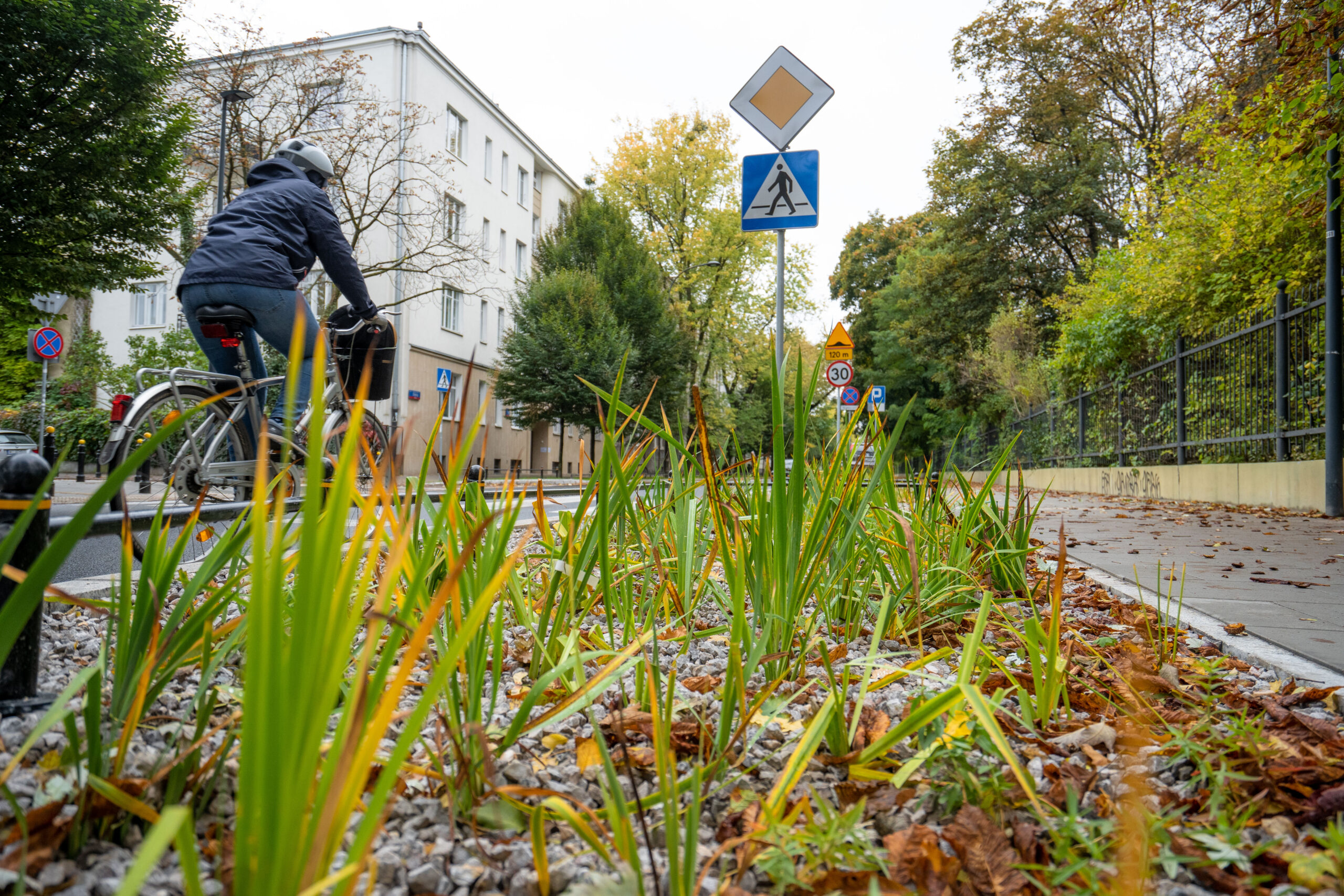
Jointly Developed Technical, Financial and Citizen Engagement Solutions for Implementation of NBS/GI
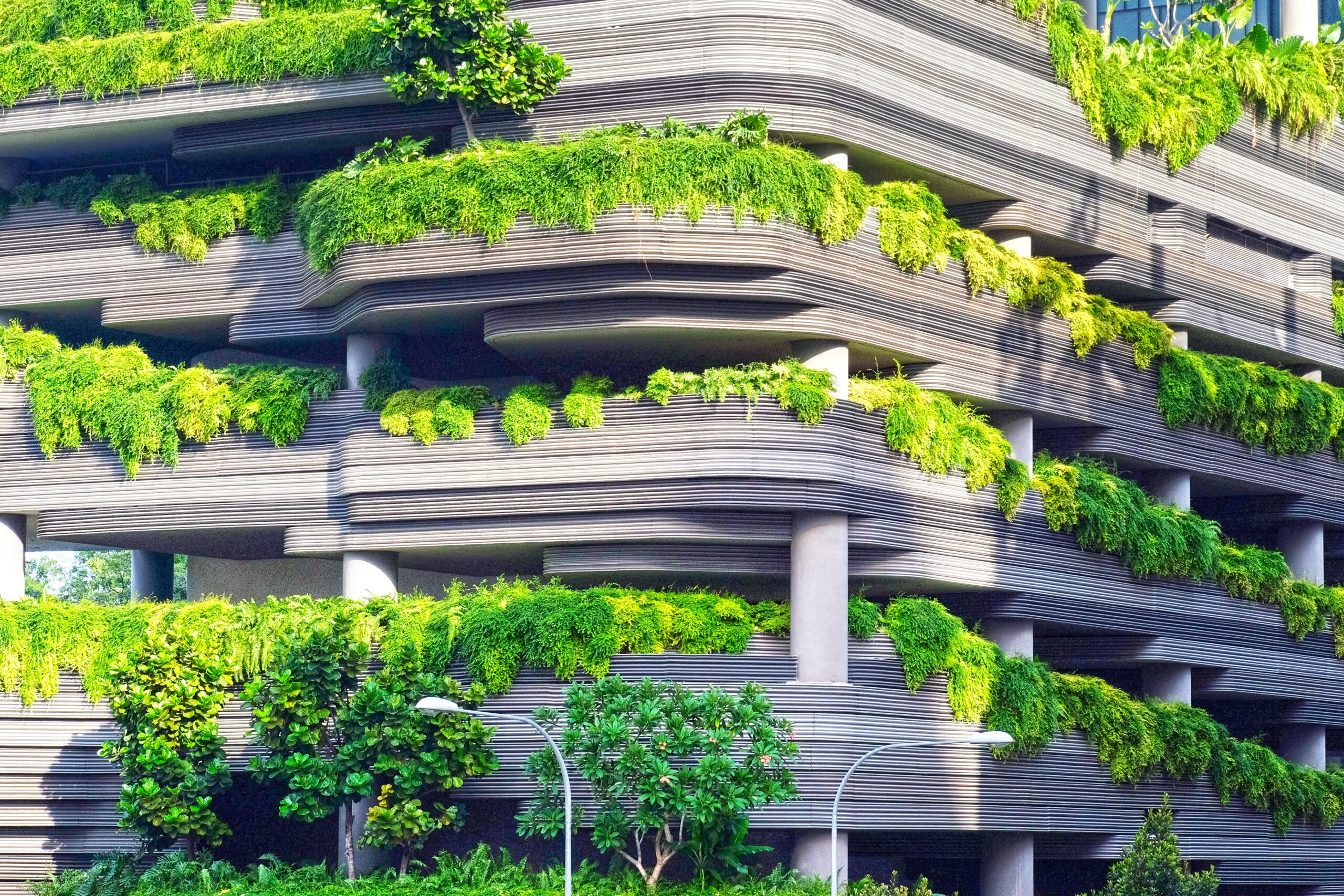
Joint Transnational Strategy on Implementing, Integrating and Funding NBS in Urban Areas

GreenScape CE Package Pitch
- Summary Report On Good Practice Examples Of NBS GI Financing In The EU
- Overview Of Socio Economic Long Term Benefit Of NBS
- Multi Stakeholder Engagement Roadmap
- Gap Analysis Of Existing Financing Mechanisms
- DIY Guide GreenScape CE Final ENG Version
- Toolbox For Selecting Nature Based Solutions (NbS)
- Typology And Criteria For Planning GI And NBS
- GreenScapeCE_PackagePitch
Position Paper
Project videos
Project documents
Success Stories & Articles
Project images
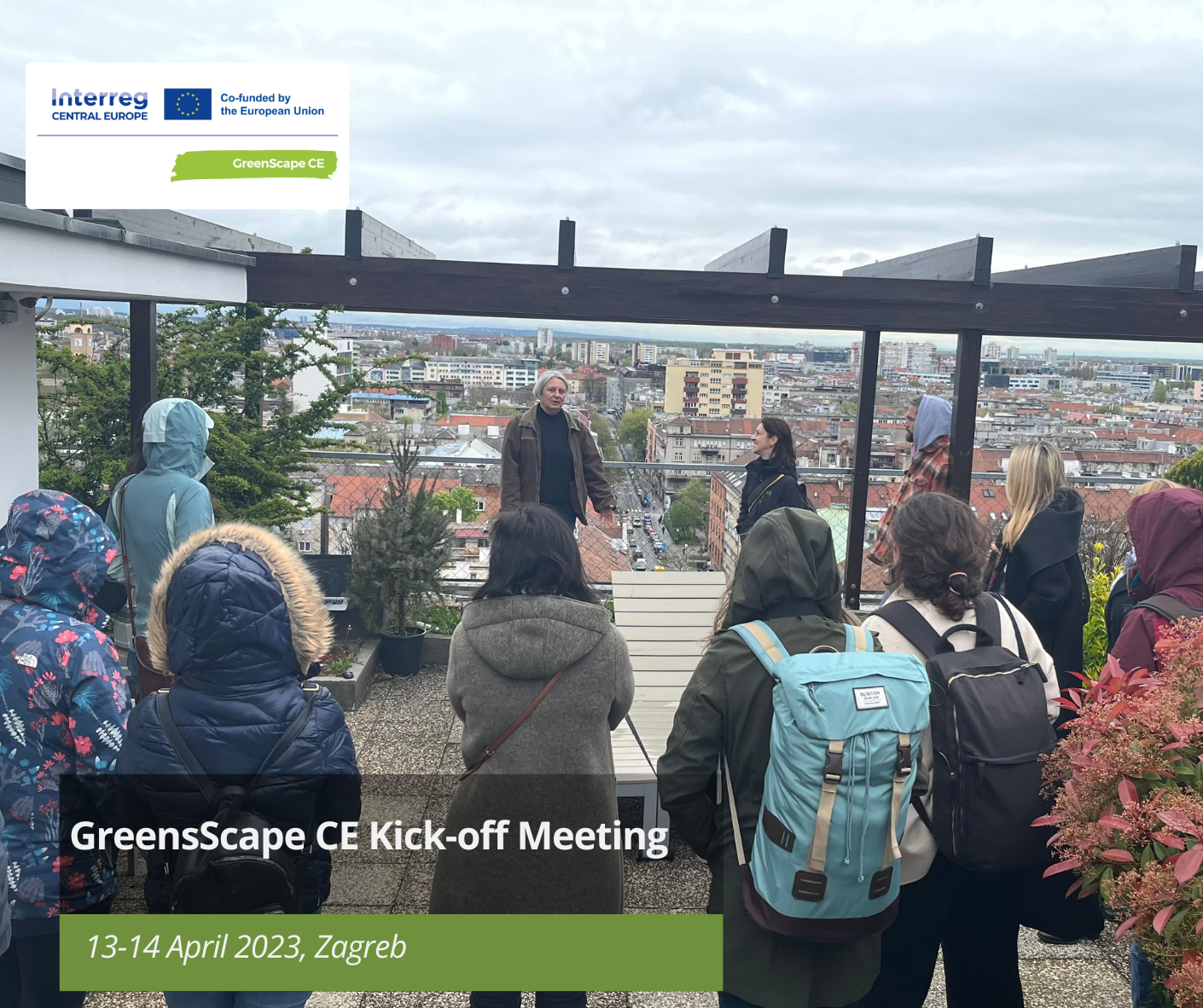
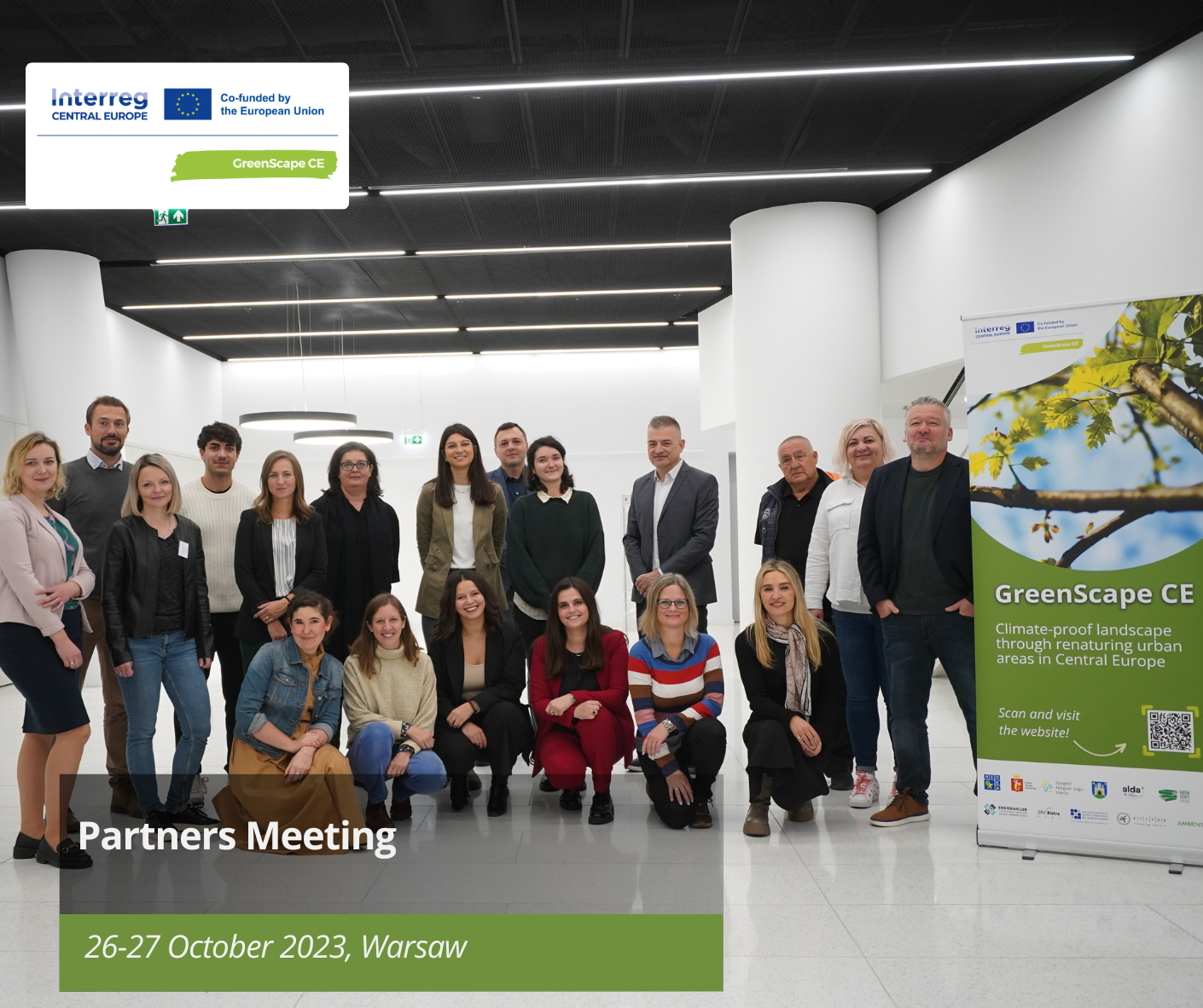
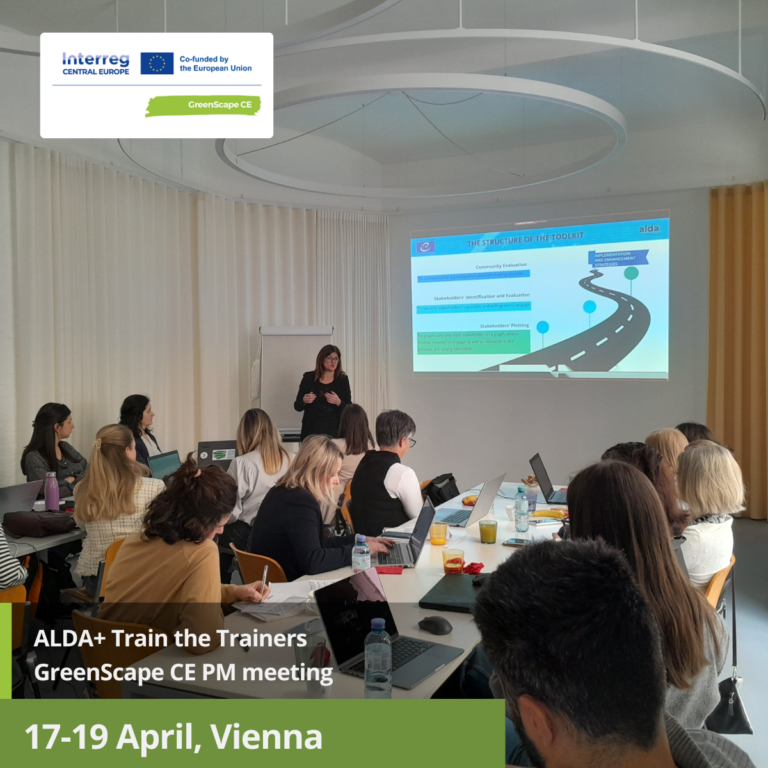
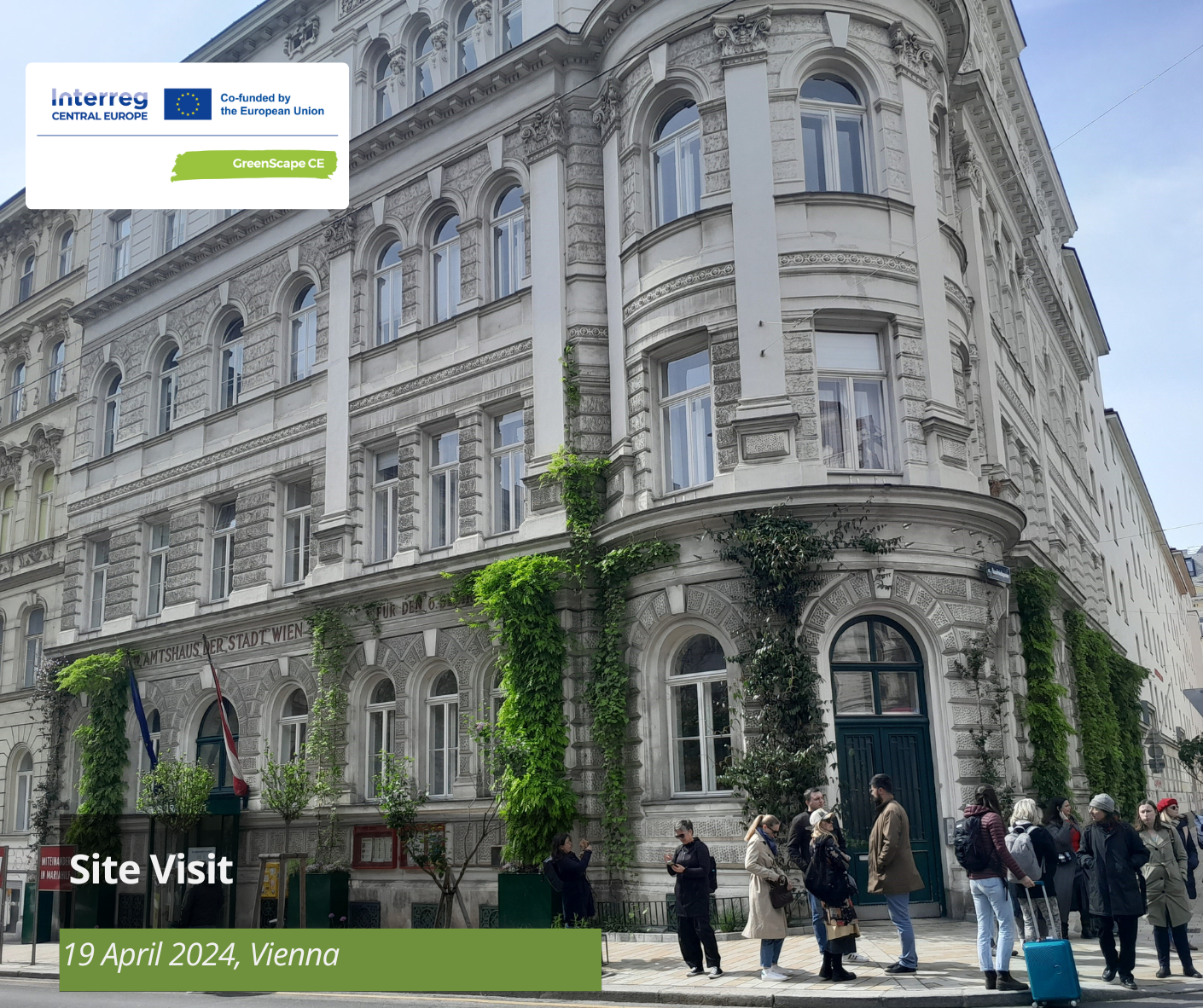
GreenScape CE
The project lead partner is responsible for the content of this project website.