HealthyForestRegions

Project overview

Healthy Forest Regions: Supporting Healthy Forest ecosystems for human well-being in forest Regions

Can there be healthy people without healthy forests? Without fresh air, clean water, climate regulation, biodiversity, and natural recreation places? The answer is “No”. What we need now is commitment. The HealthyForestRegions project aimed at paving the way for regional inhabitants, actors and decision-makers to secure the remaining healthy forests and support the recovery of those jeopardized by human impact.

2,78m €

Project Budget

80%

of the Budget is funded by ERDF

Layer 1

6

Countries

8

Regions

9

Partners

7

Pilots

Duration

Start date

End date

Project progress

100%

About the project

The main goal of the HealthyForestRegions (HFR) Project was the preservation and encouragement of healthy forest ecosystems in Central Europe to secure human well-being - now and in the future.

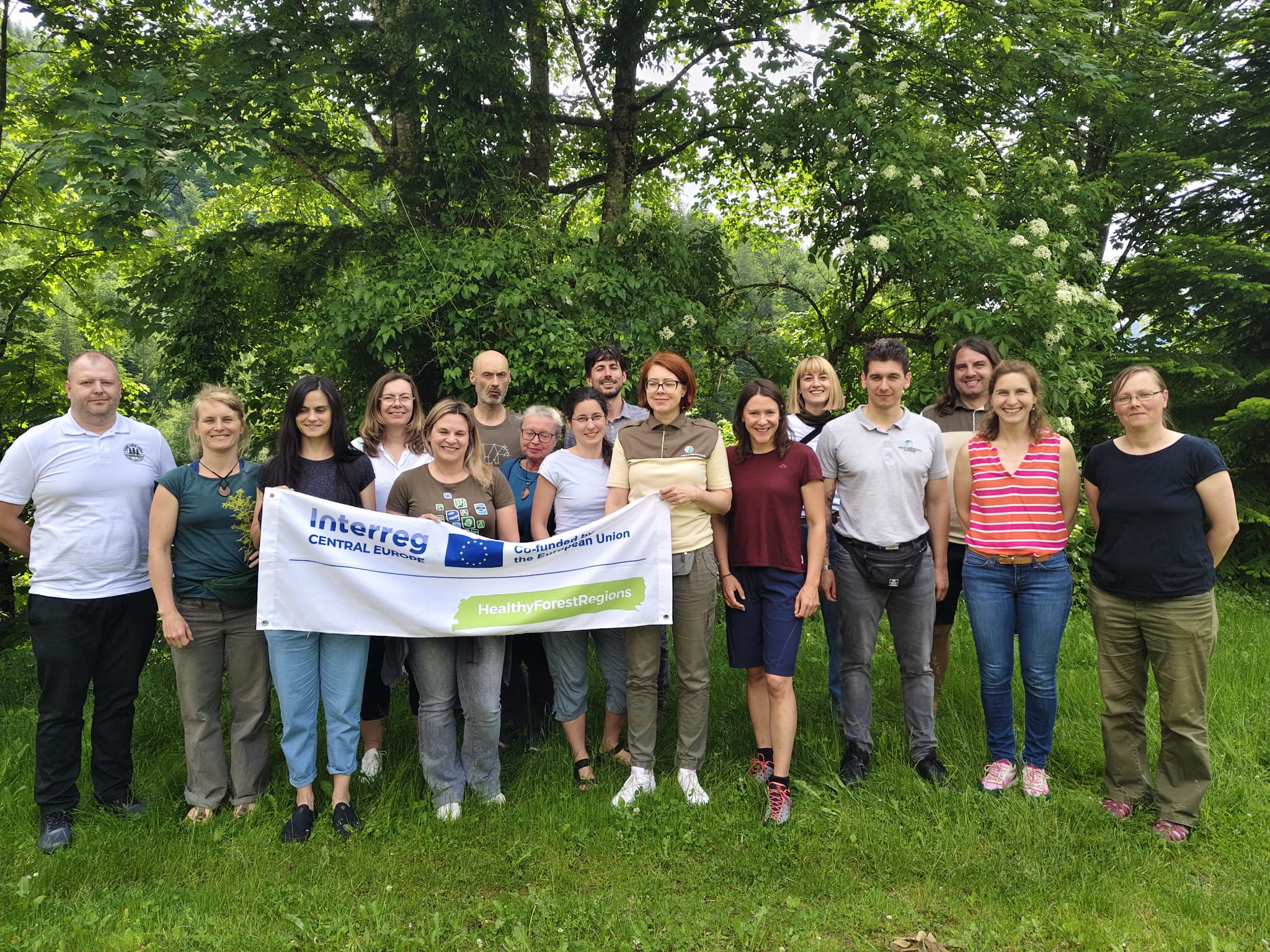
The key actors to put that objective into practice were policy- and decision-makers in certain forested regions. They are the people who have the opportunity and power to make a change. Thus, they are the once we aimed to offer well-founded explanations and feasible solutions. Therefore, we brought to life a transnational project team with widely spread competences: 2 universities, 2 municipalities, 2 national forest services, 2 nature parks and 1 NGO. In close exchange and cooperation, the project partners worked together on three different topics fields to achieve the project goal:

    The first topic field focused on raising awareness and spreading knowledge about the value of regional forests. It also included implementing pilot actions to anchor this value among educational institutions, recreation and tourism organizations, and the local population.

In the second work field, a team of project partners focused on creating alternative income opportunities for local and regional forest owners and managers. These alternatives aimed to reduce the need for intensive timber harvesting, which often compromises forest health. Specifically, forest-based schemes of Payments for Ecosystem Services (PES) were being analyzed and developed.

The third topic field aimed to enable regional policymakers and decision-makers to assess the health of local forests. It also examined how regional regulations and structures impact forest conditions. Based on these findings, measures to maintain and support forest health were developed into a General Forest Health Strategy and a transferable HFR Concept.

Project partnership

Project partners

Deutschland (DE)

Lead partner

Eberswalde University for Sustainable Development

Faculty of Forest and Environment, Centre for Econics and Ecosystem Management, Centre for Econics and Ecosystem Management
Address
Schicklerstrasse 5
16225 Eberswalde
Country
Germany (DE)
Web
www.hnee.de, www.centreforeconomics.org

Project partner

Address
Markt 35
8933 Sankt Gallen
Country
Austria (AT)
Web
www.eisenwurzen.com
Total partner budget
469,704 €
Address
T.G. Masaryka 22
960 01 Zvolen
Country
Slovakia (SK)
Web
https://web.nlcsk.org
Total partner budget
339,159 €
Address
Večna Pot 2
1000 Ljubljana
Country
Slovenia (SI)
Web
www.zgs.si
Total partner budget
538,711 €
Address
Rathaus - Markt 24
16278 Angermuende
Country
Germany (DE)
Web
www.angermuende.de
Total partner budget
191,018 €
Address
Děkanská 74
464 01 Frýdlant
Country
Czechia (CZ)
Web
https://www.masif.cz/
Total partner budget
169,560 €
Faculty of Forestry and Wood Sciences (FFWS)
Address
Kamýcká 129
165 00 Praha
Country
Czechia (CZ)
Web
https://www.fld.czu.cz/en
Total partner budget
100,040 €
Address
Dr. F. Tuđmana 14a
23244 Starigrad-Paklenica
Country
Croatia (HR)
Web
www.np-paklenica.hr
Total partner budget
206,400 €
Address
Ljubljanska cesta 26
1330 Kočevje
Country
Slovenia (SI)
Web
https://www.kocevje.si/Home?lang=en
Total partner budget
168,120 €

Roadmap

1

What is the project about?

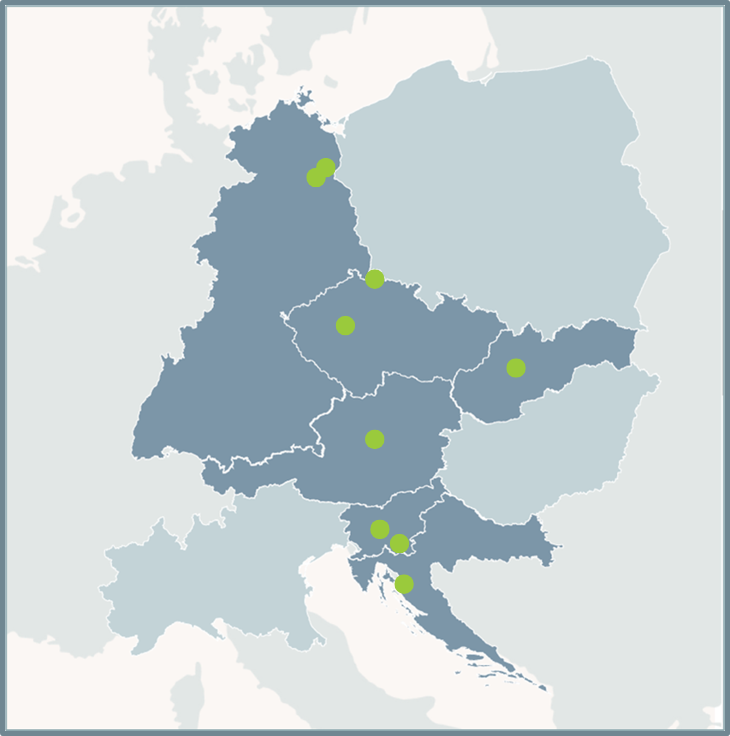
The HealthyForestRegions Project connected 9 Central European partner organizations in 6 different forested European regions to jointly work on the conservation and recovery of regional forests.

2

What are the problems the project addressed?
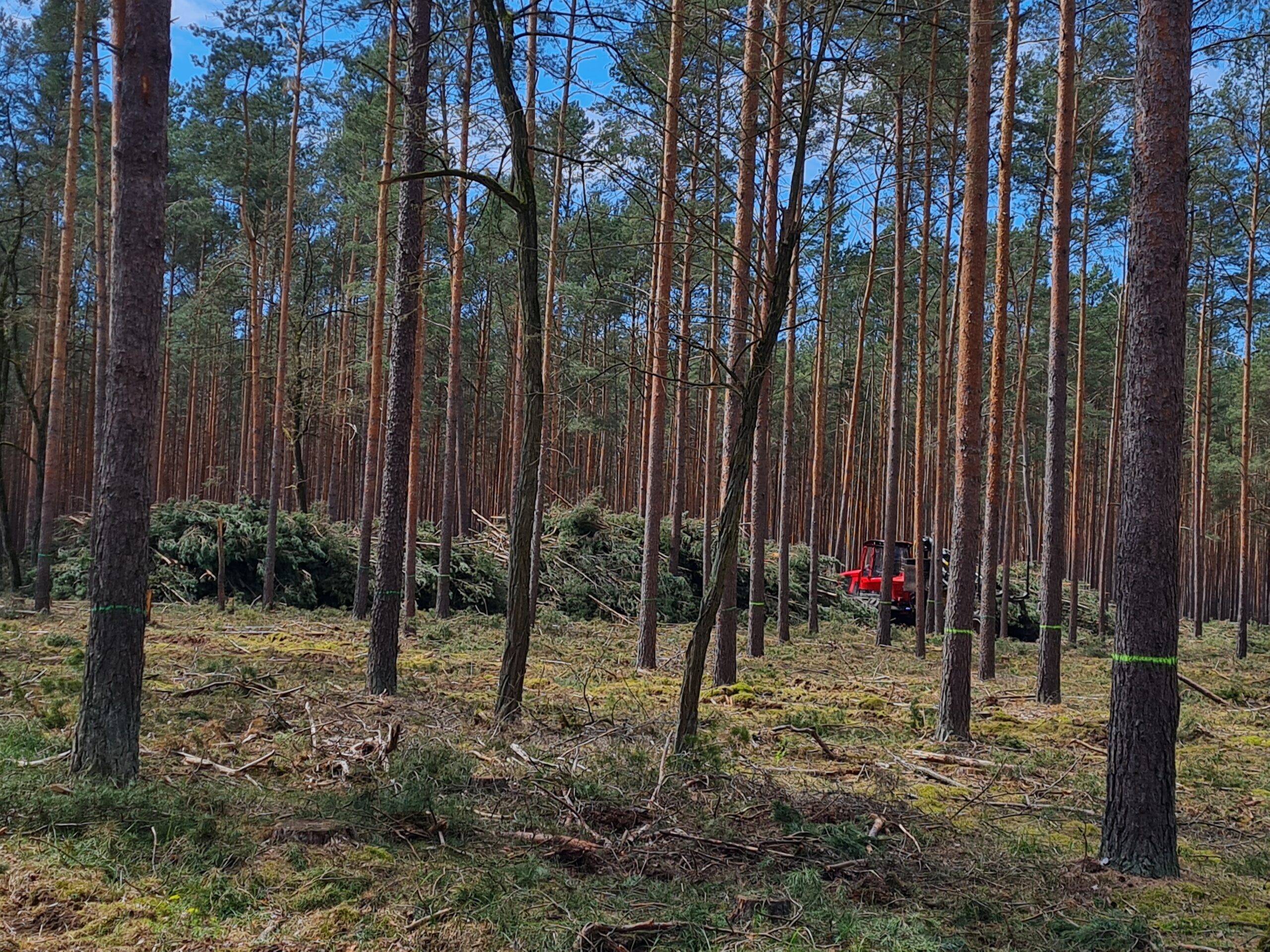
Human well-being is deeply connected to the health of regional forests, but their continued existence is jeopardized by intensive forest management practices and timber production, as well as by changing environmental conditions.

3

The key question...

In order to remain and become healthy, forests need socio-ecological and political conditions that allow them to develop their powers of self-regulation and self-preservation. Thus, the key question is: How can we ensure such conditions?

4

What is the solution we developed?

To ensure conditions that help forests to self-regulate and regenerate, the HFR Project addressed and supported the people who are in power of influencing those conditions: the regional policy- and decision makers.

5

What were important steps to reach our objective?

UNDERSTANDING what healthy forests are and what conditions are needed to support them

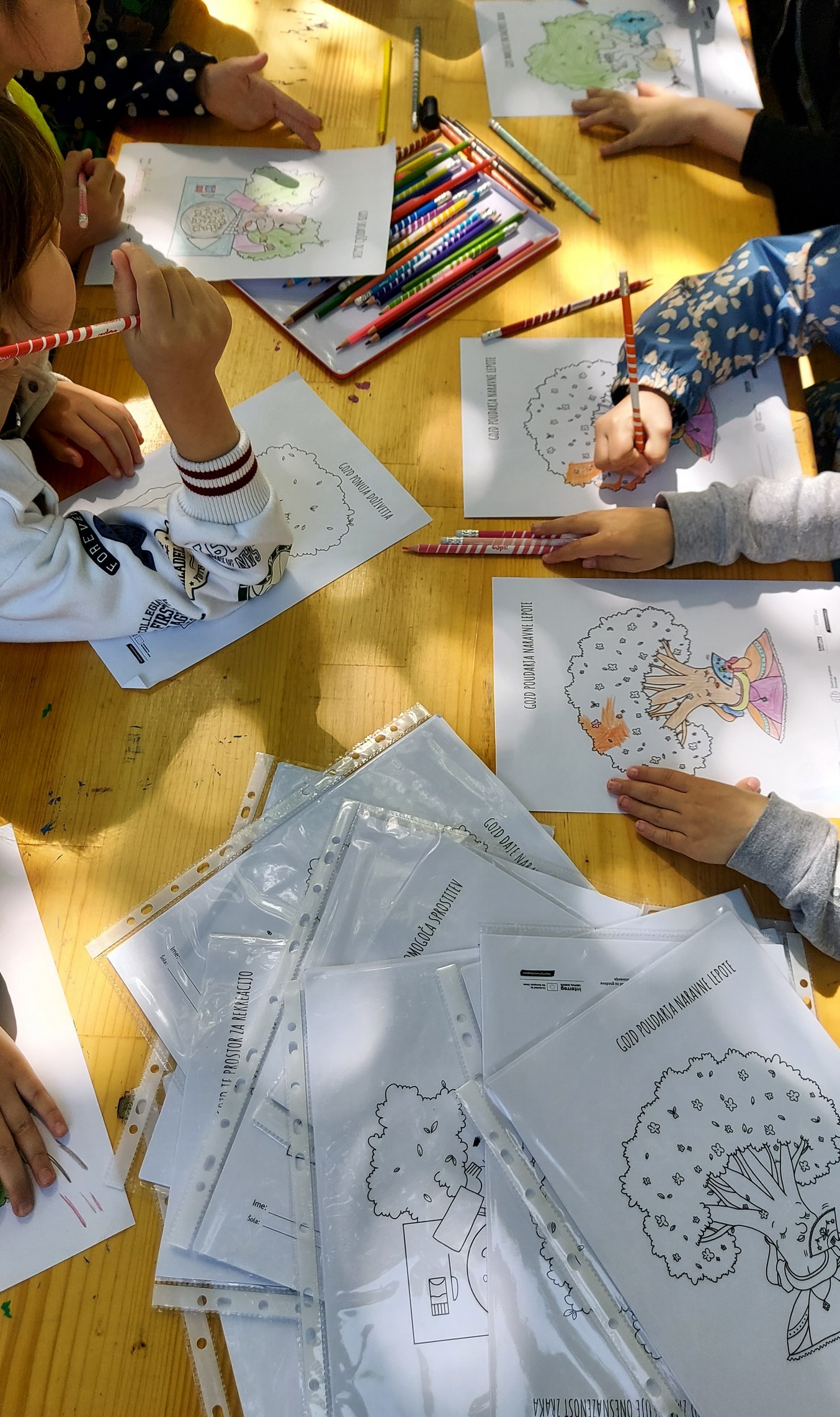
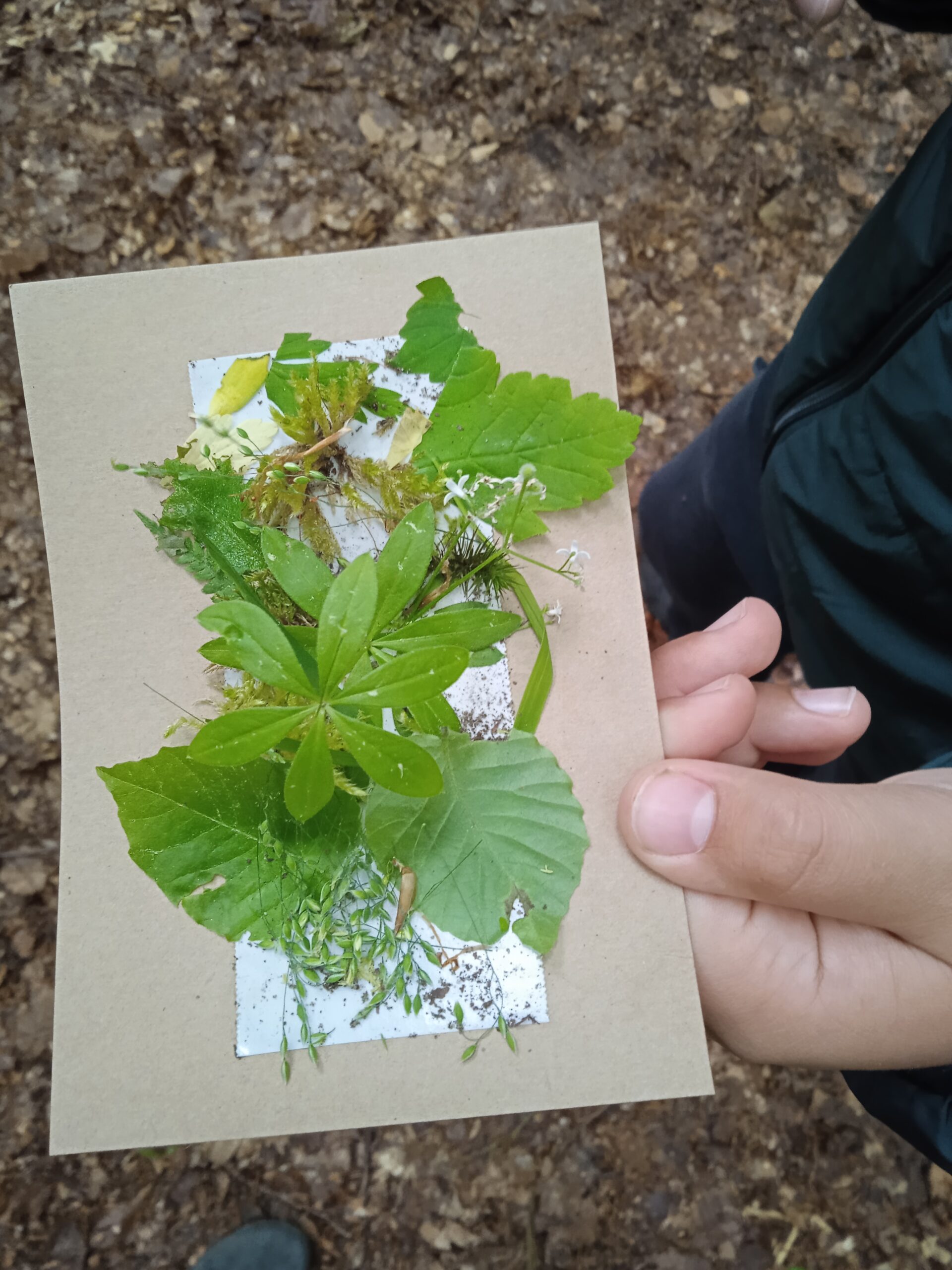
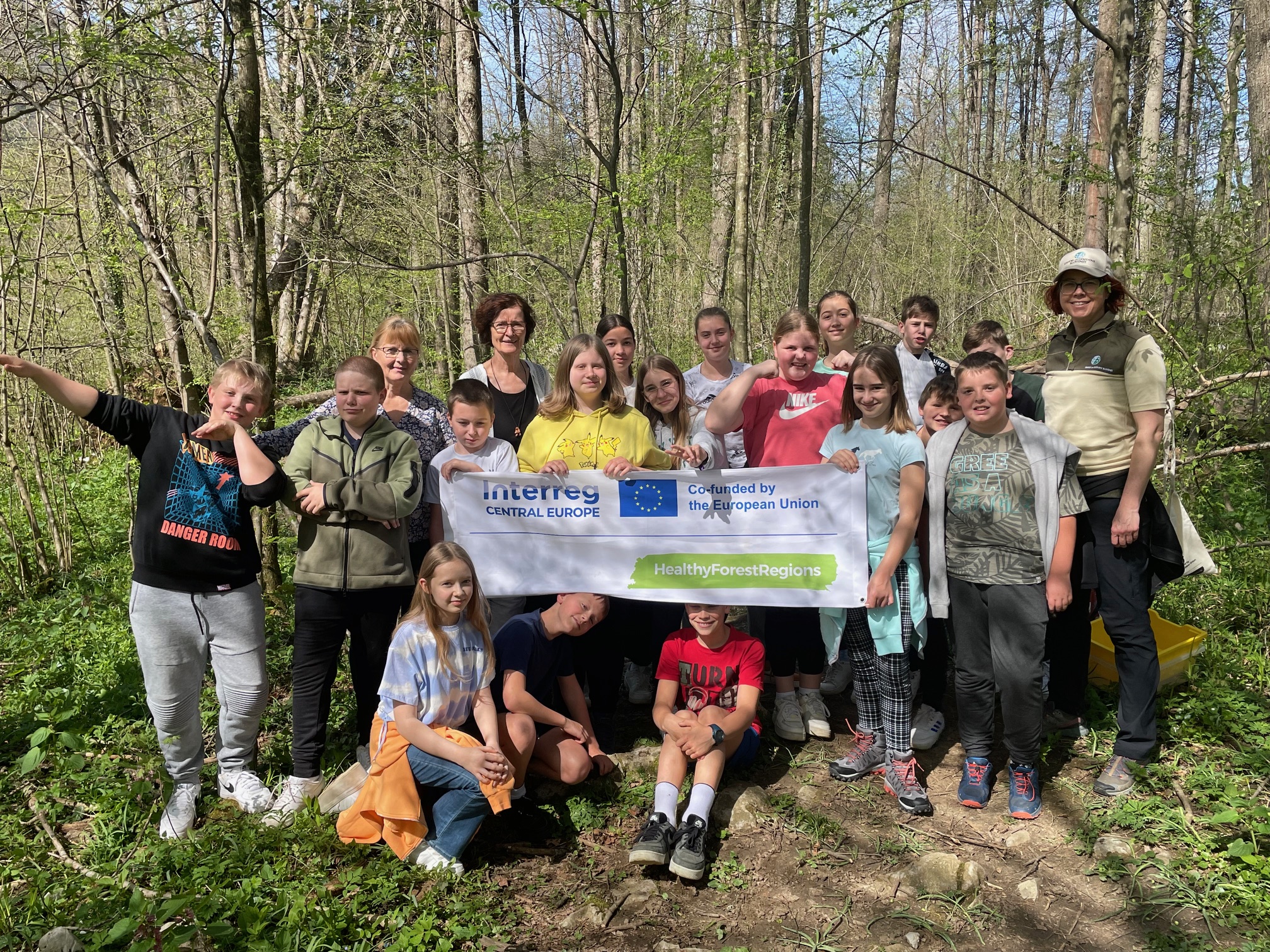
ADDRESSING the local people and children with diverse forest education and experience offers

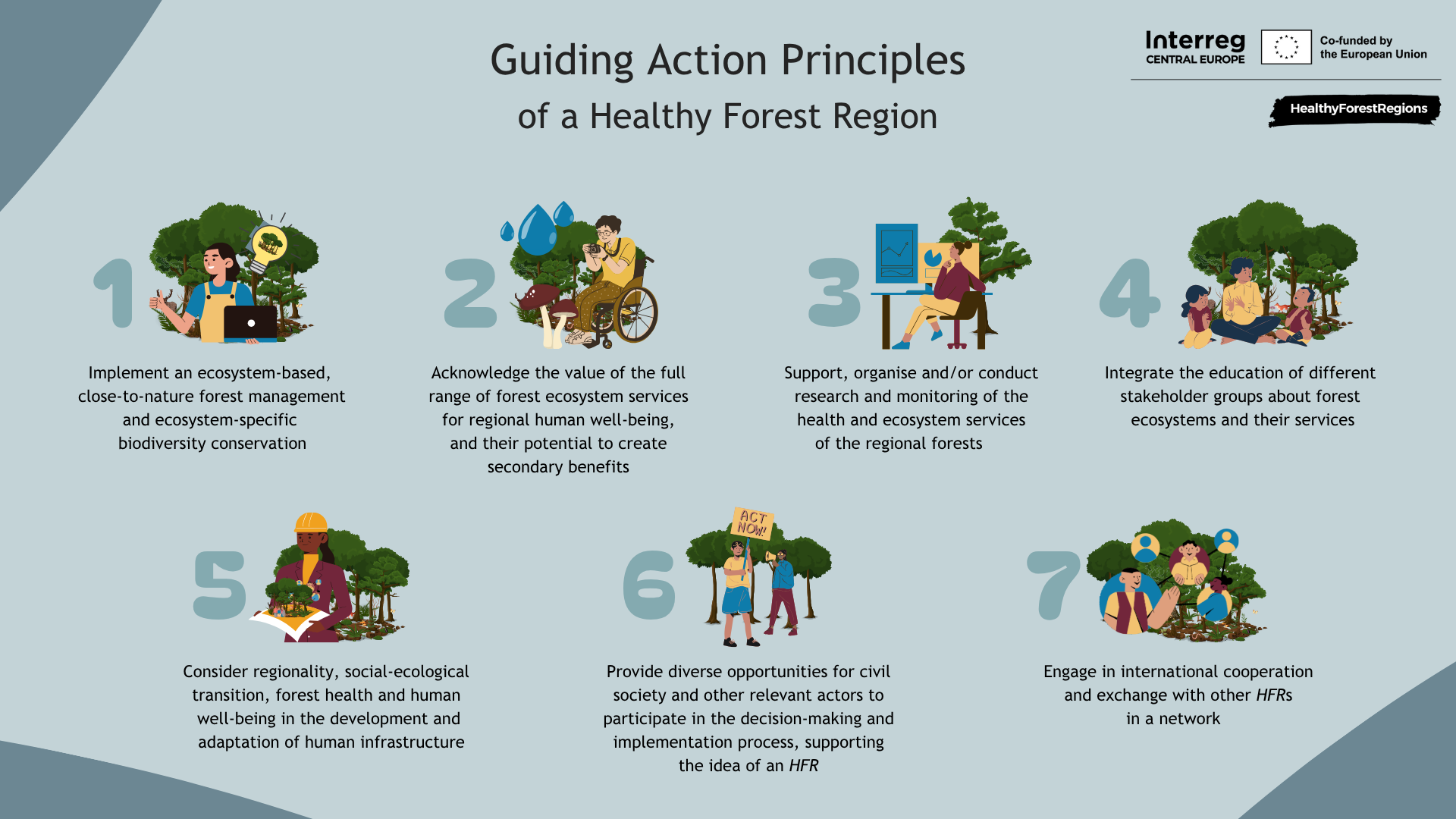
DEVELOPING strategies and action plans to become a region with healthy forests that support the well-being of people working, living, and spending their time there

OFFERING alternatives for people who economically depend on timber production

CREATING commitment among regional political and decision-makers to secure the continued existence and recovery of healthy forests.

6

What impact did we have?

We are proud and grateful to have initiated significant developments across six forest-rich Central European regions. Together with nine partner organisations, we developed practical solutions on three levels: forest education and recreation, ecosystem services, and policy support. These efforts culminated in the Healthy Forest Regions Concept—a transferable framework for forest-based regional development. Most importantly, 28 organisations have formally committed to continuing the collaboration, ensuring that educational programmes, tourism offers, and governance approaches live on in regional initiatives and follow-up projects.

7

How the HFR Project ideas are carried on

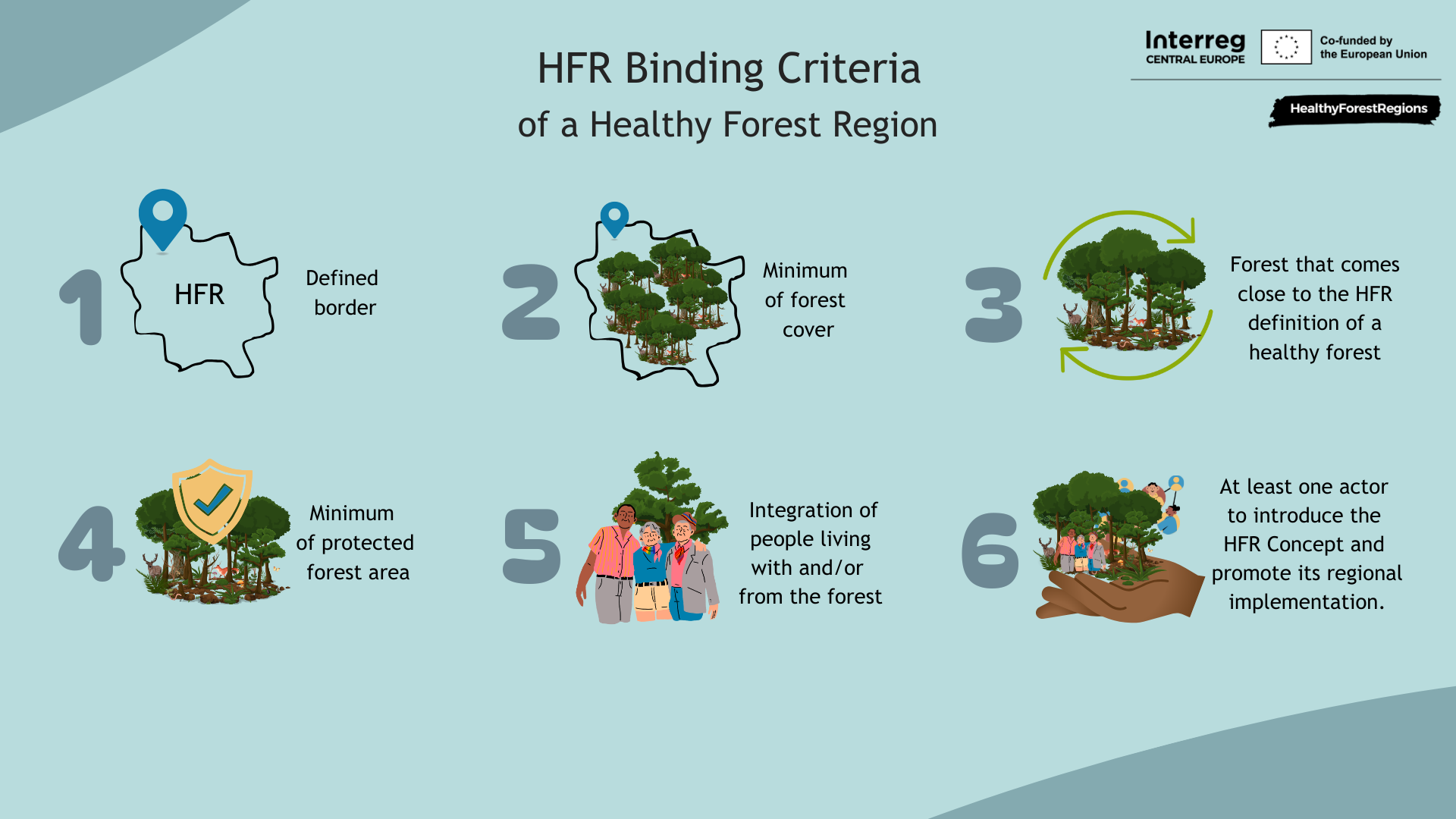
28 organisations involved in the project as project and associated partners committed to continuing the cooperation and implementation of the HFR ideas after the project ends. In order to give such a continuation a framework, integrate the most relevant project outcomes, and offer other forest-rich regions a roadmap for what it means to embark on the path of a Healthy Forest Region, the HFR Concept has been developed.

News

Events

Pilot actions

Outputs

Integrating forest ecosystem knowledge into education for health and well-being

Pilots in Austria, Slovenia and Slovakia tested how forest owners can earn income from hazard protection, carbon storage, biodiversity and recreation, not just timber sales. Slovenia piloted a tourism-based "Treasure Hunt" scheme with a tour operator and forest owner. Austria tested carbon measurement via drone and laser scanning, and explored hazard-protection buyers such as a railway operator. Slovakia produced step-by-step guidelines for setting up payment schemes. Key lesson: tourism-based schemes are the easiest entry point, needing little new infrastructure. Full guidance in the linked Best Practice Guide.
Type of output: Solutions

Creating secondary benefits for local stakeholders
The project designed innovative solutions to generate forest ecosystem-based benefits for local and regional stakeholders. Best-practice guidelines and concepts were created to support sustainable regional development through products, services and offers in tourism, nature therapy and recreation. The resulting solutions provide approaches for strengthening long-term regional development and resilience.
Type of output: Solutions

Marketing forest ecosystem services for regional development

Building on pilot Payment for Ecosystem Services (PES) schemes, the project produced concepts and tools for marketing forest ecosystem services as drivers of regional development. The jointly created PES products offer approaches that can be implemented and further adapted in regions beyond the initial programme areas, supporting sustainable economic development and environmental stewardship.
Type of output: Solutions

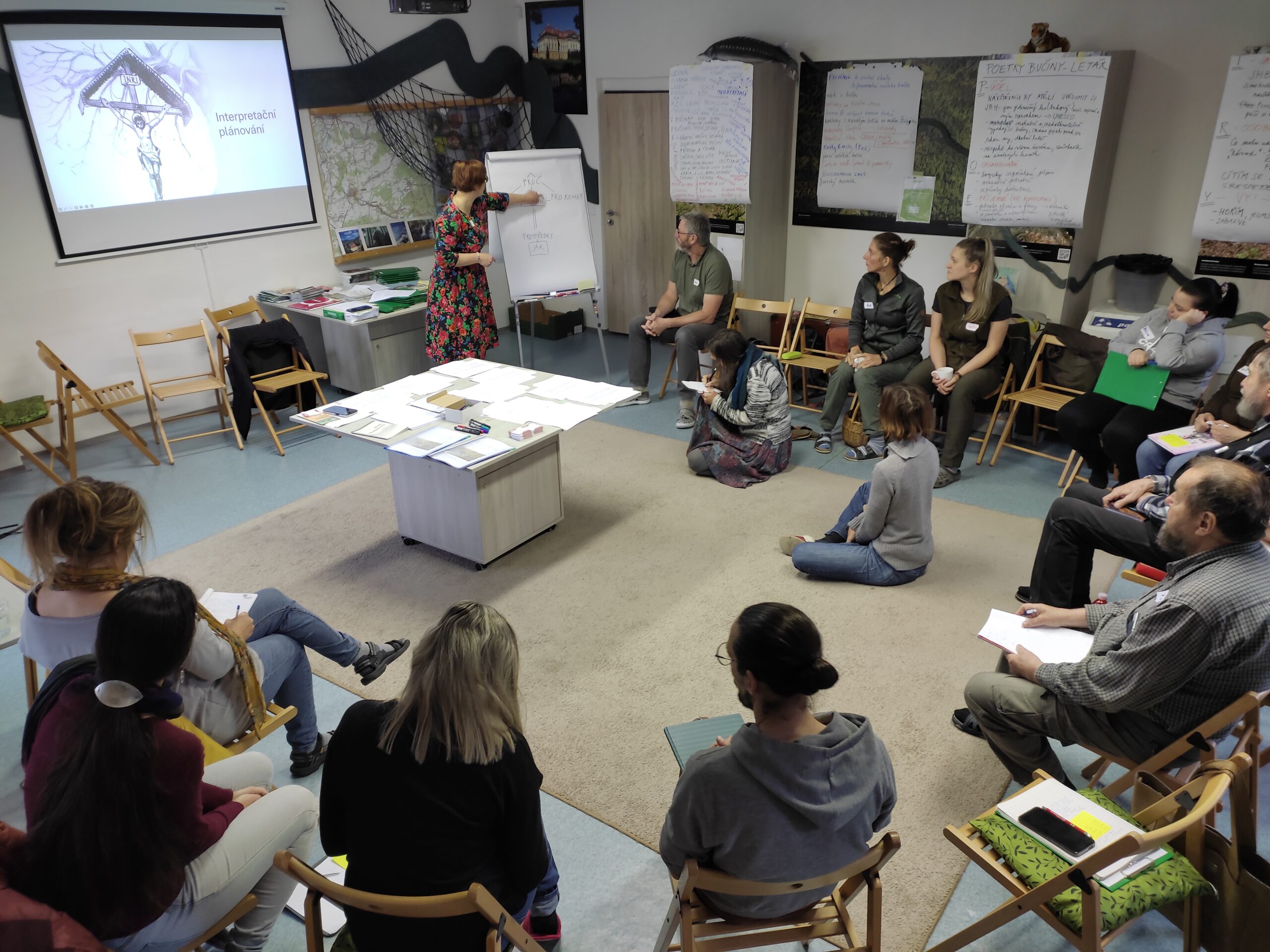
Interpretation Plan for Healthy Forest Regions

The project jointly created an interpretation plan for Healthy Forest Regions. It provides a general strategic approach for communicating the value of healthy and functional forests and their ecosystem services for human health and well-being. The plan offers a framework for building and implementing further education and communication offers in Healthy Forest Regions.
Type of output: Strategies and action plans

Regional strategies and action plans for prioritizing ecosystem services

The project produced three regional governance strategies for public authorities at different levels (community, district and federal) to support the prioritisation of ecosystem services that contribute to regional value. The strategies include actionable approaches for forest management aimed at safeguarding and enhancing forest functionality and the provision of ecosystem services. They were created collaboratively by the project partners and relevant regional stakeholders.
Type of output: Strategies and action plans

General Forest Health Strategy to maintain and enhance forest health for human well-being

The project developed a comprehensive governance strategy for protecting forest ecosystem functionality and its contribution to human health and well-being. Based on research and pilot actions, the strategy provides guidance for public authorities at community, district and federal levels as well as for other relevant stakeholders across the target regions. It also provides a framework for integrating measures to maintain and enhance forest health into regional planning and administration.
Type of output: Strategies and action plans

Regional strategies and action plans to maintain and enhance forest health

The project produced regional strategies and action plans to protect forest ecosystem functionality and its contribution to human health and well-being. Created in collaboration with regional stakeholders, the strategies translate the project's strategic approaches into concrete measures for the two lead target regions in Germany and Slovenia. They offer practical guidance for implementing these approaches in the selected Healthy Forest Regions.
Type of output: Strategies and action plans

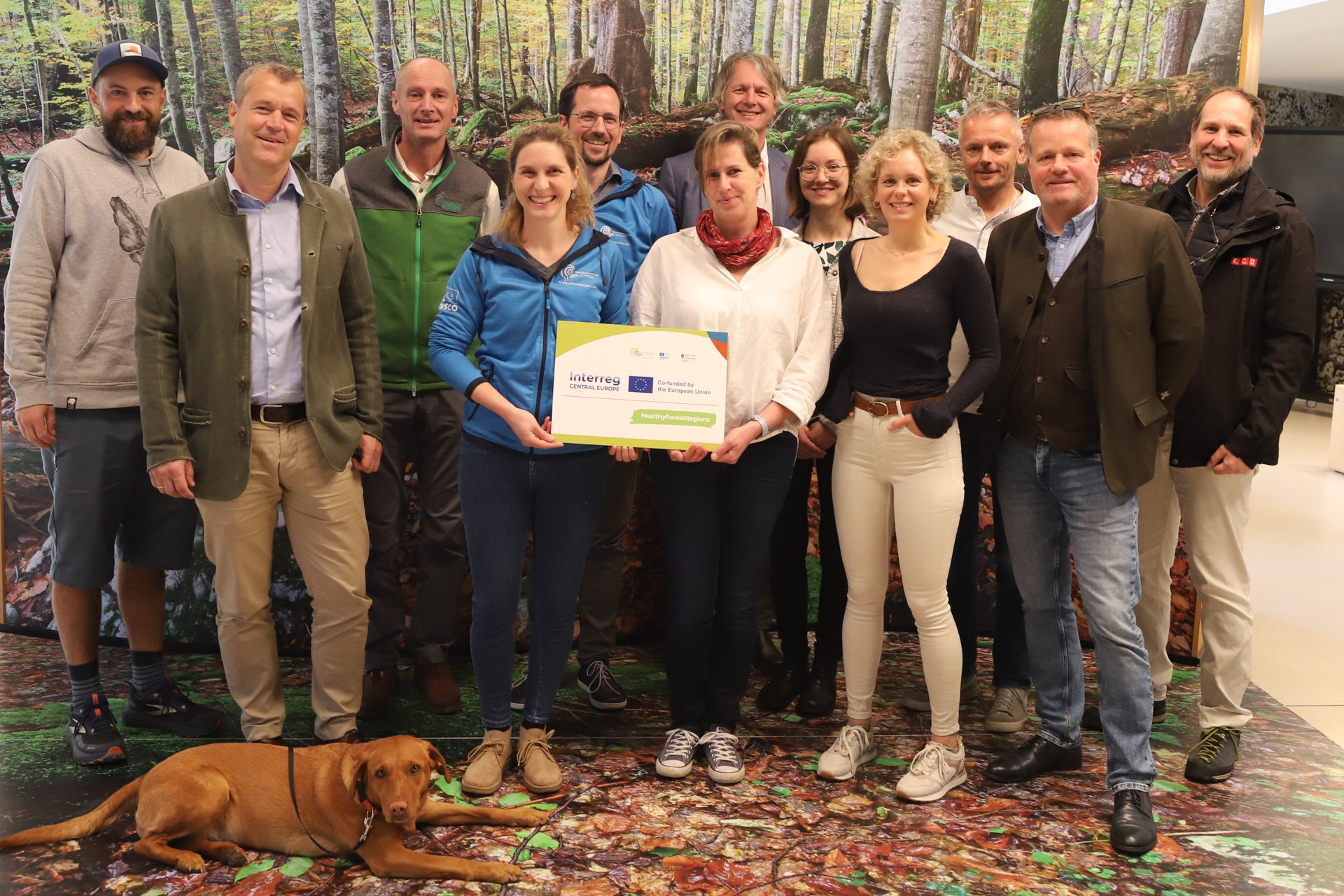
Replicable cooperation approach encompassing all involved project and associated partners in HealthyForestRegions

A total of 28 organisations involved in the project as project or associated partners committed to continuing the cooperation and implementing HFR ideas beyond the end of the project. To provide a framework for this continuation, integrate the most relevant project outcomes and offer other forest-rich regions a roadmap towards becoming a Healthy Forest Region, the project developed the Healthy Forest Regions Concept. The Concept sets out principles, criteria and practical pathways for becoming a Healthy Forest Region and provides tools and approaches that can be adapted to different regional contexts, including lighthouse projects, communication strategies and participatory approaches.
Type of output: Solutions

Project videos

HealthyForestRegions

The project lead partner is responsible for the content of this project website.

Project contact

Prof. Dr. Pierre L. Ibisch