EnCLOD

Project overview

Enhancing governance Capacities of Local authorities using Open Data

Data is the raw material for territorial governance in our digital age, but public authorities often lack capacities to utilise data effectively. At the same time, the vast expertise of civil society and the private sector on technological issues remains untapped for solving urban issues. The EnCLOD project bridges this gap by fostering collaboration between local authorities, civily society, and the private sector in five countries. Together, they are improving local governance by training public officials on Open Data, the Internet of Things and Digital Twins. In addition, they develop tech-related action plans, and engage communities in events like “hackathons”.

1,91m €

Project Budget

80%

of the Budget is funded by ERDF

Layer 1

5

Countries

6

Regions

10

Partners

5

Pilots

Duration

Start date

End date

Project progress

100%

Project partnership

Project partners

Italia (IT)

Lead partner

Province of Vicenza

Tecnical Services
Address
Contrà Gazzolle 1
36100 Vicenza
Country
Italy (IT)
Web
www.provincia.vicenza.it

Project partner

Address
Santa Croce 191
30135 VENEZIA
Country
Italy (IT)
Web
www.iuav.it
Total partner budget
224,000 €
Directorate of Innovation and Service development
Address
Salétrom 3
4025 Debrecen
Country
Hungary (HU)
Web
www.dkv.hu http://smartcity.debrecen.hu/en
Total partner budget
142,800 €
Address
Brněnská 344
68603 STARÉ MĚSTO
Country
Czechia (CZ)
Web
www.citiq.cz
Total partner budget
247,240 €
Department of Geoinformatics
Address
17. listopadu 50
77900 Olomouc
Country
Czechia (CZ)
Web
www.upol.cz
Total partner budget
156,800 €
n/a
Address
Královo Pole 34E
61100 Brno
Country
Czechia (CZ)
Web
https://www.cityone.cz/
Total partner budget
218,800 €
Address
Trg Edvarda Kardelja 1
5000 NOVA GORICA
Country
Slovenia (SI)
Web
https://www.nova-gorica.si/
Total partner budget
156,780 €
Faculty of Architecture
Address
Zoisova cesta 12
1000 Ljubljana
Country
Slovenia (SI)
Web
https://www.uni-lj.si/
Total partner budget
147,000 €
University Science Park
Address
Univerzitná 8215/1
SK-01026 Žilina
Country
Slovakia (SK)
Web
https://www.uniza.sk/
Total partner budget
203,000 €
n/a
Address
Viale Milano 36
36100 Vicenza
Country
Italy (IT)
Web
www.alda-europe.eu
Total partner budget
116,200 €

Roadmap

1

Challenge

Local and regional authorities across Central Europe face growing challenges in areas such as mobility, environmental protection and climate adaptation. However, limited access to reliable data and insufficient capacity to analyse and use it can make informed decision-making more difficult. Strengthening data-driven governance is therefore essential to developing more effective, sustainable and responsive public policies.

2

Specific Problem

Despite the growing availability of Open Data and technologies such as the Internet of Things (IoT), many public authorities face difficulties integrating these resources into everyday planning and decision-making. Limited technical expertise, fragmented data systems and insufficient cooperation between public institutions, businesses and civil society can prevent data from being used effectively.

These challenges also make it harder to share knowledge and develop common approaches across territories, limiting opportunities for more transparent, participatory and evidence-based governance.

3

Idea

EnCLOD was developed to help local authorities make better use of Open Data, Internet of Things (IoT) technologies and digital tools in territorial governance. The project brought together public authorities, research institutions, businesses and civil society organisations to explore how data-driven solutions and stronger stakeholder collaboration could support more informed decision-making and citizen engagement across five Central European pilot territories.

4

Solution

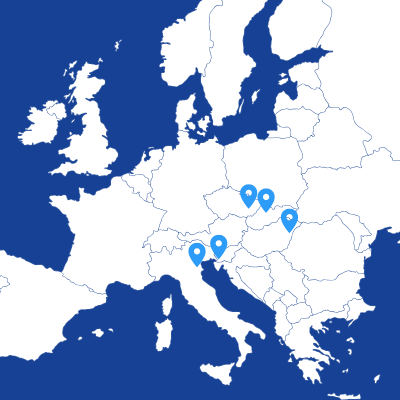
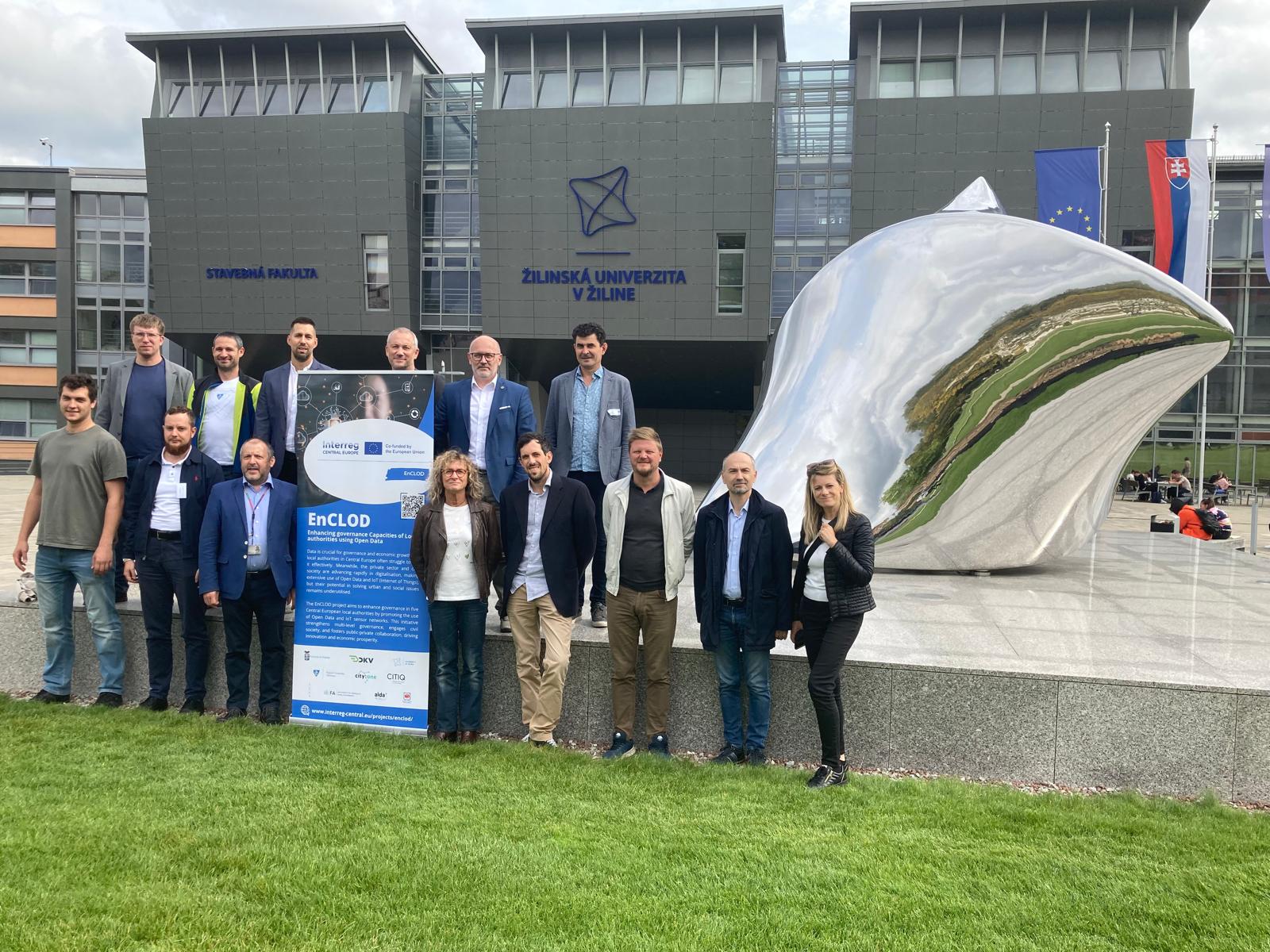
EnCLOD developed and tested data-driven approaches to territorial governance through five pilot actions in Vicenza (Italy), Žilina (Slovakia), Debrecen (Hungary), Nova Gorica (Slovenia) and Olomouc (Czechia).

Each pilot addressed a specific local challenge, using Open Data, IoT sensors and digital tools to support decision-making in areas such as winter road maintenance, road safety, sustainable mobility, air quality and climate adaptation.

Alongside these pilot actions, the project developed five Local Action Plans and practical guidelines to support public authorities in integrating Open Data into their governance processes, while promoting cooperation with researchers, businesses and civil society.

5

How it works

EnCLOD followed a common transnational approach to strengthen the use of Open Data in local governance.

The project began by analysing existing good practices and assessing the level of Open Data maturity and the main challenges in the participating territories. Based on these findings, partners developed five Local Action Plans addressing specific territorial needs.

These plans informed the implementation of five pilot actions, which tested the application of Open Data, IoT sensors and digital tools to practical challenges related to mobility, road safety, air quality and climate adaptation.

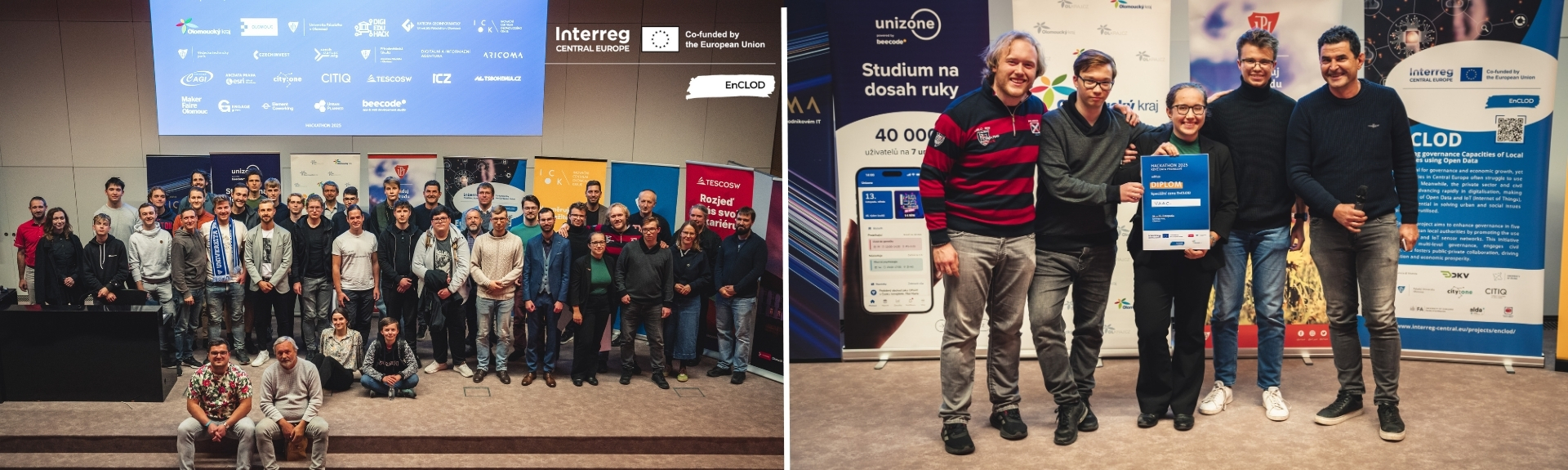
Alongside the pilots, the partnership organised training activities, workshops and hackathons to strengthen local capacities, encourage stakeholder participation and promote collaboration between public authorities, researchers, businesses and citizens.

The knowledge and experience gained through these activities contributed to the development of common guidelines and resources designed to support the transfer and adaptation of the EnCLOD approach to other territories.

6

Proof/Credibility

Between May 2024 and October 2026, EnCLOD brought together ten partners from five Central European countries to explore and test innovative approaches to data-driven territorial governance.

The project delivered five Local Action Plans and implemented five pilot actions addressing concrete territorial challenges:

  • Vicenza, Italy: Using Open Data, weather sensors and predictive tools to support winter road maintenance and improve road safety.
  • Žilina, Slovakia: Testing IoT traffic sensors and monitoring tools to support urban road safety and the protection of vulnerable road users.
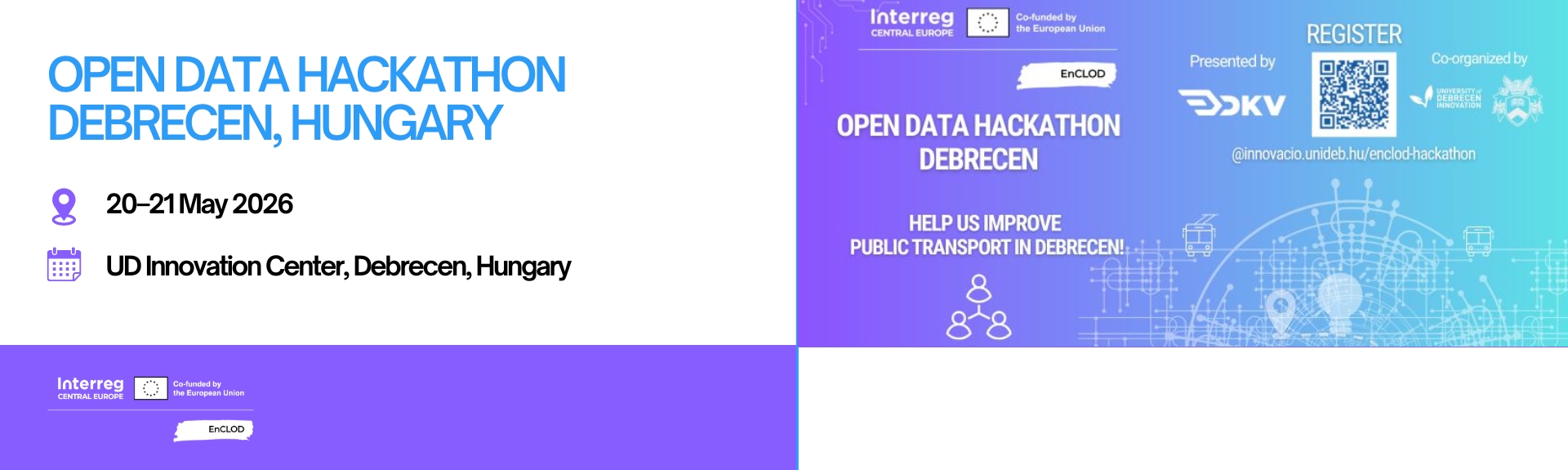
  • Debrecen, Hungary: Using mobility data and digital tools to support public transport planning and traffic management.
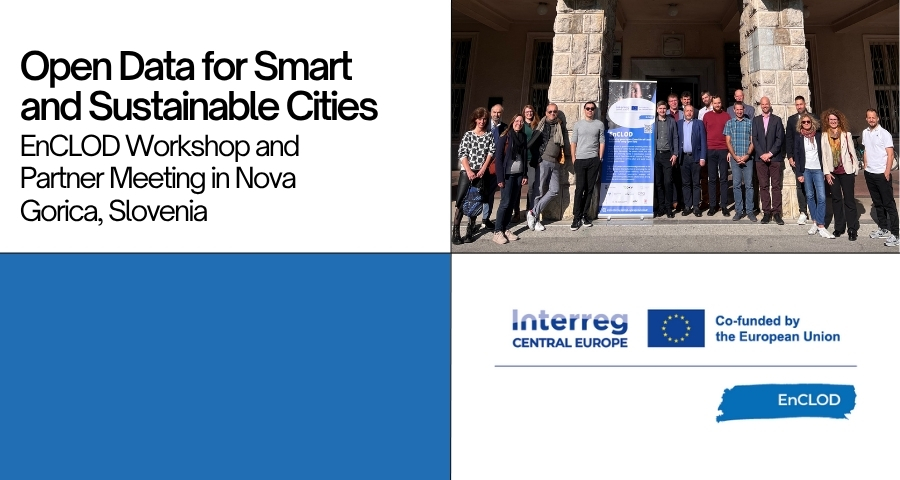
  • Nova Gorica, Slovenia: Monitoring traffic and air quality to better understand environmental challenges and inform urban planning.
  • Olomouc, Czechia: Using IoT sensors and urban microclimate monitoring to support climate adaptation and address urban heat islands.

Beyond these local applications, EnCLOD produced reports on Open Data good practices and territorial maturity, training resources, guidelines and non-technical reports documenting the pilot actions. These resources provide practical knowledge and examples that other territories can explore and adapt to their own governance challenges.

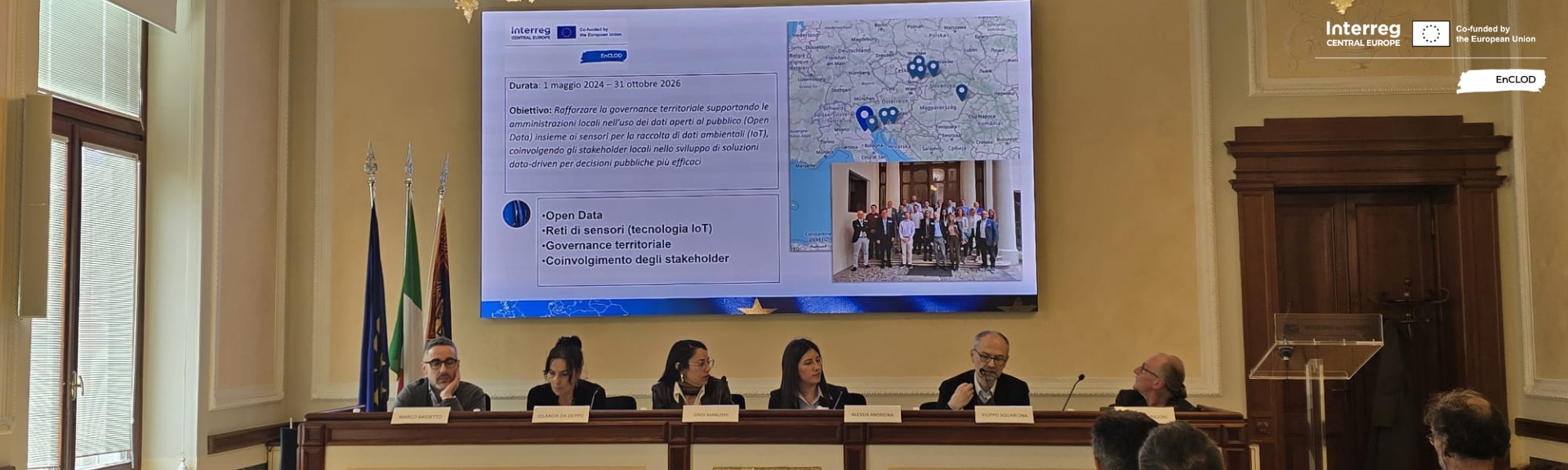
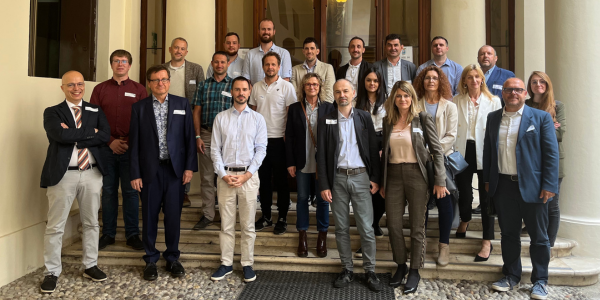
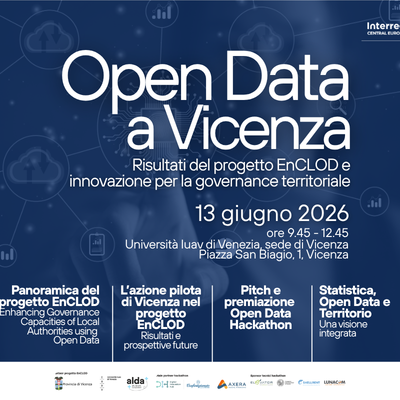
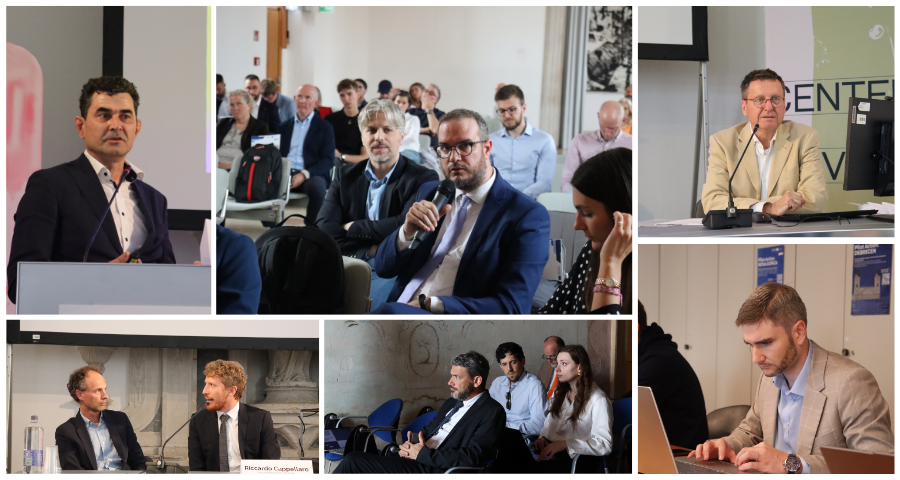
The project's results were presented at its final conference on 24 September 2026 in Venice, Italy, which brought together more than 70 participants from public authorities, research institutions, businesses and other relevant organisations.

Through its transnational cooperation and practical experimentation, EnCLOD established a foundation for the further application, exchange and replication of data-driven governance approaches across Central Europe.

7

Vision

EnCLOD's legacy lies in the knowledge, tools and cooperation developed to help local authorities make more effective use of Open Data in territorial governance.

The five pilot actions, Local Action Plans and practical guidelines offer examples and methodologies that other cities and regions can draw upon when addressing challenges related to mobility, environmental monitoring and climate adaptation.

Beyond the project's conclusion, these resources can support continued knowledge exchange, capacity building and the adoption of more informed, transparent and participatory decision-making processes.

Building on the cooperation established throughout EnCLOD, project partners have also expressed their commitment to continuing collaboration on Open Data and exploring future opportunities to further develop and share the project's results.

By making its experience and resources available for future use, EnCLOD contributes to the long-term development of smarter, more sustainable and resilient territories across Central Europe.

News
Events

Pilot actions

Outputs

Five local action plans for open data-driven territorial governance

The EnCLOD project developed five Local Action Plans to strengthen the use of Open Data and Internet of Things (IoT) technologies in territorial governance across Vicenza (Italy), Žilina (Slovakia), Debrecen (Hungary), Nova Gorica (Slovenia) and Olomouc (Czechia). Developed through a common methodology and adapted to each territory's specific needs, the plans identify priorities and actions to improve data collection, accessibility and use in local decision-making. They also address cooperation between public authorities, businesses, research institutions and citizens. Covering challenges such as mobility, road safety, air quality and climate adaptation, the plans provide practical roadmaps for local and regional authorities interested in adopting more transparent, collaborative and data-driven approaches to governance. Their methodologies and recommendations can also serve as a reference for other European territories seeking to integrate Open Data and digital technologies into their planning processes.
Type of output: Strategies and action plans

Optimising winter road maintenance through open data and weather sensors

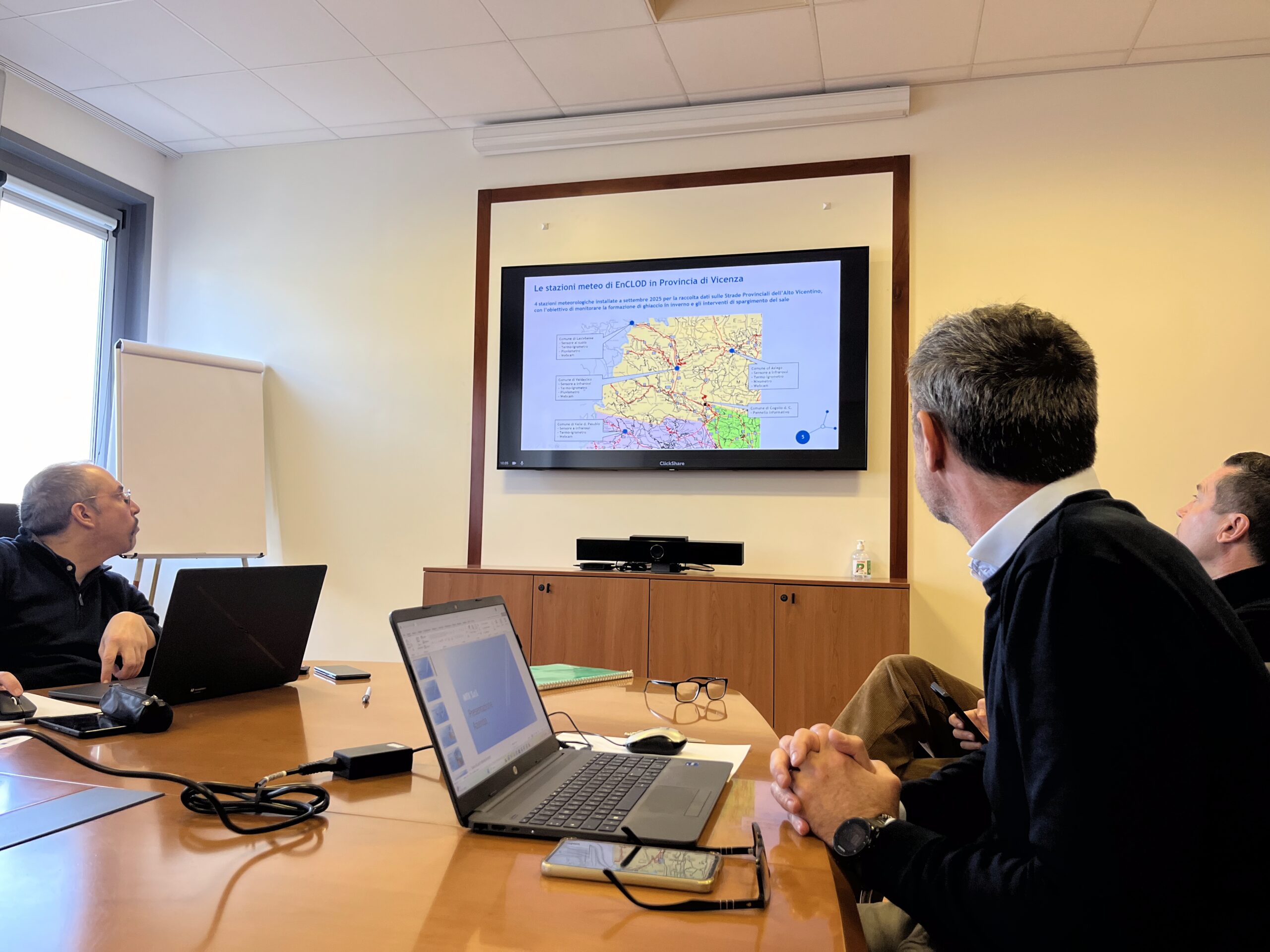
The EnCLOD pilot action in the Province of Vicenza (Italy) developed a data-driven approach to improving winter road maintenance through Open Data, environmental sensors and digital monitoring tools. Four meteorological stations, comprising 15 environmental sensors, were installed along selected mountain roads to collect localised information on weather and road-surface conditions. The data, made available through online platforms and Open Data channels, was combined with existing environmental information to develop and test an algorithm assessing when road salting interventions may be necessary. Initial testing demonstrated the potential of this approach to support the evaluation of winter maintenance operations, improve the monitoring of outsourced services and inform future planning. The pilot also strengthened cooperation between the Province of Vicenza, IUAV University of Venice, Vi.abilità and ARPAV, contributing to the development of a local Open Data ecosystem. The pilot's methodology, technical findings and lessons learned offer a transferable example for other local and regional authorities seeking to improve road maintenance, environmental sustainability and evidence-based territorial governance.
Type of output: Solutions

Improving urban road safety through open data and traffic monitoring

The EnCLOD pilot action in Žilina (Slovakia) strengthened urban road safety monitoring by combining Open Data, Internet of Things (IoT) sensors and digital tools to support evidence-based decision-making. The project installed 42 new traffic sensors and integrated them with infrastructure developed through previous initiatives, creating a monitoring network of more than 90 dedicated traffic sensors. These provide information on vehicle speeds, traffic volumes and mobility patterns, particularly around busy intersections, residential areas and school zones. The pilot also established 61 transport microzones and developed a dataset covering more than 270 pedestrian crossings, providing a structured evidence base for identifying potential risks and prioritising road safety interventions. The collected data is processed through the doprava.digital platform and contributes to the development of the Traffic Safety Preventist Tool, designed to support the assessment and ranking of high-risk locations. Analytical prototypes developed through the project's hackathon demonstrated how the available data can inform infrastructure planning, maintenance priorities and targeted safety measures. Beyond the technological results, the pilot strengthened cooperation between the City of Žilina, the University of Žilina, municipal stakeholders and technology providers, supporting a more integrated approach to urban data management. The pilot offers a transferable example for other municipalities interested in combining IoT monitoring, Open Data and stakeholder collaboration to improve traffic safety and develop smarter, more responsive urban mobility policies.
Type of output: Solutions

Supporting sustainable urban mobility through open data and traffic monitoring

The EnCLOD pilot action in Debrecen (Hungary) strengthened the use of Open Data and Internet of Things (IoT) technologies to support more informed public transport planning and sustainable urban mobility. Led by DKV, the city's public transport operator, the pilot installed 42 traffic sensors at four strategic locations around rapidly developing industrial areas. These collect data on vehicle volumes, speeds, directions and categories, providing new insights into traffic patterns and emerging transport needs. The collected data was integrated into an analytical dashboard and combined with existing mobility, environmental and meteorological datasets. The pilot also developed a microzoning framework comprising 42 urban zones and a dedicated web application for mapping available territorial data. These resources provide DKV and local authorities with an evidence base to assess traffic intensity, identify potential improvements to public transport connections and support future decisions on routes, schedules and mobility services. The pilot also contributed to the development of a broader Traffic Management Tool. Beyond the technological achievements, the initiative strengthened cooperation between DKV, municipal authorities, the University of Debrecen and technology providers through training activities, knowledge exchange and a local hackathon. The pilot offers a transferable example for other cities and public transport operators interested in integrating Open Data, digital monitoring and stakeholder collaboration into sustainable mobility planning and evidence-based territorial governance.
Type of output: Solutions

Integrated air quality and traffic monitoring through Open Data
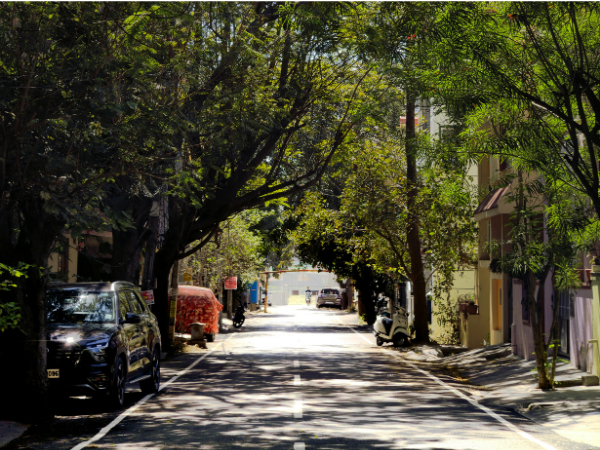
The EnCLOD pilot action in Nova Gorica (Slovenia) developed an integrated Open Data monitoring system to strengthen environmental management, sustainable mobility and evidence-based territorial governance. The pilot installed 24 traffic sensors, 7 air-quality sensors and one reference meteorological station across strategic urban locations. These technologies collect information on traffic flows, vehicle categories, particulate matter and meteorological conditions, providing a more comprehensive understanding of environmental and mobility patterns. The collected data is publicly available through online dashboards and Open Data platforms, allowing public authorities, researchers, businesses and citizens to access and reuse information. Initial analyses revealed that pollution episodes can be highly localised, highlighting the importance of continuous monitoring and targeted environmental measures. The monitoring infrastructure also provides an evidence base for Nova Gorica's Air Quality Plan, supporting the identification of pollution hotspots and the development of more informed urban planning and environmental policies. A distinctive feature of the pilot is its cross-border approach. Traffic monitoring and microzoning were designed to reflect the functional urban area shared by Nova Gorica and Gorizia (Italy), enabling a better understanding of mobility and environmental conditions that extend beyond national boundaries. Beyond the technological achievements, the pilot strengthened cooperation between public authorities, researchers, technology providers and local communities through workshops, public events and a hackathon. The pilot provides a transferable example for other European municipalities, particularly cross-border cities, interested in integrating affordable IoT technologies, Open Data and environmental monitoring into more transparent, collaborative and sustainable urban governance.
Type of output: Solutions

Using open data and urban climate monitoring to support climate adaptation
The EnCLOD pilot action in Olomouc (Czechia) developed and tested an integrated Open Data monitoring approach to support urban climate adaptation, parking management and evidence-based territorial governance. The pilot deployed 38 traffic sensors, 10 weather stations and 10 heat-island sensors to collect information on traffic flows, parking occupancy, air temperature and surface heating across different urban environments. The sensor network was complemented by parking surveys and additional temperature measurements, providing a comprehensive evidence base for analysing the relationship between mobility patterns and local climate conditions. The collected data was made publicly available through Open Data platforms and visualisation tools, including a user-friendly dashboard. The pilot also applied a microzoning framework to organise territorial information and support comparisons between different urban areas. Initial analyses demonstrated how data can inform more targeted urban planning decisions. At a shopping centre with approximately 1,000 parking spaces, relatively low occupancy indicated that around 150 spaces could potentially be converted into green infrastructure. In residential areas, significantly higher parking occupancy highlighted the importance of adapting interventions to local needs. Beyond the technical achievements, the pilot strengthened cooperation between public authorities, Palacký University Olomouc, technology providers and citizens through stakeholder workshops, training activities and a hackathon, encouraging the reuse of Open Data and the development of innovative solutions. The experience also contributed to the City of Olomouc's decision to expand its monitoring infrastructure and integrate data-driven approaches into its future digital twin and Intelligent Transport System strategy. The pilot provides a transferable example for other European cities interested in using environmental and mobility data to identify urban heat islands, improve parking management and develop more sustainable, resilient and transparent approaches to territorial governance.
Type of output: Solutions

EnCLOD guidelines for effective open data use in territorial governance

The EnCLOD Guidelines provide a practical and transferable approach to help local and regional authorities strengthen territorial governance through the effective use of Open Data and Internet of Things (IoT) technologies. Developed on the basis of the project's transnational cooperation, Local Action Plans and five pilot actions, the guidelines bring together methodologies, lessons learned and practical examples from the participating territories. They offer guidance on integrating data-driven approaches into local planning and decision-making, strengthening collaboration between public authorities and other stakeholders, and promoting more transparent and participatory governance. Designed to support knowledge transfer and replication, the guidelines can be used by local and regional authorities, researchers and other organisations interested in adapting the EnCLOD approach to their own territorial challenges. The publication represents one of the project's key legacy resources, making the experience gained throughout EnCLOD available for continued learning and application beyond its conclusion.
Type of output: Solutions

Project videos

Project documents

Research, Evidence and Scientific Publications

Project images

EnCLOD

Priority 4: Improving governance for cooperation in central Europe

SO 4.1: Strengthening governance for integrated territorial development in central Europe

The project lead partner is solely responsible for all content published on this project website, including, where applicable, content created with the support of AI tools and the appropriate labelling of such content. The views expressed do not necessarily reflect those of the Interreg CENTRAL EUROPE Programme, its programme bodies or the European Union.

Project on social media

Project Contacts

Project Manager

Filippo Squarcina
Phone: 0444 908235

Finance Manager

Caterina Bazzan
Phone: 0444 908309

Communication Manager

Francesca Borga
Phone: 0444 169000