
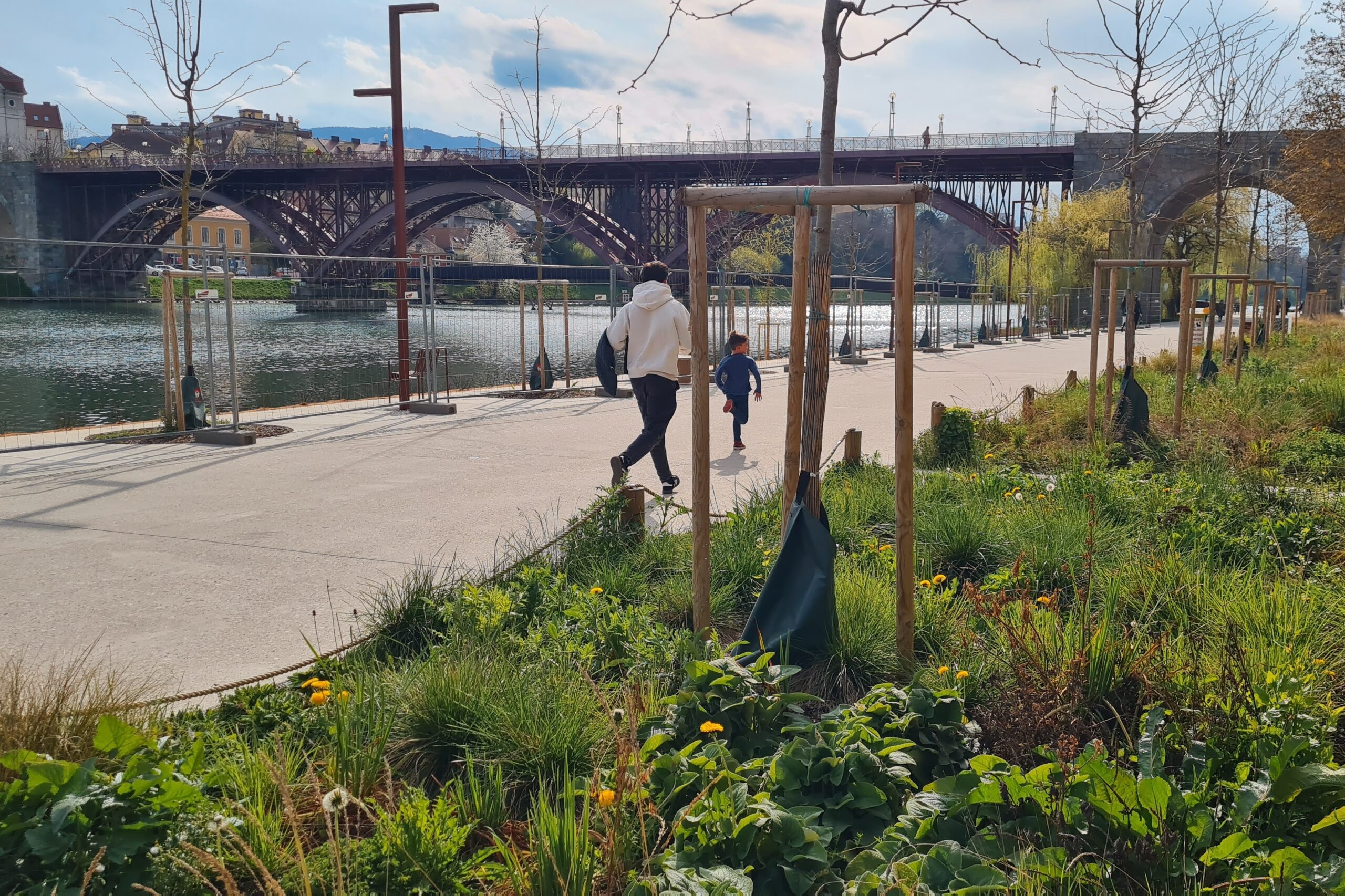
Maribor On the Road to Beat the Heat
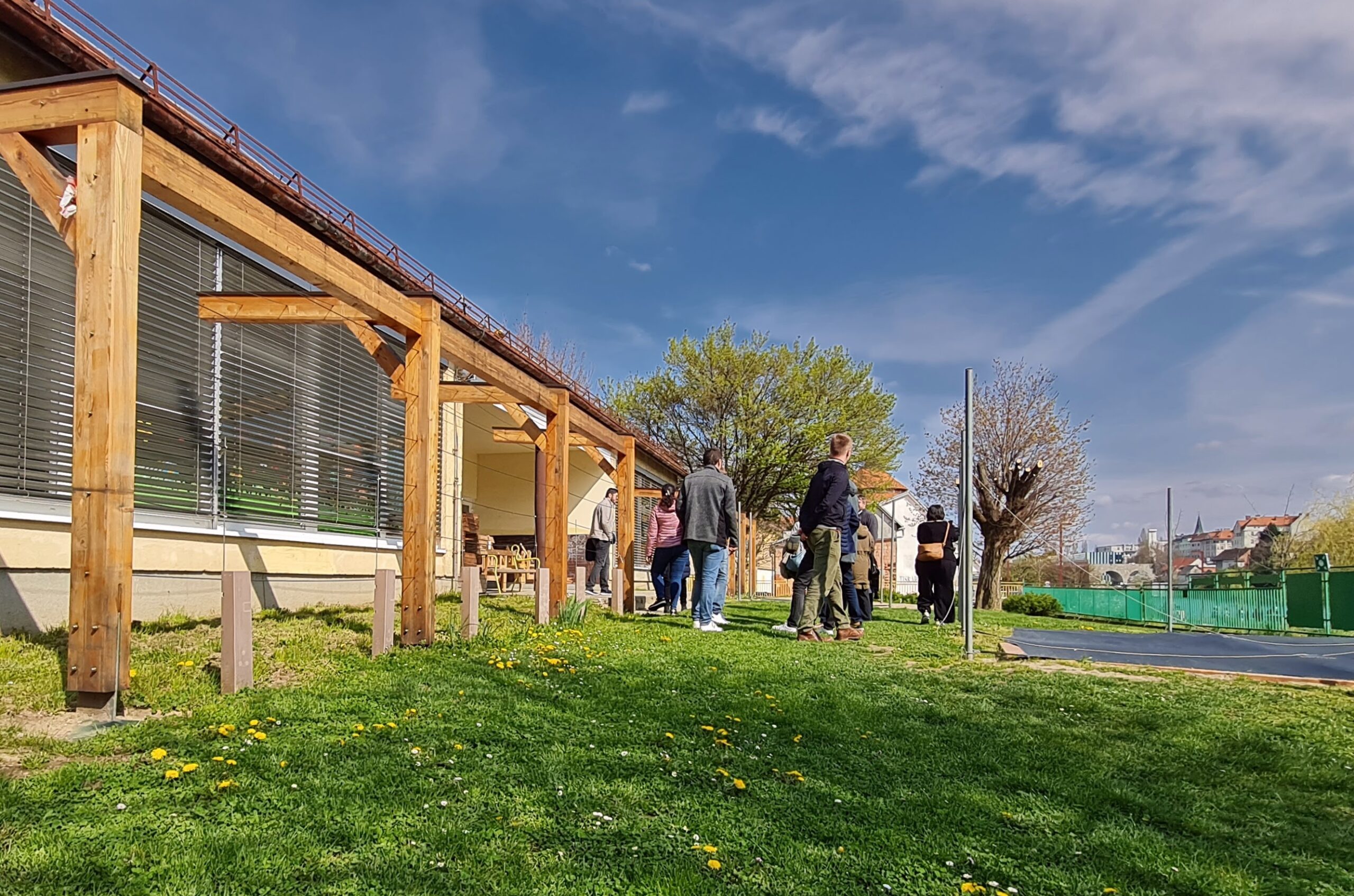 Pilot cities and Ready4Heat partners visited Maribor’s recently intalled shading pergola with quick-growing trees and planst. Photo: Csaba Lajtmann Maribor steps to protect its citizens from rising temperatures started with the adoption of the Heat Action Plan in early 2025. The city’s actions—from planting climate-resilient trees along roads to installing pergolas in kindergartens for natural shade are also about the people. Local pensioners, city employees, and families with children are all part of the journey. The key message a local authority can convey is that everyone has a role to play in making our cities more liveable. National and local media helped spread the word thanks to a press event before the summer heat did hit the city.
Weiz: Preparing for a Hotter Tomorrow, Today
Since the Heat Action Plan was adopted in December 2024, the city was busy rolling out public awareness campaigns, workshops, and the city’s first heat alert system. As warmer days approached, the city launched the plan publicly in coordination with its new municipal government. Key actions included increasing drinking water access, educating vulnerable groups, and upgrading public buildings with energy-efficient cooling systems powered by solar energy designed to cool a central space.
Hajdúböszörmény’s Heat Resilience Takes Root
In Hajdúböszörmény, following the adoption of its Heat Action Plan, the city has installed 47 green islands across town. These little oases offer shade, cleaner air, and a greener urban landscape. What’s more, cool shelters, misting gates, and drinking stations were considered to help residents—especially the elderly and young families—stay safe in the summer heat. The city engaged with volunteers, institutions, and citizens to help maintain these improvements, a “Heat Day” and a public press event supported communication efforts in the spring.
Worms Connects People for Climate Resilience
Worms focused on how stakeholder engagement can beat the heat. The city’s pilot actions brought together schools, senior homes, outdoor workers, and involve universities to create a climate-resilient community. From hands-on workshops to smart digital sign-ups, Worms got everyone involved. One major highlight to raise awareness and kick-start the summer network was the Heat Action Day on 4 June 2025, inviting stakeholder groups to learn, act, and protect one another. Meanwhile, the city is testing new tools like shadow routes for safer movement in the heat and installing sensors to make smart, data-driven decisions.
Good Practices in Action
Heat Warning Systems: Local Solutions for Timely Alerts
Maribors comprehensive Heat Warning System automatically extracts alerts from the Slovenian Environment Agency’s website. Once a heatwave is forecasted, SMS messages are sent to subscribed individuals and institutions working with vulnerable groups such as elderly care homes, kindergartens, and outdoor workers. The system went live in June 2025 in s pilot phase.and has been continued beyond the initial phase. Worms introduced the “Heat Phone,” a telephone-based heat alert service aligned with national meteorological warnings. Citizens can voluntarily register and will receive direct messages during heatwaves. The initiative was announced during the city’s Heat Day on 4 June 2025. Weiz introduced a new local heat warning system building on the Land of Styria’s regional infrastructure. A key feature is a dedicated Heat Action Landing Page on the city website. This platform offers e-mail sign-up for warnings for tips for specific vulnerable groups and locations of cool rooms and shelters. Launched in early summer 2025, accompanied by a targeted communication campaign, this system now helps the community to prepare for staying safe on hot days.
Hajdúböszörmény implemented a multi-channel warning system, based on the national Heat Warning System using emails to inform institutions (e.g. kindergartens, elderly homes), and public platforms like the City’s social media channels, official website, local TV and newspapers, public bulletin boards and a mobile app using push pop-up alerts directly to users’ phones. The app includes special accessibility features for older residents. A campaign will promote app downloads and user engagement.
Advanced Training Sessions: Strengthening Local Capacity
Advanced Training sessions for vulnerable groups and their network of support was a key feature in all municipalities’ engagement strategies. Before the summer, Maribor ran targeted training sessions for Associations of pensioners and people with disabilities, Elderly care staff and home visitors, Pregnant women, Kindergarten staff, Outdoor workers in public companies. In Worms following the early 2 training sessions, 2 additional sessions over thecourse of the summer focused on early childcare workers. Weiz chose to organise online training sessions to offer a flexible participation option, targeting Caregivers of children (kindergarten staff, trainers, parents), Elderly care workers (including home care and nursing staff), Healthcare professionals (led by Mag. Pollhammer and Red Cross experts), Outdoor workers (e.g. construction, agriculture, road maintenance). Hajdúböszörmény organized four training sessions in early spring led by medical staff and the NGO “Green Circle”. The participants included caregivers and educators as well as managers of outdoor workers.