Urban living rooms, not car parks: Kamnik’s pop-up experiment
In many central European towns, public space is quietly reduced. Services move to the outskirts, traffic grows, and streets and squares are too often designed around cars, leaving less room for walking, cycling, meeting, and simply spending time outdoors. Without a shift in how public spaces are managed, cities risk becoming less livable and more disconnected from their residents.
PopUpUrbanSpaces tackles this challenge with a simple idea: “Show & Tell”. Instead of debating abstract mobility plans, cities create temporary, low-cost pop-up interventions that let citizens and decision-makers experience what streets and public spaces could feel like if they were designed for people, not cars.
Test first, learn fast, scale what works
Tactical urbanism is at the heart of the project: small, reversible changes that help cities try out new mobility and placemaking solutions before committing to expensive, permanent redesigns.
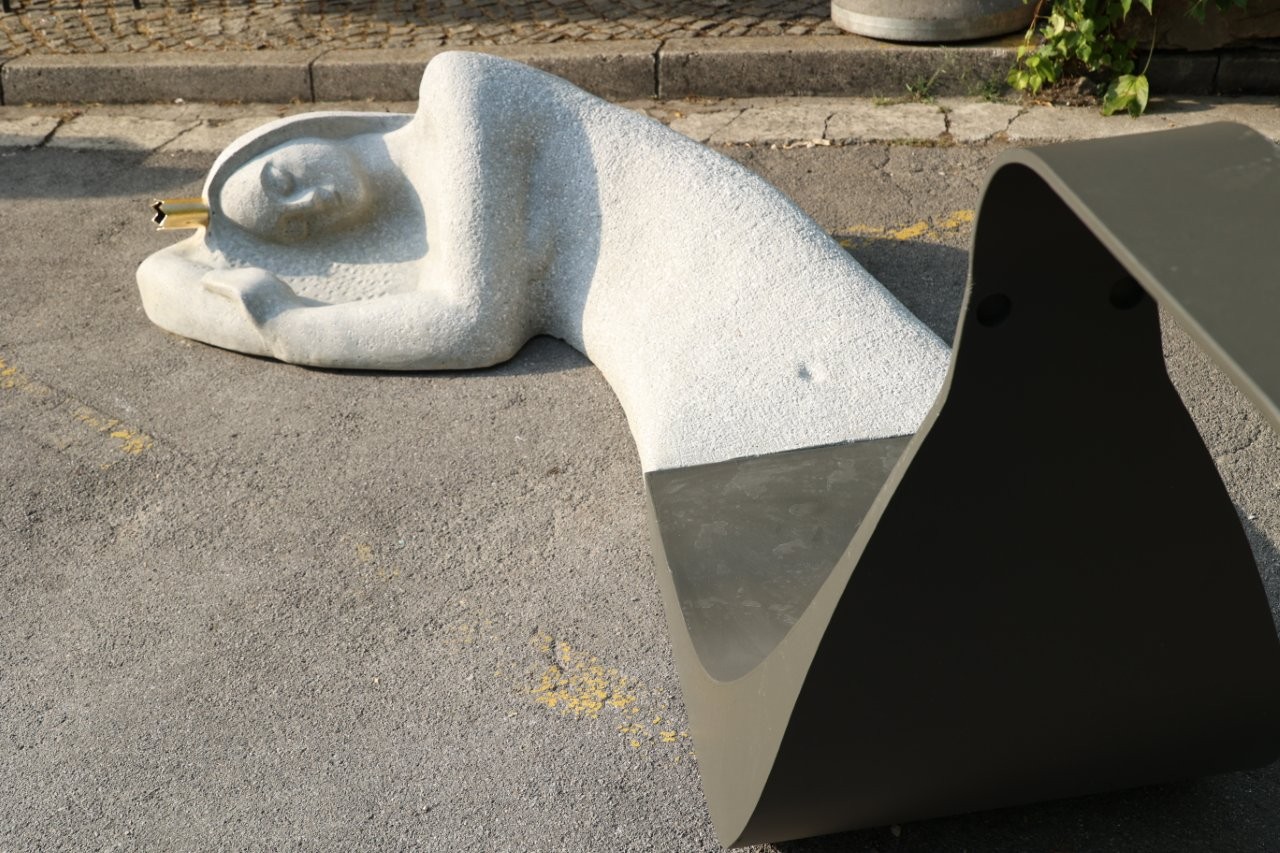
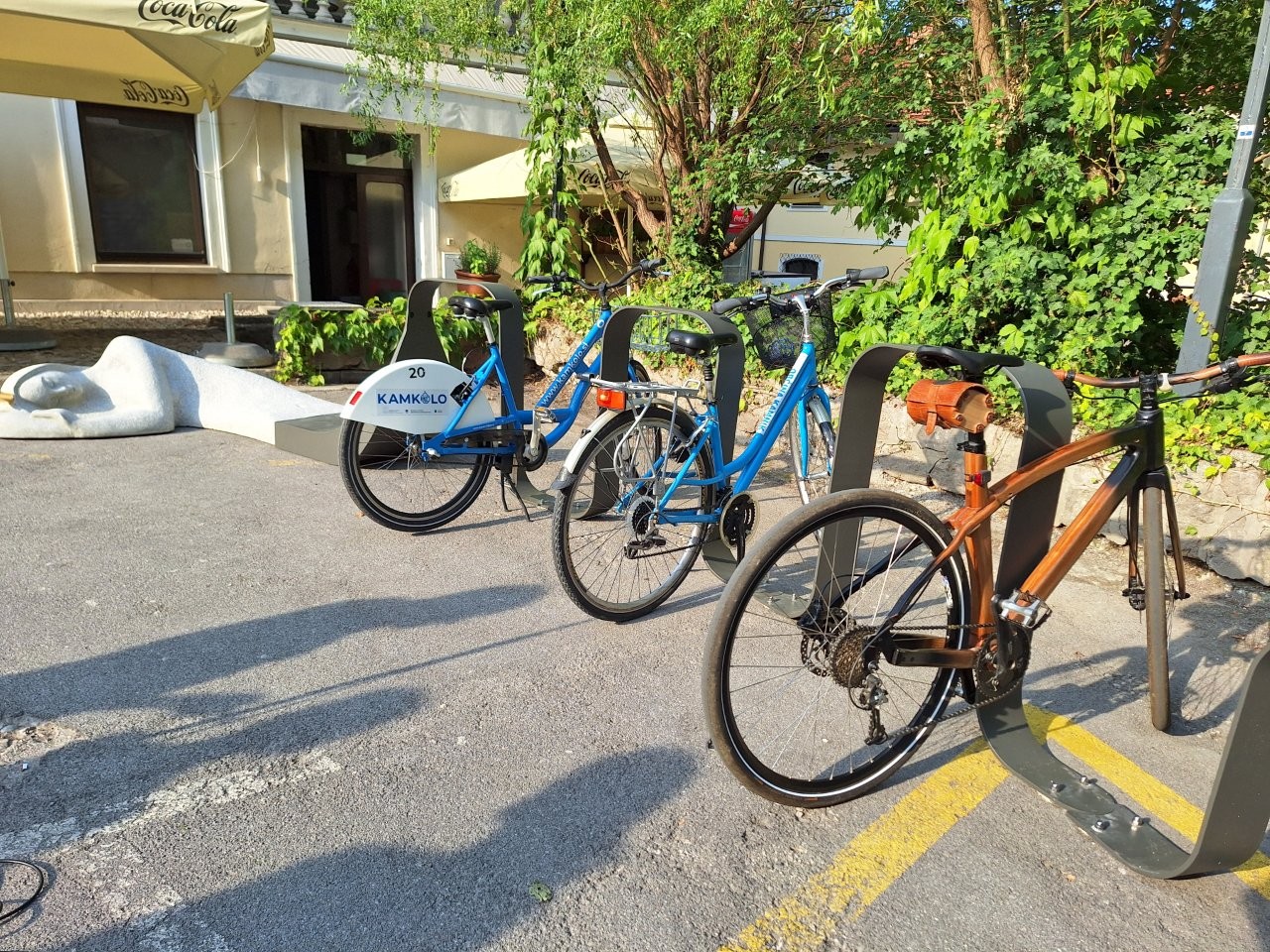
PARKing Veronika was created with the idea of how public space can become more than just a functional surface. The design, developed by Štajn Group architects together with students and the local community, is complemented by a very special artistic intervention – a unique bicycle rack inspired by a Kamnik legend and created by local sculptor Nina Koželj.
In parallel, PopUpUrbanSpaces combines these “on-street” demonstrations with digital campaigning tools that help explain the risks of car-centred mobility and support behaviour change.
From parking lot to urban living room
In Kamnik, Slovenia, the pilot action PARK(ing) Veronika was designed as a two-part intervention.
First, the city temporarily removed a few parking spaces and created a welcoming pop-up area: it introduced temporary urban furniture (benches, tables, lights, etc.), tidied up unkempt lawns and trees, and improved the setting (including a fenced area for rubbish bins). Importantly, the pilot also includes observation of how the space is used so the city can learn what works in practice.
Second, the pilot added an “attractor”: an artistic intervention using video mapping to project the legend of Princess Veronika onto the old walls of Mali Grad castle, turning the new pop-up space into the best place to experience the installation. The location also hosted summer festivals like the Kamfest, which brought an exceptional number of visitors to the location, helping establish PARK(ing) Veronika as an important part of Kamnik’s cultural scene.
The pilot shows how a small redesign can shift how people move, meet, and spend time in the city centre and help local authorities see what kinds of changes deserve to be scaled.
Why cooperation beyond borders matters
Kamnik is not doing this alone. PopUpUrbanSpaces is a transnational partnership that tests and shares approaches across multiple cities. The implemented pop-ups are not “nice one-offs,” but stepping stones toward methods other places can realistically adopt.
Based on these pilot experiences, the project developed a practical support package for other public authorities. It includes a capacity building strategy that spells out the needs, goals and competencies public staff need to apply tactical urbanism and digital campaigning effectively;
“how-to” toolkit covering practical interventions, and territorial action plans to embed lessons into city planning processes.
Explore also the pilots in other cities
If you work in urban mobility, public space management or community engagement, take inspiration from Kamnik’s PARKing Veronika, and keep an eye on the other PopUpUrbanSpaces pilots across central Europe as they test and refine people-centred solutions in real streets and squares.
Beyond Kamnik (Slovenia), the project piloted pop-ups in Varaždin (Croatia), Ferrara (Italy), Rzeszów (Poland), Krems (Austria), Bamberg (Germany), and Nyíregyháza (Hungary).
Project: PopUpUrbanSpaces
Duration: 2023-2026
Budget: 2,29 m €
Partners: AT, DE, HR, HU, IT, PL, SI