
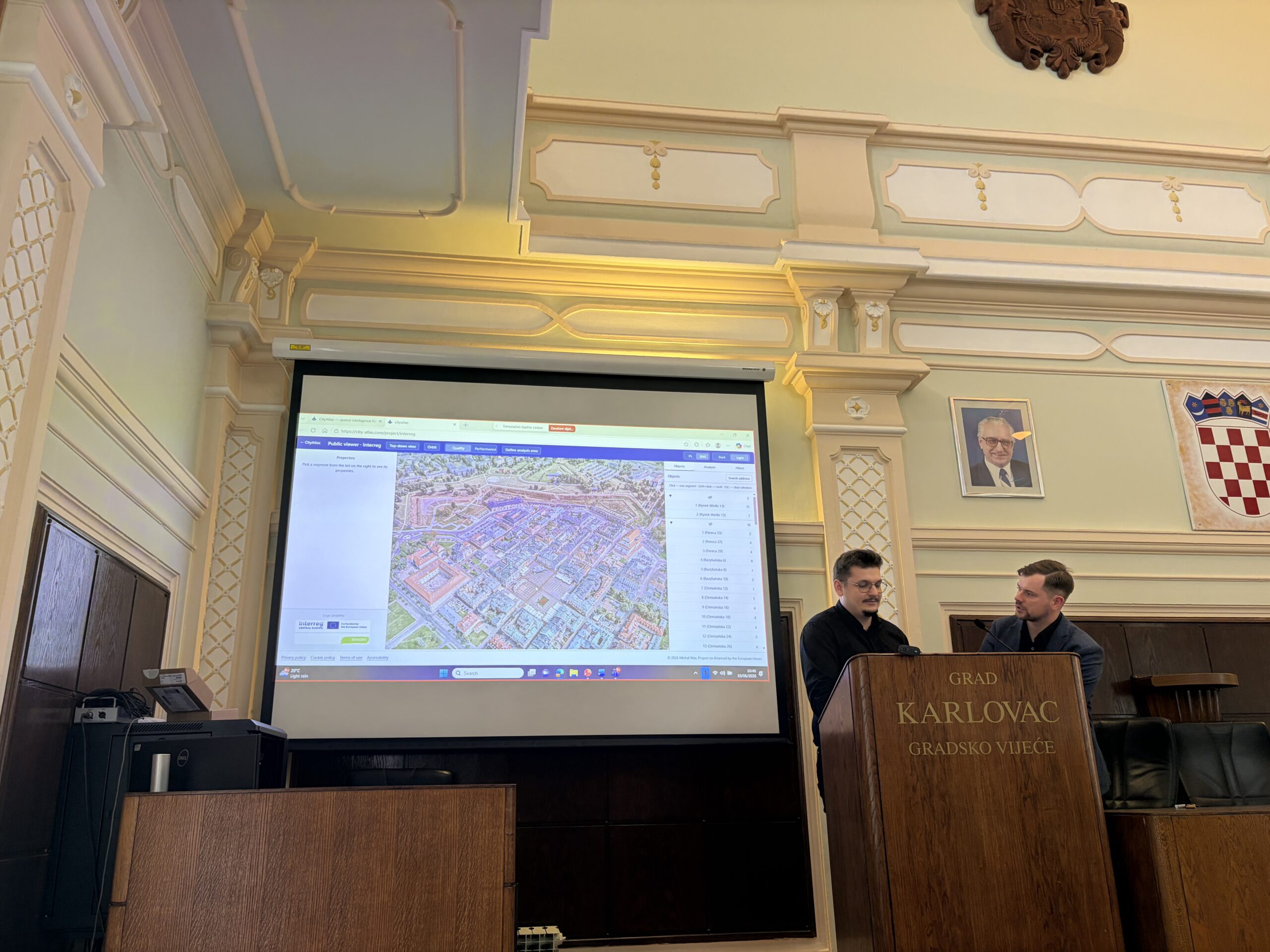
This question was explored during the “New Bauhaus in Practice” event held in Karlovac on 10 June 2026 as part of the ZEB4ZEN project and the New European Bauhaus Festival 2026.
The event brought together project partners, local authorities, experts and stakeholders to discuss how historic neighbourhoods can become more energy-efficient and sustainable while preserving their cultural and architectural identity. An important part of this discussion was dedicated to digital solutions and their role in supporting energy planning and communicating future energy transformations.
During the event, participants were introduced to Virtual Reality (VR) tools developed within ZEB4ZEN, together with related digital approaches that demonstrate how energy and urban-planning information can be transformed into interactive and visual experiences.
Instead of communicating Energy Action Plans only through technical data, reports and conventional presentations, VR environments can place proposed measures within a recognisable spatial context. Users can explore neighbourhoods and buildings, better understand their energy characteristics and examine how different renovation and energy solutions could influence the future development of an area.
This is particularly relevant for historic neighbourhoods, where energy planning needs to balance energy efficiency, renewable energy integration, decarbonisation and the preservation of cultural heritage.
The presentations in Karlovac demonstrated how digital tools can support this process by:
- making complex energy-planning information more accessible to non-technical audiences
- visualising proposed interventions and future energy scenarios
- supporting communication between technical experts, public authorities, citizens and other stakeholders
- providing a common visual basis for discussing proposed solutions and collecting feedback
The Karlovac event demonstrated an important aspect of the ZEB4ZEN approach: digital tools are not only instruments for technical analysis, but can also become communication tools connecting energy planning with the people and places affected by the transition.
By combining Energy Action Plans with interactive visualisation and stakeholder engagement, cities can communicate future energy scenarios in a more tangible and accessible way supporting a shared understanding of the transition towards sustainable, low-energy historic neighbourhoods.