
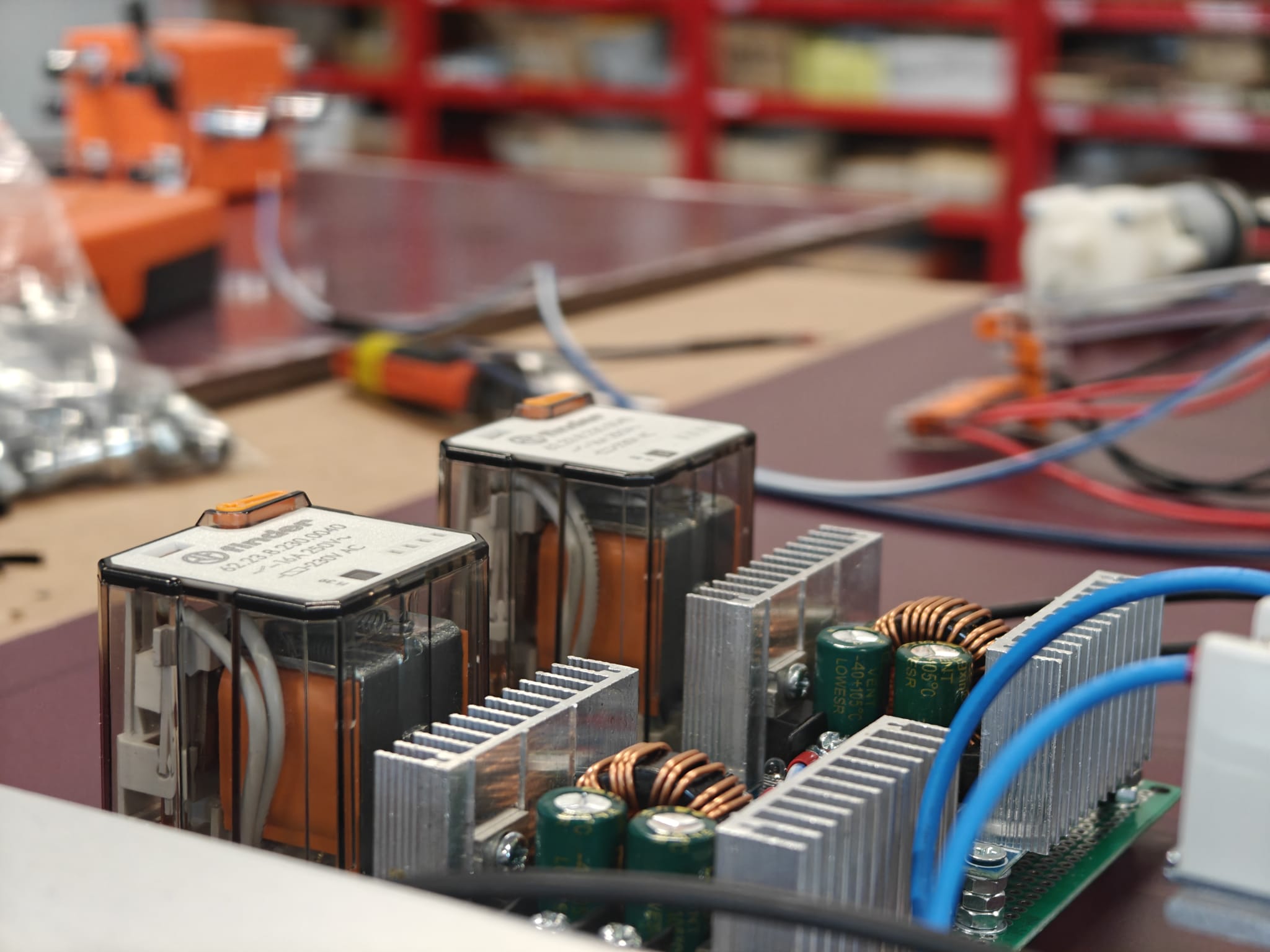
The CIRCOTRONIC project has an ambitious goal: to support the transformation of the EEE sector towards a circular economy. For Elektryka Morska, participating in this project was not only an opportunity to exchange experiences but also to encounter a completely different perspective on the design and use of electrical equipment. Elektryka Morska operates at the intersection of two sectors: electrical and marine. Our operations follow international regulations, including those of the IMO (International Maritime Organization) and the requirements of Classification Societies. This means that every change, even the smallest, in the design or materials used in devices must comply with strict standards. In reality, it’s impossible to simply replace one material with another, even if the latter is more environmentally friendly. Circularity was a key priority for the project partners – they focused on making devices easier to recycle and identifying which materials could be replaced with more environmentally friendly alternatives. The meeting of these two perspectives – circularity and safety regulations – sparked an important discussion. As a result, we began to look more broadly at the opportunities offered by the circular economy. The CIRCOTRONIC project offered us a space to compare approaches and gain insight into other sectors’ needs. The Circularity Assessment Tool was a key element for Us. This tool inspired us to reflect on the potential of device life cycle analysis. Working with this tool inspired us to launch our own research and development project, focusing on extending the life cycle of batteries and frequency converters used on ships. Because we can’t freely replace materials with more eco-friendly ones in the maritime industry, our project strives to ensure that products like batteries and frequency converters are as durable and long-lasting as possible. This allows us to combine inspiration from the circular economy with the practical needs of the maritime industry.
Written by: Sandra Szurgot and Kamila Zimińska, Elektryka Morska Sp. z o.o.