
The LOCALIENCE Handbook serves as the project’s Online Knowledge Repository, bringing together all key results, tools, and lessons learned into a single, structured and accessible resource. It is designed to ensure that the knowledge generated throughout the project does not remain fragmented, but can be easily used, transferred, and adapted by municipalities, disaster management authorities, and other stakeholders across Europe. As an online repository, the Handbook goes beyond a traditional final report. It systematically compiles the project’s analytical outputs, training materials, pilot experiences, and governance recommendations, creating a practical reference point for those working on climate adaptation and disaster risk reduction. Its main purpose is to support users in understanding not only what was developed within LOCALIENCE, but also how and why these solutions work in real-life conditions. A key feature of the repository is its practice-oriented structure. It presents concrete pilot actions implemented in five countries, alongside methodologies such as training programmes, coaching processes, and peer-review mechanisms. This allows users to explore tested solutions—from community-based flood management to improved warning systems—and assess their relevance for their own local context. The Handbook also plays a crucial role in knowledge transfer and capitalisation. By organising project results into a coherent and user-friendly format, it enables stakeholders outside the partnership to access and reuse LOCALIENCE outputs. Transfer workshops and dissemination activities further build on this repository, helping translate knowledge into practical action at local and regional level. Importantly, the Online Knowledge Repository addresses a common challenge in EU projects: the loss of valuable knowledge after project closure. By consolidating experiences and recommendations in one place, the LOCALIENCE Handbook ensures long-term accessibility and usability of results, supporting continued learning and cooperation beyond the project’s lifetime. In essence, the LOCALIENCE Handbook is not just documentation—it is a living knowledge base that helps bridge the gap between policy, practice, and community engagement, contributing to stronger and more resilient local responses to extreme weather events. By: MoPARD – Lilla Bettina Hugyecz
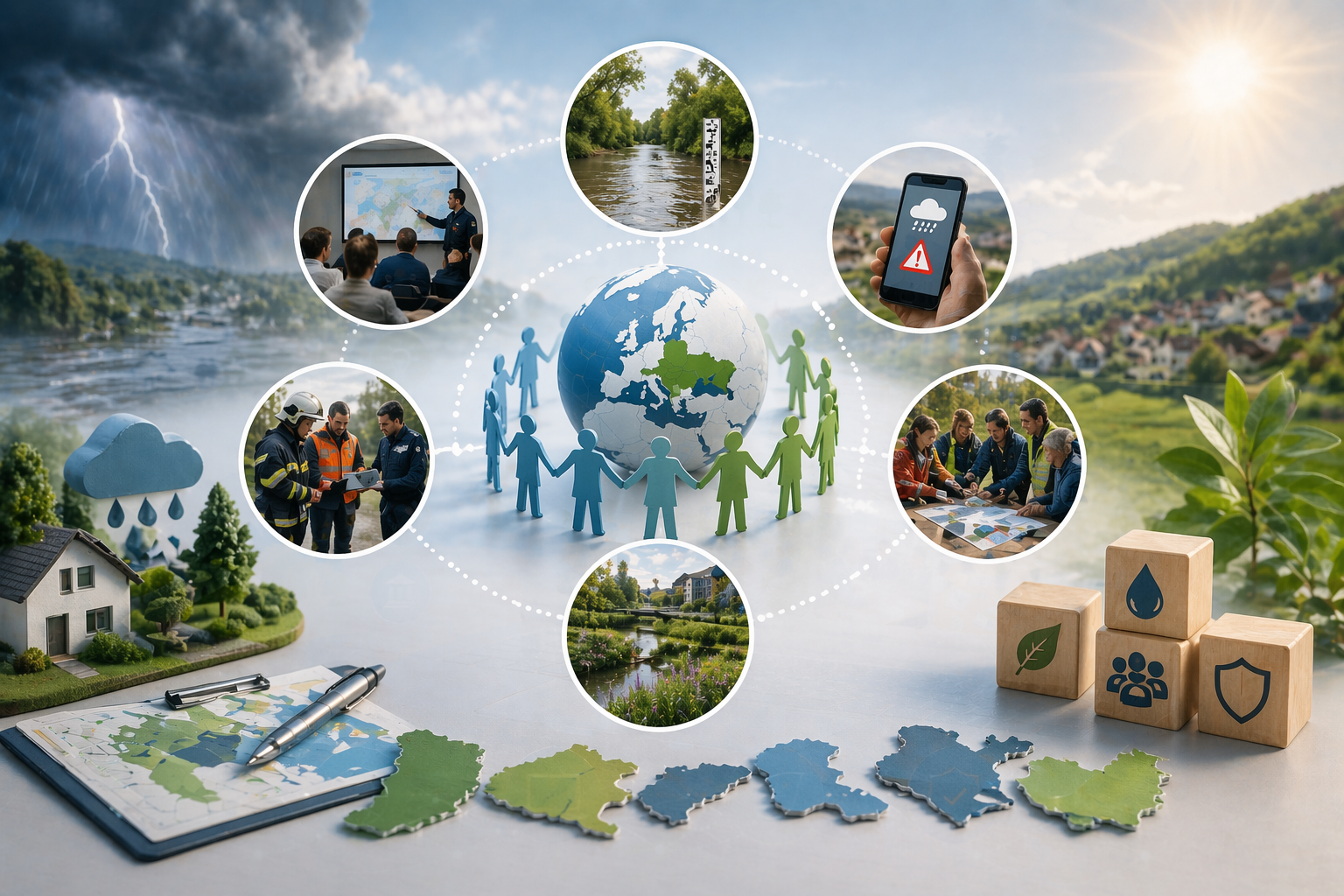
Klímaviszonyok és közösségi összefogás by ChatGPT