
Palmanova is a UNESCO-listed historic city known for its distinctive star-shaped fortress and highly protected urban fabric. The pilot demonstrates how renewable energy solutions can be implemented in and around historic areas by placing photovoltaic installations outside the historic city walls, while enabling the energy produced to be shared with consumers within the historic centre.
Preparing the Renewable Energy Community
The preparation phase focused on laying the foundations for the establishment of the Renewable Energy Community and assessing the technical, legal, regulatory and community engagement aspects required for its implementation.
A key challenge was finding a solution that would allow renewable energy production without compromising the protected character of Palmanova. The selected approach was to locate the photovoltaic installation outside the historic city walls, in an area where fewer architectural and landscape constraints apply. The electricity generated can then be shared with members of the community within the historic centre.
The establishment of the REC was initially delayed as the Italian operational rules governing Renewable Energy Communities were only finalised in February 2024. Waiting for a clear regulatory framework was essential to ensure that the pilot could be implemented in compliance with the applicable national requirements.
The preparation phase also demonstrated the importance of local participation. Engaging residents, businesses, public authorities and other stakeholders was identified as a key condition for building awareness, trust and long-term participation in the REC.
From Planning to Implementation
The pilot investment was developed on a degraded former landfill site on Miurina Street, which is designated as a suitable area for photovoltaic parks under the municipal planning framework. The investment was divided into two functional lots, resulting in a combined installed capacity of approximately 108 kWp. The investment was supported through ZEB4ZEN funding and local crowdfunding.
The implementation involved a wide range of stakeholders, including the Municipality of Palmanova, REC members, APE FVG as the technical partner, the photovoltaic contractor, GSE and e-distribuzione, as well as legal and notarial advisors.
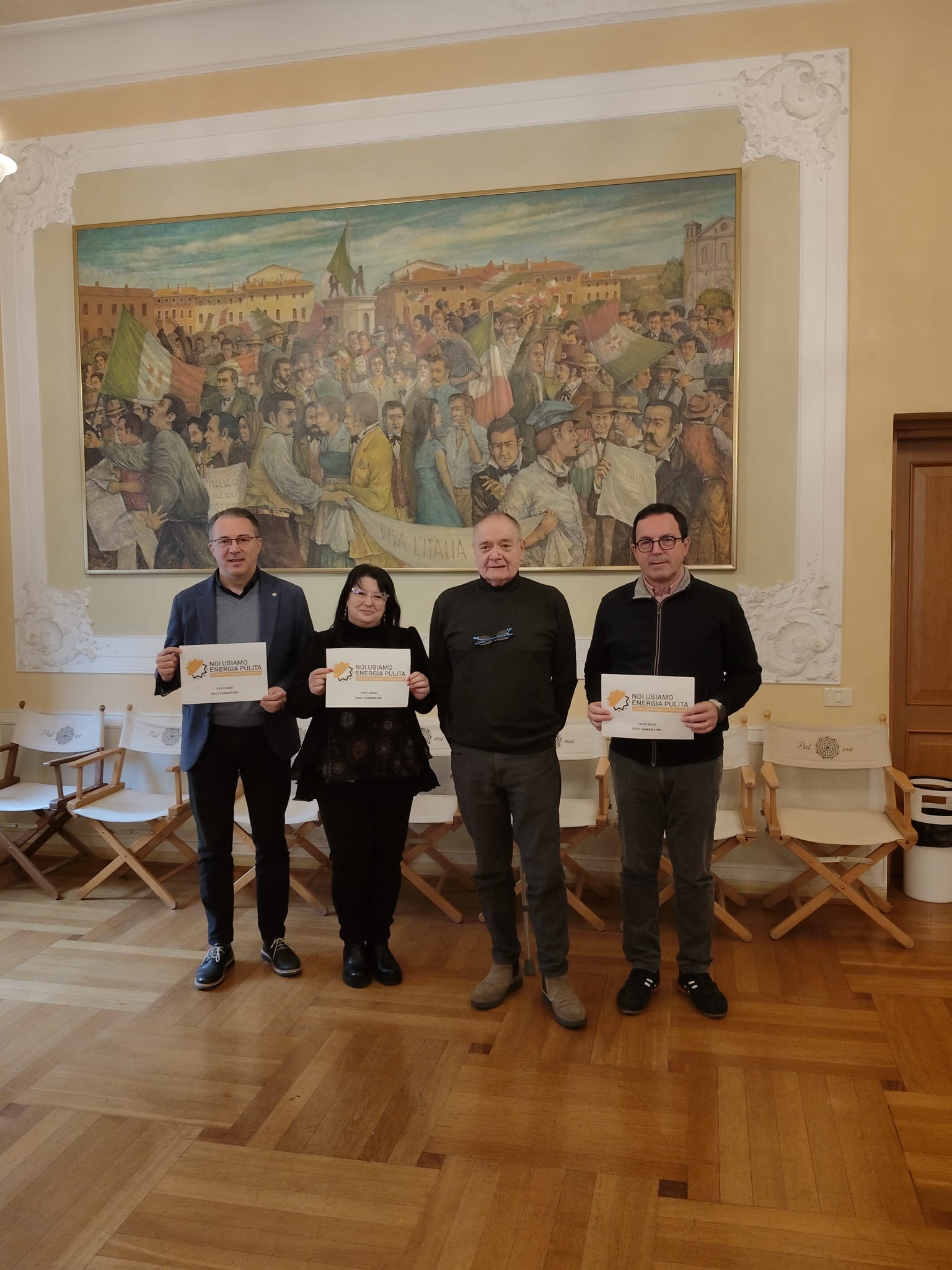
An important milestone was reached in January 2026, when the Palmanova Renewable Energy Community was formally established as a recognised non-profit association. The REC subsequently obtained legal personality. Its Statute and Internal Regulation define the governance structure, membership arrangements, energy-sharing mechanisms and distribution of economic benefits, with particular attention to inclusion and the mitigation of energy poverty.
The implementation process also included securing the availability of the land, obtaining the required connection and building authorisations, and carrying out a transparent market procedure for the design and construction of the photovoltaic plants.
Building a Community Around Renewable Energy
Community engagement has been an essential part of the Palmanova pilot. Public meetings and dedicated communication activities were organised to introduce citizens and businesses to the REC concept, explain its potential benefits and encourage participation. A dedicated REC website was also developed to support information sharing and facilitate expressions of interest.
By September 2026, the REC had 27 participants, including public entities, households and SMEs, with additional members in the process of joining.
The pilot has demonstrated that establishing a REC in a historic urban context requires coordination across technical, administrative, legal and community levels. The evolving regulatory framework, limited previous experience with the REC model, administrative procedures and grid connection requirements presented challenges throughout the implementation process. At the same time, the commitment of the Municipality and the mobilisation of the local community enabled the initiative to progress towards a functioning and potentially replicable model.
Measuring the Results
The evaluation of the Palmanova pilot applies the ZEB4ZEN Monitoring, Reporting and Verification (M&V) methodology specifically to a Renewable Energy Community. Unlike conventional energy-efficiency investments, where performance is primarily assessed through reductions in energy consumption, the Palmanova pilot focuses on renewable energy generation and the sharing of locally produced energy among community members.
The two photovoltaic plants, STELLA and SOLE, have a combined installed capacity of 108.4 kWp and an expected annual electricity production of approximately 135,202 kWh. These installations provide the energy basis for the Renewable Energy Community.
The M&V approach links the expected performance of the investment with actual measured data, supporting the traceability, transparency and verification of the results. The application of IPMVP and ICP principles, adapted to the specific characteristics of Renewable Energy Communities, provides a methodological framework for monitoring renewable energy production, shared energy and the resulting energy and environmental benefits.
A Replicable Model for Historic Areas
The Palmanova pilot shows how renewable energy communities can contribute to the decarbonisation of historic urban areas while respecting heritage protection requirements.
By combining photovoltaic generation outside the historic centre with energy sharing among local consumers, the pilot offers an alternative to installing renewable energy systems directly on protected historic buildings. At the same time, the creation of a local governance and participation model demonstrates the importance of combining technical solutions with community involvement.
The experience gained in Palmanova contributes to the wider ZEB4ZEN objective of developing approaches that can help historic neighbourhoods move towards zero-emission standards while preserving their cultural and architectural identity. The pilot provides practical experience that can inform similar initiatives in other historic areas, taking into account the specific regulatory and heritage context of each location.