
After 30 months of transnational cooperation, OPTI-UP leaves behind practical strategies, tested approaches and a digital Toolkit to help small and medium-sized cities plan more sustainable and efficient public transport systems.
How can smaller cities improve public transport when resources, technical expertise and reliable data are often limited? And how can transport planning better respond to the changing needs of citizens and urban development?
These questions have been at the heart of OPTI-UP – Optimising and Greening Public Transport Networks through Integration with Urban Planning and Data-Driven Approaches, a project co-funded by the Interreg CENTRAL EUROPE Programme.
Bringing together nine project partners, OPTI-UP has worked to bridge the gap between transport research, strategic planning and practical implementation. Through cross-border cooperation, the project has developed transport models, local planning strategies, pilot solutions and a digital decision-support Toolkit designed to make knowledge and experience accessible to other cities facing similar challenges.
From local challenges to shared solutions
Small and medium-sized cities across Central Europe face many common mobility challenges: limited public transport coverage, dependence on private cars, changing travel patterns, financial constraints and the need to better connect urban centres with surrounding communities.
While these challenges are shared, the solutions must reflect local circumstances.
OPTI-UP addressed this through six project areas across five countries: Osijek (Croatia), Modena (Italy), Paks and Pécs (Hungary), Grosuplje (Slovenia) and Český Krumlov (Czech Republic).
Each area brought different transport characteristics, planning priorities and institutional capacities to the project.
By combining local knowledge with transport modelling, stakeholder engagement and transnational exchange, the partnership developed approaches addressing three key areas:
- Public transport network optimisation: Improving routes, connections and service efficiency to better respond to local mobility needs.
- Demand-responsive transport: Exploring flexible transport services that can improve accessibility in areas where conventional public transport is less effective.
- Greener public transport: Supporting the transition towards low- and zero-emission vehicles and more environmentally sustainable transport operations.
These approaches were explored through three jointly developed pilot actions covering the six project areas, providing practical experience and lessons for future implementation.
Building a stronger foundation for public transport planning
One of OPTI-UP’s key contributions is its integrated approach to public transport and urban planning.
Rather than treating transport networks as isolated systems, the project examined how mobility, land use, demographic trends and urban development influence one another.
The partnership developed and applied transport modelling approaches to support evidence-based planning, allowing participating cities to explore different scenarios and better understand the potential effects of proposed measures.
This work was complemented by local public transport plans and a Comprehensive Strategy for Sustainable and Efficient Public Transport Networks in Central Europe.
The Strategy provides an adaptable planning methodology, guiding cities through the analysis of existing conditions, stakeholder engagement, definition of strategic objectives, scenario testing, action planning and performance monitoring.
Importantly, it recognises that smaller cities have different levels of resources and technical capacity. The methodology is therefore designed to be flexible and applicable across different local contexts.
Together, these results provide a foundation for more informed, transparent and integrated public transport decision-making.
The OPTI-UP Toolkit: Making project knowledge accessible beyond the partnership
A central part of the project’s long-term legacy is the OPTI-UP Toolkit, a web-based decision-support tool developed to help small and medium-sized cities explore public transport planning approaches suited to their needs and priorities.
The Toolkit translates the project’s accumulated knowledge and practical experience into an accessible starting point for local authorities, transport operators and mobility planners.
Users provide information about their city, existing public transport system and planning priorities. Based on these inputs, the Toolkit offers an indicative recommended planning direction that can be explored further through an AI-supported conversation and relevant project experience.
The Toolkit is designed to support early strategic thinking and help users identify potential directions for further investigation. It does not replace detailed transport modelling, local feasibility assessments or professional planning expertise.
By making project knowledge accessible in this way, OPTI-UP aims to support the transfer and wider application of its results beyond the original pilot areas.
Explore the OPTI-UP Toolkit: https://www.opti-up.net/
Sharing results across Central Europe
The final phase of OPTI-UP placed particular emphasis on making project results visible, understandable and accessible to a wider audience.
Under the message “Better Public Transport = Better Cities”, a transnational public awareness campaign brought the project’s work to decision-makers, transport professionals, local authorities and the general public.
The campaign combined digital advertising, social media, partner communication, media outreach and a dedicated online platform, connecting different audiences with the project’s results and practical tools.
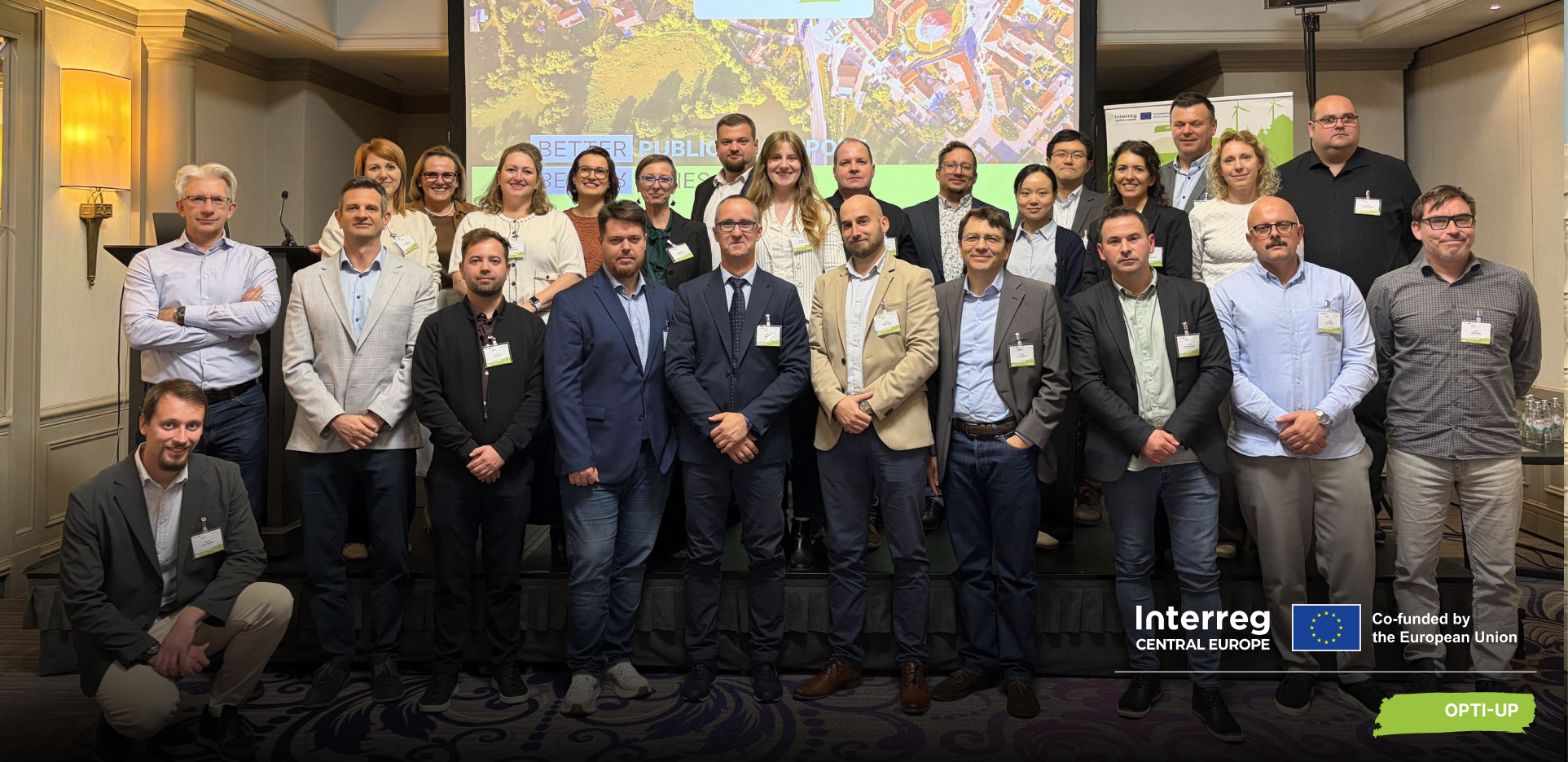
The project also brought its partnership and wider stakeholder community together at the OPTI-UP Final Conference in October 2026.
The conference provided an opportunity to present the project’s main achievements, share pilot experiences, discuss lessons learned and demonstrate how the OPTI-UP Toolkit can support future public transport planning.
Beyond project completion: Keeping results in use
Although OPTI-UP’s implementation period has come to an end, the knowledge, methodologies and solutions developed through the project remain relevant to cities seeking to improve their public transport systems.
The project’s lasting value lies not only in the individual strategies and pilot activities, but also in the shared planning approach and practical experience generated through cooperation across different European contexts.
The project has demonstrated the importance of combining technical analysis with local knowledge, stakeholder participation and realistic implementation planning.
Its results offer a starting point for cities looking to strengthen their planning capacities, explore sustainable mobility solutions and make better-informed decisions about future public transport investments.
Through its publicly available outputs, OPTI-UP provides resources that other cities and transport stakeholders can explore, adapt and build upon.
Better Public Transport = Better Cities.
The project may be concluding, but its approaches, tools and lessons can continue supporting