
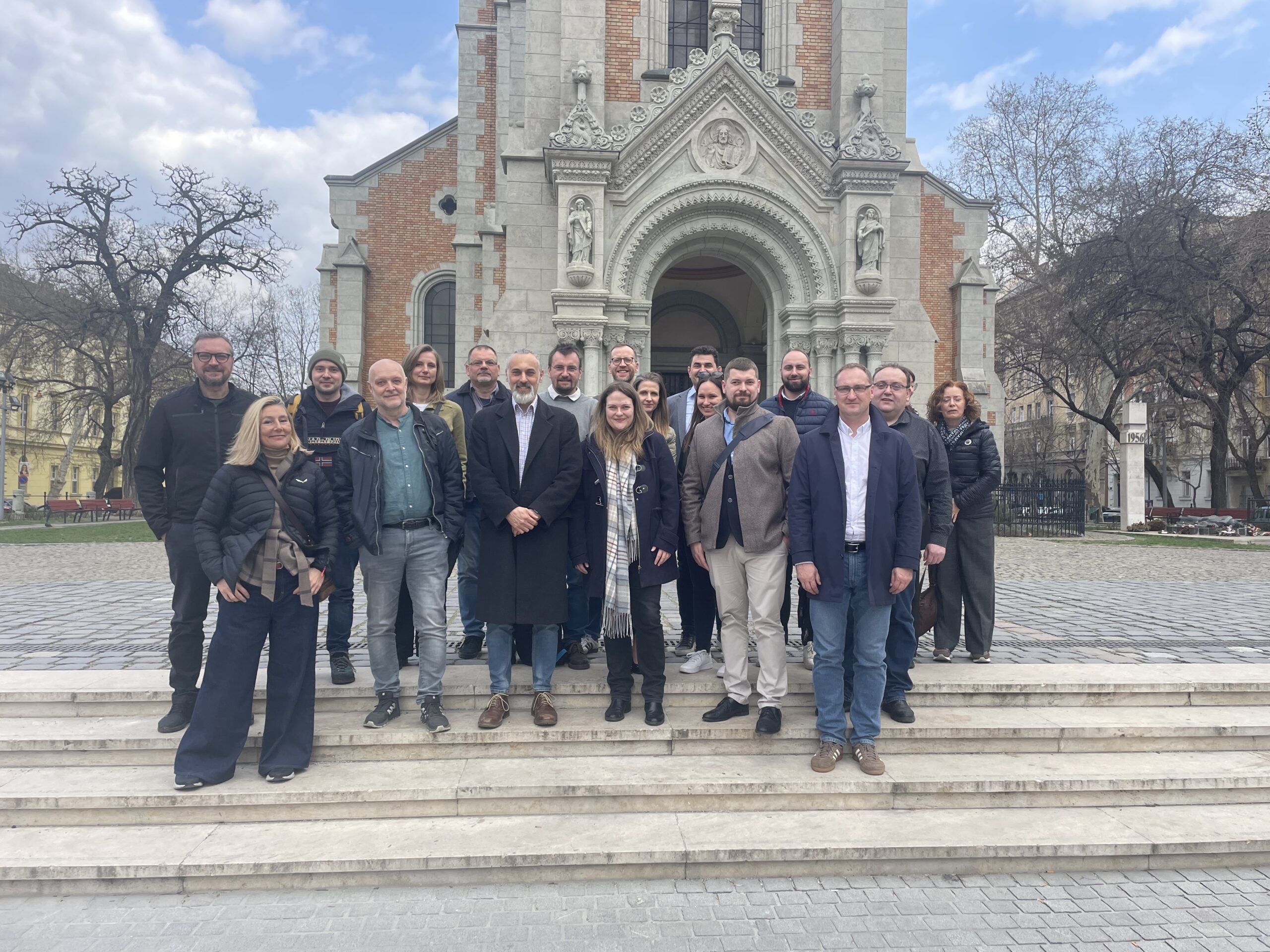
After three years of intensive cross-border collaboration, the Interreg Central Europe NXTLVL Parking project has officially come to a successful close. Urban areas across Central Europe face growing motorization, severe parking pressure, traffic congestion, and the loss of valuable public spaces. Traditional parking management often operates in isolation, disconnected from broader Sustainable Urban Mobility Plans (SUMPs). To address these challenges, the NXTLVL Parking project was launched to help municipalities shift from isolated parking enforcement to integrated, data-driven, and sustainable mobility management. Here is a look back at what we achieved together! Strategic foundations through ParkPAD Audits At the core of our approach was the ParkPAD (Parking Policy Audit Tool) process. Project partner cities—including Rostock, Žilina, Ferencváros, and Olomouc—conducted comprehensive audits bringing together multi-departmental working groups and local stakeholders. These audits evaluated existing governance, identified policy gaps, and established a consensus-based foundation for sustainable parking reform. Follower cities across the region also completed their ParkPAD audits, enabling them to feed the findings directly into their own municipal mobility plans. In addition, their participation provided invaluable feedback on the ParkPAD tool itself: while it proved to be a solid baseline for assessing parking policy, the auditing process highlighted opportunities for future refinement—such as tailoring specific questions to better fit the unique context and challenges of smaller cities and municipalities. Testing solutions: 14 transnational pilot demonstrations All project partners designed, implemented, and monitored 14 pilot demonstrations across Central Europe. To ensure a balanced approach, each project partner executed both a regulatory “push” measure and an incentive-based “pull” measure, alongside a dedicated citizen pilot:
- Rostock (DE): Deployed magnetic ground sensors for real-time fire lane monitoring, while establishing cargo bike sharing and secure P+R bike lockers.
- Žilina (SK): Digitalized resident parking in District No. 1 / Hájik, supported by high-efficiency camera scanning vehicles and comprehensive GIS mapping of bicycle parking.
- Ferencváros (HU): Introduced a “residential parking only” scheme to curb commuter P&R pressure, and built covered B&R bicycle storage at Pöttyös Street Metro Station.
- Olomouc (CZ): Managed parking search traffic near schools while installing high-quality bicycle racks at educational institutions and deploying an interactive map-based web application for citizen engagement.
- Prettau (IT): Implemented targeted parking and visitor flow management solutions to alleviate traffic pressure in high-altitude alpine tourist hotspots, protecting vulnerable natural landscapes while maintaining local accessibility.
Capacity building & CE-level webinars for decision-makers Cross-border learning was central to the project’s success. Through peer-to-peer review sessions and capacity-building workshops, partners continuously shared operational lessons, procurement strategies, and data collection methodologies. A key highlight was two major Central European-level webinars organized specifically for decision-makers and regional/national legislators. These events showcased pilot outcomes and provided a platform to discuss policy tools for sustainable urban space reallocation. Transnational strategy & legislative recommendations Drawing on pilot evaluations and audit outcomes, project partners jointly drafted a transnational advice package and strategy directed at regional and national legislators. The strategy provides actionable recommendations on modernizing, harmonizing, and streamlining parking regulations, removing legal barriers for digital enforcement, and facilitating the transition toward human-centered urban environments across Central Europe. Final implementation-ready Action Plans The project culminated in the delivery of joint, implementation-ready Parking and Mobility Action Plans (Output O1.2) for all participating functional urban areas. Developed through the ParkPAD framework and validated by real-world pilot testing, these plans equip local authorities with concrete, scalable roadmaps to sustain smart parking governance well into the future. Acknowledgements & next steps We extend our sincere thanks to all project partners, follower cities, experts, municipal staff, and citizens who contributed to the ParkPAD audits, pilot actions, and policy discussions. The tools, strategies, and implementation-ready plans generated through the NXTLVL Parking project will continue to serve as a practical foundation for sustainable parking management across Central Europe.