
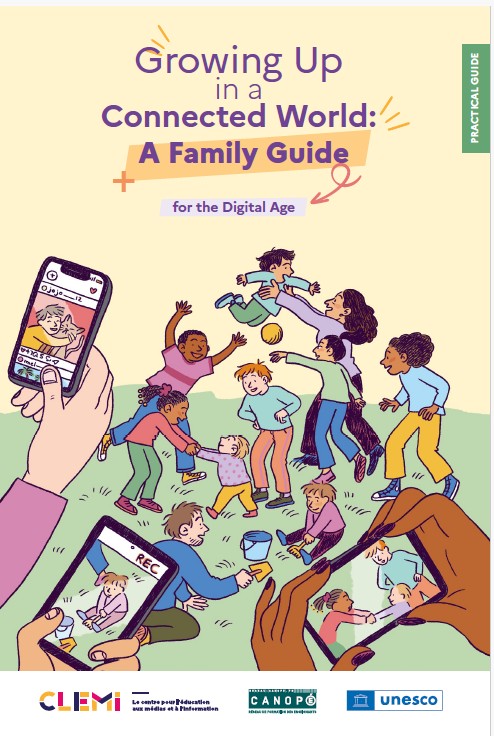
One of its strongest messages is that rules alone are not enough. Children need adults who talk with them, help them question what they see, and model the digital habits they expect from others. Families are encouraged to create clear routines around screens, protect time for sleep, movement and face-to-face interaction, choose age-appropriate content and make space for shared digital experiences.
Critical thinking is just as important as technical safety. Children should learn to ask who created information, what evidence supports it and whether it can be verified elsewhere. The same applies to generative AI: its answers may sound convincing while still being wrong, and personal information should not be shared casually with AI systems.
PERHAPS THE MOST USEFUL IDEA IS ALSO THE SIMPLEST: THE GOAL IS NOT PERFECT CONTROL, BUT INFORMED DIGITAL AUTONOMY. TRUST, DIALOGUE AND EXAMPLE HELP CHILDREN GRADUALLY LEARN TO MAKE SAFER AND MORE RESPONSIBLE CHOICES FOR THEMSELVES.
For parents, educators and anyone working with young people, the guide is a timely reminder that growing up online is not something children should have to learn alone.
Check the document here:
https://unesdoc.unesco.org/ark:/48223/pf0000398455.locale=en