
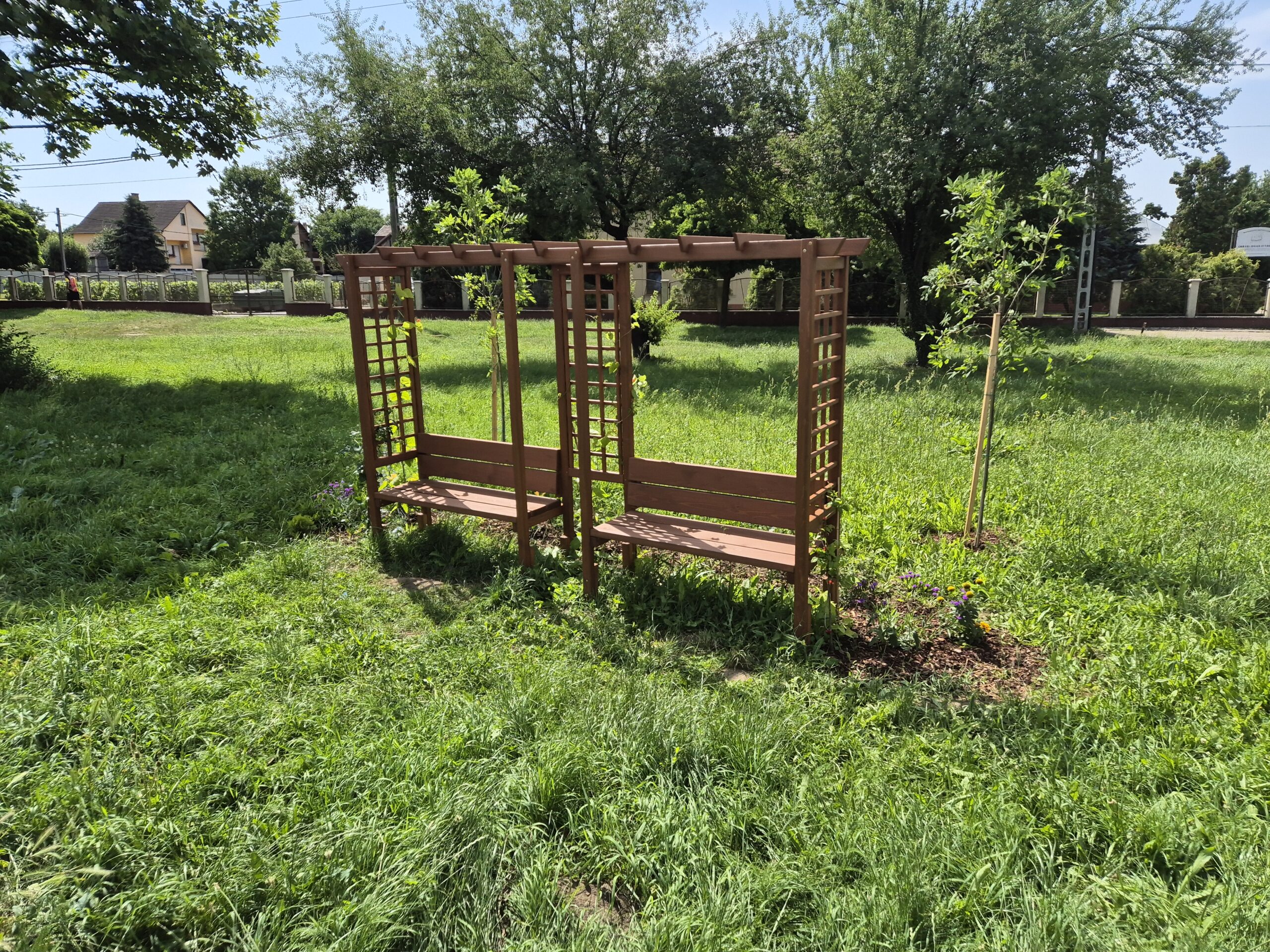
The implementation of green infrastructure as a pilot measure for urban heat adaptation was advanced in Hajdúböszörmény through the installation of “green islands” demonstrating the practical application of nature-based solutions to mitigate urban heat.
Hajdúböszörmény implemented a total of 47 green islands across 23 locations in public spaces and around public buildings. The sites were selected based on heat maps and in cooperation with stakeholders involved in citizen engagement processes, ensuring a targeted and participatory approach.
Read the article of the local newspaper (In Hungarian)
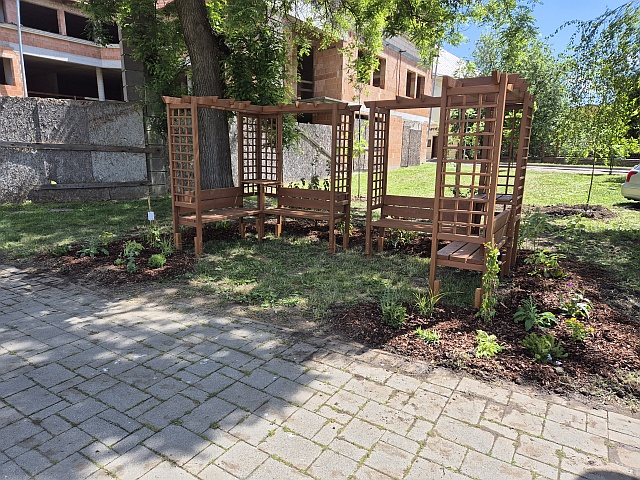
Each green island combined shaded seating with vegetation supported by wooden structures, providing localized cooling effects, improving microclimatic conditions, and enhancing public space quality. Additional design considerations included accessibility, integration into existing urban layouts, and the selection of plant species capable of rapid growth and effective shading.
In parallel, the city of Maribor completed the installation of two pergolas at separate kindergarten sites. These structures were designed to provide shade for both playground areas and building façades, thereby improving thermal comfort for children and staff. Two plant species—kiwi and white Isabella vine—were selected and tested for their suitability in providing natural shading. At the time of reporting, the vegetation was developing well and being properly maintained, allowing for ongoing evaluation of performance.
Both pilot actions were accompanied by monitoring and maintenance activities to assess their effectiveness and ensure long-term functionality. The implemented measures provided practical insights into the design, placement, and operation of small-scale, nature-based cooling interventions.
Overall, the experiences in Hajdúböszörmény and Maribor demonstrated how municipalities can implement targeted, cost-effective, and transferable solutions to reduce heat stress, particularly in areas frequented by vulnerable population groups. The results contributed to a growing evidence base supporting the replication of such measures in other urban contexts.
Read more about Ready4Heat pilot actions