
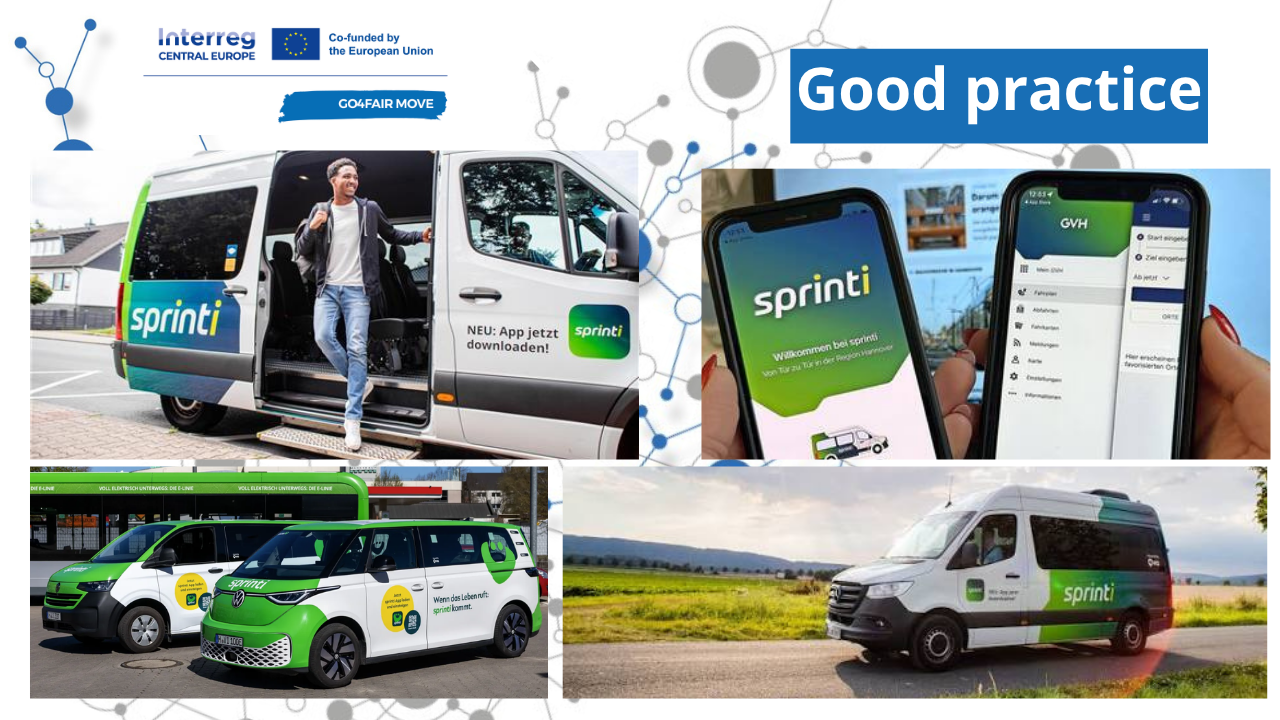
SPRINTI addresses a familiar challenge in dispersed settlements: a public transport network may exist, but reaching the nearest railway station or main bus connection can still be difficult without a private car. The service therefore operates primarily as a first- and last-mile solution, connecting passengers to the wider public transport network.
Journeys can be booked through an app or by telephone. The system dynamically pools passengers travelling in similar directions and uses a dense network of virtual pick-up points to keep walking distances short. Importantly, SPRINTI is fully integrated into the regional public transport and fare system. Where an appropriate regular public transport connection is available, the system proposes that option first, ensuring that demand-responsive transport complements existing services instead of competing with them.
The experience also demonstrates the importance of gradual development. Following an earlier pilot in selected municipalities, the service was progressively expanded. Strong public-sector support, cooperation with an experienced technology partner and continuous monitoring have contributed to growing passenger numbers and social acceptance.
At the same time, SPRINTI highlights challenges that need to be considered when transferring such a model. Demand-responsive services require stable public funding, sufficient vehicles and drivers, reliable digital infrastructure and efficient route planning to minimise empty kilometres. Financing models, service areas, operating hours, virtual stops and integration rules therefore need to be adapted to local conditions.
For GO4FAIR MOVE, SPRINTI is particularly relevant because it demonstrates how flexible mobility can connect dispersed rural communities with buses and rail, reduce dependence on private cars and improve mobility for people without access to their own vehicle. Its combination of first- and last-mile connectivity, virtual stops, dynamic routing, integrated fares and gradual pilot-based expansion provides useful inspiration for the GO4FAIR MOVE pilot areas.