
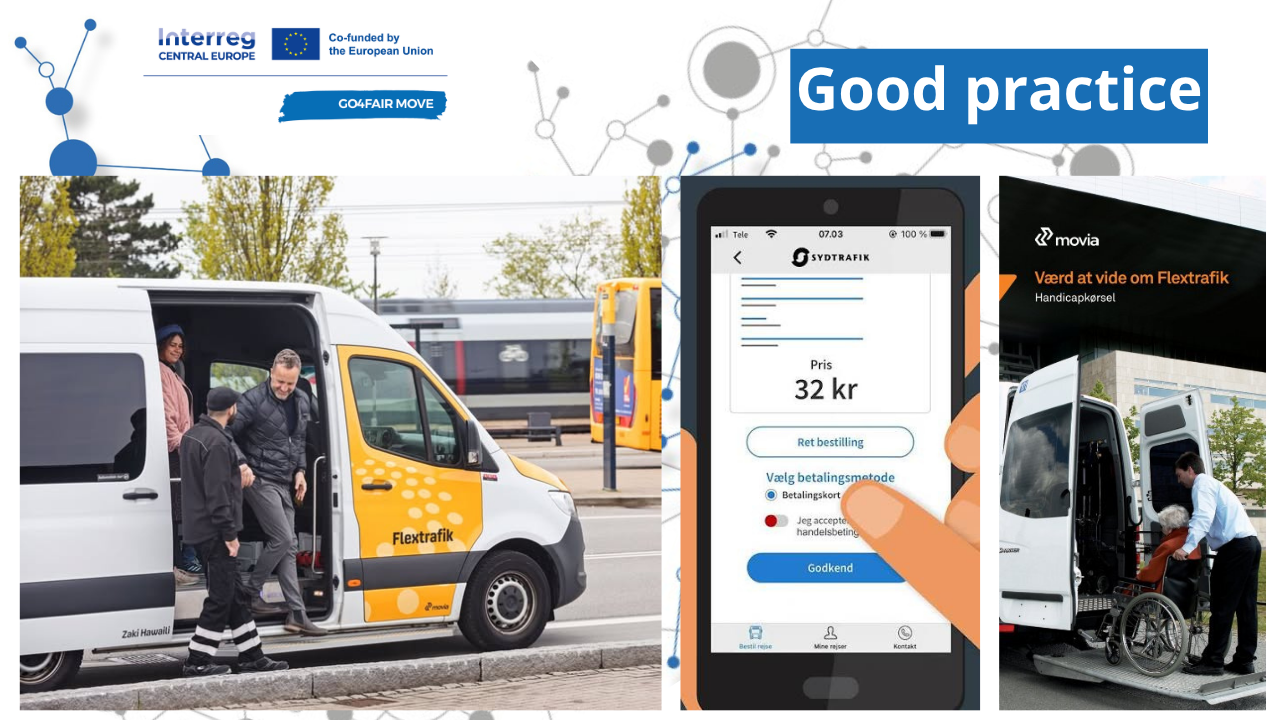
Flextrafik is operated through cooperation between Danish regional transport authorities, municipalities and regions, supported by a shared IT platform managed by FlexDanmark. The system includes services available to the general public, such as Flextur, Plustur and Flexbus, alongside transport for people with disabilities, patient transport and other mobility services commissioned by public authorities.
One of the model’s main strengths is coordination. A common digital system can combine journeys, dynamically plan routes and pool passengers travelling in compatible directions. This helps improve vehicle utilisation and reduce unnecessary kilometres. Instead of maintaining a dedicated fleet, services can also be provided by contracted local transport operators and taxi companies.
Accessibility is another important feature. Depending on the service, journeys can be booked by telephone, online, through an app or via Denmark’s national journey planner. Flexible services can also connect passengers to conventional buses and trains, making them particularly useful in rural and suburban areas where regular public transport alone cannot efficiently serve dispersed demand.
The scale and integration of Flextrafik also create challenges. Coordinating different services, public authorities and private operators requires a sophisticated organisational and technological framework. Stable public financing is essential, while the system depends heavily on reliable IT and journey-planning algorithms. Pooling passengers can also increase individual journey times.
For GO4FAIR MOVE, Flextrafik is especially valuable because it demonstrates that demand-responsive transport does not necessarily have to be organised as a separate solution for each mobility need. A shared platform serving several municipalities and different passenger groups can coordinate publicly funded transport more efficiently while making use of existing local carriers. This experience offers valuable inspiration for the GO4FAIR MOVE pilot areas when considering cross-municipal cooperation, integrated booking systems, passenger pooling and better connections between flexible and conventional public transport.