
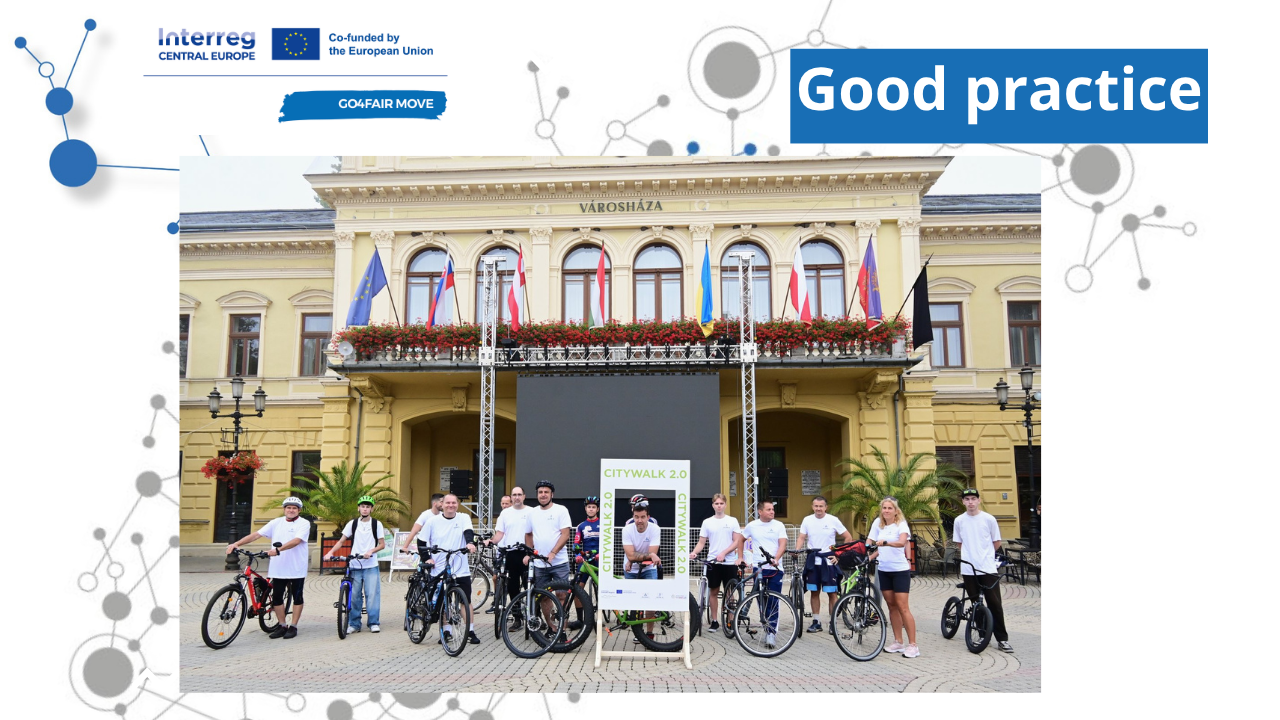
The initiative demonstrates how relatively simple and low-cost measures can encourage people to reconsider their everyday travel habits and choose cycling for regular journeys. Employers and schools were actively involved from the preparation stage, while the programme combined awareness raising with gamification, an ambassador system and incentives for participants. The Strava application was used to monitor journeys and results, providing a digital component that made participation measurable and helped maintain motivation throughout the programme.
Strong support from the municipality, broad communication before the pilot and continuous dialogue with residents were important factors behind the initiative. Employers could contribute additional incentives, including financial benefits, while Bike2Work and Bike2School ambassadors helped engage and motivate participants. At the same time, the experience highlighted several challenges, including limited resources for continuing the programme, insufficient safe bicycle parking at schools, difficulties in engaging young people and the continued preference for private cars among some residents. The effectiveness of such campaigns also depends considerably on the availability of suitable cycling infrastructure.
The approach has good transfer potential, as many of its core elements – including monthly Bike2Work and Bike2School challenges, gamification, digital journey monitoring, ambassador schemes and cooperation with employers and schools – can be replicated relatively easily. Successful transfer nevertheless requires basic cycling infrastructure, effective communication and active community participation. Local adaptation is particularly important when designing incentives, promotional activities and cooperation arrangements with employers and schools.
For GO4FAIR MOVE, the practice provides a useful example of how behavioural change can complement transport and governance measures. Particularly relevant is the combination of employer engagement, digital tools, gamification and targeted communication to encourage more sustainable commuting choices. These elements can inspire locally adapted Bike2Work-type campaigns and other initiatives in the GO4FAIR MOVE pilot territories, demonstrating that improving home-to-work mobility does not necessarily depend only on major infrastructure investments.