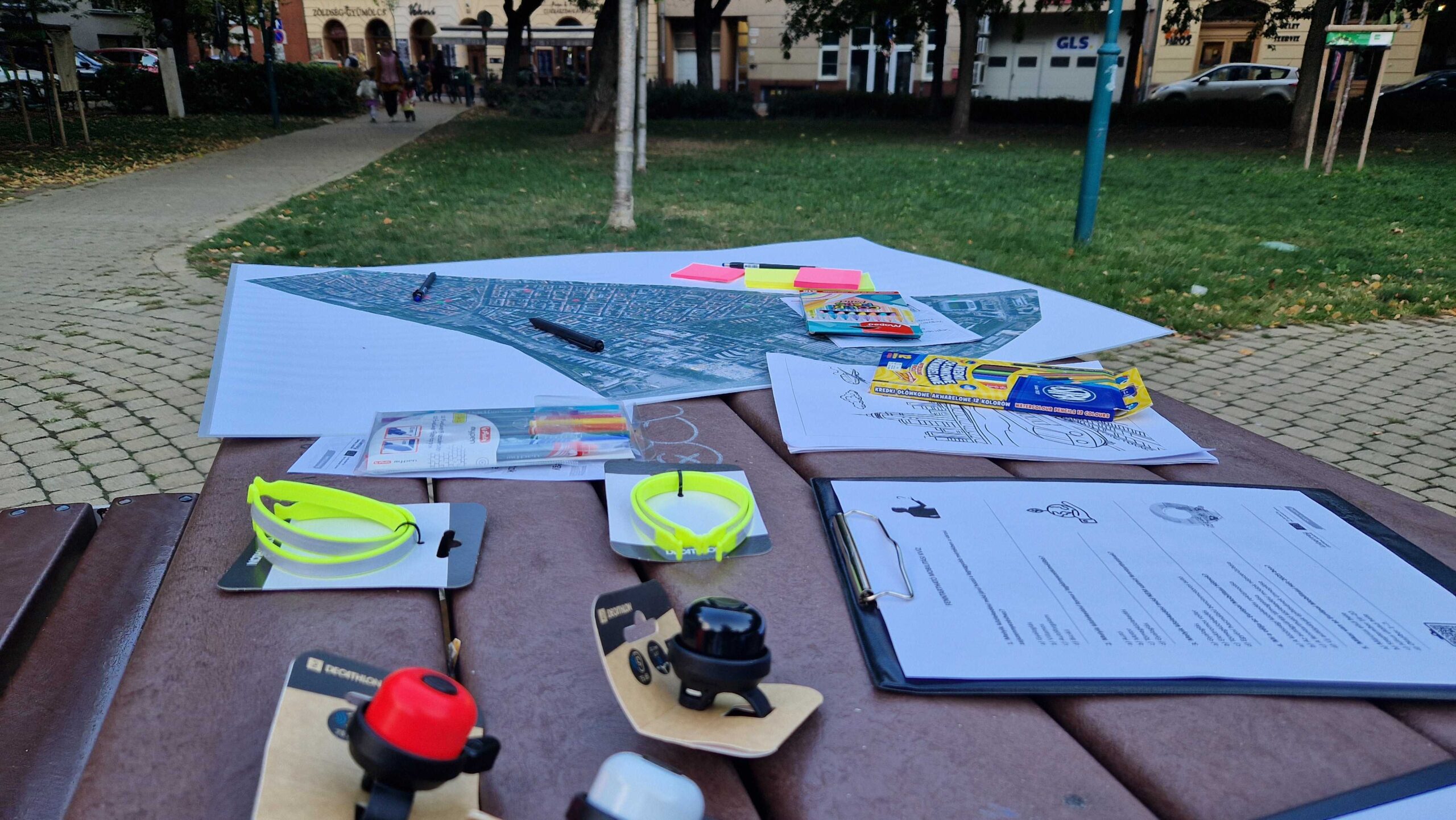
Within the framework of the NXTLVL Parking project, the 9th District of Budapest (Ferencváros) implemented targeted pilot measures to address heavy parking pressure, encourage active mobility, and explore climate adaptation strategies in high-density residential areas. Residential parking only scheme in the József Attila housing estate To alleviate severe commuter and P+R parking pressure near metro stations at the boundary of paid and non-paid parking zones, Ferencváros introduced a “residential parking only” scheme in the non-paid section of the József Attila housing estate. The permanent measure covered a designated area bounded by Ifjúmunkás Street, Dési Huber Street, Távíró Street, and Epreserdő Street. Physical works included installing traffic signs and poles to reserve designated parking spaces for local residents during specific hours. Baseline and post-implementation monitoring conducted by Mobilissimus confirmed that the regulation successfully freed up parking spaces for residents and accelerated the removal of long-term parked or abandoned vehicles. Covered bicycle storage at Pöttyös Street metro station To promote multimodal trips and offer a reliable Bike & Ride (B&R) option, a covered bicycle rack facility was installed directly adjacent to the Pöttyös Street metro station in the József Attila housing estate. Located right next to the newly regulated residential parking zone, the weather-protected storage facility aimed to reduce bicycle theft risks and encourage a modal shift from private cars to cycling for daily commutes. The measure directly supported the district’s long-term strategy to expand cycling infrastructure along Metro Line M3. Ferencváros citizen pilot – research study on cooling public spaces and microclimate intervention As part of the participatory citizen pilot, Ferencváros conducted a comprehensive research study focusing on microclimate interventions, the urban heat island effect, and the thermal relief of densely built public spaces. The study specifically examined how reallocating space currently dominated by surface car parking could create opportunities for green infrastructure, shading, and public “cooling points”. Key elements of the citizen pilot included: Microclimate analysis and urban heating assessment: The study mapped out severe heat stress zones within the district’s densely built residential blocks and housing estates, where concrete and asphalt surfaces significantly elevate summer temperatures. Reallocating parking space for climate adaptation: It explored concrete design concepts and technical feasibility for transforming selected parking slots into shaded, greened community spaces and micro-parks (parklets) equipped with cooling elements. Data-driven public space planning: The research provided actionable recommendations and baseline data for municipal planners, demonstrating how parking management strategies can directly contribute to local climate resilience, improved thermal comfort, and enhanced quality of life for residents.