
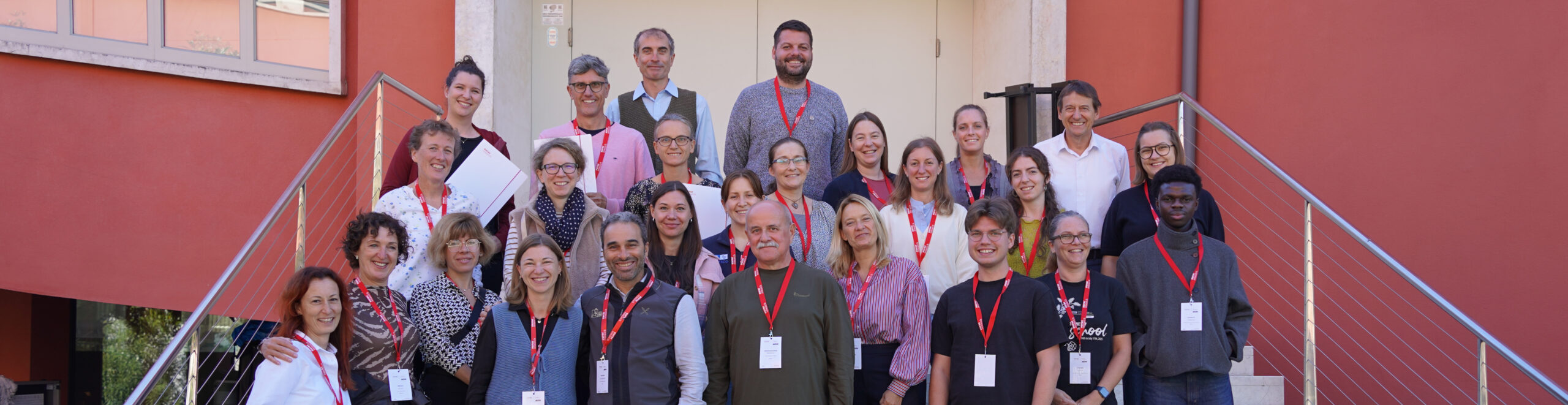
Natural areas rarely stop at political borders. Landscapes, ecosystems, cultural traditions and historical memories extend across countries, creating shared territories that require shared approaches to their protection and promotion. It is from this perspective that ENTURE-CE officially began its journey during the kick-off meeting held in Bolzano on 8 and 9 October.
The event brought together the seven project partners and some associated partners for two days of exchange, discussion and planning, laying the foundations for a collaborative effort that will connect natural areas and local communities across Central Europe.
At the heart of the project are five remarkable natural areas located along two European border regions. The Julian Prealps Natural Park, Dobratsch Nature Park and Triglav National Park form a cross-border network between Italy, Austria and Slovenia, while Horná Orava Protected Areas and Babia Góra National Park connect territories along the Slovak-Polish border. These areas will become spaces for learning, experimentation and cooperation, where partners will explore new ways to manage tourism impacts on natural environments, engage local communities in decision-making processes and strengthen cross-border approaches to the valorisation of natural and cultural heritage.
Drawing on the experience and results of previous and ongoing Interreg projects, the natural area partners, coordinated by Eurac Research and working together with CUAS Carinthia University of Applied Sciences, the Ekopsychology Association and the Walk of Peace Foundation, aim to develop a transboundary governance model for natural areas. The ambition is to create a framework that supports both the coordinated promotion and protection of these territories, while recognising the cultural landscapes, historical legacies and shared stories that continue to connect communities across borders.
ENTURE-CE starts from a simple but increasingly important question: how can protected areas balance tourism development, nature conservation and community well-being in a rapidly changing world? Over the coming months, partners will work together to identify concrete solutions, exchange knowledge and test approaches that can strengthen the resilience of natural areas while enhancing the value of the heritage they hold.
The discussion is only beginning. Through this project, partners hope to foster a wider dialogue that extends beyond the consortium itself, engaging stakeholders, local communities and everyone interested in the future of sustainable tourism and protected areas.
We invite you to follow the project’s progress and join the conversation through upcoming updates on the project website and partner communication channels.