
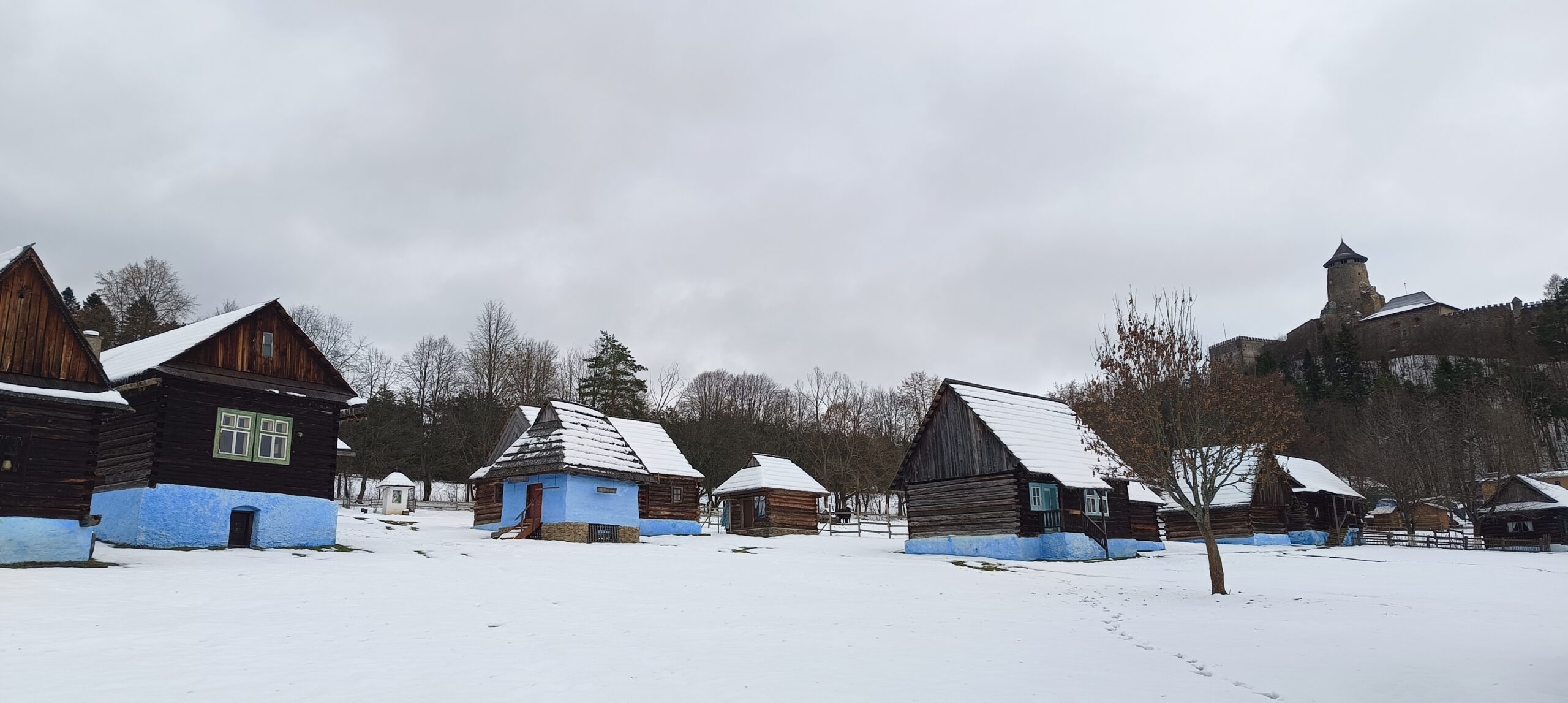
From 25 to 27 November 2025, partners of the CENTRAL MOUNTAINS project met in Stará Ľubovňa, Slovakia, to review progress towards the final phase of the project and exchange good practices supporting sustainable governance in mountain regions. The meeting combined discussions on project implementation with a study visit showcasing examples of heritage-led regional development and innovative digital tools supporting cross-border cooperation.
A key highlight of the meeting was the presentation and testing of the Mobile Application for Cross-Border Functional Areas in the Carpathians, developed by ZMOS as one of the project’s pilot actions. Designed as a transnational platform, the application aims to facilitate cooperation between municipalities, organisations and stakeholders by enabling them to share events, opportunities and information relevant to cross-border functional areas.
Project partners tested the prototype and provided detailed recommendations to improve its functionality, multilingual accessibility and user experience. Feedback focused on simplifying navigation, expanding language options, improving search filters and strengthening the application’s role as a practical tool for planning and coordinating cross-border activities. The discussions confirmed the strong potential of digital solutions to support cooperation beyond the lifetime of the project.
The study visit also highlighted how cultural heritage can become a catalyst for local development. Participants visited Ľubovňa Castle, one of the most important historical landmarks in the Polish–Slovak border region, where the shared history of Poland, Hungary and Slovakia illustrates the long tradition of cross-border cooperation in the Carpathians. The successful restoration of the castle and its transformation into one of Slovakia’s most visited heritage sites demonstrated how investments in cultural heritage can stimulate tourism, strengthen local identity and create new economic opportunities.
Further examples included the Open-Air Museum beneath Ľubovňa Castle, preserving the multicultural traditions of the Spiš and Šariš regions, as well as the restored Castle Distillery, where the revitalisation of historic infrastructure has contributed to preserving local traditions while supporting entrepreneurship and employment.
Partners also visited the Červený Kláštor Monastery, where extensive restoration works have transformed an important cultural heritage site into a multifunctional centre combining heritage preservation, tourism, education and local economic development. The example demonstrated how endogenous resources can become drivers of sustainable regional development while safeguarding the unique cultural identity of mountain communities.
The experiences from Stará Ľubovňa reinforced one of the CENTRAL MOUNTAINS project’s key messages: effective mountain governance combines innovation with tradition. Alongside digital tools supporting cross-border cooperation, investments in cultural heritage and local identity create lasting opportunities for sustainable development, stronger regional cooperation and increased resilience of mountain communities.
How did this contribute to CENTRAL MOUNTAINS?
The meeting also contributed to the final refinement of the project’s Joint Strategy, governance recommendations and practical solutions, ensuring that they reflect both innovative digital approaches and successful examples of place-based development observed across Central Europe.