
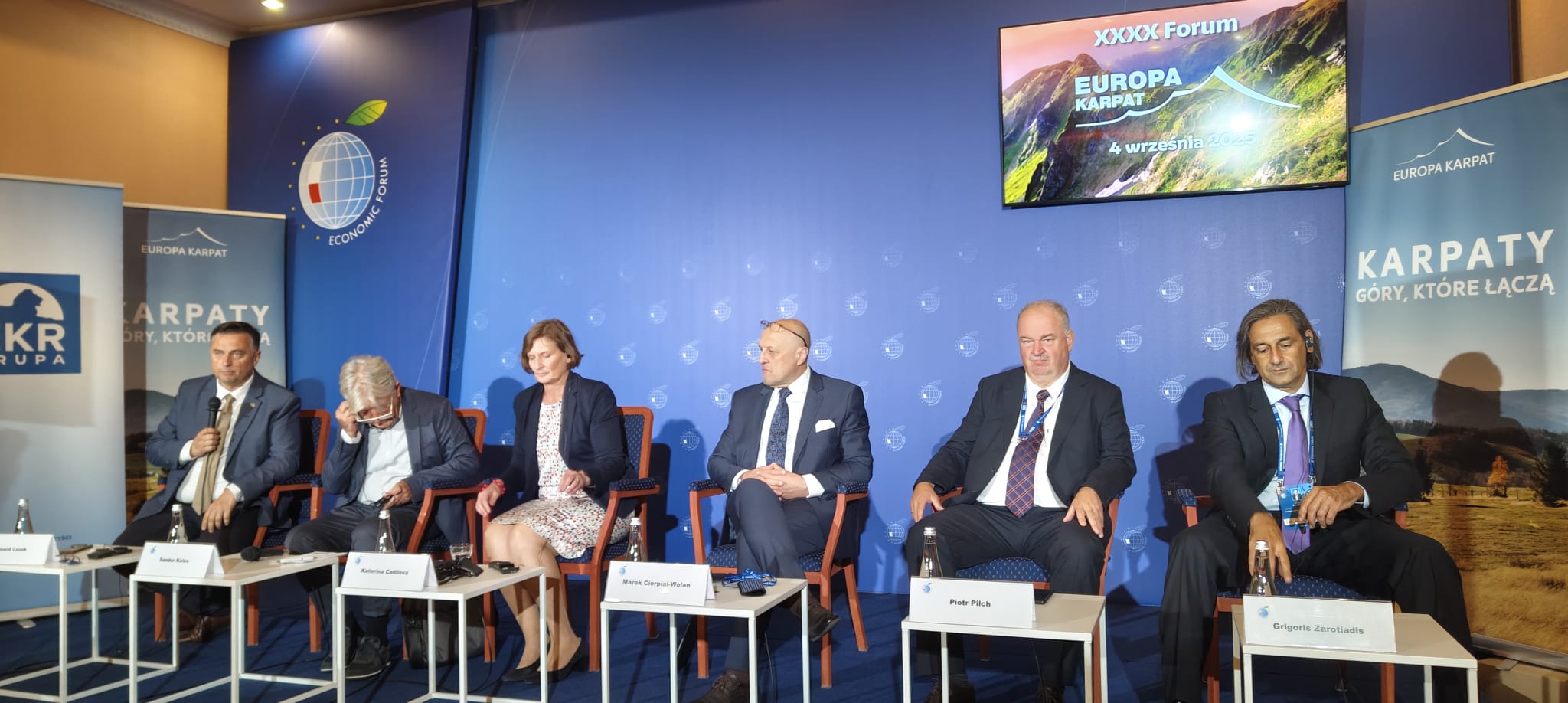
The CENTRAL MOUNTAINS project was presented during the Economic Forum in Karpacz, one of the largest international conferences in Central and Eastern Europe dedicated to regional development, public policy and international cooperation. As part of the Europe of the Carpathians programme, the project reached a wide audience of policymakers, representatives of national and regional authorities, international organisations, researchers and practitioners working on the sustainable development of mountain regions.
The event provided an opportunity to showcase how CENTRAL MOUNTAINS supports more effective governance across the Alps, Carpathians and Sudetes through participatory approaches, cross-border cooperation and practical governance solutions developed together with regional stakeholders. The presentation highlighted the project’s key results, including the Alpine-Carpathian Joint Strategy, innovative governance models tested through pilot actions, and practical tools designed to strengthen cooperation between public authorities, civil society and local communities.
Particular attention was given to the importance of Cross-Border Functional Areas (CBFAs) and long-term governance structures capable of supporting sustainable mountain development beyond individual projects. The discussion also addressed the role of stakeholder participation, youth engagement and stronger institutional cooperation as key elements of resilient mountain governance.
Presenting the project during the Europe of the Carpathians discussions significantly increased the visibility of its results among decision-makers responsible for regional, national and European policies. It also created opportunities for knowledge exchange with representatives of other mountain regions and contributed to promoting the project’s governance solutions as transferable approaches for future territorial cooperation initiatives.
By bringing the project’s outcomes to one of the most influential policy forums in the region, CENTRAL MOUNTAINS strengthened the long-term dissemination and uptake of its results, supporting their continued use by public authorities, regional organisations and international cooperation networks beyond the project’s lifetime.