
Did you know that frozen and chilled food may cross borders before reaching our plates? Have you heard that packaging requirements, documentation and hygiene procedures, temperature records, traceability practices and reusable-packaging return systems can differ between neighbouring countries in Central Europe? For small and medium-sized enterprises, these differences can mean additional administration, higher costs and delays. They can also increase waste and make circular solutions harder to introduce.
Food safety also depends on reliable refrigeration, clear records and smooth cooperation. Recent suspected cyber-attacks on supermarket refrigeration systems in Europe, which reportedly caused food to be discarded, are a reminder of how vulnerable cold chains can be. COOL-BORDER is not a cybersecurity project, but the incidents show why monitoring, traceability and coordination matter.
This is why we launched COOL-BORDER in September 2026. The project will address these barriers in frozen, chilled and pre-chilled food value chains across Central Europe. During the 24-month project, seven partners from six countries will map value chains and identify where cross-border processes create unnecessary burdens.
Achieving meaningful results depends on the active participation of those who experience these challenges. We are setting up six bilateral cross-border hubs that will bring together businesses, support organisations, logistics and packaging providers, NGOs, training bodies and public authorities. Their experience will guide shared responses, including clearer documentation, improved return flows and better cold-chain practices.
The project will also develop and test the COOL-BORDER Transnational Accelerator. It will combine circular business advice, packaging guidance, technology assistance, logistics planning, cold-chain optimisation, digital tools of D4Pack and FoodCycle.ai and training.
If you work for an SME in the frozen-food sector, represent such companies through an association or cluster, provide business support, or work for a relevant authority, we invite you to share your experience, join our cross-border hubs and help us test practical solutions. By working together, we can reduce waste, improve resource efficiency and make cross-border cooperation easier for food businesses.
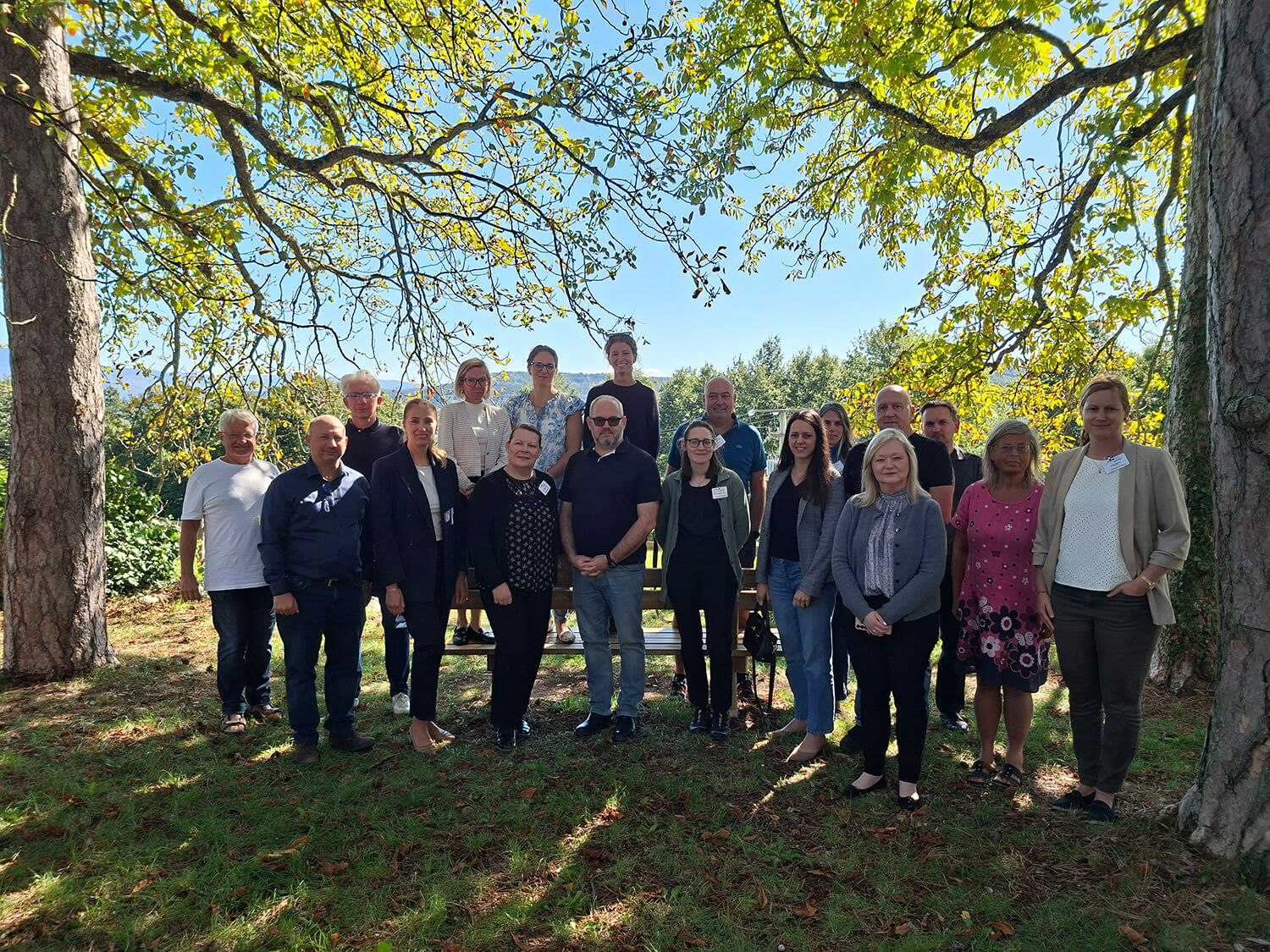
Our partnership gathered in Istria for the project’s kick-off meeting on 24–25 September 2026. We were hosted by our local project partner, AZRRI—Agency for Rural Development of Istria Ltd. In addition to establishing the project’s management structures, we began mapping relevant stakeholders, collecting input on perceived challenges and preparing the cross-border hubs.
We look forward to working with you to improve cross-border frozen-food flows in Central Europe!