
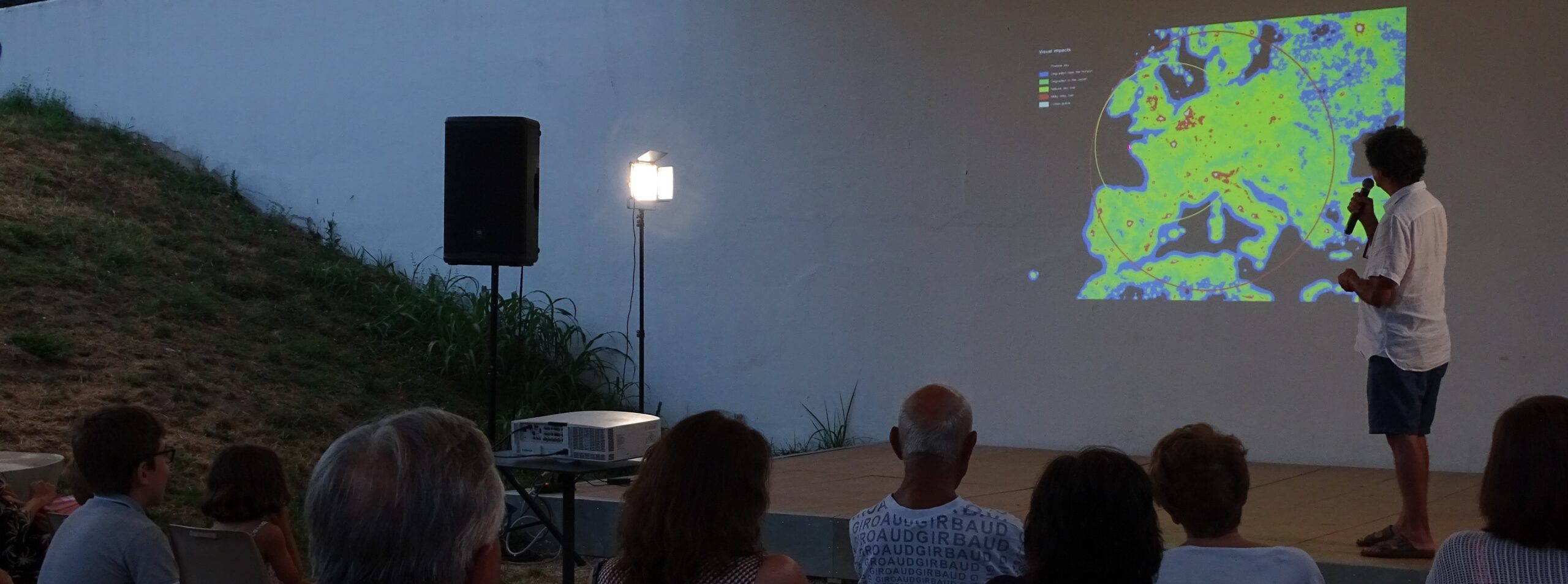
During the evening, researchers from the Italian National Institute for Astrophysics (INAF) and the PRISMA network introduced participants to the issue of light pollution, highlighting its impact on astronomical observations, human health and biodiversity. The event showed how reducing unnecessary artificial light at night can help protect both natural ecosystems and the cultural value of dark skies.
A key focus of the event was Alpi – Terra di Stelle, the Italian pilot action developed within the Interreg Central Europe DARKERSKY4CE project in collaboration with GAL Escartons e Valli Valdesi. Visitors learned about the pilot’s activities to promote dark-sky conservation and sustainable astro-tourism in the Western Alps, including a series of summer events designed to reconnect local communities and visitors with the beauty of the night sky.
The audience also had the opportunity to actively contribute to the project by completing the “Bright Nights” questionnaire, which explores public perceptions of artificial light at night and the value people attribute to starry skies. This participatory activity supports DARKERSKY4CE’s broader objective of engaging citizens and stakeholders in developing more sustainable lighting practices and protecting Europe’s dark skies.