
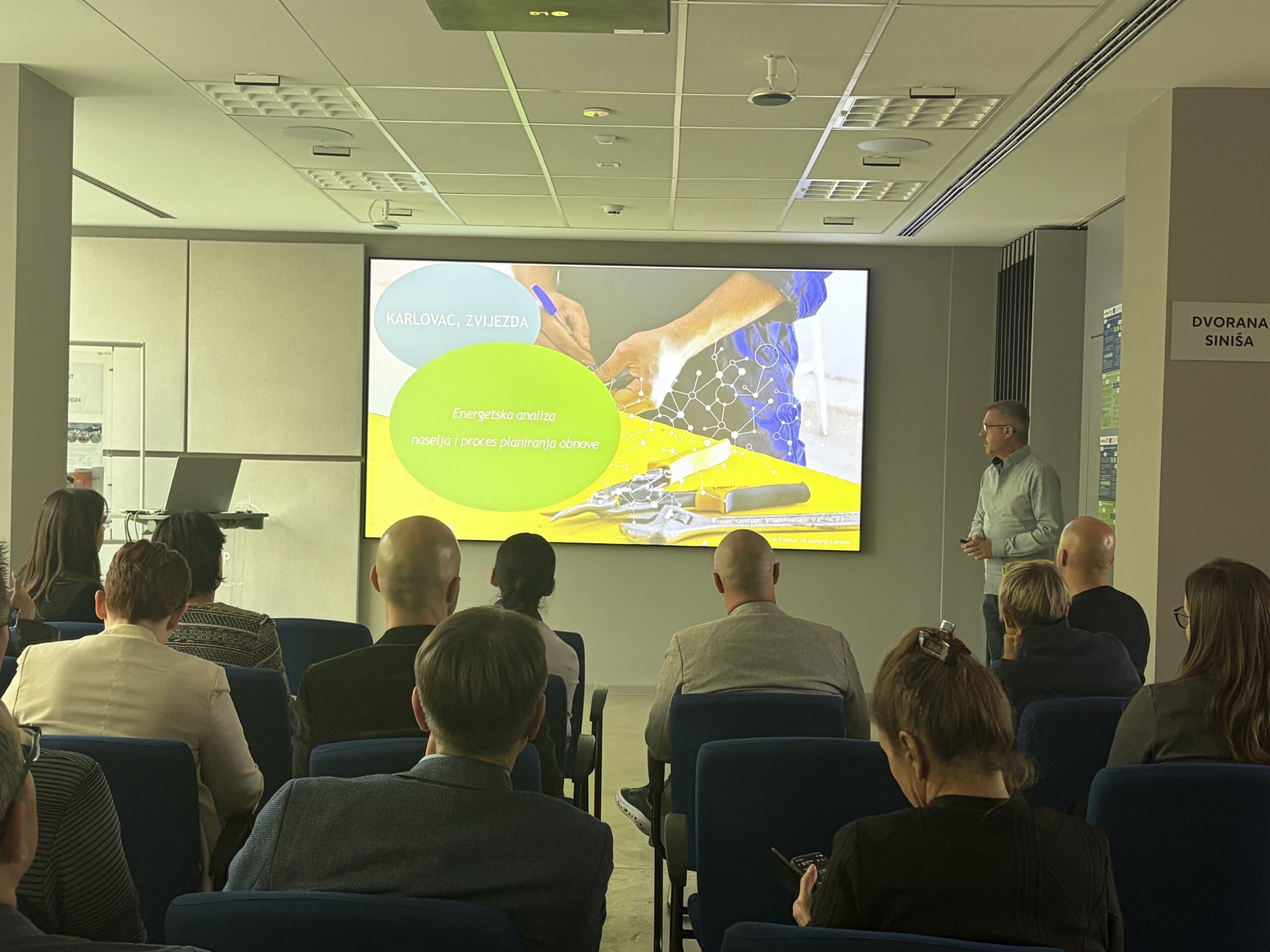
The ENEFIRST Plus project, co-funded by the European Union’s LIFE Programme, aims to support the integration of the EE1st principle into energy-related decision-making processes by ensuring that energy efficiency, demand-side management and flexibility solutions are systematically considered alongside investments in energy generation and infrastructure.
During the workshop, participants explored the project’s key findings, Croatian pilot cases and opportunities to strengthen the implementation of the EE1st principle within national energy policies and planning frameworks.
Showcasing ZEB4ZEN Results and Innovative VR Solutions
As part of the workshop, EIHP also presented the results of the Interreg CENTRAL EUROPE ZEB4ZEN project, highlighting activities carried out in the Croatian pilot area – the historic Zvijezda district in Karlovac.
Special attention was given to the innovative VR tool developed within the ZEB4ZEN project, which supports the planning and assessment of sustainable energy renovation solutions in historic urban areas.
Through an interactive 3D environment, the VR tool enables users to explore different energy renovation scenarios, including the integration of renewable energy sources, and assess their potential impacts on energy costs, CO₂ emissions and cultural heritage preservation.
By combining digital technologies with energy efficiency and heritage conservation considerations, the tool provides valuable support for municipalities, urban planners and other stakeholders involved in the sustainable transformation of historic districts.
The presentation demonstrated how the ZEB4ZEN approach can contribute to the practical implementation of the Energy Efficiency First principle by supporting informed decision-making and helping identify suitable renovation strategies that balance energy performance, environmental sustainability and cultural heritage protection.
The workshop provided a valuable opportunity to share ZEB4ZEN results with a wider professional audience, encourage knowledge exchange between European projects and highlight the potential of innovative digital tools to support more sustainable and energy-efficient historic urban environments.