
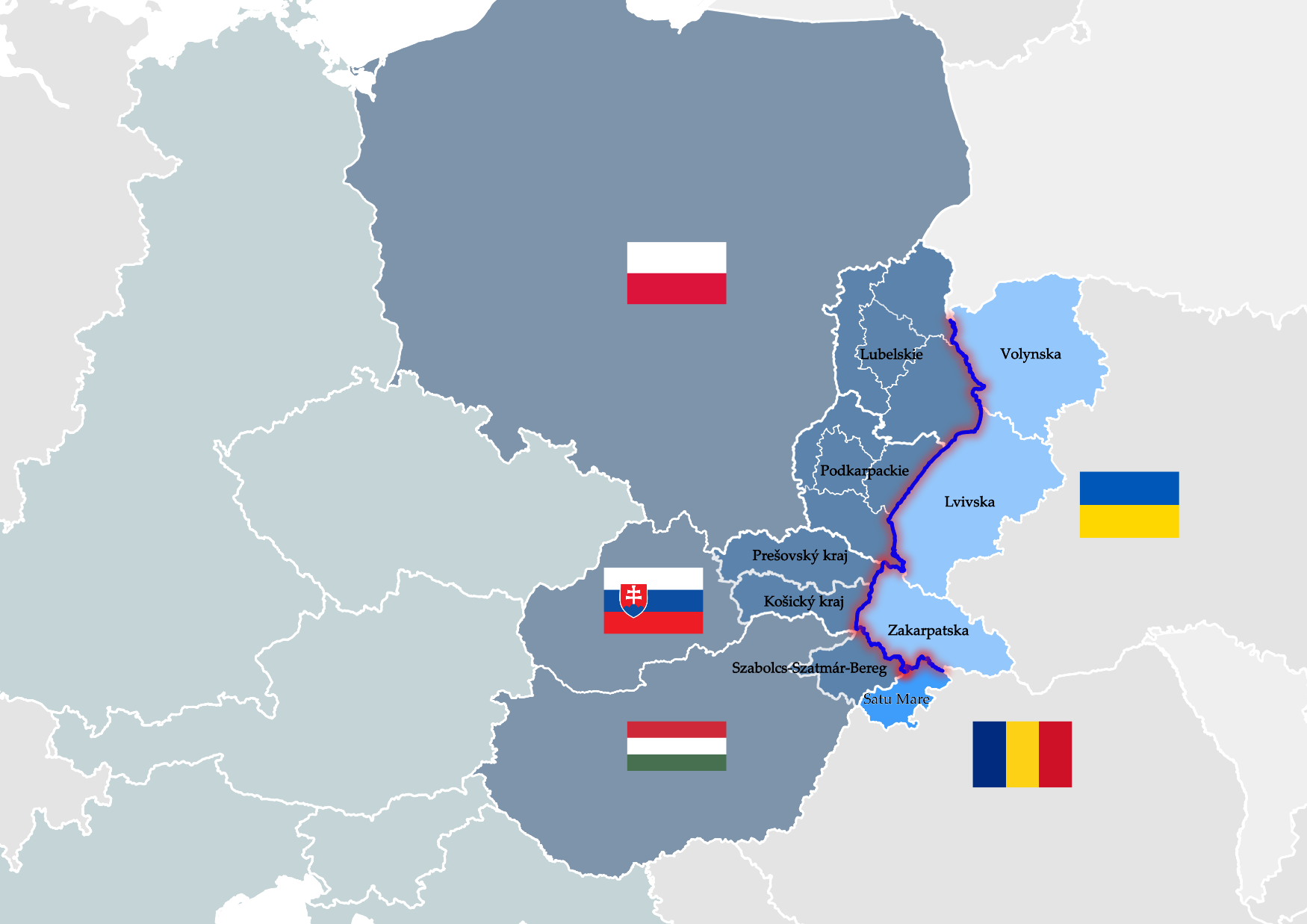
How is the war in Ukraine reshaping the socio-economic dynamics of neighbouring Central European regions? What new opportunities could Ukraine’s future reconstruction and European integration create for the border regions?
During the first reporting period of the Bridge2EastCE project, a comprehensive regional development-focused analysis of the Hungarian, Polish, Slovak and Romanian regions bordering Ukraine was completed.
The analysis provides a shared evidence base for establishing an interregional territorial planning cooperation framework (Interregional Territorial Planning Cooperation – ITPC) connecting the border regions of the four countries.
The study examined the demographic, economic, labour market, human capital, quality of life, innovation and digitalisation characteristics of the regions. By comparing the wider NUTS 2 regions with the NUTS 3 territories directly bordering Ukraine, it identified significant internal territorial disparities and shared structural challenges.
The analysis also explored:
- the economic, social and territorial consequences of the war in Ukraine, particularly in relation to migration, labour markets, public services and border infrastructure;
- the cross-border implications of Ukraine’s administrative reforms, economic transformation and internal population movements;
- how regional development strategies in the partner territories could adapt to the new geopolitical and economic environment;
- the institutional, planning and financial capacities of regional and local governance systems, as well as their resilience in responding to crises.
One of the key findings is that the regions bordering Ukraine cannot be treated as homogeneous territories. Despite their different characteristics and development trajectories, they face several common challenges, including population decline, outward migration, economic underperformance and limited innovation capacities.
At the same time, Ukraine’s future reconstruction and European integration may create new economic, logistical and cooperation opportunities. With appropriate infrastructure and institutional cooperation, the peripheral location of these regions could be transformed into a strategic development asset.
The findings of the completed study will directly inform the planning and pilot development activities in the next phase of the project, as well as the preparation of the related Regional Development Opportunity Map.
The long-term objective of Bridge2EastCE is to help transform the Central European regions bordering Ukraine into a more interconnected, resilient and competitive development area through coordinated territorial planning and stronger cross-border institutional cooperation.