
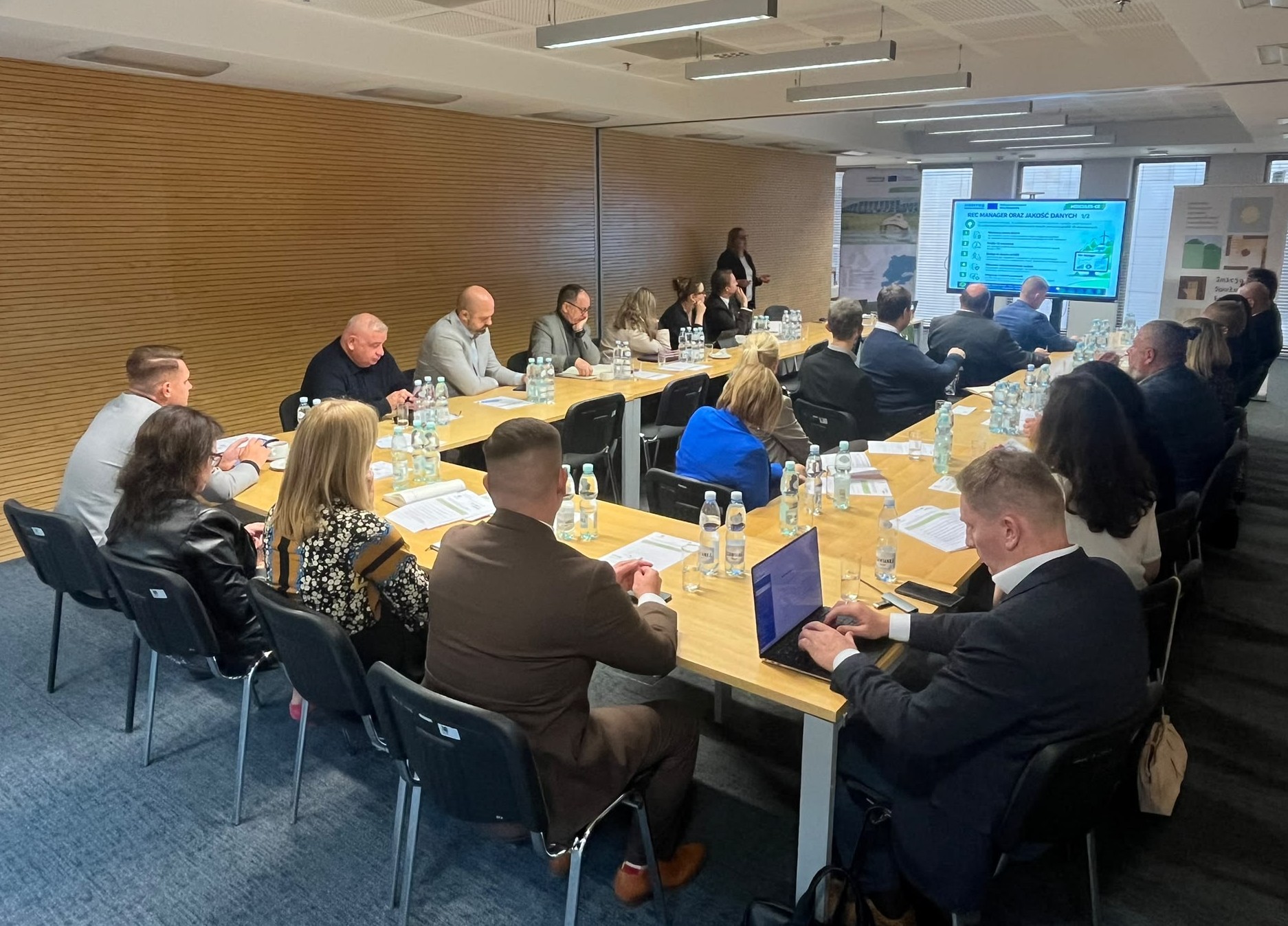
A key part of the programme was the presentation of the Lubelskie pilot action and its outcomes. Participants explored the REC Manager tool, developed within HERCULES-CE to support data analysis, monitoring and scenario-based planning for Renewable Energy Communities. Discussions confirmed that access to reliable and standardised energy data remains one of the main challenges for local energy initiatives.
The event also showcased one of the most tangible outcomes of the pilot action: the transformation of the Tomaszów Energy Cluster into the Roztocze Energy Cooperative. The example demonstrated how local partnerships, supportive regulations and stakeholder engagement can help turn community energy concepts into operational structures.
Practical perspectives were provided by representatives of energy cooperatives and organisations working with community energy projects. Discussions covered self-consumption, energy storage, organisational models, financial viability and energy settlement mechanisms.
Agricultural biogas plants attracted particular interest among participants. Discussions highlighted both the potential of biogas within Renewable Energy Communities and the challenges related to investment costs, technical requirements and community acceptance.
Another key message of the event was that energy efficiency should be the starting point for the energy transition.
“Energy should be actively managed, not simply purchased, because the cheapest energy is the energy we use wisely.”
The event concluded with a discussion on future opportunities for Renewable Energy Communities. Participants emphasised the importance of practical tools, knowledge exchange and cooperation between stakeholders and regions. The Lubelskie experience showed how pilot actions and transferable solutions developed within HERCULES-CE can support community energy development across Central Europe.