
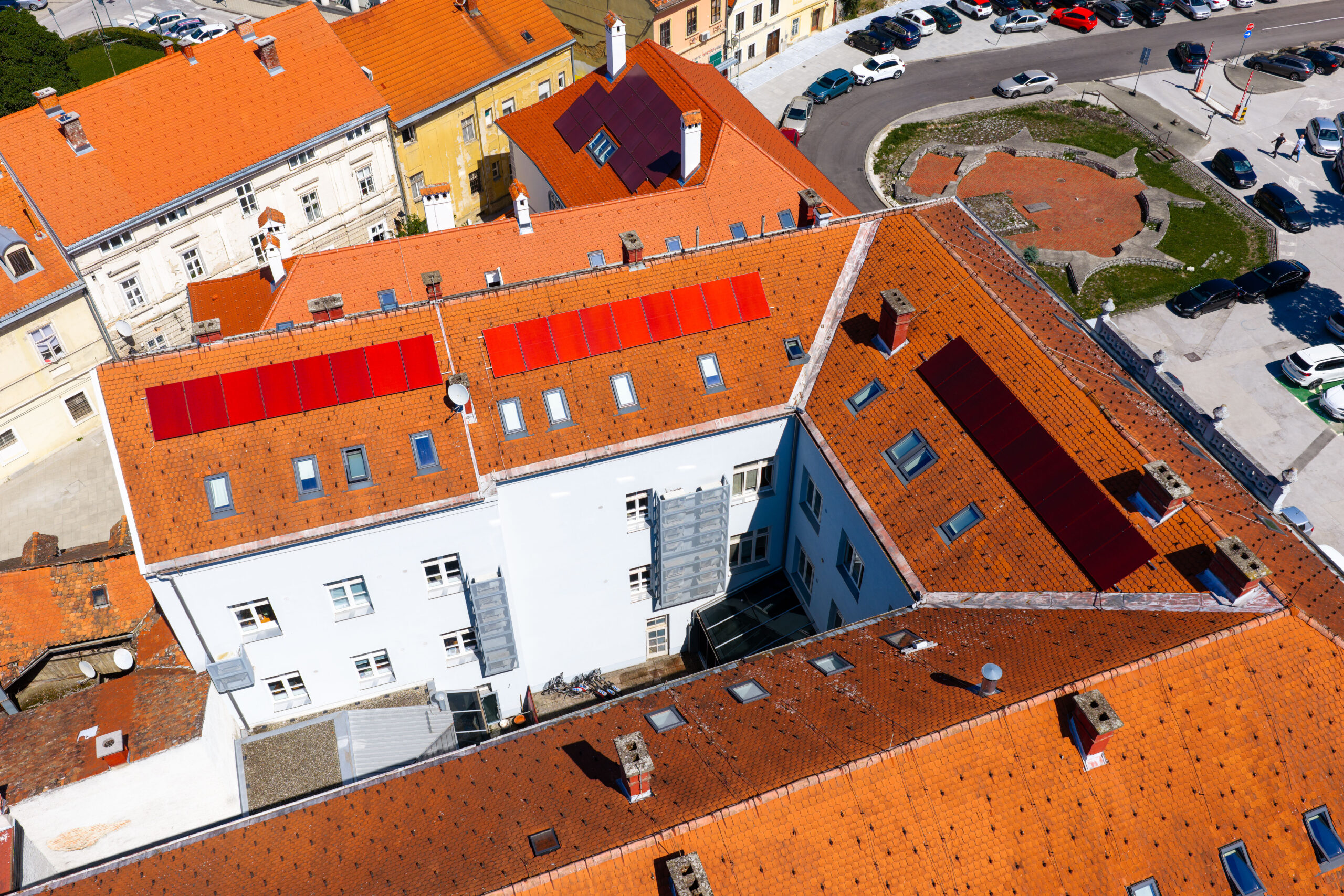
The pilot combines rooftop photovoltaic generation, an electric vehicle with Vehicle-to-Load (V2L) functionality, smart charging infrastructure and a digital Energy Management System (EMS). By connecting renewable energy production, mobility and digital energy management, the pilot demonstrates how different technologies can work together within a heritage-protected public building.
Preparing a Green and Digital Solution for Zvijezda
The preparation phase focused on developing an integrated energy solution combining rooftop photovoltaic generation, electric mobility, charging infrastructure and digital energy management at the Karlovac City Hall.
The original concept included stationary battery storage. However, following a feasibility study and consideration of fire protection requirements, the concept was adapted to use an electric vehicle as a mobile energy storage solution. The preparation phase also included the development of technical documentation, market research and procurement planning.
Working within the historic centre presented additional requirements related to heritage protection and the visual integration of photovoltaic panels. The experience highlighted the importance of early coordination between technical experts, the City, conservation authorities and other relevant bodies when introducing innovative energy technologies in protected areas.
From Concept to Implementation
The Karlovac pilot resulted in an integrated system combining an approximately 10 kW rooftop photovoltaic installation, an electric vehicle, charging infrastructure and an Energy Management System at the City Hall building. Together, these components connect local renewable energy production with electric mobility and digital energy management.
Implementation required several adaptations. The original concept envisaged Vehicle-to-Grid (V2G) technology, but market research showed that suitable V2G-enabled vehicles were not available in Croatia or the wider Central European market. Regulatory and technical frameworks were also still developing. The pilot was therefore adapted to a Vehicle-to-Load (V2L) solution, allowing the electric vehicle to act as mobile energy storage and supply selected building loads.
The implementation also faced conservation, fire protection, procurement and administrative challenges. Changes in requirements resulted in modifications to the technical documentation and repeated procurement procedures. Despite these challenges, the photovoltaic installation was successfully completed in June 2026, together with the other components of the integrated pilot solution. D.2.3.2 Report on pilot action …ic vehicle provides both sustainable mobility and additional energy flexibility.
The digital Energy Management System connects the different components by monitoring energy production and consumption and coordinating energy flows. During periods of higher solar production, the system can prioritise local consumption and vehicle charging, helping to increase the use of locally generated renewable electricity.
Although the transition from V2G to V2L reduced the potential for interaction with the electricity grid, the final solution maintained the main objective of the pilot: demonstrating how renewable generation, electric mobility and digital control can be integrated within a heritage-protected public building.
Measuring Energy and Environmental Benefits
The evaluation of the Karlovac pilot assessed its technical, financial and environmental performance using the ZEB4ZEN Monitoring, Reporting and Verification methodology. The photovoltaic system has an estimated annual electricity production of around 13,964 kWh, with most of the generated electricity intended for direct consumption within the City Hall building.
According to the MRV calculations, the photovoltaic system is expected to provide 11,466 kWh of final energy savings and around 17,176 kWh of primary energy savings per year, together with annual savings of approximately 1.82 tonnes of CO₂ and €1,502 in energy costs.
The transition from a conventional petrol vehicle to an electric vehicle provides additional benefits, with estimated final energy savings of 6,353 kWh per year. The combination of these measures demonstrates how relatively small-scale interventions can contribute to wider energy and decarbonisation objectives when implemented as part of an integrated system.
Turning Challenges into Lessons for Other Historic Cities
The Karlovac pilot demonstrates both the opportunities and practical challenges of introducing innovative energy technologies in heritage-protected environments. Technology availability, changing regulatory requirements, procurement procedures, fire protection and conservation requirements all influenced the final design and implementation process.
At the same time, the pilot shows the value of an adaptable approach. Replacing the originally planned V2G solution with V2L technology enabled Karlovac to maintain the core concept of using an electric vehicle as a flexible energy resource while responding to current market and regulatory conditions.
The experience gained in Karlovac contributes to the wider ZEB4ZEN objective of supporting the transition of historic neighbourhoods towards zero-emission standards. By combining renewable energy, electric mobility and digital energy management, the pilot provides practical lessons that can support other European cities seeking to introduce smart energy solutions while preserving their architectural and cultural heritage.