
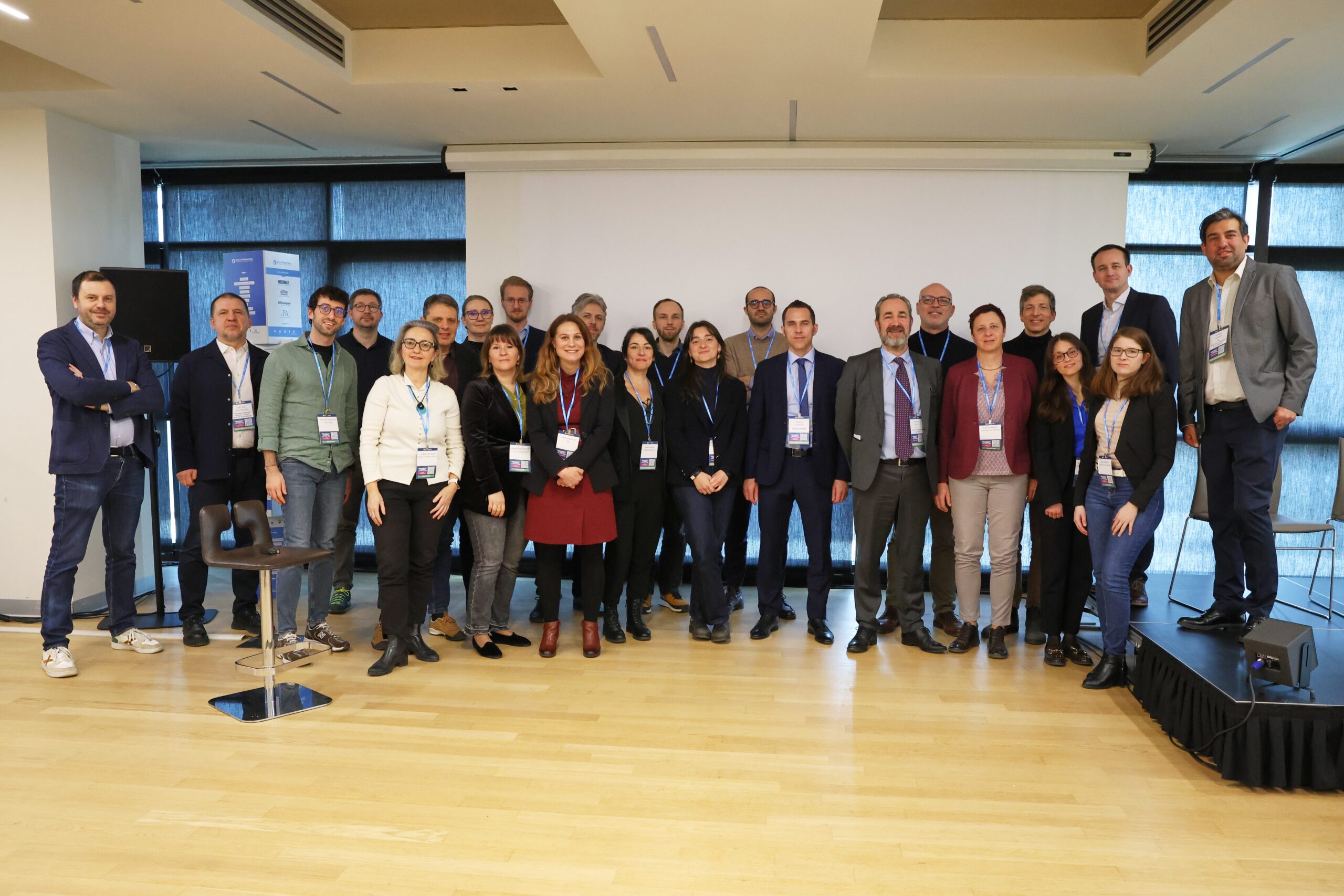
On March 31st the GRETA project came to its conclusion. Over the past three years the GRETA consortium has been working together to address urban mobility issues in several cities of Central Europe. With the expansion of e-commerce, the freight delivery increased over time, and consequently so did the emissions, noise, congestion, whereas the public space decreased. To this end, GRETA project aimed at decarbonizing the last mile deliveries in Functional Urban Areas through joint sustainable solutions tested through a set of pilot actions implemented in Maribor, Reggio Emilia, Verona, Poznan and Budapest.
To identify the right solutions, partners elaborated the Territorial need assessment and gaps analysis was drawn to assess mobility and freight transport challenges in Functional Urban Areas (FUAs) and serve as a baseline for the pilot actions’ development.
Moreover, partners developed a comprehensive Capacity Building Strategy that supports Functional Urban Areas (FUAs) in Central Europe in developing, adopting, and scaling innovative low-emission urban logistics solutions. Its scope covers both the technical and institutional dimensions needed to embed sustainable last-mile delivery systems into long-term urban mobility and planning frameworks.
Both steps led the consortium towards the elaboration of jointly developed urban freight and logistics pilot actions for the decarbonization of last mile delivery and for the effective Curb Management and urban freight in FUAs.
In Reggio Emilia, the pilot centred on the co-creation and testing of a collaborative governance model for an urban micro-hub serving the city centre. The micro-hub was conceived as a modular space within which each operator has its own dedicated area, while the transshipment zone is shared and used by conventional vans to deliver parcels to the hub, where goods are transferred by cargo bikes for last-mile distribution in the city centre
In Maribor, the pilot focused on establishing a micro-hub at the border of the pedestrian zone to enable deliveries with zero-emission vehicles. .By locating the micro-hub at the border of the pedestrian area, the municipality created a consolidation point enabling last-mile deliveries with zero-emission vehicles (ZEVs) therefore allowing deliveries also outside the traditional 5–10 a.m. time window.
In Poznań, the pilot tested the use of a micro-hub combined with cargo bikes for last-mile deliveries, involving a single operator (GLS). During the pilot, GLS used three cargo bikes daily (with potential capacity for four), serving an average of around 20,000 shipments over the monitored period.
In Verona, the pilot introduced a digital curbside management platform combining hardware and software components. Sensors installed beneath parking lots detected occupancy, while a web application allowed logistics operators to book loading and unloading slots in real time. They could also verify the availability of slots beforehand.
In Budapest, the pilot aimed at creating more liveable and better-managed public spaces through a structured curbside management framework. Two pilot areas in different districts were selected to address challenges such as irregular parking, limited space and lack of reliable data. Static and dynamic data were collected through surveys and field activities, forming the basis for a functional assessment methodology.
Despite the project has reached its end, all project achievements, results and strategies remain available on our website in the section outputs and media.
Moreover, the partnership built over the past three years has laid the foundations for continued dialogue and future initiatives. GRETA partners remain open to new synergies and capitalization actions at local, national and European level, with the shared objective of advancing sustainable urban logistics solutions across Functional Urban Areas.