
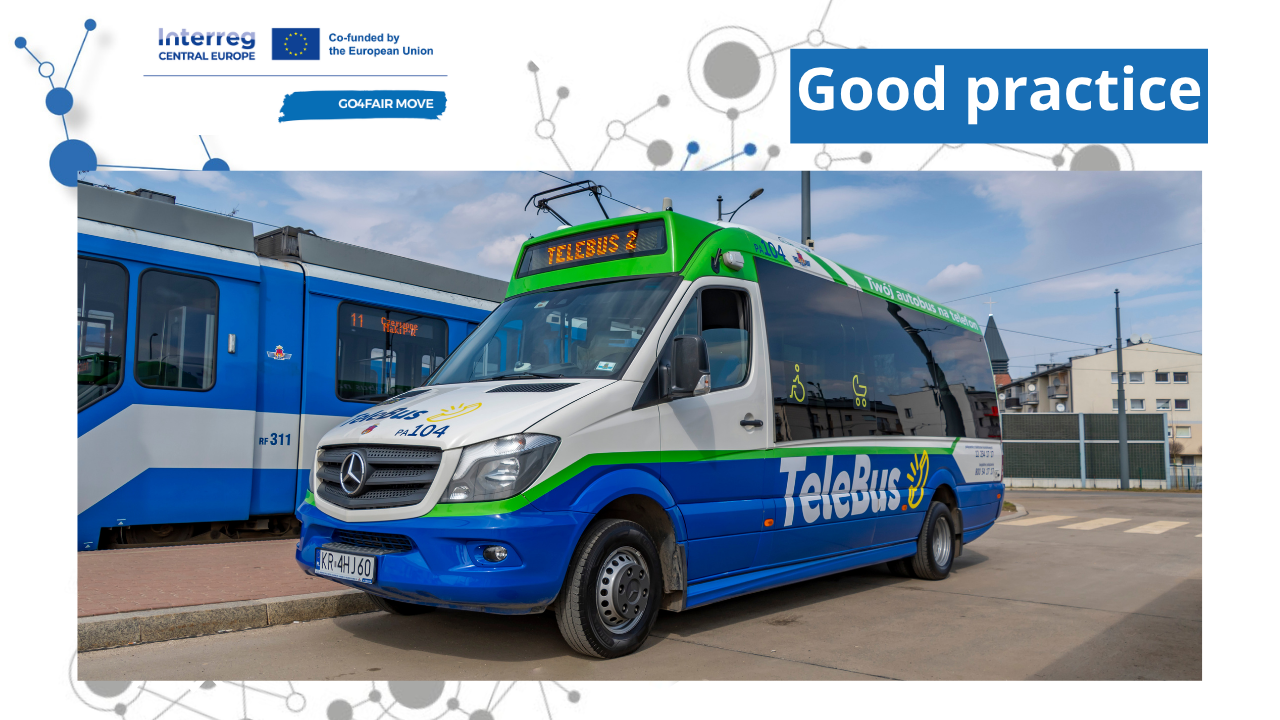
TELEBUS was introduced in an area with lower population density and limited access to regular public transport. Its key feature is flexibility: routes and travel times are adjusted to passenger requests, while journeys can be booked by telephone or through digital tools. A specialised dispatch centre manages bookings and plans routes, and the service is integrated with Kraków’s existing public transport and municipal fare system.
The service can also act as feeder transport, connecting passengers with main public transport routes. This first- and last-mile function makes TELEBUS particularly relevant for territories where dispersed demand makes conventional fixed-route services difficult or costly to operate. The approach also benefited from experience and technology transferred from a similar system in Genoa and was gradually adapted to the needs of local residents.
The Kraków experience nevertheless shows that demand-responsive transport requires more than an appropriate technological system. Stable financing, a clear division of responsibilities between the transport authority and operator, efficient booking and route optimisation, and effective communication with residents are all important. Low passenger numbers may result in high unit costs, while advance booking can reduce travel spontaneity. Careful consultation is also needed before considering the replacement of regular routes with demand-responsive services.
TELEBUS has strong transfer potential for peripheral, suburban and less densely populated areas. Telephone and online booking, flexible route planning, smaller vehicles, a central dispatch centre and integration with existing public transport are among the elements that can be replicated relatively easily. Financing, operating hours, service areas, stop locations and the relationship with regular public transport, however, need to be adapted to local conditions.
For GO4FAIR MOVE, TELEBUS provides valuable experience in using demand-responsive transport where demand is low and dispersed. Particularly relevant for the pilot areas is its potential as a feeder service connecting residents to main bus and rail services and thereby improving access to workplaces and other destinations. The practice also demonstrates the value of starting with a pilot, monitoring demand, costs and service quality, and gradually adapting or expanding the service based on actual needs.