
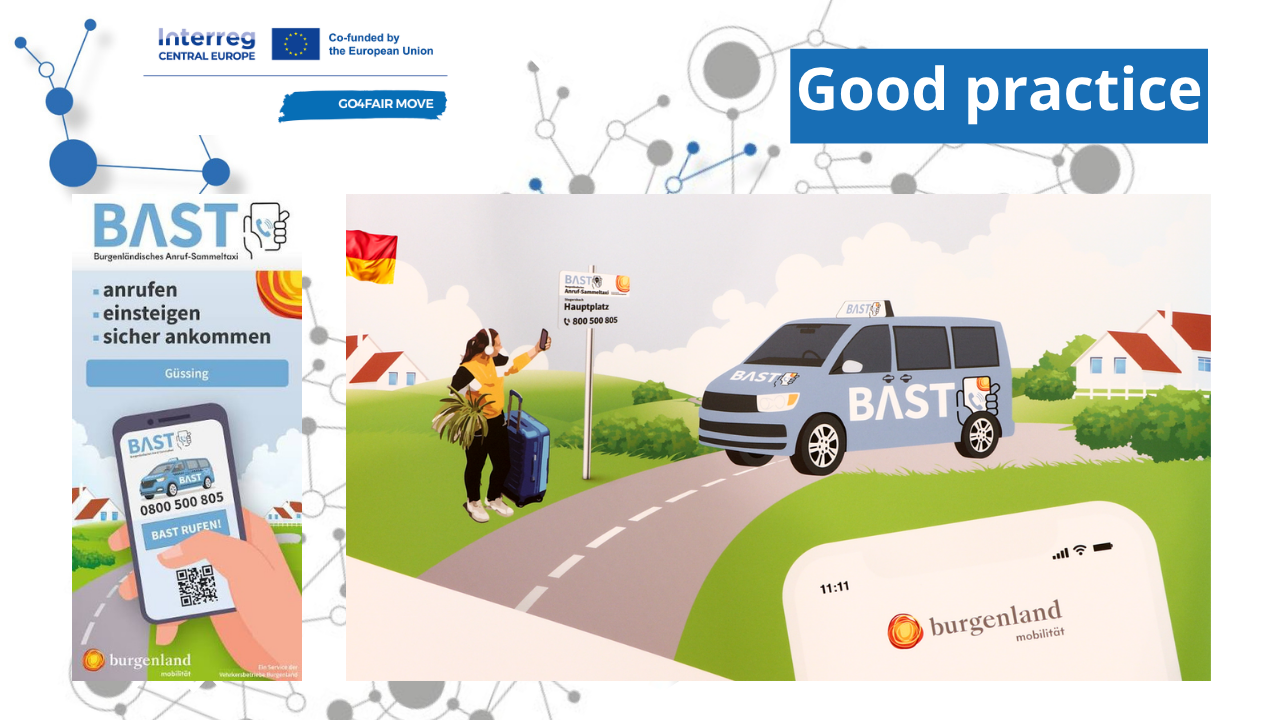
A major strength of the model is its coordinated regional approach. Rather than operating as an isolated local service, BAST follows a uniform organisational system across the federal state. Telephone and digital booking make the service accessible to different groups of passengers, while cooperation with local transport operators and taxi companies supports its implementation. Strong political commitment and substantial public funding are also important factors in keeping the service accessible in areas where passenger numbers are relatively low.
At the same time, the model illustrates some of the key challenges associated with demand-responsive rural transport. Operating costs can be high where demand is particularly low, while long-term sustainability depends on stable public financing. Effective booking management, route optimisation, sufficient vehicle availability and continuous promotion among residents are therefore essential. Maintaining consistent service quality across a large territory also requires strong coordination.
The BAST approach has considerable transfer potential for rural and peripheral territories where maintaining conventional bus routes is difficult. Several elements – such as telephone and online booking, cooperation with local carriers, integration with public transport timetables and a common passenger information system – can be replicated. However, financing arrangements, fare integration, service coverage and the regulatory framework for demand-responsive transport need to be adapted to local conditions.