
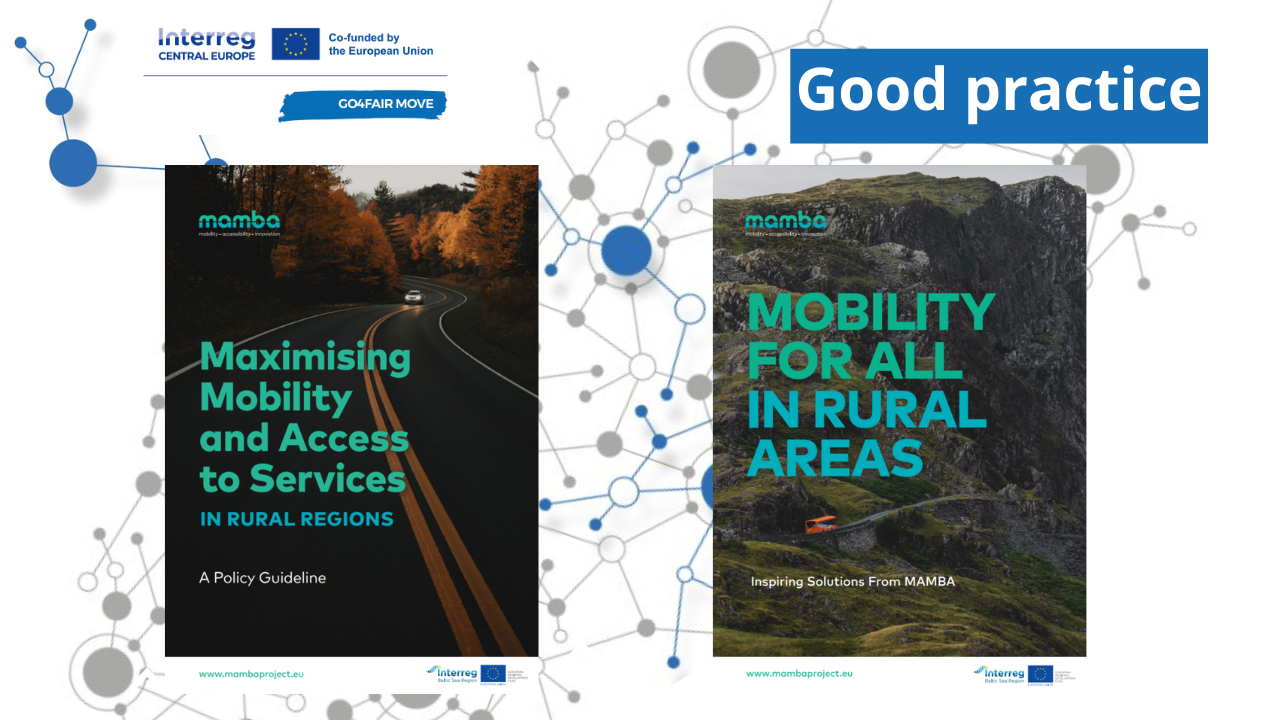
MAMBA addressed mobility challenges in rural and peripheral areas affected by demographic change and transport exclusion. A key strength of the approach was that new mobility services were based on a thorough assessment of local transport needs and public consultation. Residents were actively involved in designing services, while local authorities, transport organisers and research partners worked together through a participatory and partnership-based model. Flexible transport options adapted to sparsely populated areas were complemented by digital tools for service planning and demand analysis.
Another important feature of MAMBA was the opportunity to test innovative mobility services before their full implementation. International cooperation enabled partners to exchange experiences and learn from different territorial contexts, while EU funding made it possible to experiment with approaches that might otherwise have been difficult to launch. At the same time, the experience highlighted important challenges, including the long-term financing of services, relatively small passenger numbers in rural areas, high unit costs, regulatory constraints and difficulties in permanently integrating pilot services into existing public transport systems.
MAMBA was designed with transferability in mind, making its experience particularly valuable for other Central European regions facing similar demographic and mobility challenges. Public consultation, mobility planning methodologies, pilot testing, inter-institutional cooperation and service-quality monitoring can be relatively easily replicated. Other elements, such as financing models, digital solutions, the scope of flexible transport services and their integration into existing public transport networks, need to be adapted to local circumstances and national regulations.
For GO4FAIR MOVE, MAMBA provides valuable inspiration for developing mobility services together with the people who will actually use them. Its experience demonstrates the importance of assessing demand before introducing new services, involving residents in their design, building strong local partnerships and testing new approaches before moving towards full implementation. These lessons can support the GO4FAIR MOVE pilot areas in exploring demand-responsive transport and other flexible mobility approaches that improve access to employment while helping to reduce mobility poverty in rural and peripheral territories.