
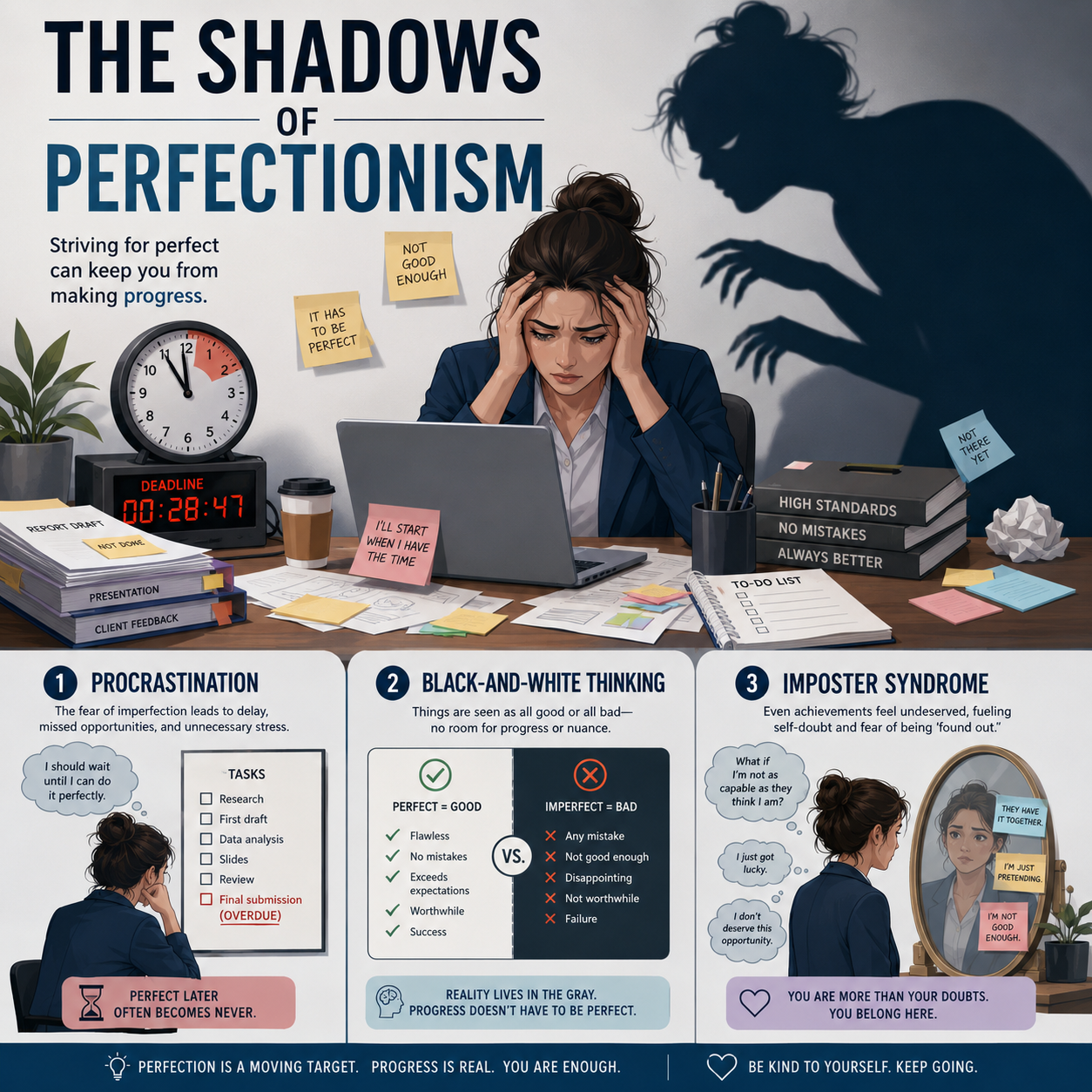
However, research shows that perfectionists tend to create unhealthy imbalances in their lives, including setting unrealistic goals, focusing excessively on preventing mistakes, having an excessive need for their efforts to be valued and recognised by others, feeling unreasonably vulnerable, and being unable to tolerate criticism or disagreement.
How does perfectionism affect productivity at work?
PROCRASTINATION- Perfect later often becomes never: You procrastinate when you must complete something by a certain deadline but keep putting it off until the last moment. Although it may seem contradictory, procrastination is a very common side effect of perfectionism, because you are afraid that you will not complete the task “perfectly”.
BLACK-AND-WHITE THINKING- Progress does not have to perfect: Black-and-white thinking is a rigid mindset in which you evaluate the things you do in binary terms — completed or not completed, perfect or imperfect, good or bad. This way of thinking does not allow you to celebrate progress. This challenge can be overcome by cultivating the skill of being present in the current moment. Perfectionism is focused solely on results, while presence in the current moment focuses on the process and on progress made along the way.
IMPOSTER SYNDROME- You are more than your doubts: Imposter syndrome is the feeling that you do not deserve your achievements, or the fear that others will discover that you are not qualified enough or not good enough at what you do. If you struggle with imposter syndrome, you can introduce a small change to your approach: reframe critical self-talk in more balanced, compassionate terms.