lightning-thunder-at-daytime
Johannes Plenio Unsplash

Clim4Cast

Project overview

Central European Alliance for Increasing Climate Change Resilience to Combined Consequences of Drought, Heatwave, and Fire Weather through Regionally-Tuned Forecasting

Climate change increases the risk of severe weather events in central Europe. Increasing resilience to droughts, heatwaves and fires is urgent but tools that monitor and predict these phenomena are widely missing. The Clim4Cast project established a new weather forecast tool, which is integrated into existing national monitoring platforms of seven countries. Concrete action plans to set up regional response mechanisms were also developed.

1,91m €

Project Budget

80%

of the Budget is funded by ERDF

Layer 1

7

Countries

7

Regions

8

Partners

3

Pilots

Duration

Start date

End date

Project progress

100%

About the project

The Central European region faces an increase in the frequency, duration, and severity of drought, heatwaves, and fire weather (DHF) due to ongoing climate change. While legal frameworks and attention have been directed toward water scarcity and drought, the insufficient consideration of heatwaves and fire weather in legislation poses a challenge, impeding efforts to increase resilience. Recognizing the direct threats posed by DHF events to human well-being and the environment, Clim4Cast has addressed the existing gap by introducing operational tools for monitoring, prediction, and raising awareness.

Clim4Cast project partners collaboratively developed and established a multi-temporal DHF forecast accessible at https://clim4cast.eu/ . Beyond forecasting, the project has assessed the impact of climate change on DHF event occurrences. The project's outcomes have contributed to a comprehensive strategy aimed at increasing climate change awareness, particularly for underreported extreme events. What sets Clim4Cast apart is the collaborative utilization of partner knowledge in extreme weather events, diverse communication strategies, and established networks of stakeholders.

The project's uniqueness lies in the development and implementation of multi-temporal forecasting, a crucial aspect currently missing in existing tools. The output of Clim4Cast now serves as an early warning system, empowering diverse stakeholders and facilitating integration into national legislative frameworks.

Project partnership

Project partners

Česko (CZ)

Lead partner

Global Change Research Institute, CAS

Domain of Climate Analysis and Modelling
Address
Bělidla 986/4a
60300 Brno
Country
Czechia (CZ)
Web
https://www.czechglobe.cz

Project partner

Department of Geography, Faculty of Science
Address
Kotlarska 267/2
61137 Brno
Country
Czechia (CZ)
Web
https://www.muni.cz/en
Total partner budget
202,754 €
Department of Geodesy and Geoinformation
Address
Wiedner Hauptstrasse 8-10
1040 Vienna
Country
Austria (AT)
Web
www.tuwien.at
Total partner budget
294,379 €
Department of Bioeconomy and Systems Analysis
Address
Czartoryskich 8
24-100 Puławy
Country
Poland (PL)
Web
www.iung.pl
Total partner budget
169,550 €
Research Platform "Data Analysis & Simulation"
Address
Eberswalder Str. 84
15374 Muencheberg
Country
Germany (DE)
Web
https://www.zalf.de/en/Pages/ZALF.aspx
Total partner budget
251,103 €
Meteorology and hydrology office
Address
Vojkova cesta 1b
1000 Ljubljana
Country
Slovenia (SI)
Web
https://www.arso.gov.si
Total partner budget
198,699 €
Meteorological Research and Development Division
Address
Ravnice 48
10000 Zagreb
Country
Croatia (HR)
Web
www.meteo.hr
Total partner budget
153,179 €
Division Meteorological Service/Dpt. of Climatological Service
Address
Jeséniova 17
83315 Bratislava
Country
Slovakia (SK)
Web
www.shmu.sk
Total partner budget
271,280 €

Roadmap

1

Challenge

Central Europe is increasingly affected by droughts, heatwaves and wildfires, which often occur simultaneously and have cascading impacts on agriculture, forestry, water resources, ecosystems and human health. Effective preparedness is further complicated by the region's diverse climatic conditions and the lack of harmonised monitoring and forecasting across national borders.

2

Approach

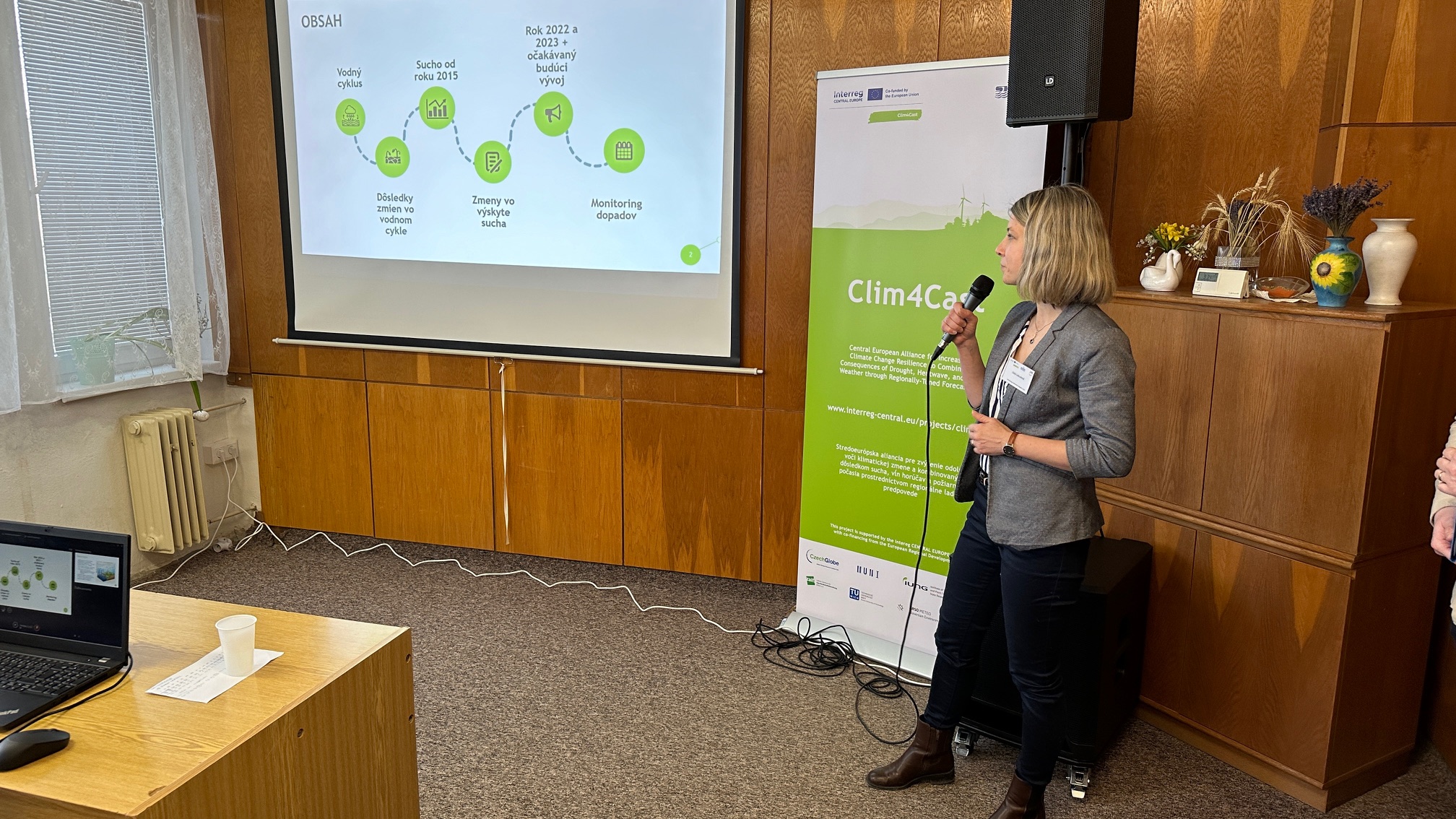
Clim4Cast brought together partners from seven Central European countries to jointly improve the monitoring, forecasting and management of droughts, heatwaves and wildfires. The project combined scientific expertise, Earth observation data, meteorological information and stakeholder knowledge to develop harmonised services, validate forecasting methods, and prepare coordinated national and transnational response approaches.

3

Solution

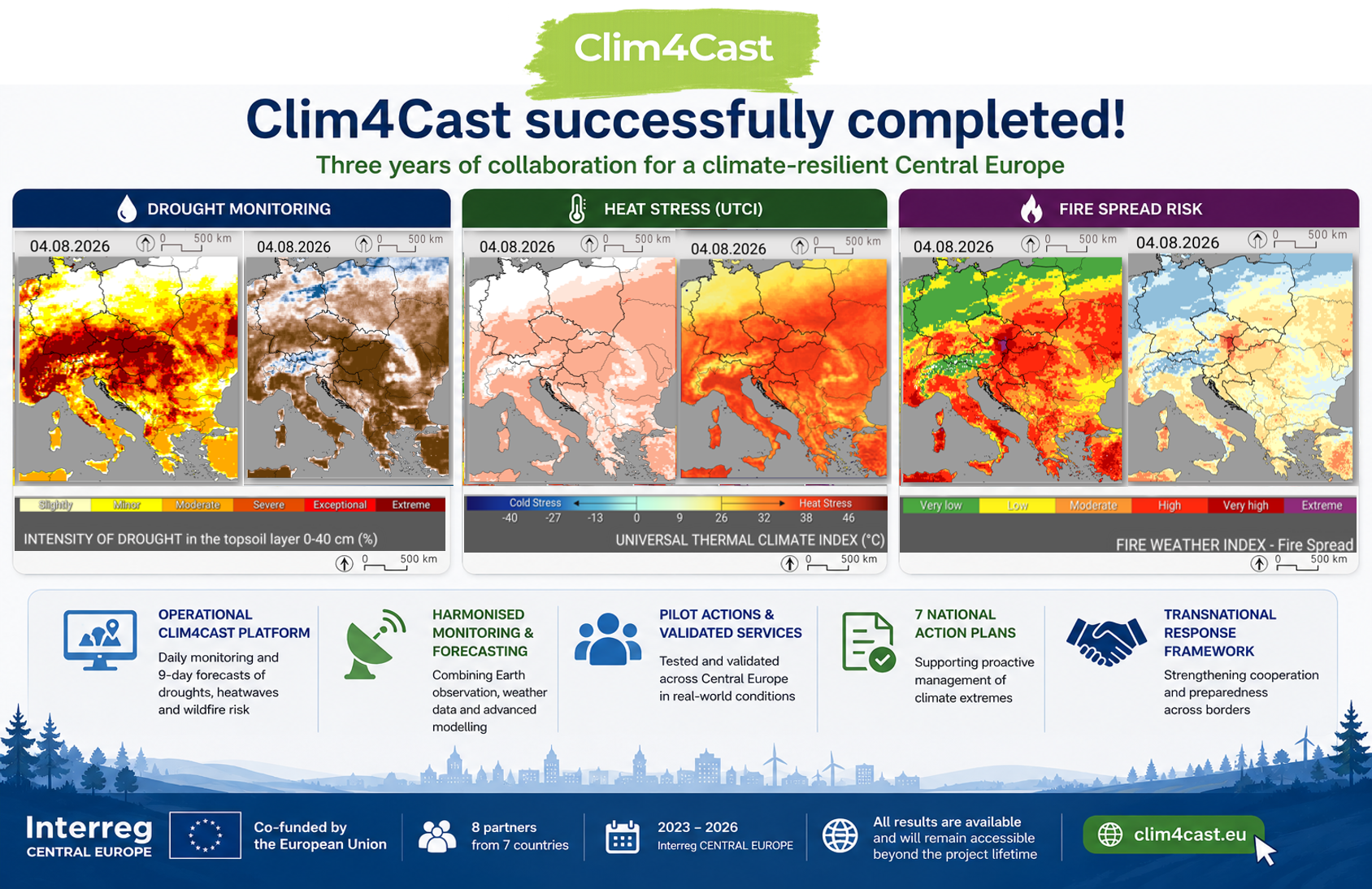
The project delivered the operational Clim4Cast Platform, providing daily monitoring and nine-day forecasts of droughts, heatwaves and wildfire risk across Central Europe. In addition, the project produced validated forecasting methods, seven National Action Plans and a transnational proactive response framework, supporting better preparedness, informed decision-making and long-term climate resilience across the region.

News
Events
Pilot actions

Outputs
" Drought in the nesting grounds "

Transnational Strategy for Climate Change Awareness on Compound DHF Events
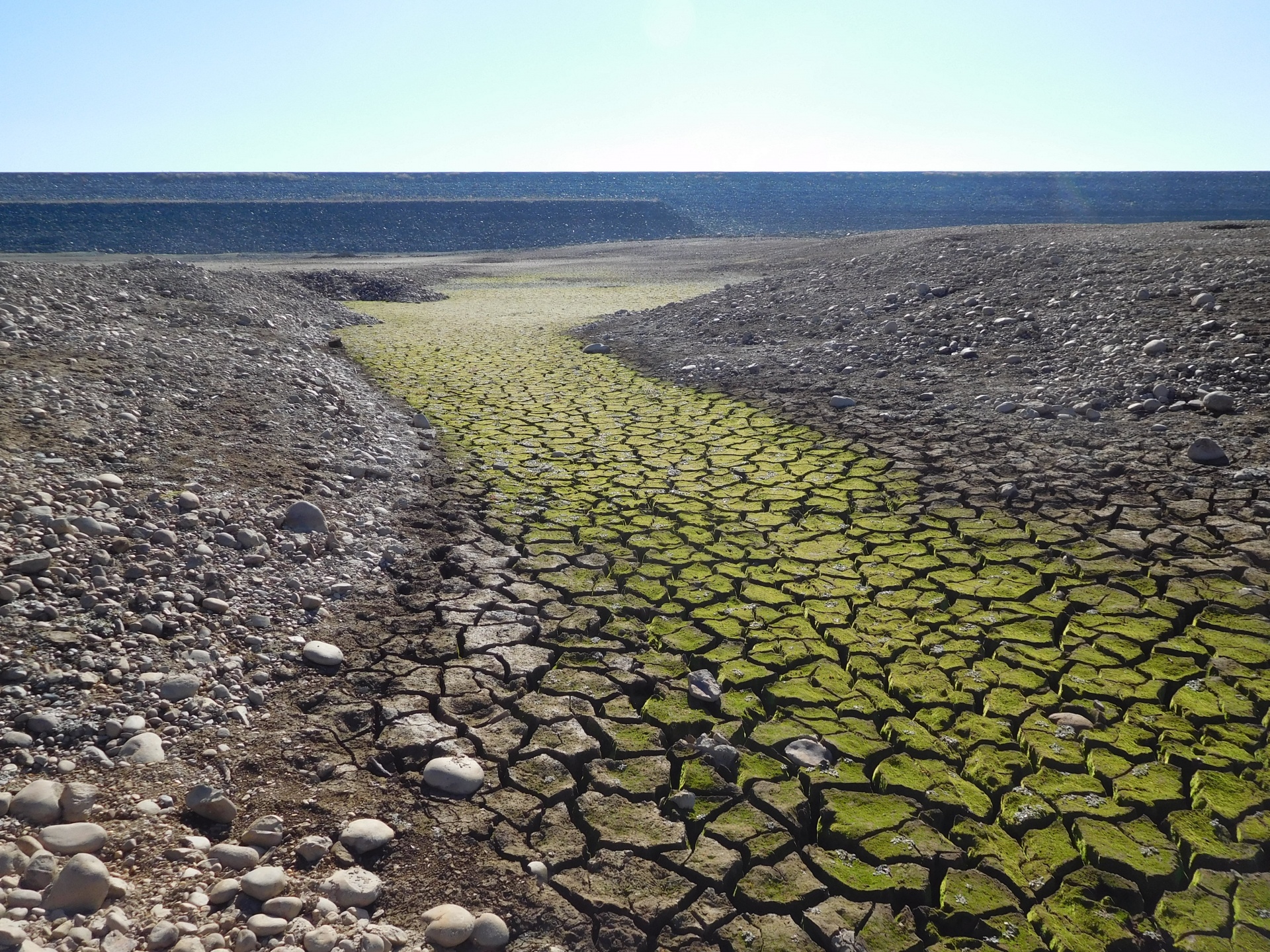
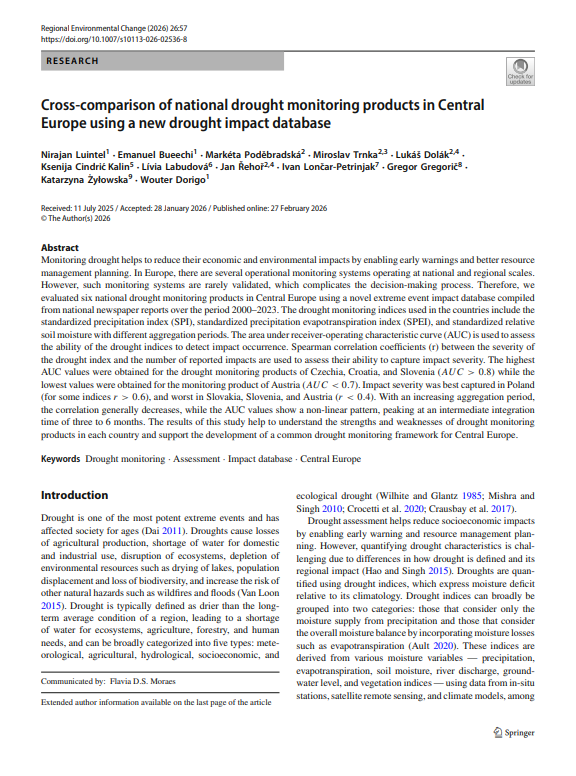
The Clim4Cast project developed a transnational strategy to improve awareness of compound drought, heatwave, and wildfire (DHF) events and their impacts across Central Europe. As part of this work, the project created a unique database documenting DHF events and their impacts between 2000 and 2023 in all participating countries. The database illustrates how compound climate extremes affect agriculture, forests, water resources, ecosystems, infrastructure, and society, making climate change impacts more accessible to decision-makers, stakeholders, and the public. It also provides a valuable scientific resource for analysing long-term changes in the occurrence and severity of compound climate events across the region. To support consistent assessment of DHF impacts, the project developed a new severity index that enables comparison of events across countries and sectors. Together with climate change attribution analyses and stakeholder surveys on risk perception and climate communication, these outputs provide practical guidance for improving climate awareness, communication, and preparedness throughout Central Europe.
Type of output: Strategies and action plans

Integrated Drought Forecasting for Central Europe

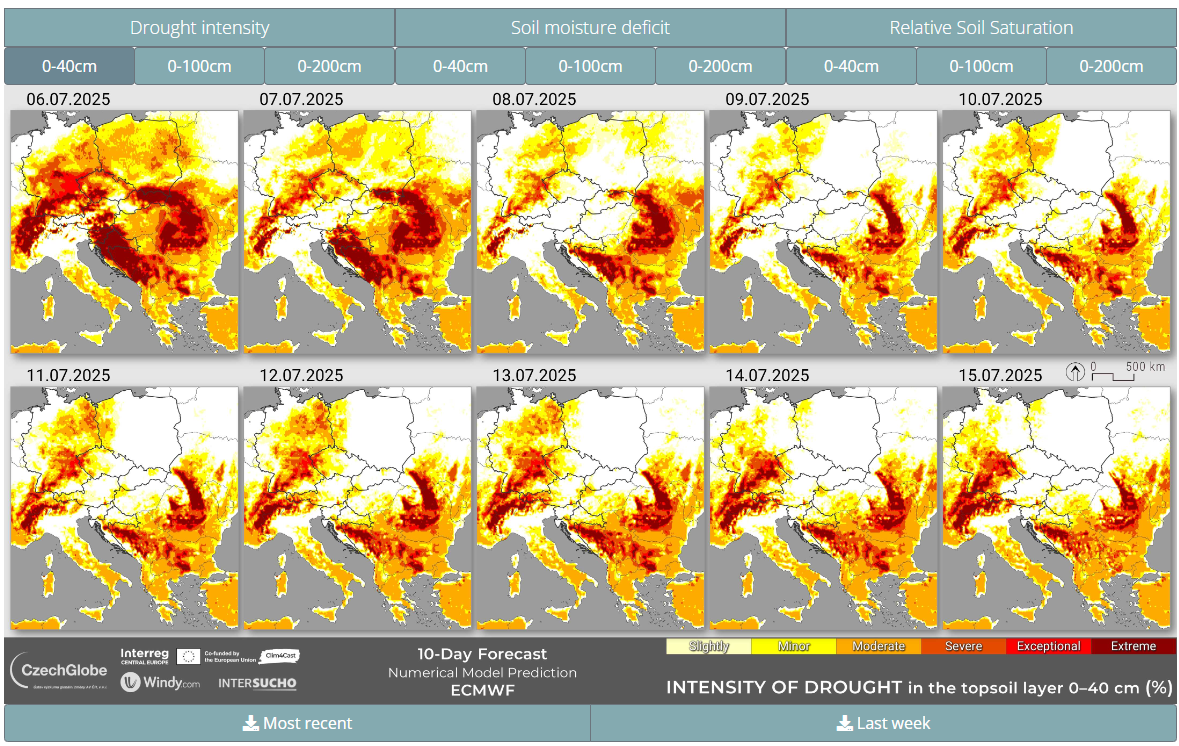
The Clim4Cast project developed an integrated drought forecasting solution for Central Europe, providing a harmonised approach to drought monitoring and forecasting across the region. The solution is based on the SoilClim model, which combines ECMWF weather forecasts with global soil and vegetation datasets to produce consistent drought forecasts at multiple forecast horizons. The resulting forecasts complement existing national monitoring systems, support cross-border comparison of drought conditions, and help public authorities, land managers, and other stakeholders improve preparedness and decision-making.
Type of output: Solutions

Integrated Heatwave Forecasting for Central Europe
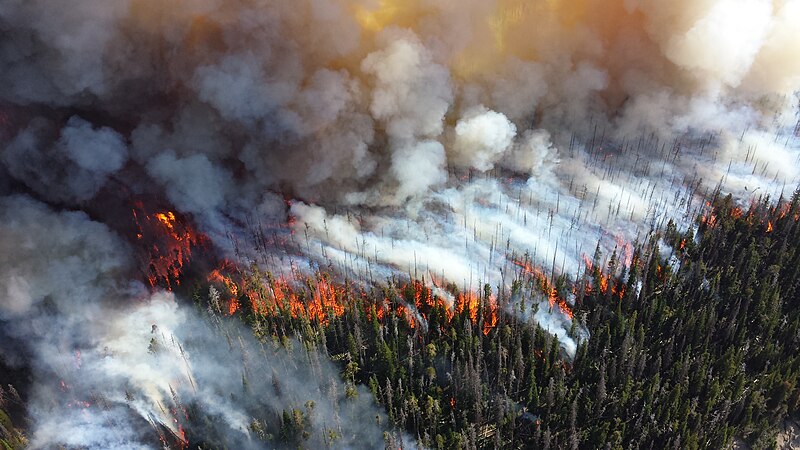
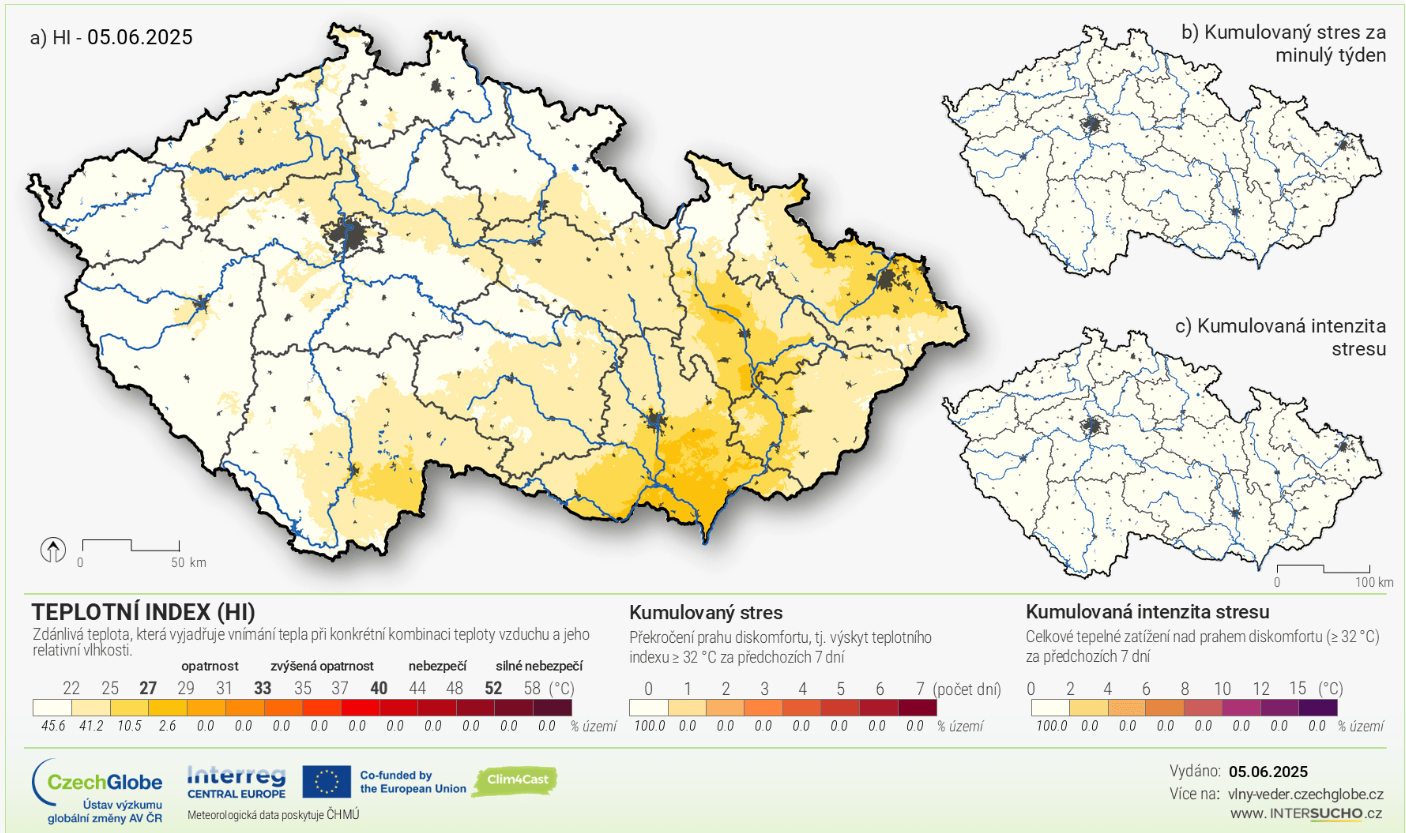
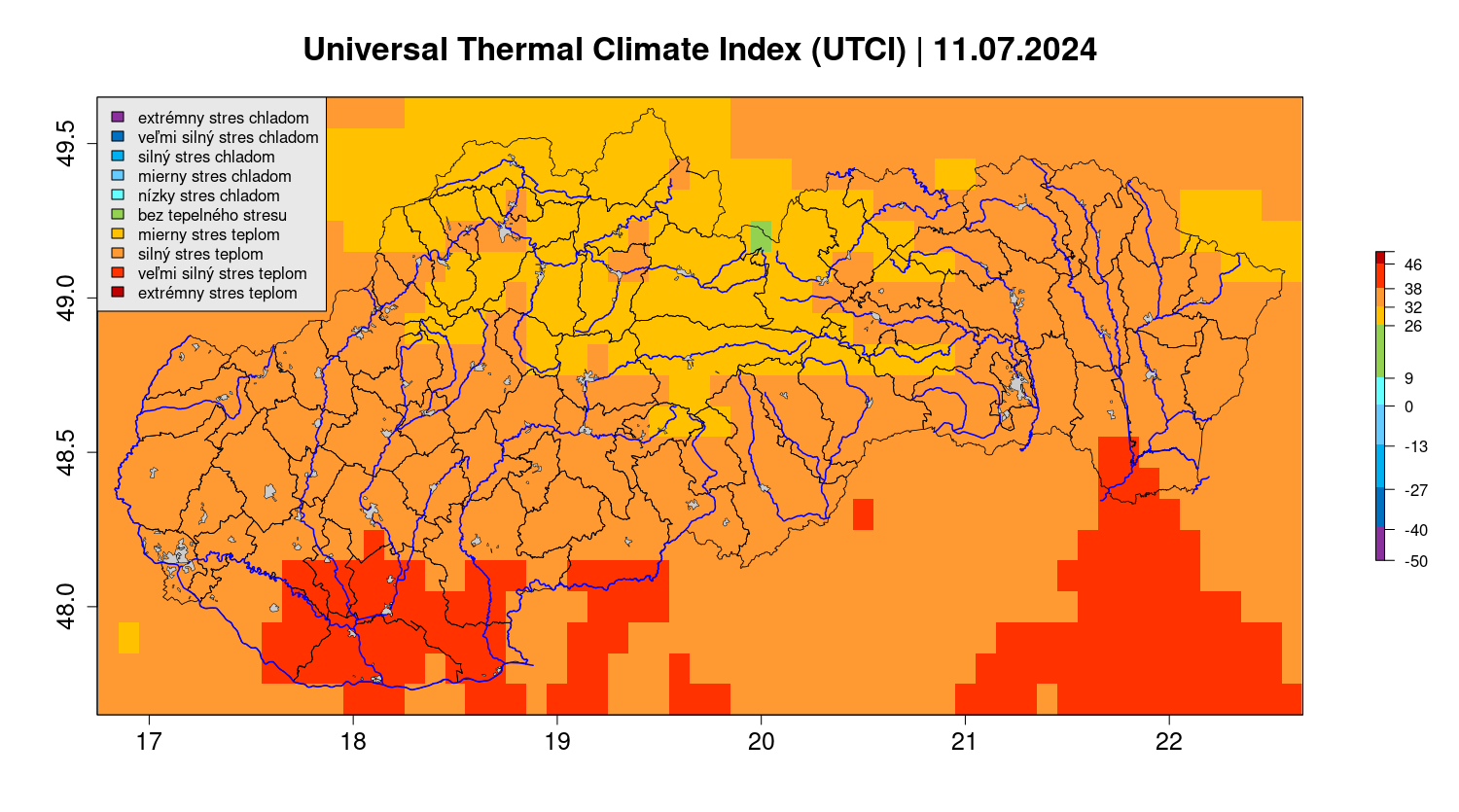
The Clim4Cast project developed a regional heatwave forecasting solution that provides a harmonised approach to heatwave monitoring and forecasting across Central Europe. The solution is based on the Heat Index (apparent temperature), combining ECMWF weather forecasts of air temperature and relative humidity to estimate human-perceived heat stress and identify dangerous heat conditions. The resulting forecasts complement existing national weather monitoring systems, support timely early warning, strengthen cross-border cooperation, and improve preparedness for extreme heat events.
Type of output: Solutions

Integrated Wildfires Forecasting for Central Europe
The Clim4Cast project developed a regional wildfire risk forecasting solution that provides a harmonised approach to assessing fire weather conditions across Central Europe. The solution is based on the Canadian Fire Weather Index (FWI), using ECMWF weather forecasts to produce consistent wildfire risk assessments adapted to the diverse climatic conditions of the region. The resulting forecasts complement existing national monitoring systems, support cross-border comparison of wildfire risk, strengthen early warning activities, and improve preparedness for wildfire events.
Type of output: Solutions

Regional Platform for Drought, Heatwave and Wildfire Monitoring

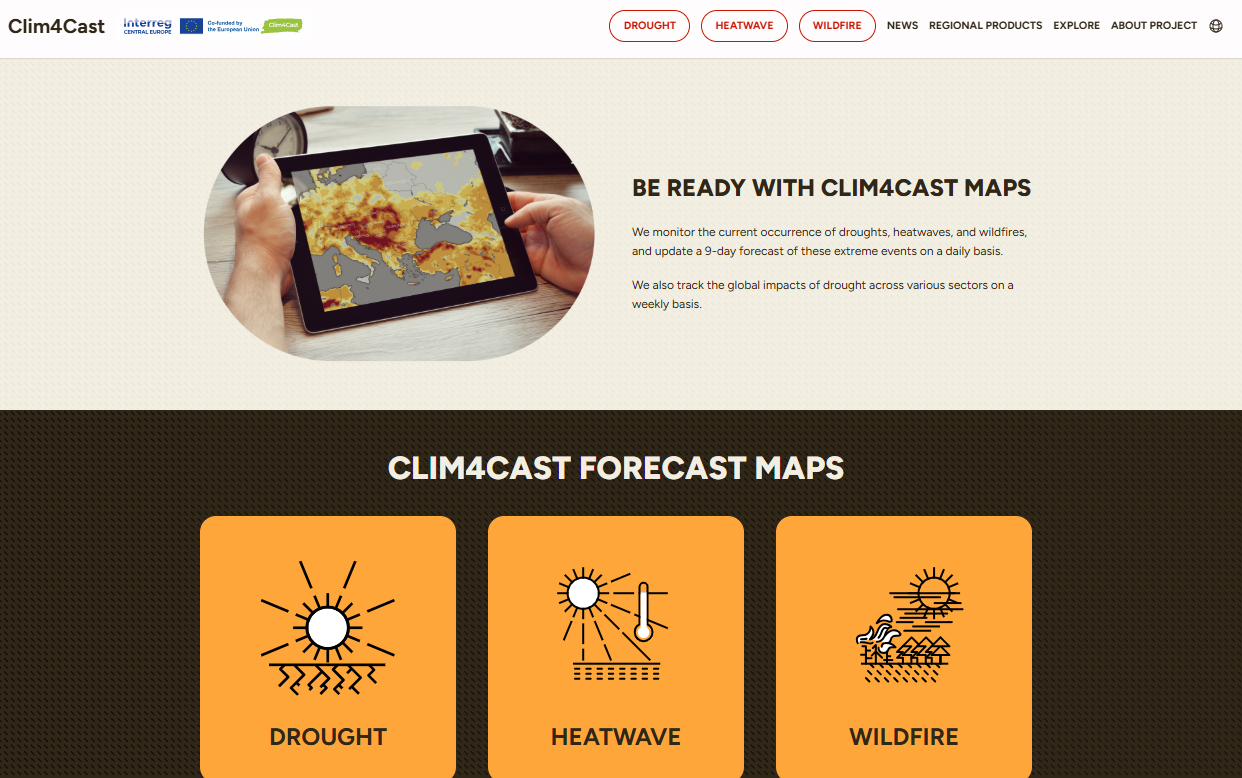
The Clim4Cast project developed an operational regional platform for monitoring and forecasting droughts, heatwaves, and wildfire risk across Central Europe. The platform combines harmonised methodologies with daily updated monitoring and forecasting products, providing consistent information across participating countries. Available at https://clim4cast.eu, the platform offers interactive maps, multilingual content, and integrated monitoring and forecasting products for drought, heatwaves, and wildfire risk. It enables users to explore current conditions, short-term forecasts, and recent climate extremes through a single, user-friendly interface. The platform was tested and validated by project partners under different climatic and operational conditions to ensure its reliability and practical applicability. It supports cross-border cooperation, strengthens data sharing between participating countries, and provides a long-term resource for climate risk assessment, early warning, and informed decision-making across Central Europe.
Type of output: Solutions

National Action Plans for Drought, Heatwave and Wildfire Preparedness

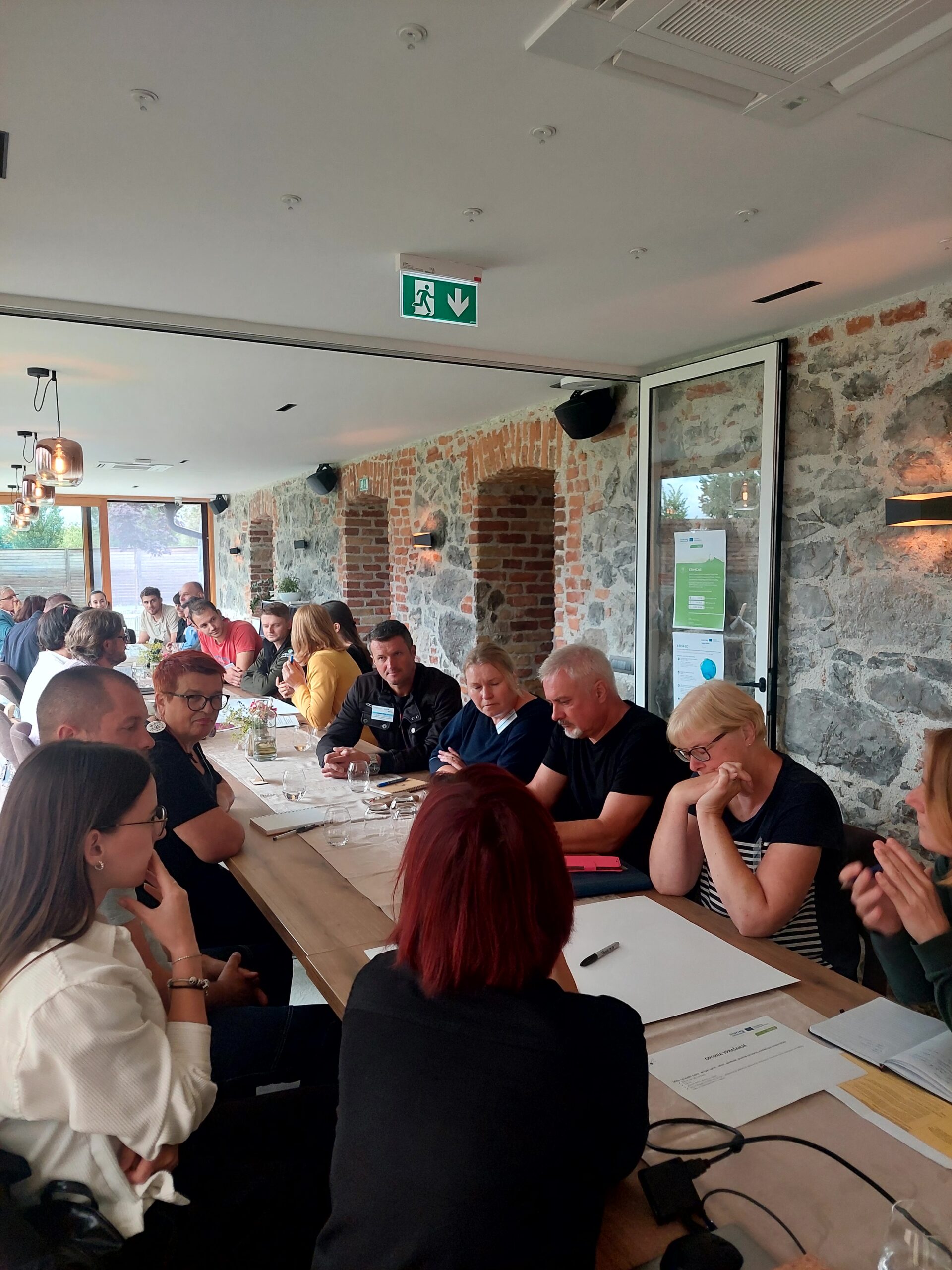
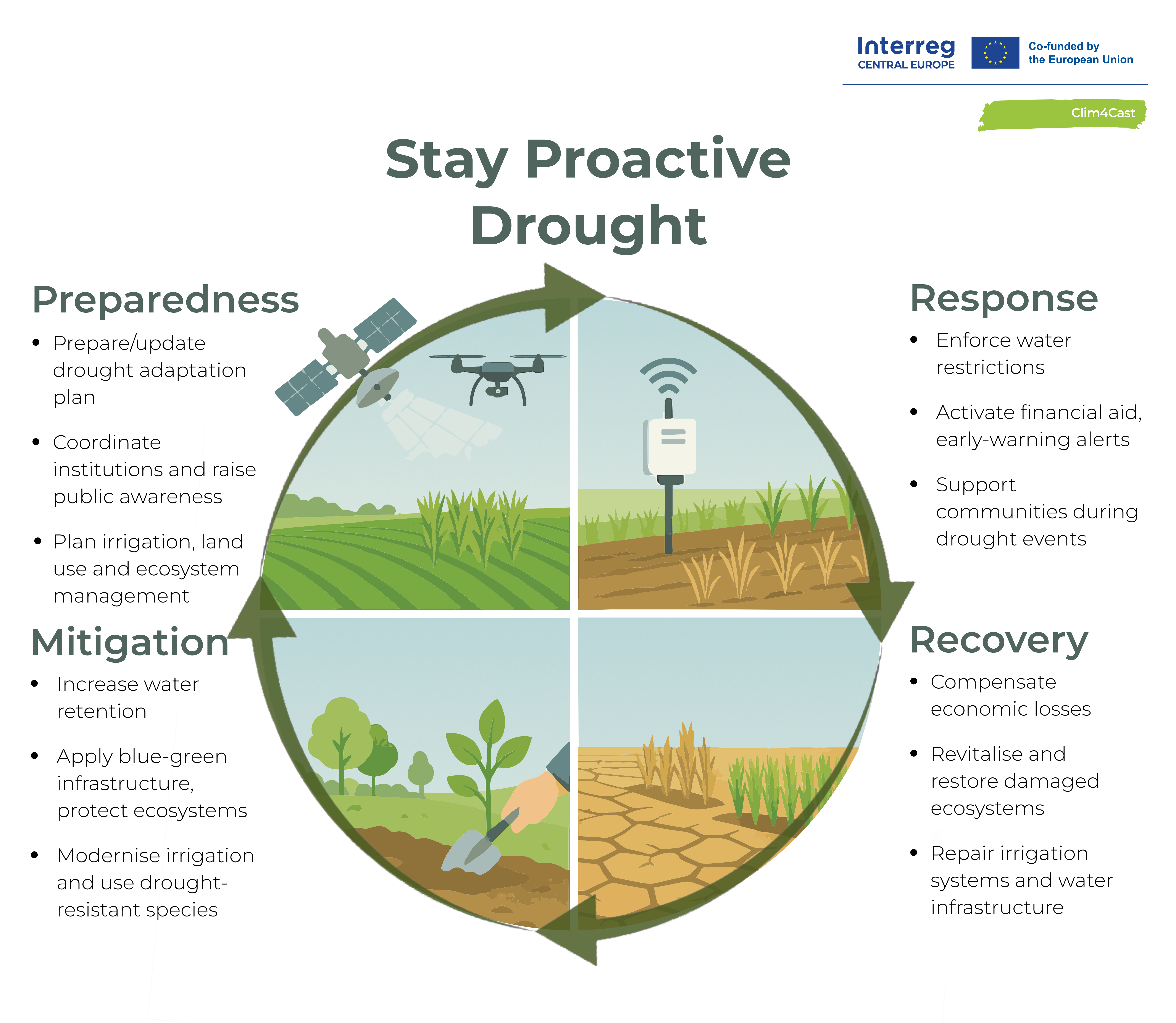
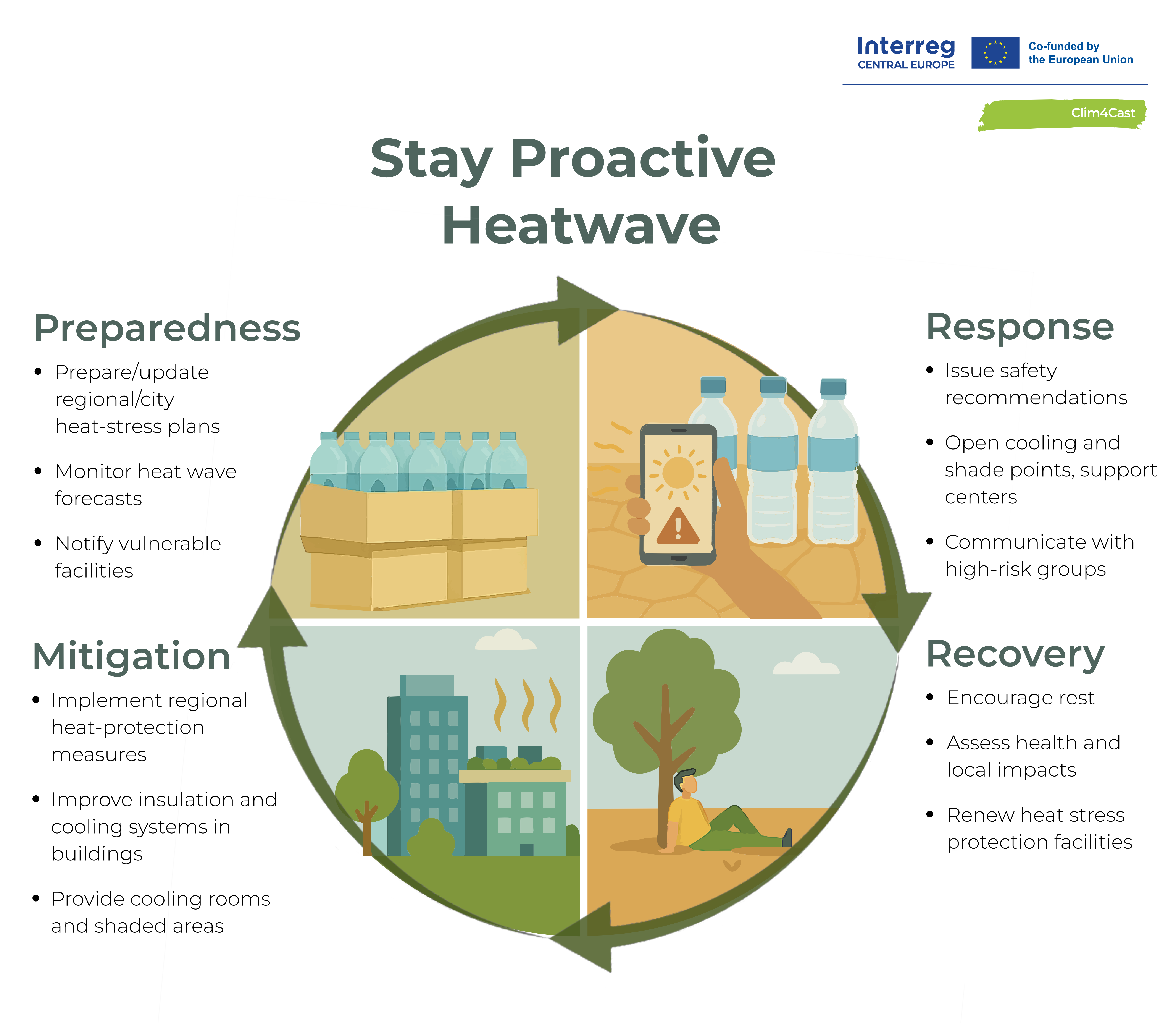
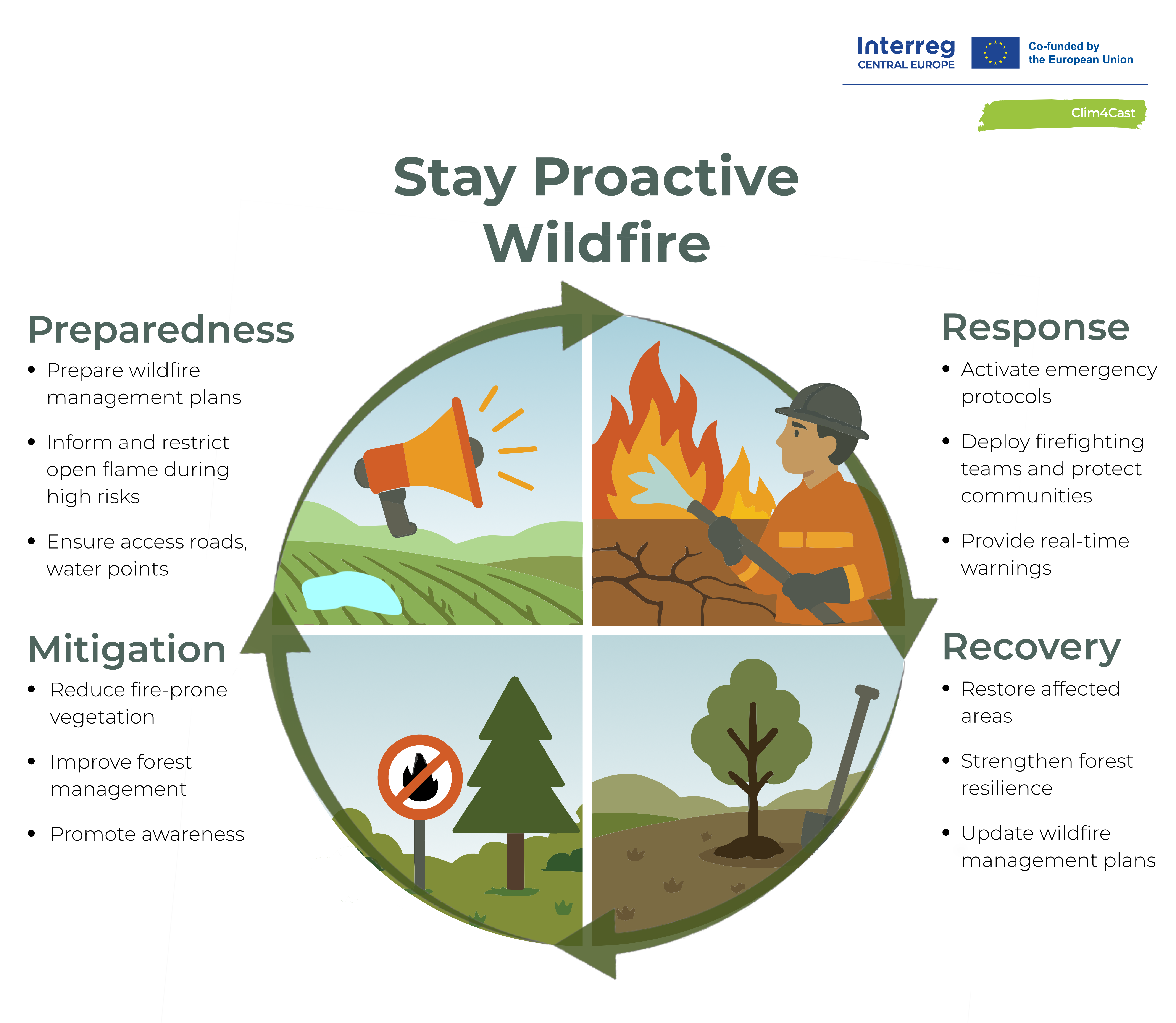
The Clim4Cast project developed seven National Action Plans for Austria, Croatia, Czech Republic, Germany, Poland, Slovakia, and Slovenia to strengthen preparedness and proactive responses to droughts, heatwaves, and wildfires across Central Europe. Each Action Plan was prepared in close cooperation with national stakeholders, including public authorities, operational institutions, sectoral agencies, and scientific experts. National stakeholder consultations helped identify country-specific vulnerabilities, implementation barriers, and priority measures reflecting different legal, institutional, and environmental conditions. Based on these consultations, each participating country developed an Action Plan tailored to its own needs and operational context. The Action Plans provide practical recommendations for improving climate resilience, early warning, risk communication, preparedness, and coordinated responses to compound climate extremes. Together, they form a practical framework that supports long-term adaptation and strengthens cooperation among institutions responsible for managing climate-related risks. The development of the Action Plans was supported by a common framework for proactive responses to droughts, heatwaves, and wildfires, defining key principles for early warning, coordinated response, and institutional cooperation across all stages of DHF event management.
Type of output: Strategies and action plans

Project images

Clim4Cast

The project lead partner is responsible for the content of this project website.

Project on social media

Project contact

Lenka Bartošová