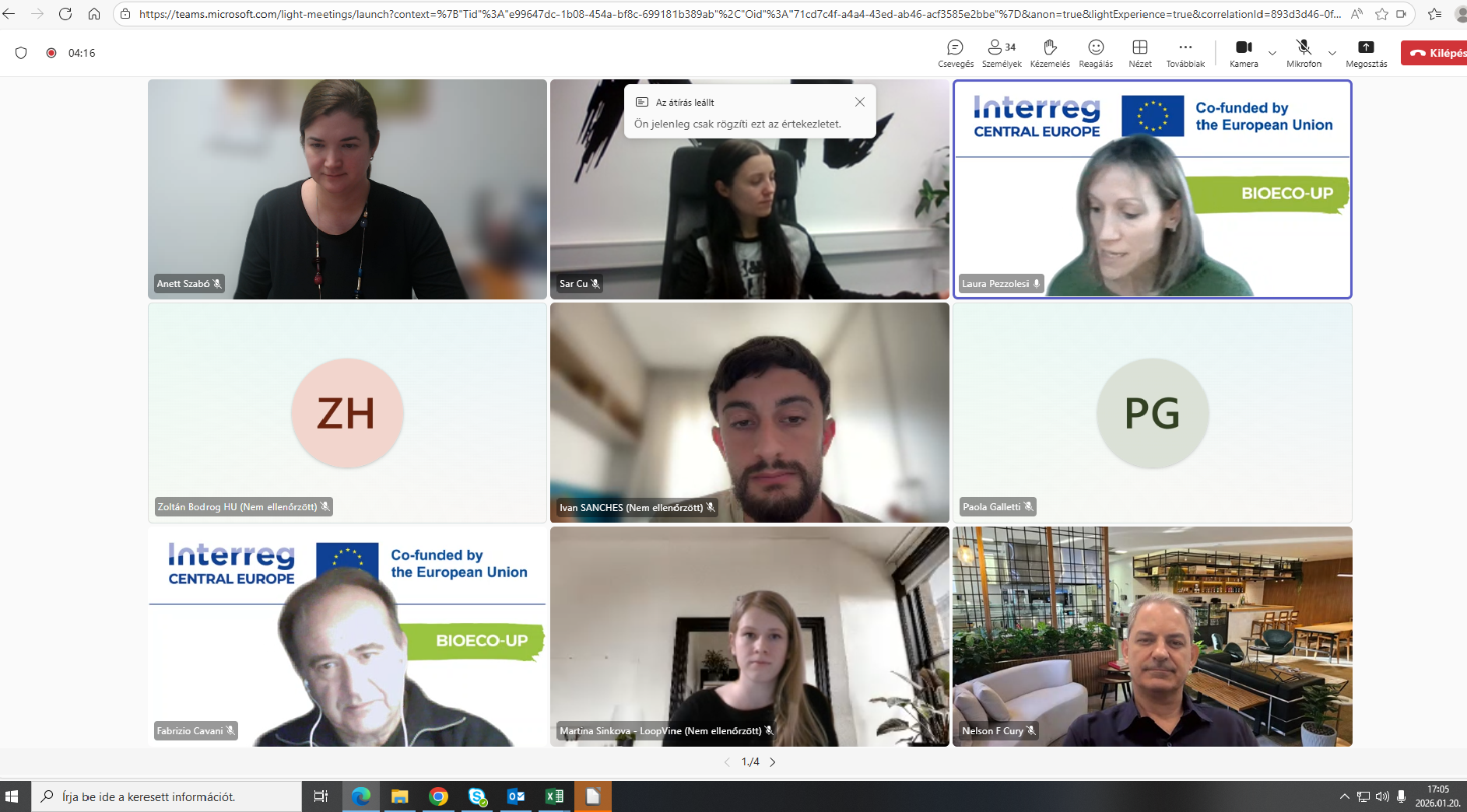
The third of a series of 3 webinars, dedicated to the role of Bioeconomy in construction and furnishing, was held on January 20, 2026. After a brief introduction by Professor Laura Pezzolesi, there was the contribution of 6 companies, which illustrated some examples of application of the circular bioeconomy in daily life. Martina Šinková presented the activities of LoopVine (Slovakia). LoopVine is a startup focused on circular cleaning, with a mission to transform unsold or discarded fruit into active ferments for use in organic, effective, and safe cleaning products. LoopVine repurpose fruit waste, converting it into natural enzymes and organic vinegar for household cleaning products, with an upcycling approach. This initiative aims to provide ecological, healthy, and safe alternatives to conventional chemical cleaners. LCA analysis estimated a saving of up to 80% CO2 emissions compared to conventional, petroleum-derived cleaners. The company is developing a pilot plant in Denmark, in collaboration with a professional cleaning service, to upscale the production of the green cleaner. Tomasz Borkowski presented the activities of FibriTech (Poland). FibriTech’s mission is to develop and provide sustainable, biodegradable, 3D fibrous biomaterials from plant fibers to replace polluting fossil-based plastics and materials, contributing to the circular economy and combating climate change by offering eco-friendly solutions for packaging, construction, agriculture, and environmental cleanup. Examples include creating alternatives to harmful materials like styrofoam, rock wool, and plastics using natural cellulose fibers, materials which are fully recyclable or biodegradable, fitting into closed-loop systems. They can be used for packaging, construction, thermal and sound insulation materials, and agriculture, such as FibriAgri, the example which has been described in detail in the webinar. Balázs Koenig and Andrea Vigh presented the Forester’s Eye Tour Series, an activity carried out by the Pilisi Park Reserve (Hungary). The aim of the Pilisi Park Reserve’s “Forester’s Eye Tour Series is to offer unique, guided nature walks where participants see the forest through a forester’s perspective, learning about forestry practices, hidden trails, nature conservation, and the area’s rich history cultural/religious sites) directly from local guides, fostering a deeper appreciation for sustainable forest management. By understanding forestry, visitors become allies in preventing issues like waste, fire, and vandalism, supporting sustainable management. In essence, it’s about education, appreciation, and fostering responsible visitor behavior to protect the Pilis forest. Programs emphasize minimal impact, using marked trails and reusable markers, adhering to conservation principles. Dario Zanichelli presented the activities of Phenbiox (Italy). Phenbiox’s mission is to develop and produce high-performance, plant-derived active ingredients for cosmetics, food, and supplements, leveraging advanced technologies like bioliquefaction and fermentation to enhance natural efficacy, sustainability, and provide proven results for skin, hair, and well-being, offering natural, effective, and often organic, “Made in Italy” solutions. Phenbiox unlocks the power of plants using scientific research and innovative technology. Ingredients delivered have proven efficacy, boosting effectiveness for cosmetic and nutraceutical applications, such as UV protection or hair health. Larisa Smrekar and Sar Cu presented the activities of Karbonoir (Slovenia). Karbonoir is a Slovenian brand focused on providing high-quality, natural activated charcoal products for skincare and oral care. The primary goal is to offer 100% natural, additive-free, and preservative-free products—such as charcoal soap, teeth whitening powder, and serums—derived from coconut shells to cleanse, detoxify, and care for the skin and teeth. Karbonoir emphasizes using carefully selected, skin-friendly ingredients designed to fight acne, blackheads, and skin impurities, as well as providing natural oral care. Finally, Nelson Cury presented the activities of TOPEMA Innovations (Brazil). Topema Innovations is a Brazilian company focused on the manufacturing of high-technology equipment for industrial kitchens and food service. In this aim, invest in eco-efficient and technologically advanced solutions for industrial kitchens, developing customized projects. The product presented is an apparatus to convert organic waste by means of a of a decentralized, electromechanical composting machines designed for immediate, on-site, and odorless processing. The machinery reduces organic waste volume by 80–90% within 24 hours, turning it into a nutrient-rich, dry soil amendment (fertilizer). It is Suitable for commercial settings such as restaurants, hotels, hospitals, and canteens. About 35 people attended the online webinar. It is available on the project’s YouTube channel at the link: https://www.youtube.com/watch?v=CKbjUlKfxGM