
Europe’s population is aging faster than ever. More people are living longer, often with multiple chronic conditions, while care systems face increasing pressure from workforce shortages, growing demand, and fragmented services.
At the same time, many older adults want the same thing: to remain independent, active, and connected to their communities for as long as possible.
Yet too often, health, social, and community services operate separately.
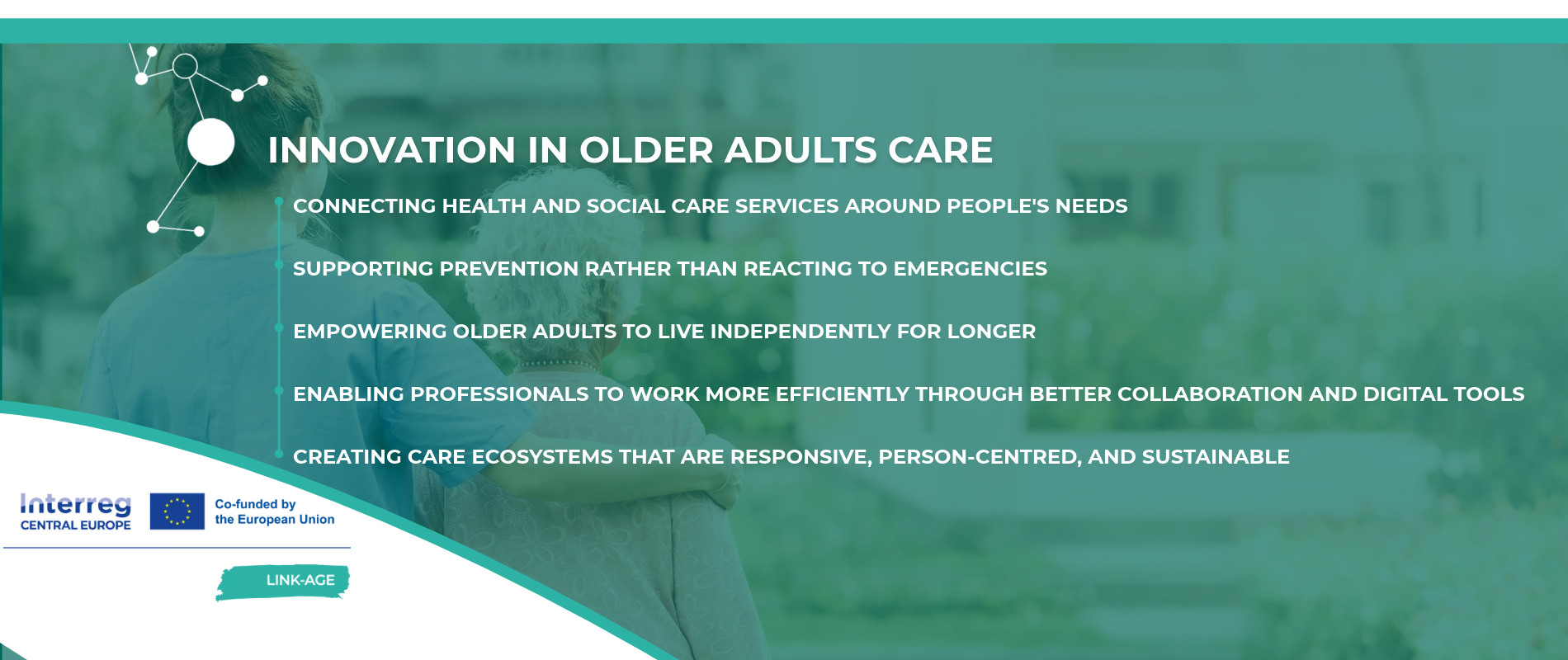
Innovation in older care is not simply about introducing new technologies. It is about rethinking how care is delivered, coordinated, and experienced. It means:
- connecting health and social care services around people’s needs
- supporting prevention rather than reacting to emergencies
- empowering older adults to live independently for longer
- enabling professionals to work more efficiently through better collaboration and digital tools
- creating care ecosystems that are responsive, person-centred, and sustainable
Across Europe, innovative initiatives are already demonstrating that a different approach is possible. By combining technology, community engagement, integrated care pathways, and new service models, they are helping create systems that are more resilient and better equipped to support healthy ageing.
As our partners continue working together to explore and transfer innovative practices, we will be sharing insights, examples, and lessons learned from across Europe.
Because the question is no longer whether innovation is needed in older adult care.
The question is how we can make it accessible, scalable, and beneficial for everyone.