
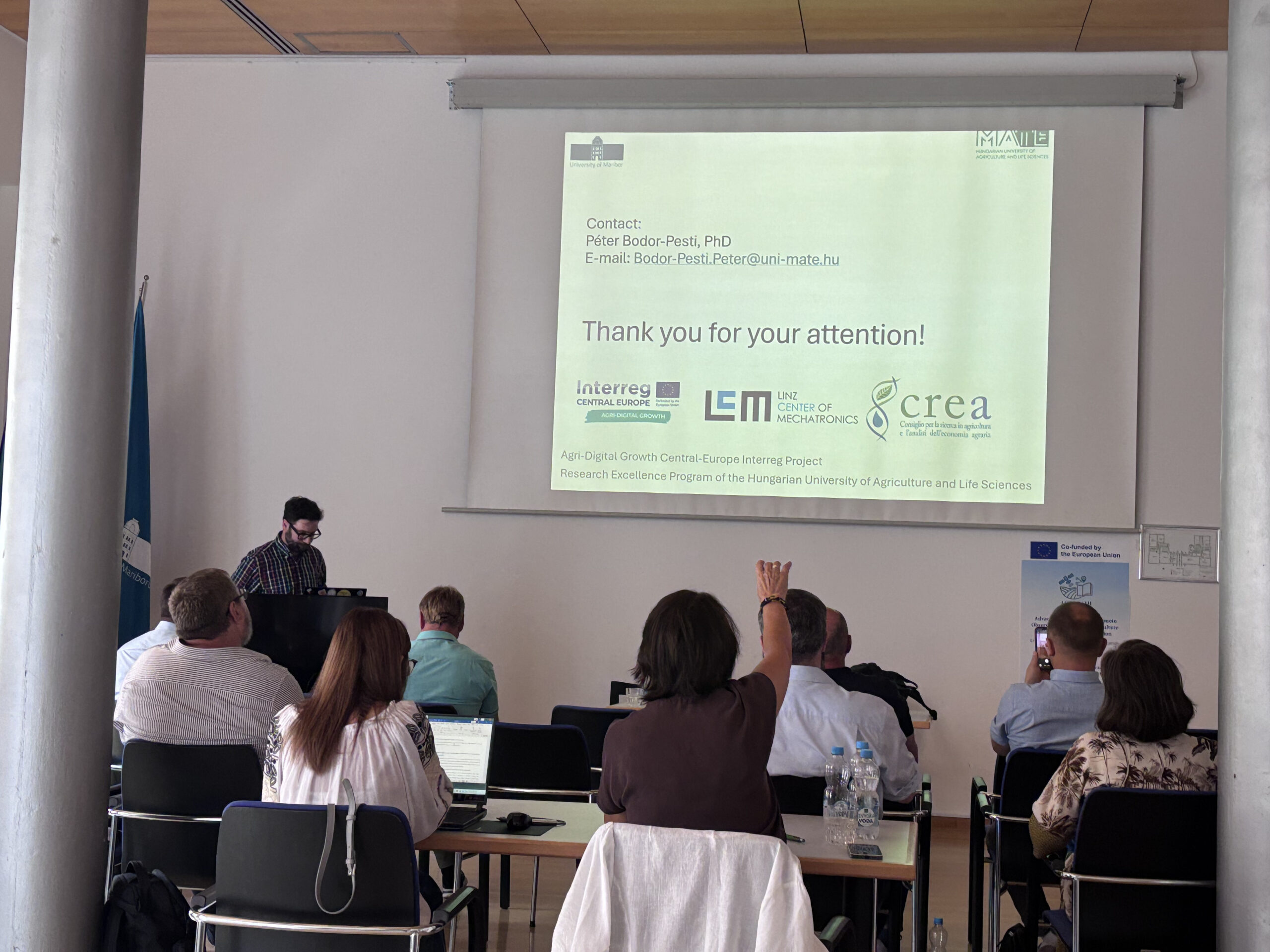
Held from 24 to 28 August 2026, the programme included technical lectures, practical activities with agricultural robots and sensor systems, field visits and exchanges on teaching methodologies. Participants explored agricultural robotics, remote sensing, data processing, smart machinery and problem- and project-based learning.
Connecting three European projects
The training brought together expertise and technological resources developed through three international projects.
AGROPATH, funded by Erasmus+, organised the programme as part of its activities to modernise higher education in geomatics, remote sensing and precision agriculture.
Agri-Digital Growth, co-funded by Interreg CENTRAL EUROPE, participated through the agro-robotics Living Lab at the University of Maribor, providing access to experimental activities and practical expertise developed within the project.
Robots4Plants (IRP38) presented robotic platforms and technological solutions for crop production, offering further examples of agricultural robotics applications.
Connecting research and agricultural education
The programme gave participants opportunities to work directly with digital agricultural technologies and discuss their integration into university teaching.
For Agri-Digital Growth, the initiative extended the knowledge transfer activities developed within the project to an international academic audience, strengthening cooperation between research and education.
The experience also highlighted the importance of practical training in developing competencies across agronomy, engineering, robotics and information technology.
A further event, planned for May 2027, will focus specifically on students, continuing the exchange of knowledge and practical experience in biosystems engineering.