
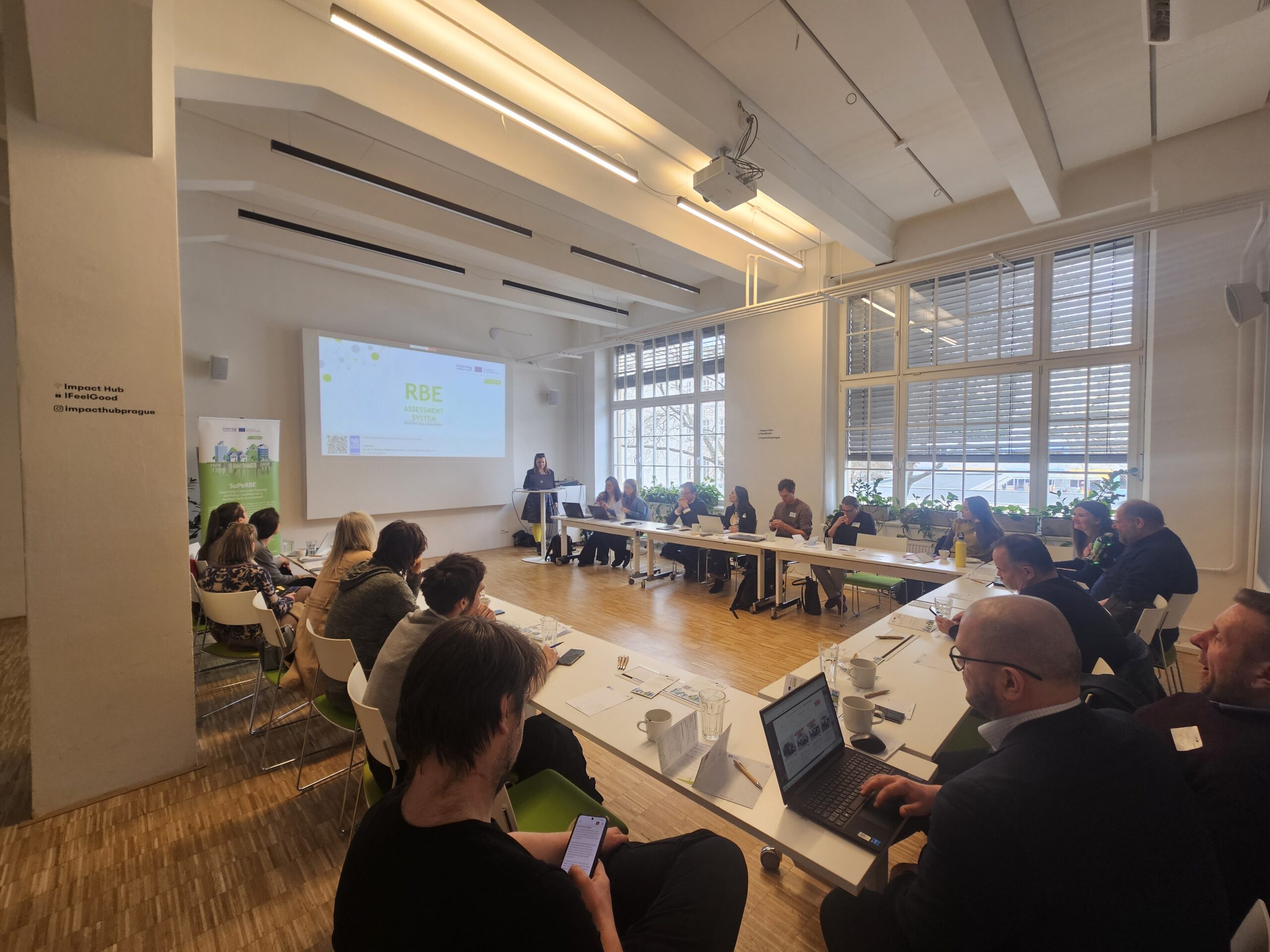
On 11 March 2026, the first educational workshop of the SuPeRBE project in Prague was successfully held in a hybrid format, bringing together participants in person and online. The event focused on one of today’s most pressing challenges: adapting buildings and urban environments to climate change.
The workshop gathered public administration representatives, technical experts, and professionals involved in urban planning and building management.
Workshop #1 aimed to provide participants with a fundamental understanding of the relationship between climate change and the built environment, along with practical approaches to climate adaptation.
Participants gained insights into:
-
The impact of climate change on buildings and urban areas
-
Principles of climate adaptation at building and district levels
-
Systematic approaches to managing climate risks
-
Tools and methodologies developed within the SuPeRBE project
Key Topics and Sessions
The workshop featured a comprehensive agenda combining theory, tools, and practical applications.
Participants explored the fundamentals of climate change, as well as policy frameworks and governance approaches related to climate adaptation.
A dedicated session focused on how climate change affects buildings and urban districts, highlighting the need for resilient design and planning strategies.
The workshop introduced practical tools developed within SuPeRBE project:
-
RBTool and RNTool for assessing sustainability and risks
-
The RBE (Relative Building Evaluation) method
-
An 8-phase decision-making model for climate adaptation
These tools support professionals in evaluating risks and implementing effective adaptation measures in real-world projects.
Building Skills through SuPeRBE
A key component of the workshop was the presentation of the SuPeRBE training system, designed to support continuous learning. Upon completing courses and assessments, participants can receive a Skill Passport, validating their professional competencies in sustainable building and climate adaptation.