
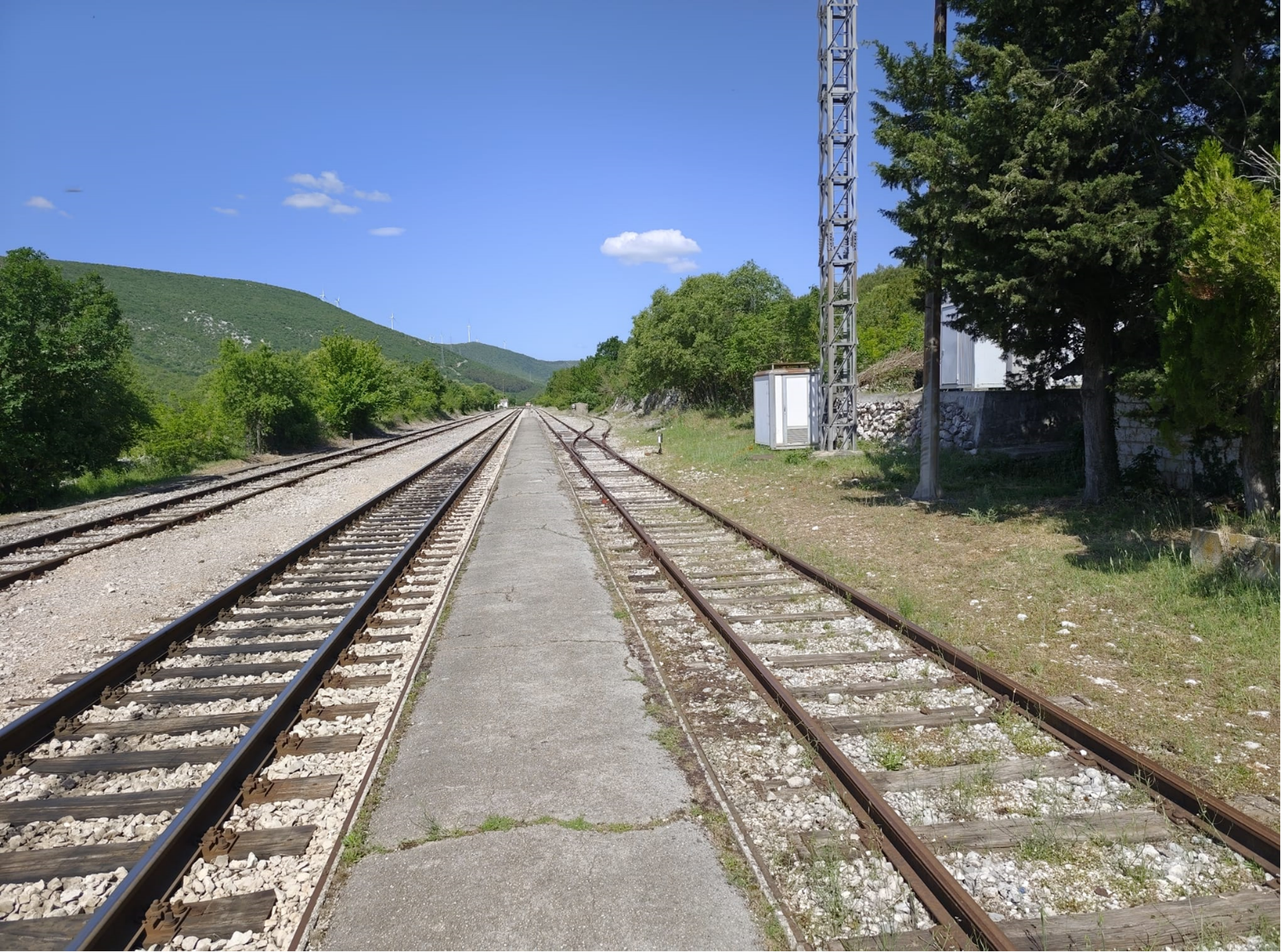
Rural railway stations often reflect the history and evolution of the territories they serve. Primorski Dolac Station, located in inland Croatia, is a clear example of how infrastructure built in the 19th century continues to shape mobility patterns and local life today. Originally opened in 1877 as part of the railway connection between Split and Siverić, the line was designed to transport coal from inland mines to the Adriatic coast.
Although the station existed as early as the 19th century, it remained relatively isolated for decades, as it was not yet connected to the broader Croatian railway network. Only in 1925, with the completion of the Lika railway linking the north and south of the country, did Primorski Dolac become part of a unified system, strengthening its role as a connector between the north and the south of the Country.
Beyond its economic function, for the local community, the railway was a lifeline. At a time when road infrastructure was almost non-existent, it allowed people to transport agricultural products to the markets of Split and Kaštela. The railway became part of local culture: trains were not identified by numbers, but by nicknames such as Zec (“Rabbit”) for the first early morning train, or Đak (“Student”) for the one used by schoolchildren.
The station building, constructed in a typical Austrian style with solid stone, reflects its historical importance and the ambition of the imperial railway system.
During both World Wars, the line gained strategic importance due to coal transport and its position towards Split, leading to special surveillance and frequent sabotage attempts.
Today, Primorski Dolac station continues to serve the local community, mainly as a stop for daily commuters: pupils, students, and workers. Located on the Split–Perković line, it offers a travel time of around 65 minutes to Split. While fast trains rarely stop here, the station remains operationally essential, allowing train crossings on a single-track line along the main corridor connecting Split with the rest of Croatia via Knin.
Within this context, the station illustrates both the challenges and opportunities typical of rural railway infrastructure. Demand is modest, services are limited, and the station no longer plays a major industrial role, yet it remains a vital connection for local communities in a territory with few alternatives.
It is precisely this combination of constraints and relevance that makes Primorski Dolac an ideal case for intervention within the RAISE‑CE project, bringing new energy and opportunities. As a pilot station, it demonstrates how smaller rural stations can be reimagined, not just as transit points, but as places that reconnect communities, improve accessibility and support more sustainable mobility choices. By building on its heritage and strategic position, RAISE-CE aims to unlock the station’s potential, making it more welcoming, functional, and better integrated into local life.
Looking ahead, the future of Primorski Dolac is closely tied to the modernization of the wider Split railway hub and to broader efforts to decarbonize transport, positioning the station as a small but meaningful piece in the transition towards a more sustainable and connected future.
Disclaimer
This publication has been developed within the RAISE-CE project, supported by the Interreg CENTRAL EUROPE Programme with co-financing from the European Union. Its content is the sole responsibility of the authors and the project partnership and does not necessarily reflect the views or positions of the Interreg CENTRAL EUROPE Programme, its programme bodies or the European Union. Neither the programme authorities nor the European Union can be held responsible for any use that may be made of the information contained herein.