
At the end of August, the restoration pilot action at Pian del Grisa entered a crucial phase. The first step involved clearing two hectares of black pine and smoke tree shrubs that had progressively encroached upon the karst dry grassland. This intervention was essential to halt the advance of woodland over an ecosystem that depends on open, sunlit spaces. Once the vegetation was removed, the soil was carefully cleaned and prepared, and seven experimental plots were established to host the next phase of the project: the transplantation of native species.
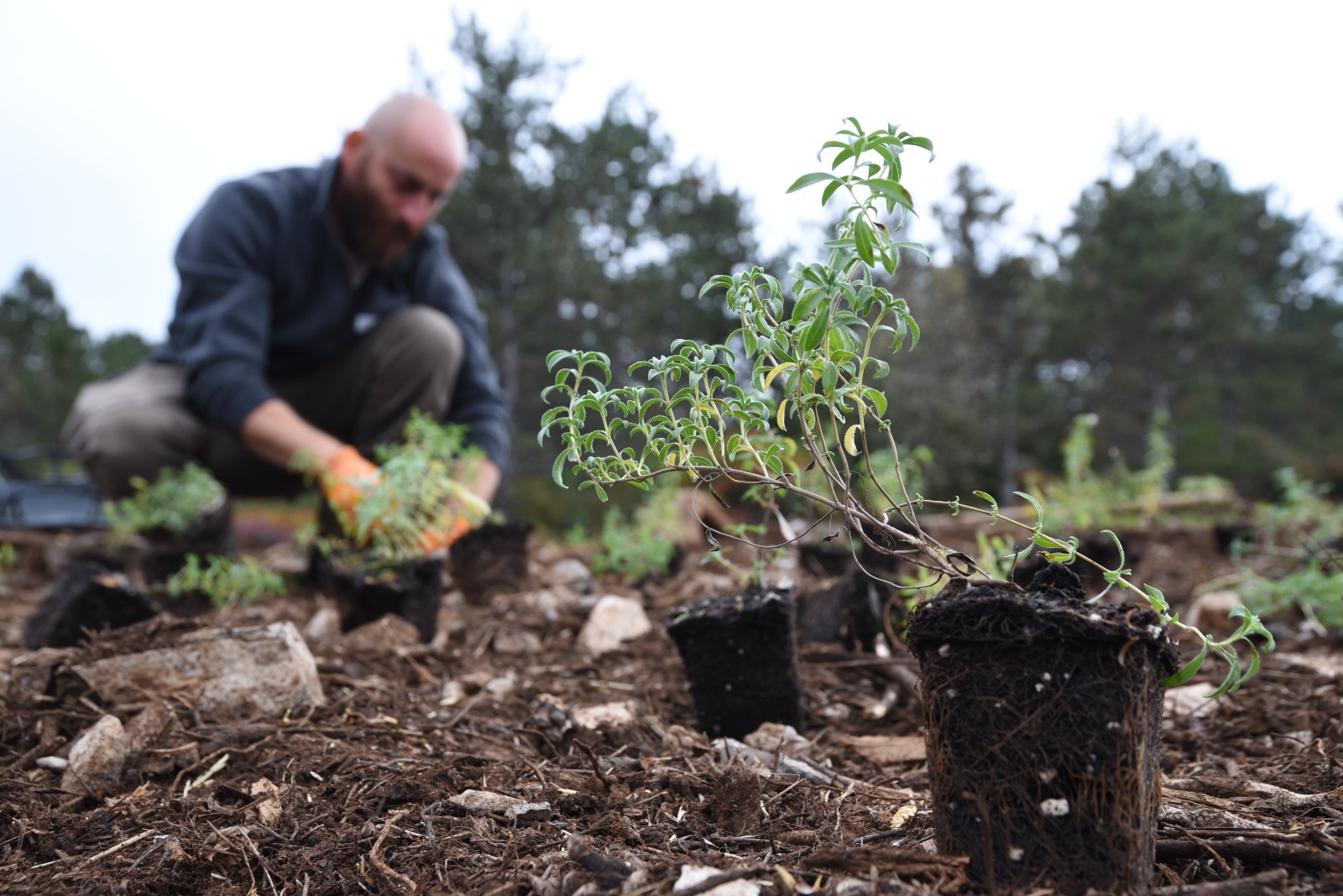
In early autumn, thanks to the collaboration between the WWF Marine Protected Area of Miramare and the Biodiversity Service of the Friuli Venezia Giulia Region, 400 young plants belonging to eight native species were successfully transplanted into the prepared plots. These seedlings had been cultivated over the previous months in the greenhouses of the Volpares nursery in Palazzolo dello Stella, ensuring their resilience and suitability for the karst environment. The site itself lies within the UNESCO-recognized Biosphere Reserve of Miramare and the Coast of Trieste, adding international significance to the restoration effort.
The transplantation required a full day of work, carried out by four specialized nursery technicians under the guidance of regional biodiversity experts. The selected species reflect the richness of the karst dry grassland habitat, including one endemic variety: Pulsatilla montana, Centaurea cristata (Trieste cornflower), Satureja montana (mountain savory), Teucrium montanum (mountain germander), Globularia bisnagarica, Ruta graveolens (common rue), Allium sphaerocephalon (round-headed garlic), and Lotus dorycnium subsp. germanicus. To stabilize the soil and reduce the risk of invasive species colonization, seeds of local grasses collected during the previous summer were sown across the disturbed ground. This measure not only consolidates the turf but also strengthens the ecological resilience of the entire site.
Recent rainfall has provided the necessary water supply for the young plants, while WWF biologists and naturalists continue their monitoring campaigns. Since February, these surveys have revealed the extraordinary biodiversity of the karst dry grassland, an ecosystem increasingly threatened by the abandonment of traditional agro-pastoral practices and the unchecked spread of woodland. The pilot action aims precisely to counter this trend, giving renewed strength to grassland species and ensuring their long-term survival.
Following the transplantation, a dedicated volunteer day was organized. WWF staff, together with local volunteers, manually removed smoke tree (Cotinus coggygria), an invasive species that tends to colonize open areas, thus protecting the restored plots. The initiative was a success, both in terms of participation and ecological impact, and given the ongoing need to control this species, similar volunteer activities are likely to be scheduled in the future. Furthermore, involving the local community is always an opportunity to foster awareness.
With the transplantation completed and the plots established, this pilot action of the ReCo project has reached its practical conclusion. Yet the work is far from over. Continuous monitoring will be essential to assess the effectiveness of the interventions and safeguard the extraordinary biodiversity of this fragile habitat. The 400 young plants now growing at Pian del Grisa are more than seedlings: they represent a sign of hope for the survival of an entire ecosystem and a tangible step toward restoring the balance of the karst dry grassland.