
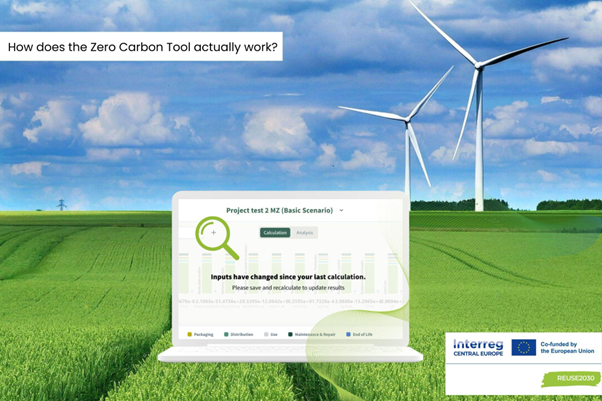
The Zero Carbon Tool is a powerful instrument for calculating the climate impact of manufacturing processes. Here’s a step-by-step breakdown of how it works 👀:
Step 1 ➡️ Select a product and enter detailed inputs
Choose one specific product and provide comprehensive data on its composition. Is it made of metal, plastic, or electronic components?
List all components, their quantities, and the percentage of recycled (and recyclable) material.
Step 2 ➡️ Automated data analysis
The system instantly calculates environmental impacts using advanced algorithms powered by regularly updated, licensed databases.
💡 No estimates, only real, verified values.
Step 3 ➡️ “What-If” scenario testing
Curious about the outcome of switching to a different primary material? Or transitioning to renewable energy?
In seconds, you’ll see potential water savings, reduction in residual waste and overall improvements in environmental performance.
With the Zero Carbon Tool, you’ll discover exactly which alternative materials to use in production. ⚙️ You can unlimitedly test and optimize production scenarios in a completely risk-free digital environment.
Step 4 ➡️ Clear, actionable results
A comprehensive report immediately highlights which components consume the most resources. You will instantly identify the most significant sources of environmental impact, and gain a complete overview of the overall climate footprint of your production.
Step 5 ➡️ Real world optimization
Apply these insights directly to your operations and achieve measurable reductions in resource use and production costs.
The data-driven Zero Carbon Tool empowers companies to analyze the full environmental impact across the entire LCA and experiment with greener, more efficient manufacturing processes – all without operational risk. Scenario-based simulations pave the way for sustainable and cost-effective production improvements.